

Isabella La Rocca González
Isabella La Rocca González (she/her) is an award-winning artist, writer, and activist based in central Kentucky whose interdisciplinary practice moves between photography, creative nonfiction, and ecological inquiry. Rooted in a longstanding artistic tradition that seeks illumination within the overlooked, the obscured, and the unconscious, her work attends closely to the poetics of memory, inheritance, and place. As a first-generation American, she explores the tensions and resonances between her Indigenous Mexican ancestry and her European heritage, engaging questions of identity, belonging, and cultural continuity through image and text. Her photographs have been exhibited internationally, including a solo exhibition at the Center for Photography at Woodstock. Her creative nonfiction has appeared in publications such as Women Eco Artist Dialog and Everything from Nothing Journal. Her screenplay, Fugue 9, was named a finalist for the 2008 Sundance Screenwriters Lab. La Rocca González received a BA in Fine Arts from the University of Pennsylvania and an MFA in Photography from Indiana University. After more than three decades teaching art and photography in higher education, she departed academia to devote herself fully to her studio practice and to the cultivation of a native pollinator garden, an extension of her enduring commitment to ecological stewardship.
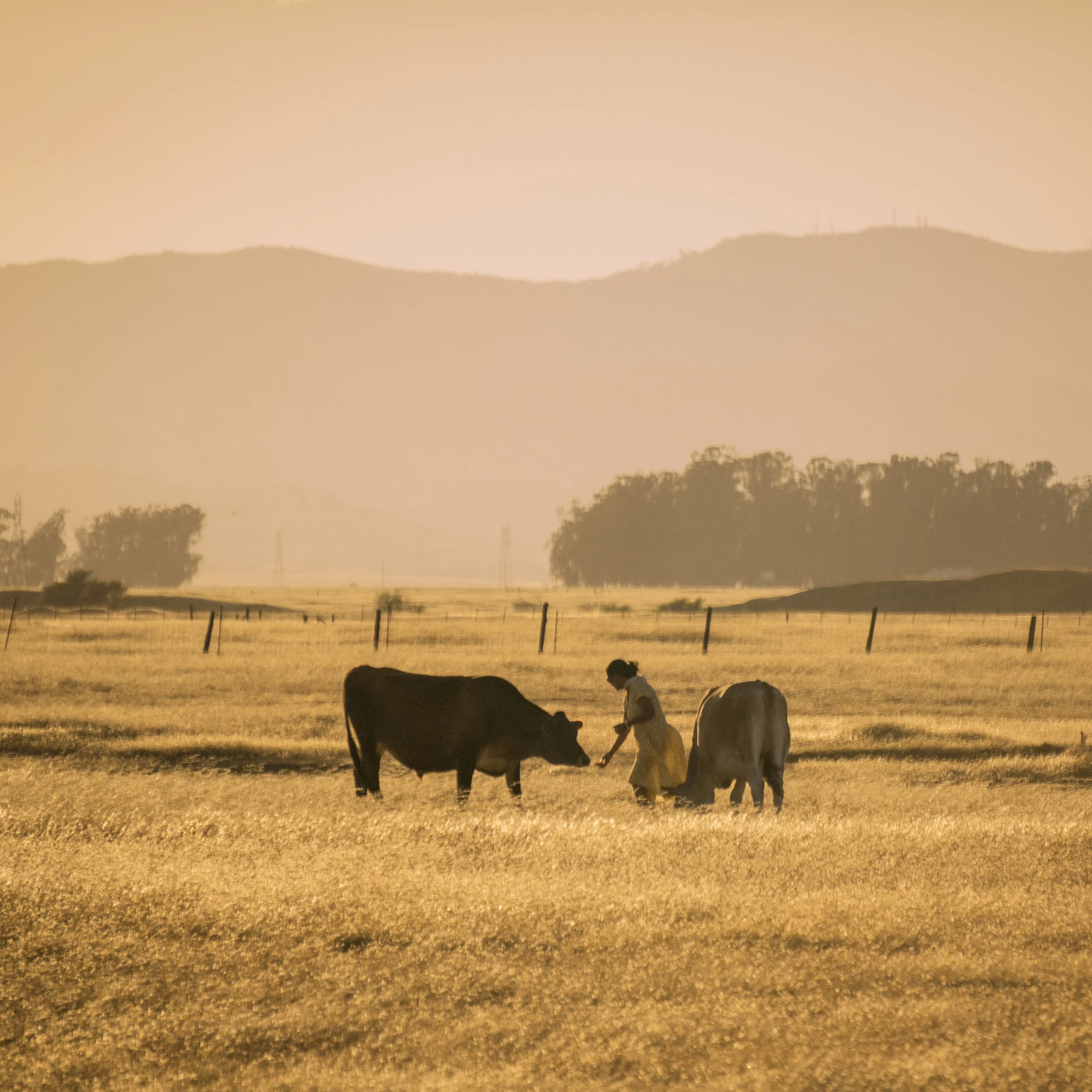
Margaret LeJeune: Today on GroundTruth, we are joined by artist and former academic Isabella La Rocca González, whose work over the past three decades has examined the fragile and often fraught relationship between humans, non-human species, and the systems we inhabit. In this conversation, we discuss her series Censored Landscapes and its engagement with the intertwined realities of factory farming, labor exploitation, and environmental degradation. We also explore the emotional and aesthetic tensions at the heart of her series Ofrendas, in which beauty and grief coexist as a means of reckoning with ecological loss.
Thank you, Isabella, for agreeing to speak with me. Would you share with us a bit of your origin story? Are there things in your upbringing that led you to a creative life?
Isabella La Rocca González: My parents met in El Paso, Texas, where I was born. My dad was in the Italian Air Force, stationed at Fort Bliss and my mom lived across the border in Ciudad Juarez. My first languages were Spanish and Italian. I spent extended periods with my family in Mexico and Italy, and we remain in close contact. I like to believe that the clash and amalgam of cultures encouraged me to take a broad and compassionate view of the world, while their nexus caused me to appreciate underlying affinities.
I can’t point to a specific event or person that convinced me I wanted to be an artist. Ever since I can remember, I was in love with anything that could be described as art. When I was a kid, the question asked over and over was, ‘what do you want to be when you grow up?’ Before I learned to read, my answer was often ‘go-go dancer’ or ‘ballerina.’ I’ve since taken many classes in ballet, modern, hip hop, and different flavors of African dance, not for any professional goals but as an amateur, in the true sense of the word - French for lover.
We moved ten times by my eleventh birthday and though I made new friends wherever we went, books were my constant companions. By the fourth grade, now the class bookworm, my response to what I wanted to be was, ‘I’m going to be a writer.’ I kept a diary, and wrote stories and poems, all mercifully lost and forgotten. In high school, as much of a bookworm as ever, I decided I did not want to spend hour after hour, day after day alone, wrestling with words in black and white; I wanted to experience the whole polychromatic world—all the places and people and possibilities. I wanted to learn about light and color and form. I dedicated myself to visual art. As an undergraduate I studied fine arts and I received my MFA in photography. No doubt, all the art forms I’ve indulged in - dance, music, writing, drawing, painting, sculpture, photography, motion pictures - impact my art practice.
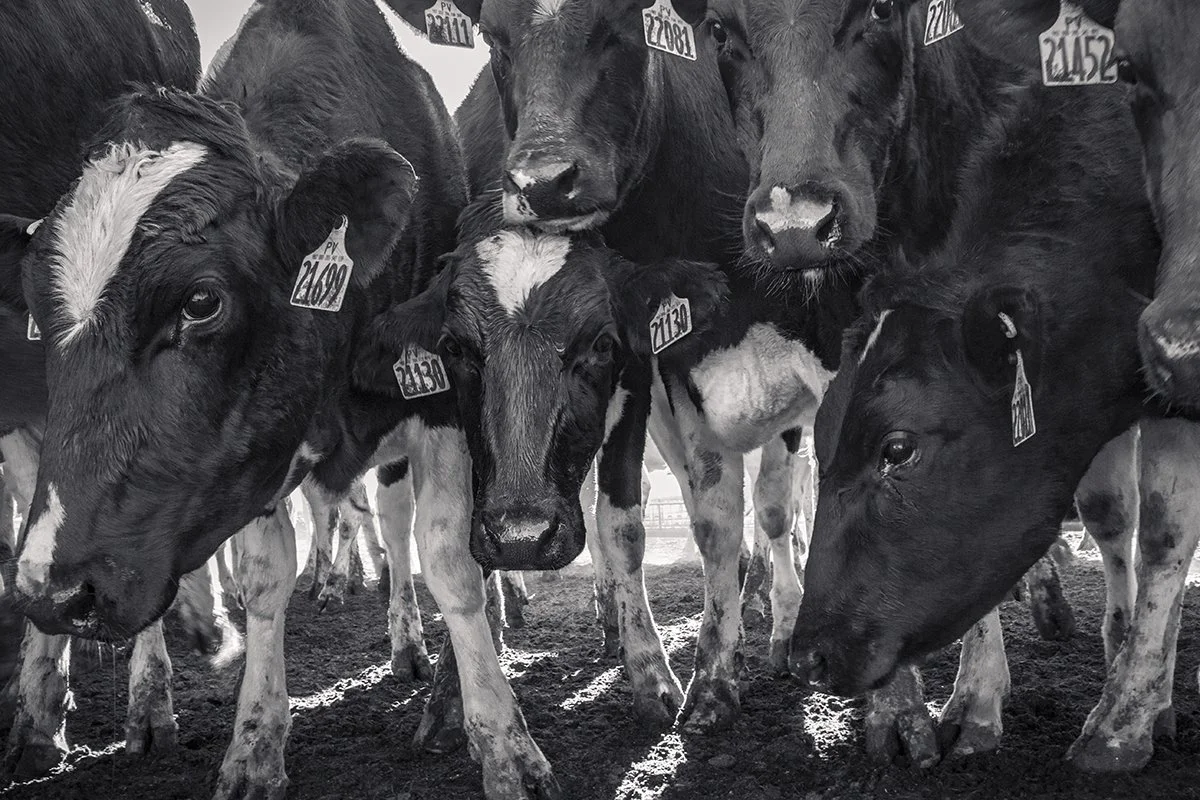
Isabella La Rocca González, Look Me in the Eyes from Censored Landscapes, 2014, 19” X 13”, archival pigment print
ML: Your work brings together photography, writing, and activism. How did these modes first converge in your practice? Did one methodology lead you to the others?
ILG: Photography, writing, and activism all inspired me as a teenager, almost simultaneously. For a long time I’ve pursued them separately - I make photographs as visual art; I write stories, creative nonfiction, and poetry; I participate in nonviolent direct action mostly with environmental and animal liberation groups. These pursuits converged in my book, Censored Landscapes: The Hidden Reality of Farming Animals(1).
I continue to contemplate strategies for integrating visual art with writing and activism. But more important to me is to follow where my practice leads. In many ways and at best, my art practice has a spirit of its own.
ML: You describe your work as part of a tradition of revealing the “hidden, unconscious, or disregarded.” What initially drew you to that impulse and how has it evolved over time?
“Art, like a collective dream, externalizes the unconscious. It has a singular ability to make visible emotions, values, the sublime, the ineffable.”
ILG: Art, like a collective dream, externalizes the unconscious. It has a singular ability to make visible emotions, values, the sublime, the ineffable. Photography is especially adept at directing the viewers’ attention toward the mundane, overlooked, or unjust. I think of the work of photographers who first inspired me: Lewis Hine, Henri Cartier-Bresson, Tina Modotti, Graciela Iturbide, Mariana Yampolski, Manuel Álvarez Bravo, the Farm Securities Act photographers, the New Topographics - there are so many!
For decades my alarm regarding the current ecological crisis that is often eclipsed or suppressed by commercial and corporate interest, has driven my work.
ML: How has your background, particularly your connection to both Indigenous and European lineages, shaped your relationship to land, animals, and image-making?
ILG: My Italian heritage, my Indigenous Mexican roots, and my nomadic existence as the daughter of immigrants have nurtured in me an obsession with origins and roots - native plants, native wildlife, Indigenous peoples. But when I was studying art as an undergraduate and in graduate school, the curriculum almost entirely descended from Eurocentric traditions. I was exposed to very little in the way of Indigenous or even Mexican art and knowledge. I learned about these histories and practices on my own, which strengthened my connection to them.
In contrast to the settler colonialist ethos of extraction and exploitation, Indigenous cultures comprehend the interconnectedness of nature, the land, spirituality, art, food, and all aspects of life. This has had a profound influence on how I approach my work, especially my project, Censored Landscapes. Unlike most modern farming, pre-Columbian agriculture integrated itself into local ecosystems and is now understood by contemporary ecologists to be regenerative and agroecological. Indigenous peoples in North and Central America did not farm animals. They produced tasty, nutritious food for themselves without breeding or caging other animals. Cows, pigs, chickens, goats, and sheep did not exist in the Americas; farmed animals were brought by the Europeans, along with alcoholism, epidemics, and firearms.
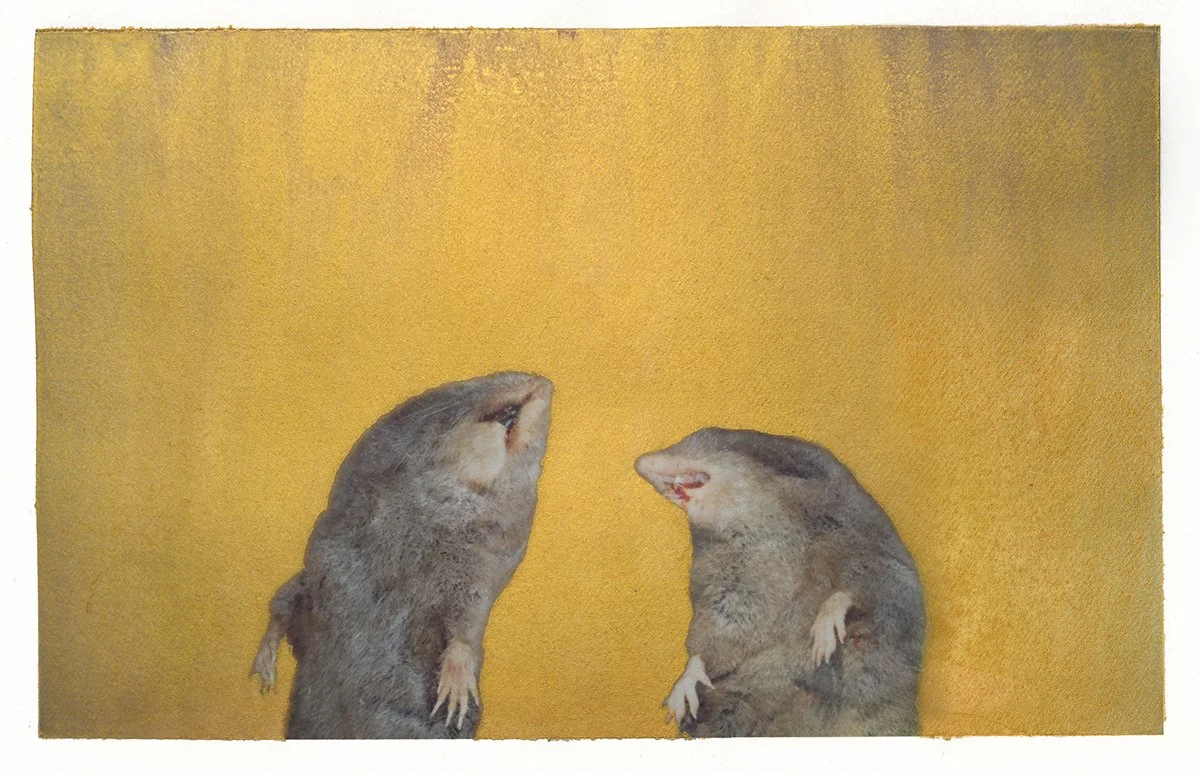
Isabella La Rocca González, Para mis campañoles from the series Ofrendas, 2023, 11” X 7.5”, archival pigment and watercolor on hot press cotton paper
ML: In Ofrendas, you engage directly with animals killed by human systems. Can you talk about the emotional and ethical responsibilities you feel when encountering and representing these bodies?
ILG: Science has now confirmed what philosophers, artists, and others have known for millennia: that the nonhuman animals exploited, commodified, maimed, and killed by humans are sentient beings. Like us, they feel pain, fear, joy, love, and a strong will to live according to their own needs and desires. And yet humans continue to treat them with indifference and cruelty. We remove them from their natural habitats, imprison them ruthlessly, and force them to behave in bizarre and distressing ways for our entertainment. We inflict sadistic and unnecessary experiments on them. We flay them for clothing. We breed, confine, and slaughter them by the billions every year in barbaric conditions for food, even though doing so causes insidious and costly human health problems, creates economic inequality, and is a major contributor to our current environmental crisis. Human disregard for, exploitation, commodification, and slaughter of nonhuman animals is an atrocity of colossal proportions. I am fiercely compelled to work toward ending this atrocity. My images of animals left for dead on the road in some small way represent the trillions of nonhuman animals that humans victimize every year.
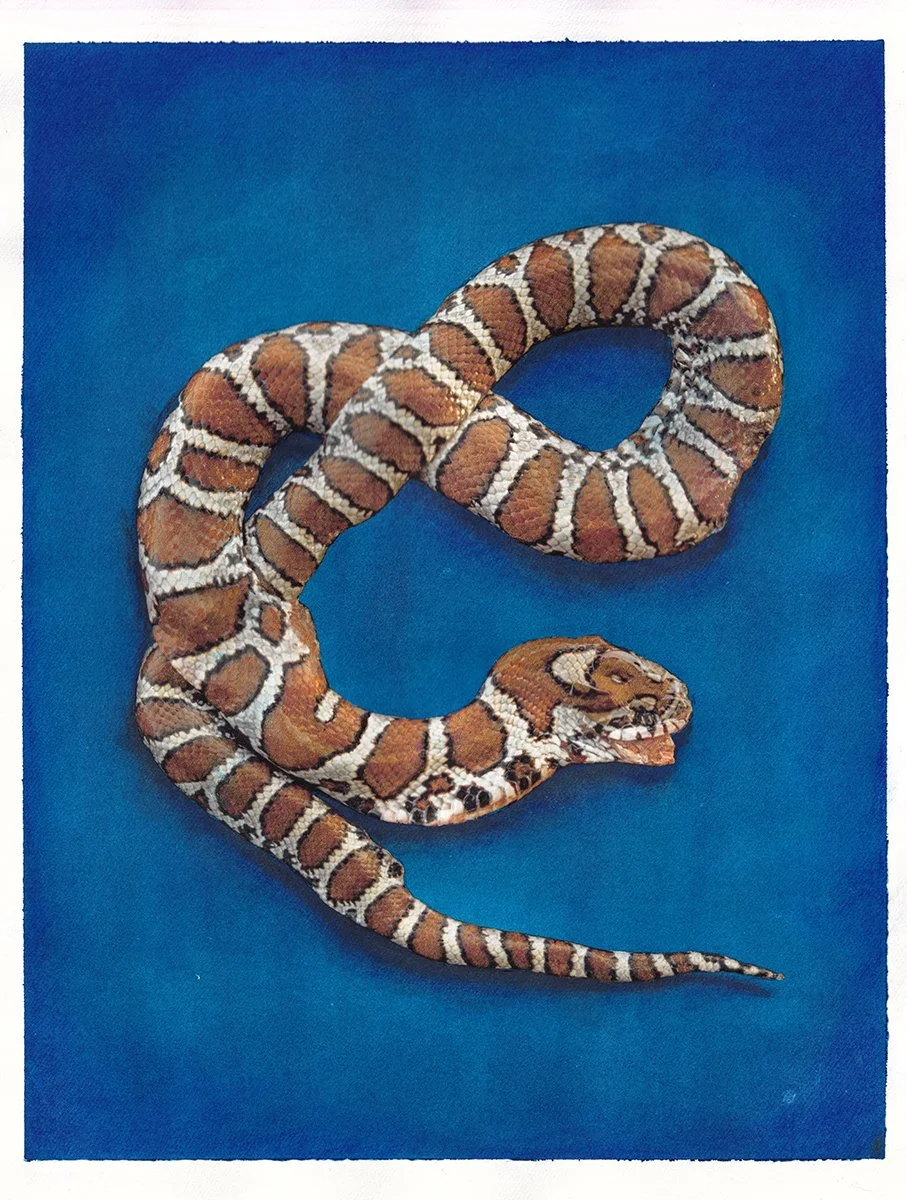
Isabella La Rocca González, Para mi vibora from the series Ofrendas, 2023, 11” X 15”, archival pigment, pastel, and watercolor on hot press cotton paper
ML: Your materials in Ofrendas are intentionally non-toxic and free of animal products. How do material choices function as an extension of your ethical framework?
ILG: In alignment with my commitment to do the least harm, I choose the most environmentally safe materials possible, both for my own work and at the schools where I’ve taught. When working with analog photography, I’ve used static washes and installed silver recovery systems. When working digitally, I’ve chosen papers made from rapidly renewable resources such as bamboo, and I recycle inkjet papers and ink cartridges.
The naked truth is that much of the materials used in making art are environmentally destructive. Until now, I’ve balanced this with practicing what I consider to be a worthy vocation. However, I continue to struggle with this dilemma and to seek out non-toxic products.
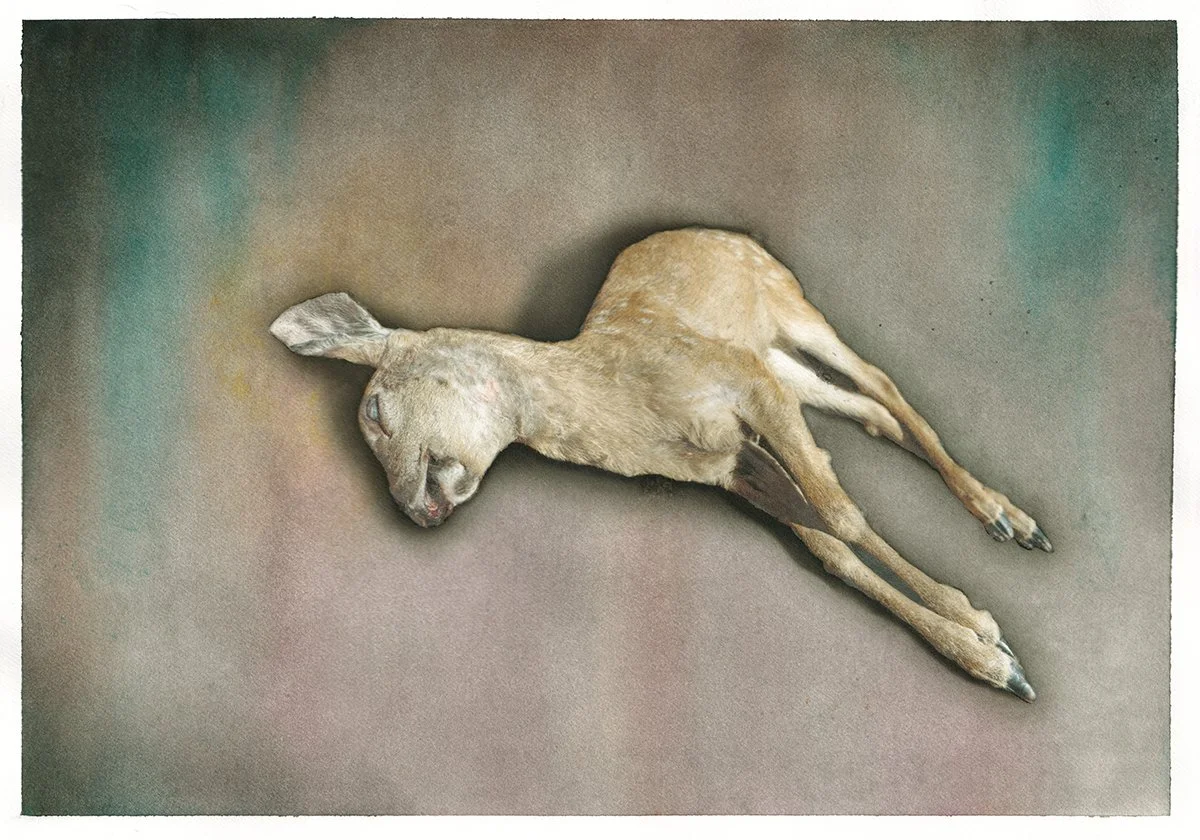
Isabella La Rocca González, Para mi venadito from the series Ofrendas, 2022, 15” X 11”, archival pigment and watercolor on hot press cotton paper
ML: In your statement for Ofrendas you mention walking daily along a creek near your home. How does this routine movement through a specific place shape your attention, your encounters, and your images?
ILG: When walking near my home, I’ve become acutely aware of the pathos and delight of occurrences in my environment that might otherwise go unremarked, subtle changes throughout the seasons and more dramatic and often harmful human interventions. Among the tragedies I’ve observed are the animals left dead along the road, mostly killed by cars, but also by hunters, fishermen, and sometimes out of sheer cruelty. In accordance with the Mexican ritual of making offerings to the dead, Ofrendas is my way of mourning and memorializing these animals in a lovelier context.
I’ve also learned to identify local plant-life, and have been growing a native pollinator garden. Native plants are beautiful, biodiverse, and resilient. Watering, herbicides, pesticides, and fertilizers are unnecessary. Natives are super beneficial to the local ecology, including beleaguered pollinators and wildlife. In my series Native, I juxtaposed photographs of native flowering plants with photographs of lawns, which are ubiquitous in our landscapes. Lawns consist of invasive grasses that require watering, fertilizers, mowing, and expensive maintenance. Pollinators and wildlife are treated as enemies. Lawns are a colonialist practice that has decimated the polycultural ecosystem that existed in the precolonial Americas and is directly connected to the ethnocide of Indigenous people.
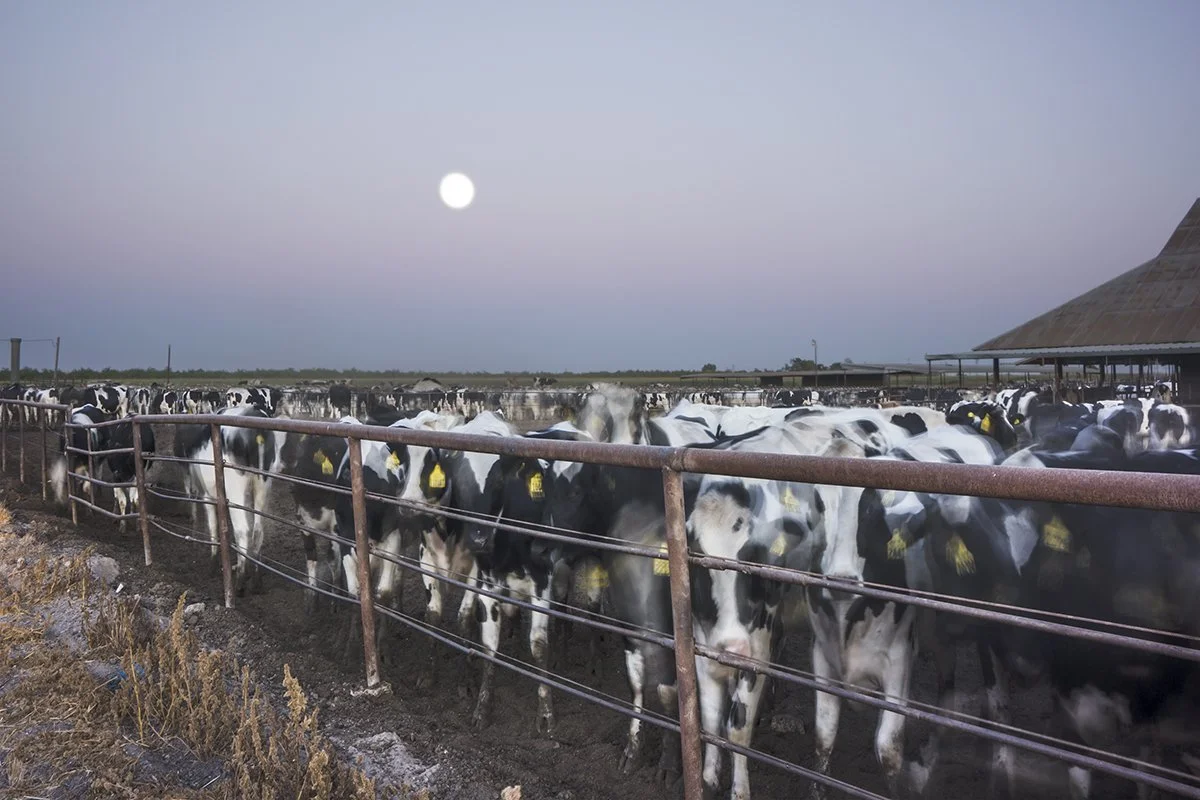
Isabella La Rocca González, Night of the Supermoon Dairy Farm—550 Cows from Censored Landscapes, 2014, 28” X 20”, archival pigment print
ML: How do you navigate the tension between witnessing violence and avoiding further harm or exploitation in your work?
ILG: I have enormous admiration, appreciation, and respect for photographers and activists who infiltrate animal agricultural facilities to expose the heinous practices and conditions there. Their work has been essential in raising awareness that helps bring about changes in individual behavior and in policy. However, Censored Landscapes does not focus on the kind of graphic depictions of cruelty and suffering found all over the Internet, of men beating turkeys with iron rods or slamming piglets onto a concrete floor, of chickens trampled in crowded sheds or grown so large they are unable to walk. As Susan Sontag described in Regarding the Pain of Others(2), viewers can become desensitized and avoid images of suffering altogether. And these images risk affirming an understanding of farmed animals as objects whose only purpose is their use to humans.
Photographic portraiture is based on an array of conventions that have developed over thousands of years. A portrait functions to bestow dignity, memorialize the sitter, and evoke emotional connection. Portraits of nonhuman animals depict living, breathing, sentient beings and encourage a feeling of kinship and shared vulnerability. Facts, stories, and poems about the humans and animals caught in the animal agricultural machine inspire not just sudden trauma and momentary guilt but slow realization that supports fundamental change.
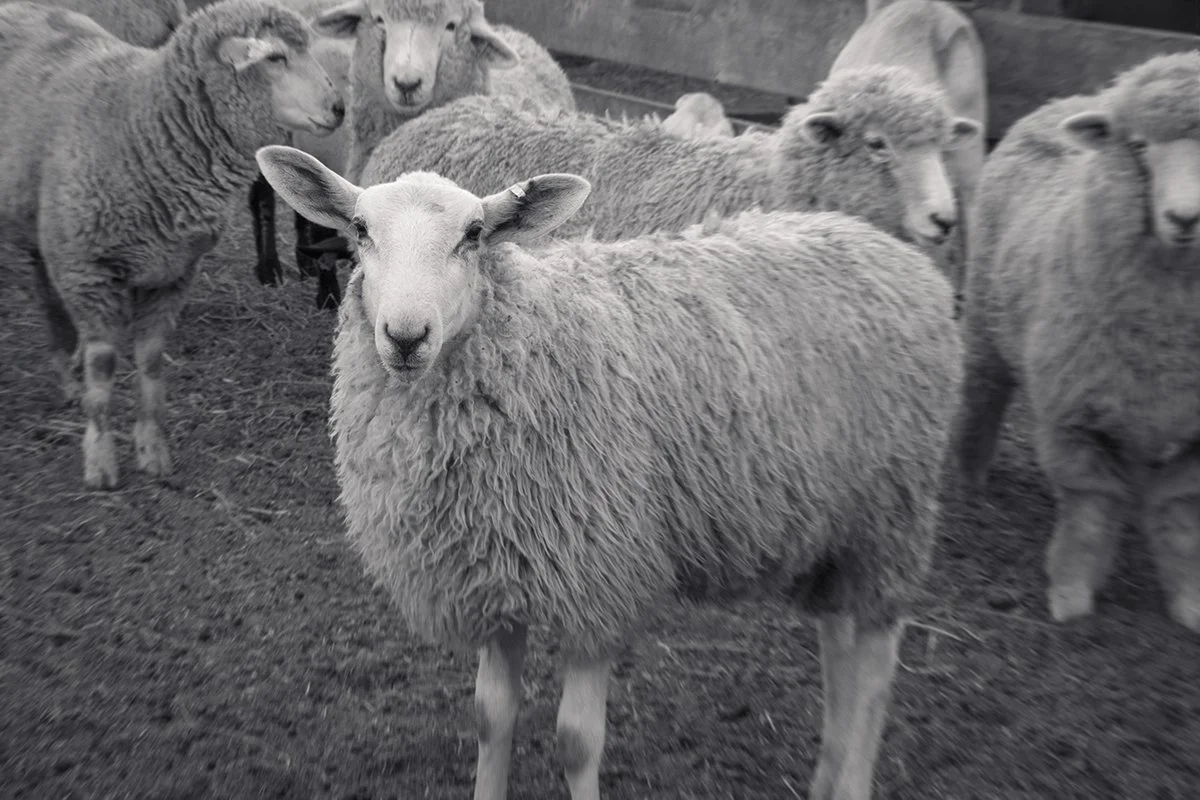
Isabella La Rocca González, Sheep – Livestock Auction from Censored Landscapes, 2015, 19” X 13”, archival pigment print
ML: Censored Landscapes connects ecological destruction, labor exploitation, and corporate power. How do you approach visualizing systems that are intentionally hidden or obscured?
ILG: The project began with landscape photographs of facilities where farmed animals are bred, confined, and slaughtered. To fully communicate the significance of these images, I felt compelled to situate the banal structures and fenced in wastelands pictured there within the systems that support them. To illustrate the magnitude of suffering caused by the industry, I researched the number of animals imprisoned in each facility and I displayed the number with each landscape. Photographic portraits of animals who have been confined in such facilities individualize the vast number of animals whose identity, beauty, sentience, emotions, and existence are obliterated. I also included meticulously documented research regarding standard industry practices, as well as environmental, human health, and economic impacts. I personalized my exploration with my own stories and creative nonfiction along with contributions from poets, scholars, and activists. The text also illuminates the intricate web of connections between animal agriculture, animal suffering, worker exploitation, political structures, colonialism, and the most pressing issues of our time.
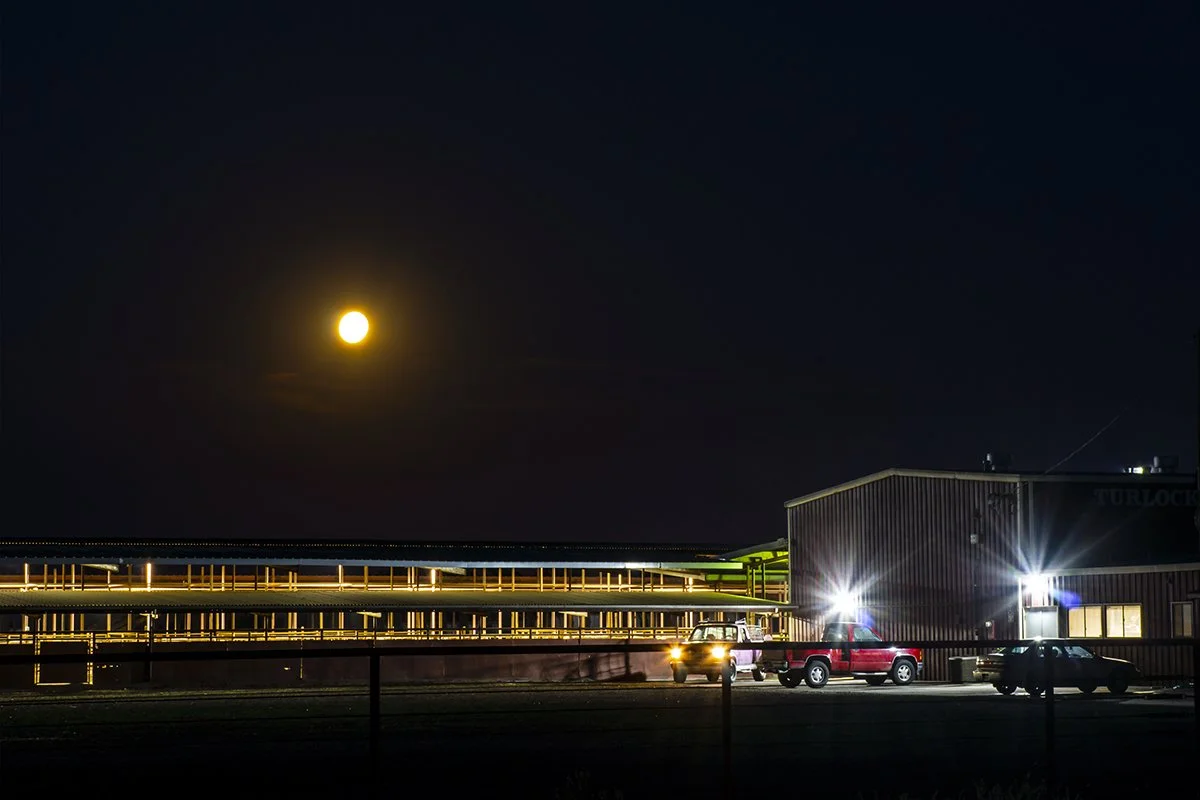
Isabella La Rocca González, Night of the Full Moon Livestock Auction—150,000 Cows/Year from Censored Landscapes, 2015, 28” X 20”, archival pigment print
ML: You write about the absence of farmed animals in the history of landscape photography. What does it mean to you to reinsert these lives into that visual tradition?
“Approximately ten billion land animals in the United States are slaughtered every year. The absence of farmed animals from landscape photography reflects their exclusion from environmental activism even though animal agriculture is a leading cause of climate change, deforestation, ocean acidification, habitat destruction, loss of biodiversity, and mass species extinction. ”
ILG: A photograph is a love song to the ecological implications of the landscape contained inside its frame. American landscape photography evolved in conjunction with the conservationist and environmental movement. Carleton Watkins hauled thousands of pounds of photographic equipment through Yosemite. His photographs influenced Abraham Lincoln to sign a bill that protected Yosemite Valley. William Henry Jackson’s photographs persuaded Ulysses S. Grant to designate Yellowstone as a national park. Ansel Adams’ work inspired Congress to establish Kings Canyon National Park. In 1975, the New Topographics: Photographs of a Man-Altered Landscape(3)exhibition depicted a stark view of human impacts on the land.
But the tale told in photographic history books illustrates that American landscape photography is one of human exceptionalism. Though humans are now integral to landscape photography, farmed animals have almost entirely been excluded, despite their prodigious numbers. Terrestrial farmed animals account for 59 percent of vertebrates on earth, humans 36 percent, all other terrestrial animals only 5 percent. Approximately ten billion land animals in the United States are slaughtered every year. The absence of farmed animals from landscape photography reflects their exclusion from environmental activism even though animal agriculture is a leading cause of climate change, deforestation, ocean acidification, habitat destruction, loss of biodiversity, and mass species extinction.
This I know to be true: environmentalism and social justice must include the other animals who share our planet.
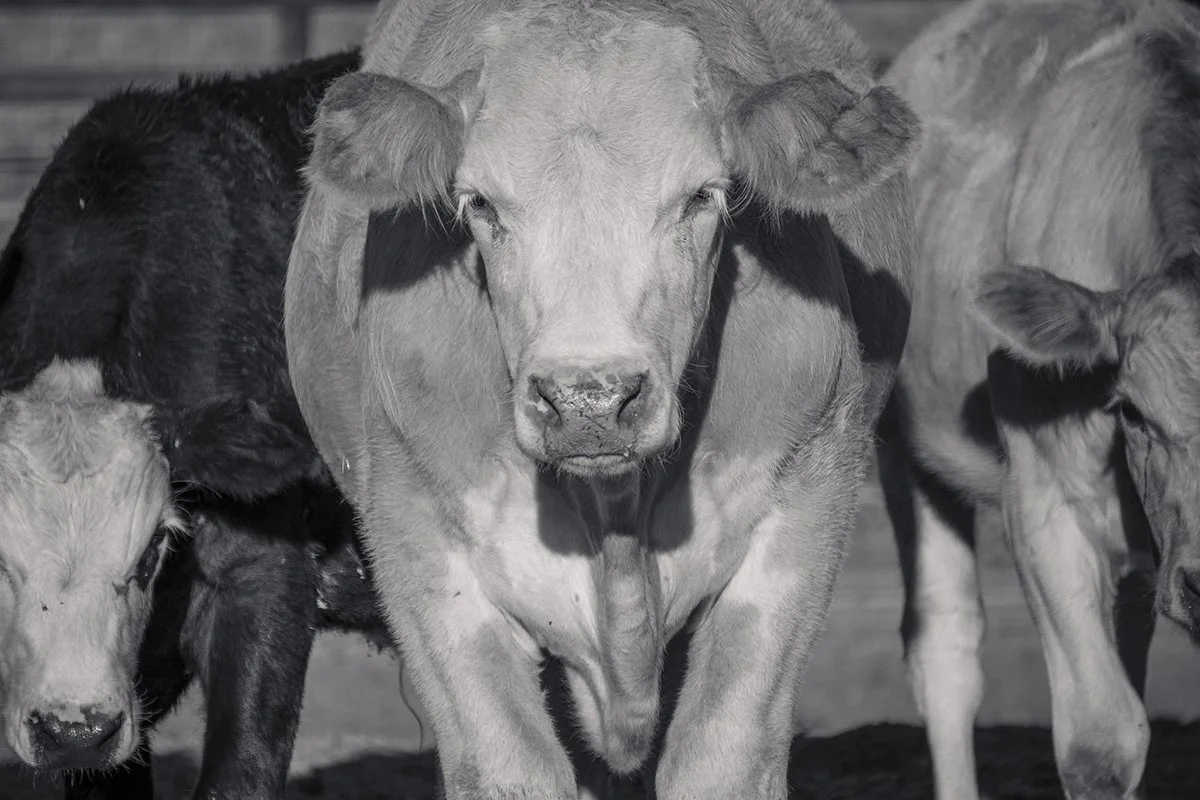
Isabella La Rocca González, Golden—Grass-Fed Beef Ranch from Censored Landscapes, 2014, 19” X 13”, archival pigment print
ML: Censored Landscapes incorporates text including facts, stories, essays, poems alongside images. How do you think about the relationship between visual and textual knowledge in this work?
ILG: As I began conceptualizing this project, I immediately envisioned it as a book. A book is the supreme structure for integrating image and text. It’s a compact, portable, lasting compendium of information, knowledge, ideas, and history that never needs to be plugged in or recharged. Books are fundamental to our collective intelligence. There is something intimate and personal about a book, though it’s likely experienced alone and often contains objective truths. You hold it close, in your lap or in your hands. A book takes you on a journey, but can be experienced in any order—backwards, forwards, starting or ending on any page. You can come back to it again and again, and each time may bring new insight. A picture book engages multiple layers of thought and perception. Picture books are humbly aesthetic objects that, with few exceptions, anyone can own. Books are not mere consumer products; libraries are full of books for free. The gift of a book conveys values with grace and authority to people you love and to those you don’t necessarily agree with.
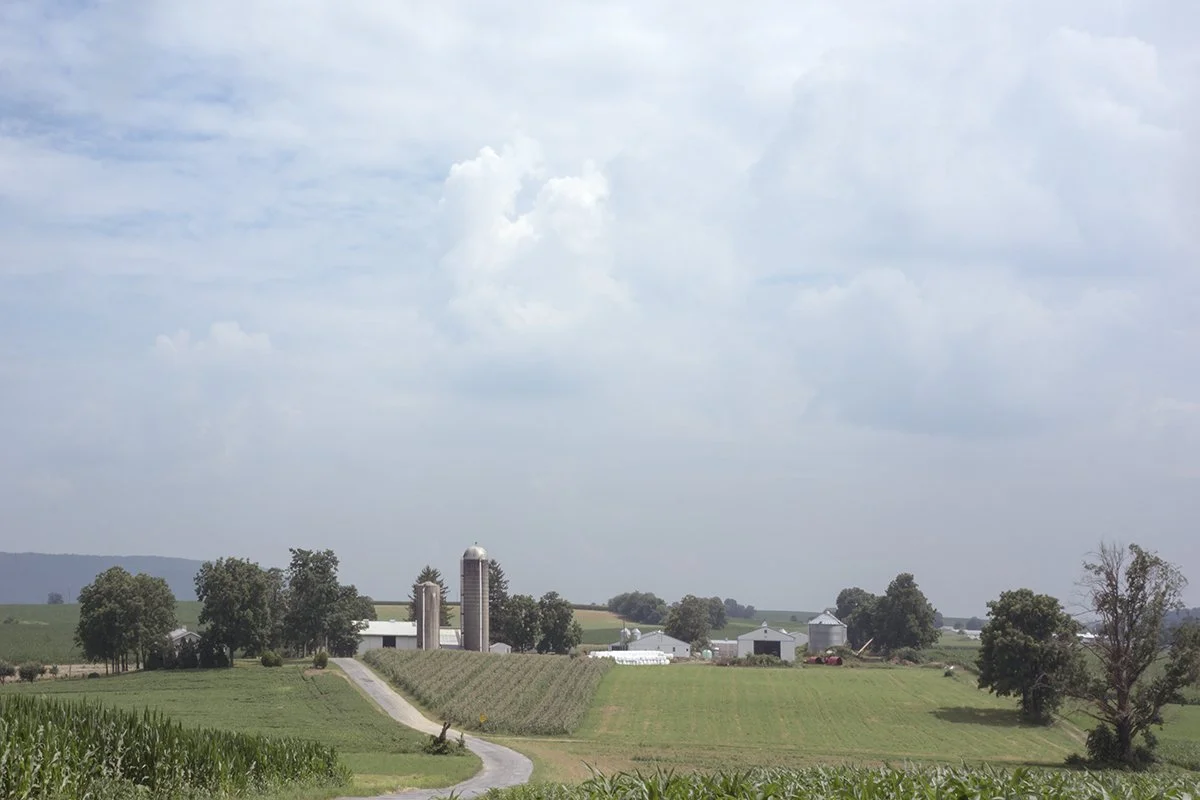
Isabella La Rocca González, Pig Farm—8,000 Pigs from Censored Landscapes, 2016, 28” X 20” archival pigment print
ML: Given the legal and political risks around documenting animal agriculture, how has access, or lack of access, shaped the form of this project?
“Those who breed, confine, and slaughter animals conceal their enterprise aggressively. They’ve attempted to pass “ag-gag” laws that criminalize photographing sites of animal agriculture in more than half of US state legislatures. Even though ag gag laws are in violation of the First Amendment of the US Constitution, they are currently in effect in six states. ”
ILG: Scary things can happen to a woman with expensive photographic gear in remote locations, especially when she is alone. The threat comes not only from thieves. Those who breed, confine, and slaughter animals conceal their enterprise aggressively. They’ve attempted to pass “ag-gag” laws that criminalize photographing sites of animal agriculture in more than half of US state legislatures. Even though ag gag laws are in violation of the First Amendment of the US Constitution, they are currently in effect in six states. The Animal Enterprise Terrorism Act is a federal law that criminalizes economic damage to an animal enterprise, including loss of profits. Photographers and journalists who expose the practices of these corporations can be lumped into the same category as Timothy McVeigh and the Unabomber.
I did not break laws in order to make the photographs in this project. However, I was not welcome and I was threatened, verbally assaulted, and chased. In most of the jurisdictions where these facilities are located, law enforcement is always on the side of the livestock operators no matter who is right. I learned early not to make the trips on my own. My friendships with the women who accompanied me deepened and grew richer. Our encounters with the men employed by the industry and the associated anxiety, frustration, fear, outrage, and flight became part of the stories that personalized the cold reality of a heartless business whose sole objective is profit.
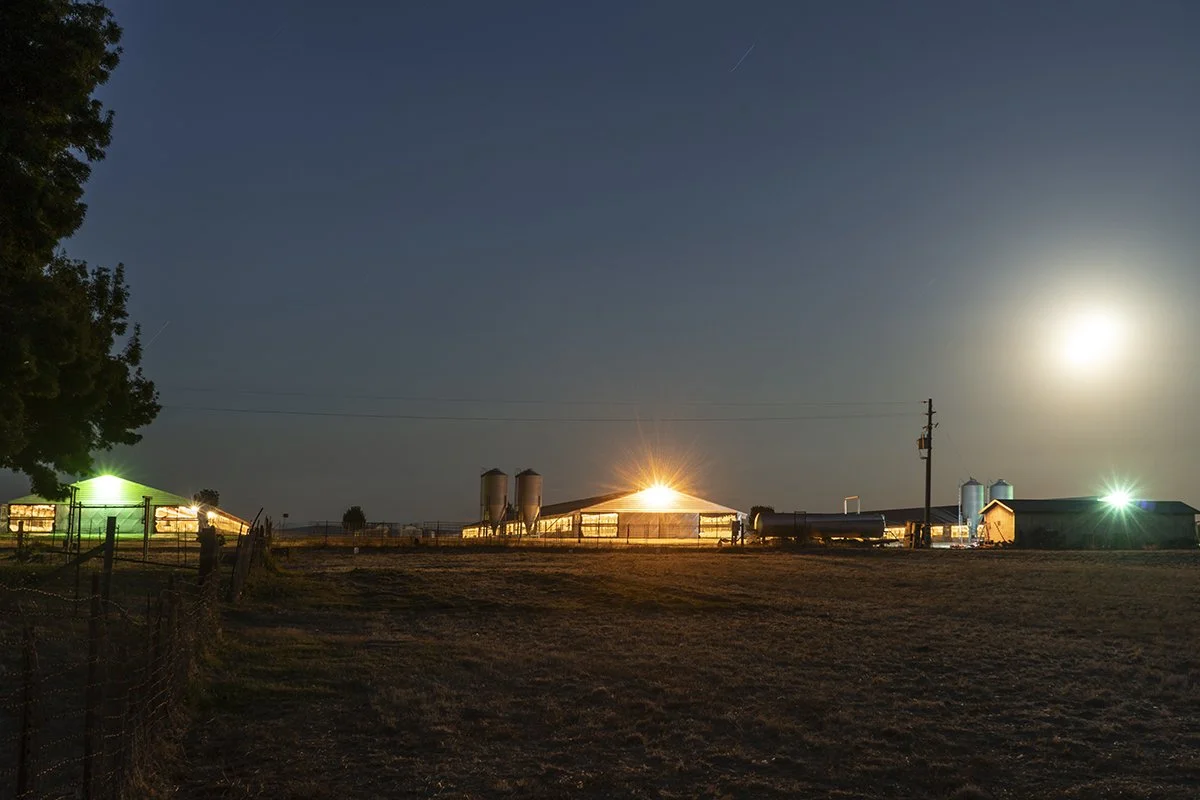
Isabella La Rocca González, Turkey Farm—37,666 Turkeys from Censored Landscapes, 2014, 28” X 20”, archival pigment print
ML: You emphasize that your intention is not to expose individuals but to implicate systems. How do you balance accountability with compassion in this framing?
ILG: Corporations evade responsibility by reducing their failures to isolated events by rogue “bad apples.” But incidents of cruelty in the animal agricultural industry are most often committed by workers who are themselves victims of a crushing machine. Workers in the animal slaughtering and processing industry are mostly from rural communities, without resources for higher education, short of opportunity, and poorly paid. More than half are people of color and over 40 percent are immigrants. Workers in the US meat industry do not receive proper safety training and disproportionately lack health insurance. They suffer an estimated three times as many serious injuries as the average American worker, including repetitive stress injuries, fractures, burns, head trauma, and amputations. Respiratory disorders are rampant. The rate of injuries and illness is likely higher than estimated; many workers refrain from reporting for fear of retribution. Employers may also underreport to avoid higher costs.
Subverting bad apple tactics is a way of holding corporations accountable. Scrubbing away fictions about wholesome products that promote convenience and health exposes mass intensive confinement; painful bodily mutilations such as debeaking, branding, and castration with no anesthetic; the revolting processes of artificial insemination; and merciless and gruesome slaughter. Scrutinizing nostalgia-infused images of contented animals grazing in pastoral landscapes unmasks marketing propaganda meant to bamboozle consumers. The enterprise is buttressed by lobbyists and government subsidies, gargantuan pay gaps between CEOs and workers, and a revolving door between industry magnates and government. Business as usual means environmental devastation and mercenary disregard for life and the natural world.
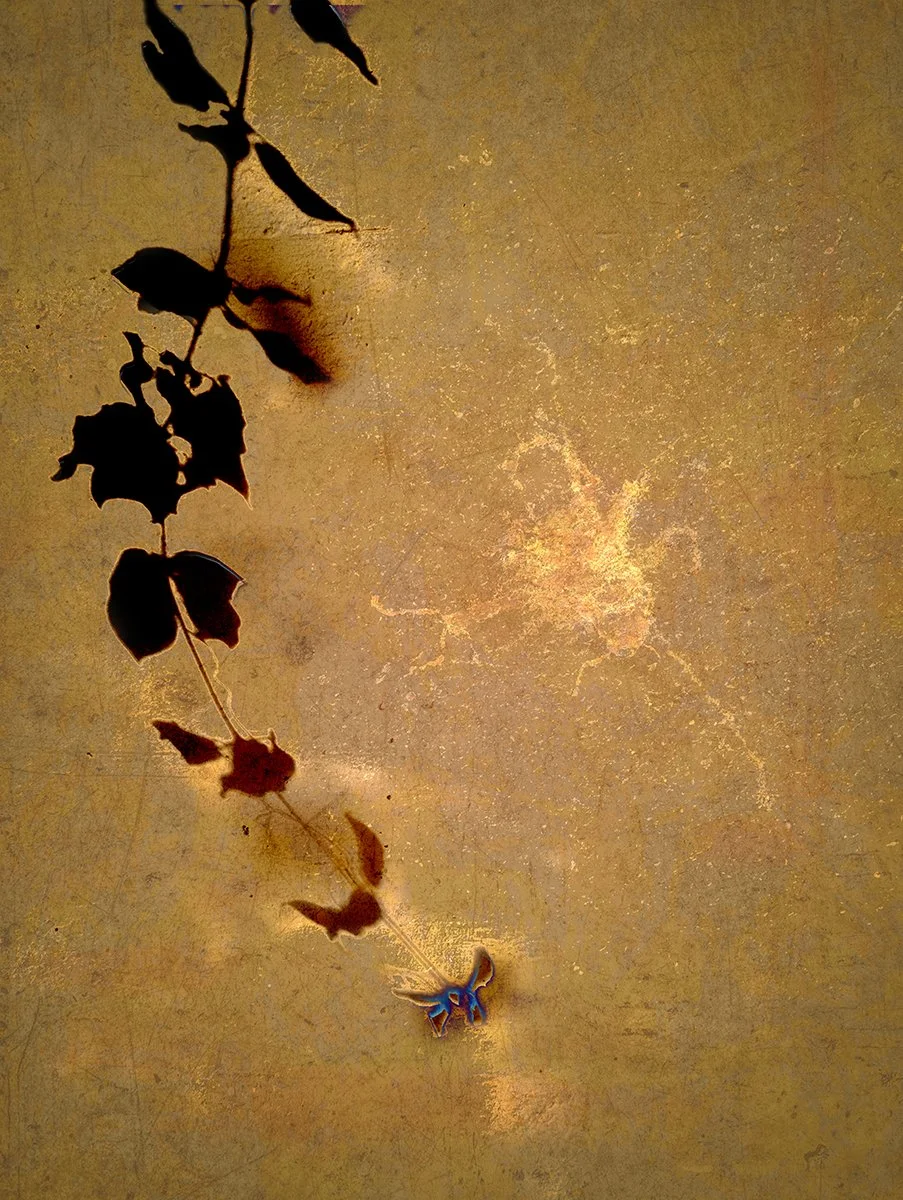
Isabella La Rocca González, Untitled 5 from the series echoes and whispers, 2026, 11.7” X 16.5”, archival pigment print on Washi bamboo paper
ML: In echos and whispers, you move toward abstraction and nonhuman perception. What prompted that shift?
ILG: Many of my conversations with friends these days revolve around our outrage and furor and burnout. One friend accurately described the global shift toward plutocratic, white supremacist authoritarianism as destroying everything that is tender. Anyone who might be profiled as an immigrant can be kidnapped and imprisoned in barbaric conditions without due process for indefinite periods. The ruling elite are pouring their efforts into regressive fossil fuels first energy policies that decimate support for renewables, and accelerate climate change and mass species extinction. Pollution is deregulated and laws go unenforced. Our public lands are sold to the highest bidder. Habitats are fragmented or destroyed. Biodiversity is under attack. What does it say about humanity that we have elected a corrupt, power-crazed, flimflammer to the most influential position on the planet? I began this series as an antidote to rage and as a means of resisting despair by detaching from an anthropocentric world view.
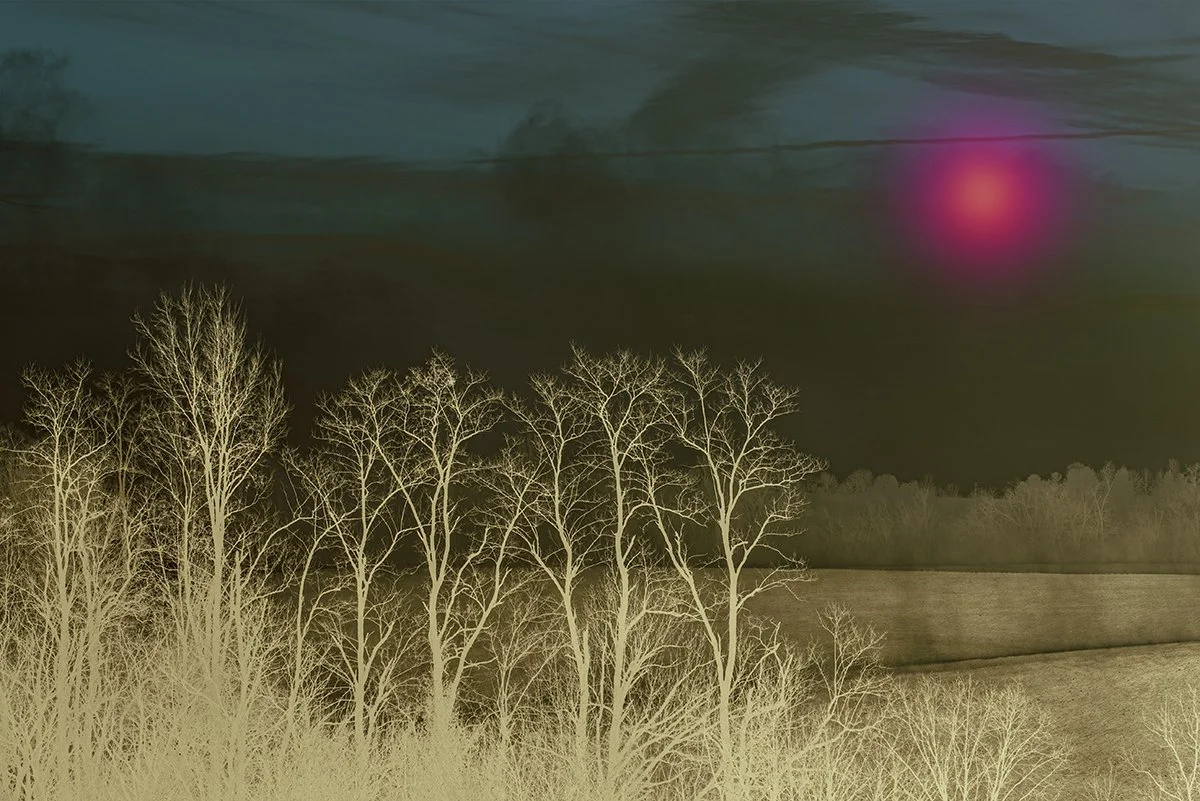
Isabella La Rocca González, Untitled 1 from the series echoes and whispers, 2025,
16.5” X 11.7”, archival pigment print on Washi bamboo paper
ML: In echos and whispers you ask what it might be like to see like a bird, bat, or fox. How do you attempt to unsettle human-centered ways of seeing through the photographic form?
ILG: Birds see more and richer colors than humans. Bats use a biological sonar system called echolocation that enables them to see with sound. They have superb night vision and are highly sensitive to movement. Foxes also detect the slightest movement in near total darkness. They can hear more acutely than humans and their ears are controlled by over a dozen muscles that pinpoint the exact direction of the sound. A fox’s sense of smell is between 10,000 and 100,000 times more sensitive than a human’s. A fox can detect pheromones in the air that are entirely unrecognized by humans. Birds, bats, foxes, and other nonhuman animals possess magneto-reception, a kind of biological compass that allows them to navigate across thousands of miles during migration with pinpoint accuracy or to locate prey.
Pictorial abstraction and shifts in color and space de-emphasize human-centered labels, categories, and icons and engage the imagination. This series is my attempt to reach beyond human perceptions and cognition with an act of almost impossible radical empathy.
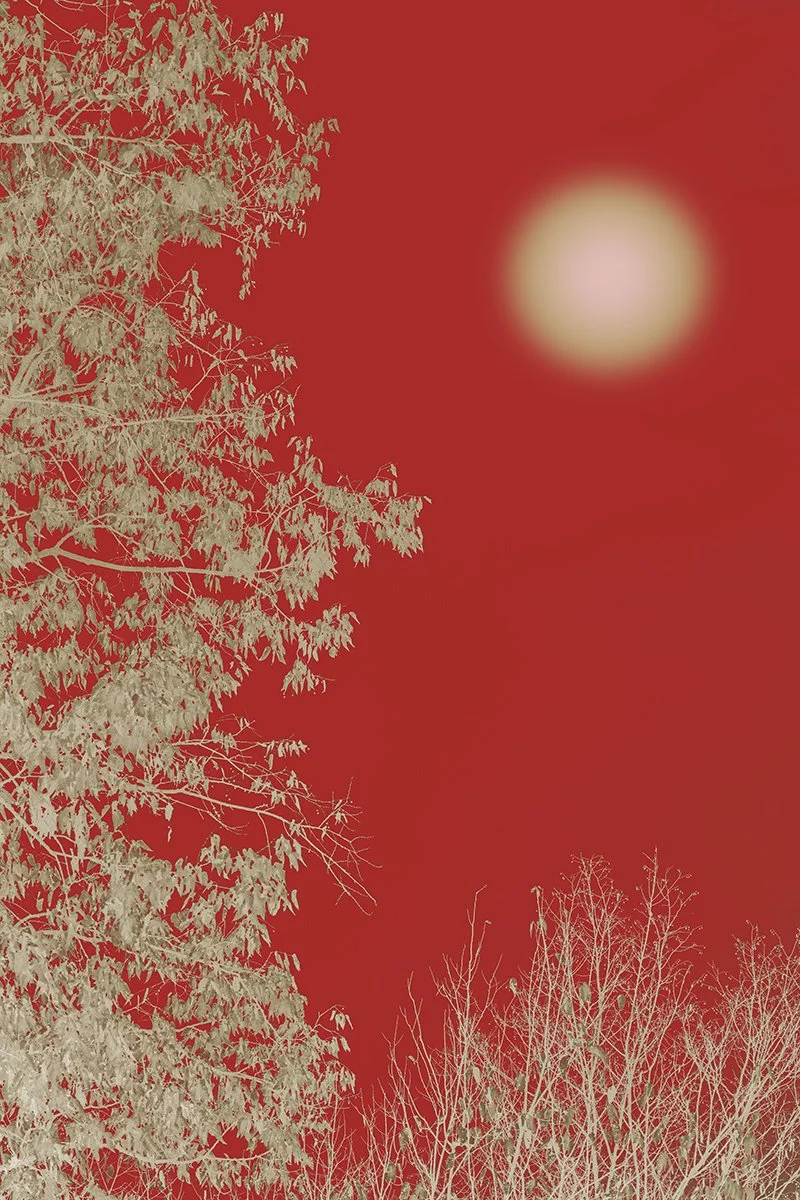
Isabella La Rocca González, Untitled 1 from the series echoes and whispers, 2025,
11.7” X 16.5”, archival pigment print on Washi bamboo paper
ML: What is holding your attention at the moment? Is there anything else you would like to share?
ILG: After thirty years of teaching art and photography on the post-secondary level, I’m fantastically able to fully pursue my art practice in all its manifestations. I have left academia, though I occasionally teach a class or workshop. Making visual art is compulsory, almost a reflex, and always ruddered by immersion in the natural world. Currently, I’m continuing to work on my series, echoes and whispers. I’m also further experimenting with mixed media, integrating my photographs with watercolor and pastel.
I’ve also been accepted to the MFA in Creative Writing program at the University of Kentucky where I will begin classes this fall. I was wrong all those years ago that writing is a solitary act. I cannot write sequestered in my own little bubble. I need connection and camaraderie with others who are tuned into a similar endeavor and sensibility.
Now, in May of 2026, dozens of native plants as well as tomatoes, peppers, basil, dill, and greens are thriving in my pollinator garden.
La Rocca González, Isabella. Censored Landscapes: The Hidden Reality of Farming Animals. New York: Lantern Publishing & Media, 2024.
Sontag, Susan. Regarding the Pain of Others. New York: Farrar, Straus and Giroux, 2003.
Jenkins, William, ed. New Topographics: Photographs of a Man-Altered Landscape. Rochester, NY: International Museum of Photography at George Eastman House, 1975.