
Meredith Davenport
Meredith Davenport (she/her) is an artist and educator living in upstate New York. She earned her MFA from Hunter College and her BFA from the Rochester Institute of Technology. Her documentary projects have appeared in National Geographic, German Geo, The New York Times Magazine, and in many other national and international publications. Davenport has received the American Aftermath grant, a Pew Fellowship, The UNICEF Child Photo of the Year, a Puffin Foundation grant, and has been invited to residencies at Yaddo, Virginia Center for the Creative Arts, Banff Centre for Arts and Creativity, Antenna Paper Machine, and Everson Museum of Art. Her work has been exhibited at the International Center of Photography and Union Docs. Her book, Theater of War, was published in 2014 by Intellect Press and is distributed by the University of Chicago Press. Her book, Membering, was published in 2022 by Antenna Paper Machine. She is an Associate Professor of Photography at the Rochester Institute of Technology.
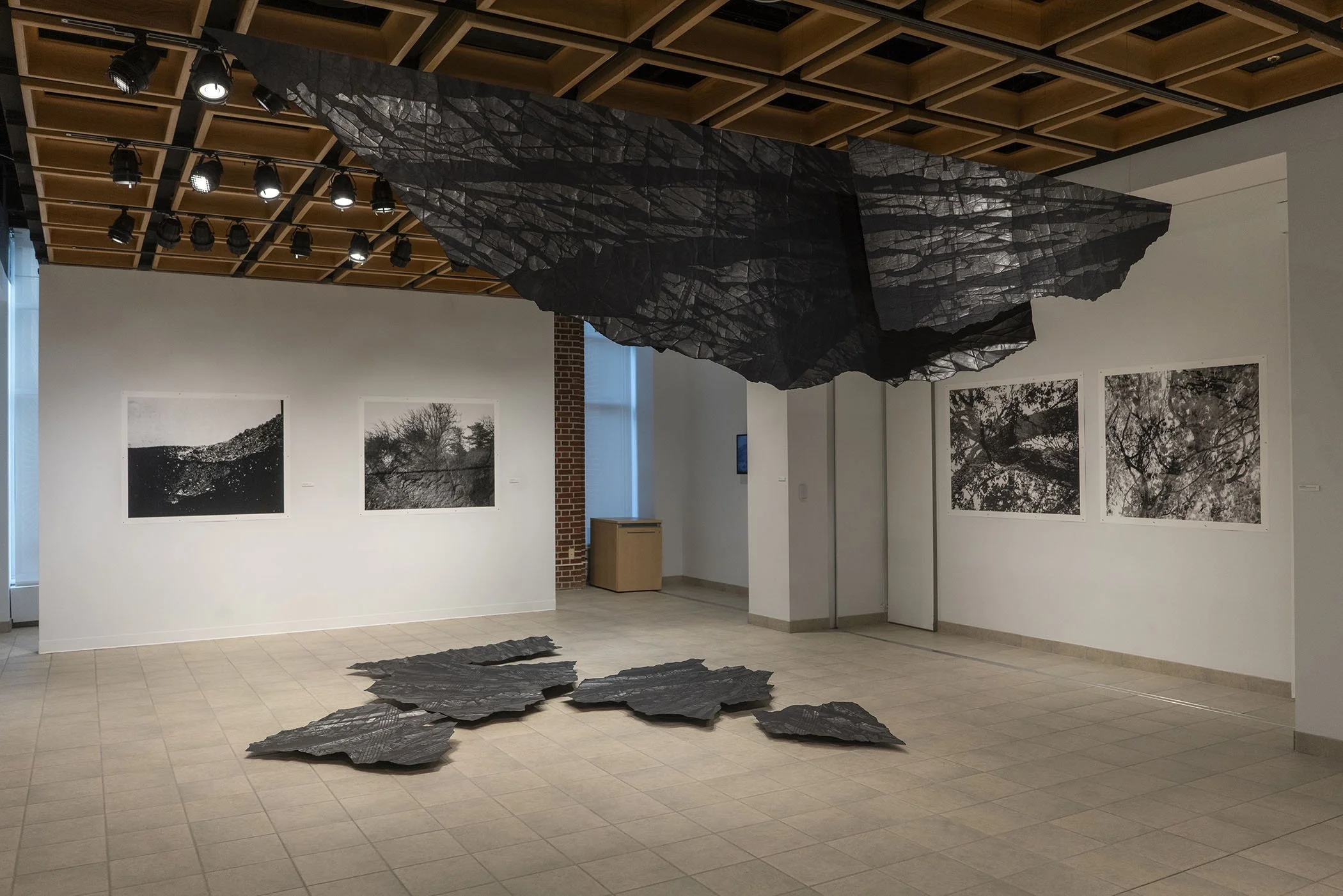
Hybrid Zones exhibition at HUB–Robeson Center Galleries at Penn State
In her current project Hybrid Zones, which is a collaboration with artist Rachel Bacon, Davenport examines the lasting environmental and bodily consequences of coal mining in Central Pennsylvania. Drawing from years of sustained observation, the project traces landscapes reshaped by both underground and open-pit extraction including slag heaps rising like artificial mountains and waterways stained orange by acid mine drainage. Using large-format analog photography coupled with the historic carbon printing process, she builds a contemporary visual response to these altered sites, where industrial residues persist in the land and in human bodies long after the mines themselves have fallen silent.
In our conversation in the early days of 2026, we delve into a few of Davenport’s recent projects as well as discuss her evolution from documentary journalist to her current creative practice.
ML: Please share some of the influences that have shaped your creative practice and how those influences show up in your work?
MD: Louise Bourgeois’ spider in Turbine Hall at the Tate Modern led me into an art practice. I had been working as a documentary photographer doing long form storytelling for magazines when I stood under the spider. The feelings and creative power I felt from that sculpture made it clear to me that I needed to move closer to that kind of creative practice. The way her internal, psychological world collided in her work and the vulnerability she shared continue to make an impact on me. Tacita Dean is another artist who I consistently hold in my thinking and in my work. Her visual poetry and grace, the passion for the medium of film, and the way she works with the language of images and drawings inspires me so much. For each project I am working on there is a stack of books by artists, poets, philosophers and fiction writers that have been touchstones for some of the ideas in the work. For the series in the exhibition “Hybrid Zones” I was initially impressed by Timothy Morton, Donna Haraway and Trevor Paglen’s ideas. The book Camera Geologica by Siobhan Angus(1) helped me to pull together thoughts I was already having around the “extractive gaze” and to deepen ideas about how my process, and how photography overall, intersects with industrial extraction. I am reading the book The Overstory by Richard Powers(2) right now, it’s so good. The structure of the novel is similar to that of a tree and the narrative intertwines the internal, emotional worlds of all of the creatures both human and non-human in the book.
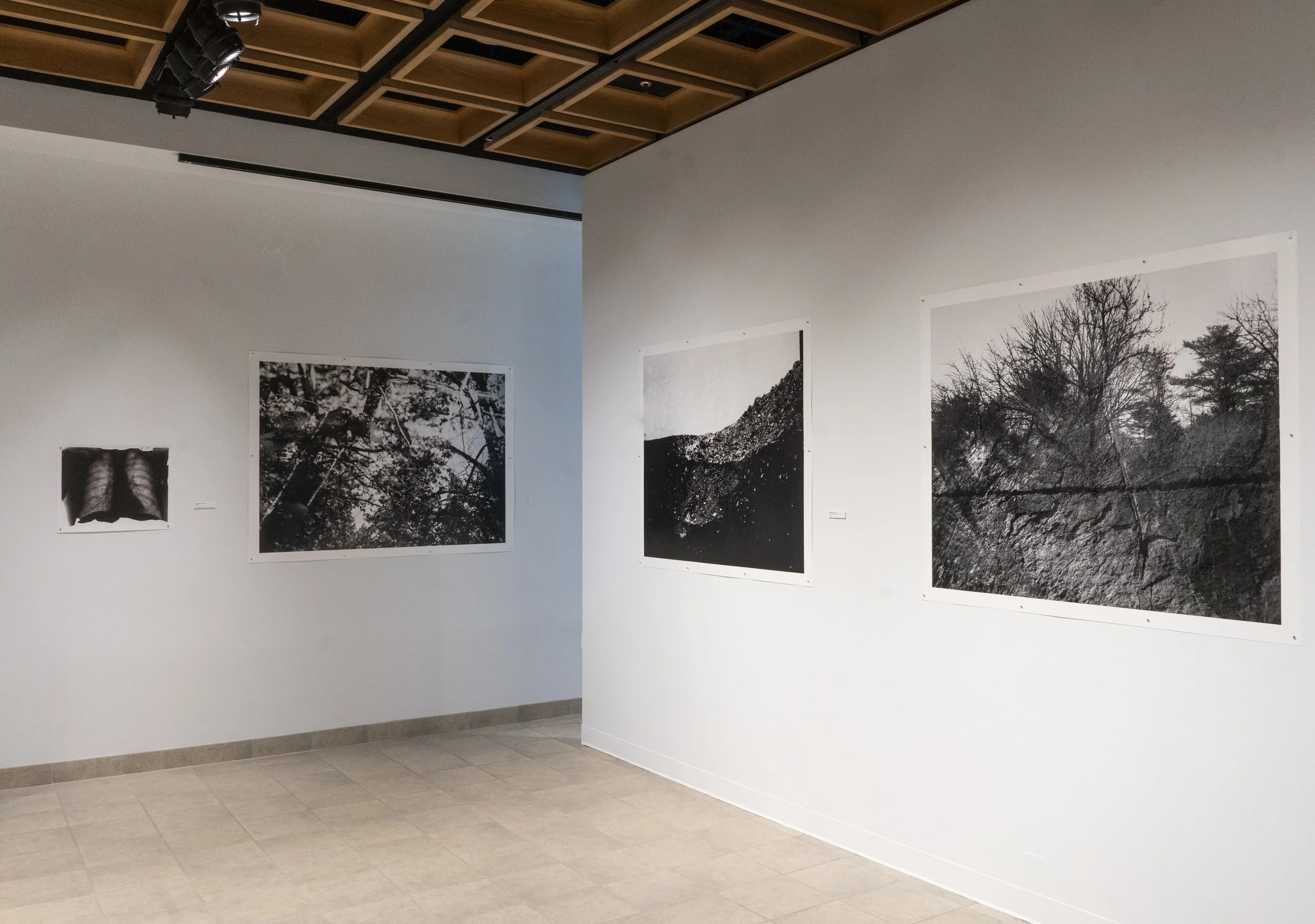
Hybrid Zones exhibition at HUB–Robeson Center Galleries at Penn State
ML: How has your education and formal training impacted your career and creative practice?
“I reached a point where I needed to explore beyond the boundaries that the news and editorial world allowed for.”
MD: As a young person I was concerned about making a living with my work. I found the camera to be a tool that connected me with worlds and places that I wouldn’t normally have access to. I went to Rochester Institute of Technology (RIT) as an undergraduate student and focused on documentary photography/photojournalism. When I graduated, I worked as a researcher in the library at Magnum photos and learned how these amazing photographers were negotiating making their work in a commercial and editorial world. I was idealistic. I wanted to tell stories that connected people - the media was different than it is now. I did that for a long time. I lived in Latin America for 7 years and worked on my own projects and for all kinds of media organizations. I didn’t want to parachute into situations, I was interested in being immersed in people’s lives and stories for long periods of time which is something I maintain. I reached a point where I needed to explore beyond the boundaries that the news and editorial world allowed for. I was also interested in a more internal journey at that point so I applied to do an MFA at Hunter College. I was looking for a program that would challenge me and Hunter immersed me into the contemporary art world where photography was just one small part of a much larger conversation. I learned to speak the language of the art world which was very different from what I knew. I appreciate the conceptual rigor and focus on theory that I gained during that time but it was hard fought and often very uncomfortable. It took me a while to recover from my MFA and build an art practice that was true to my interests and experiences and that practice feels like a work in progress.
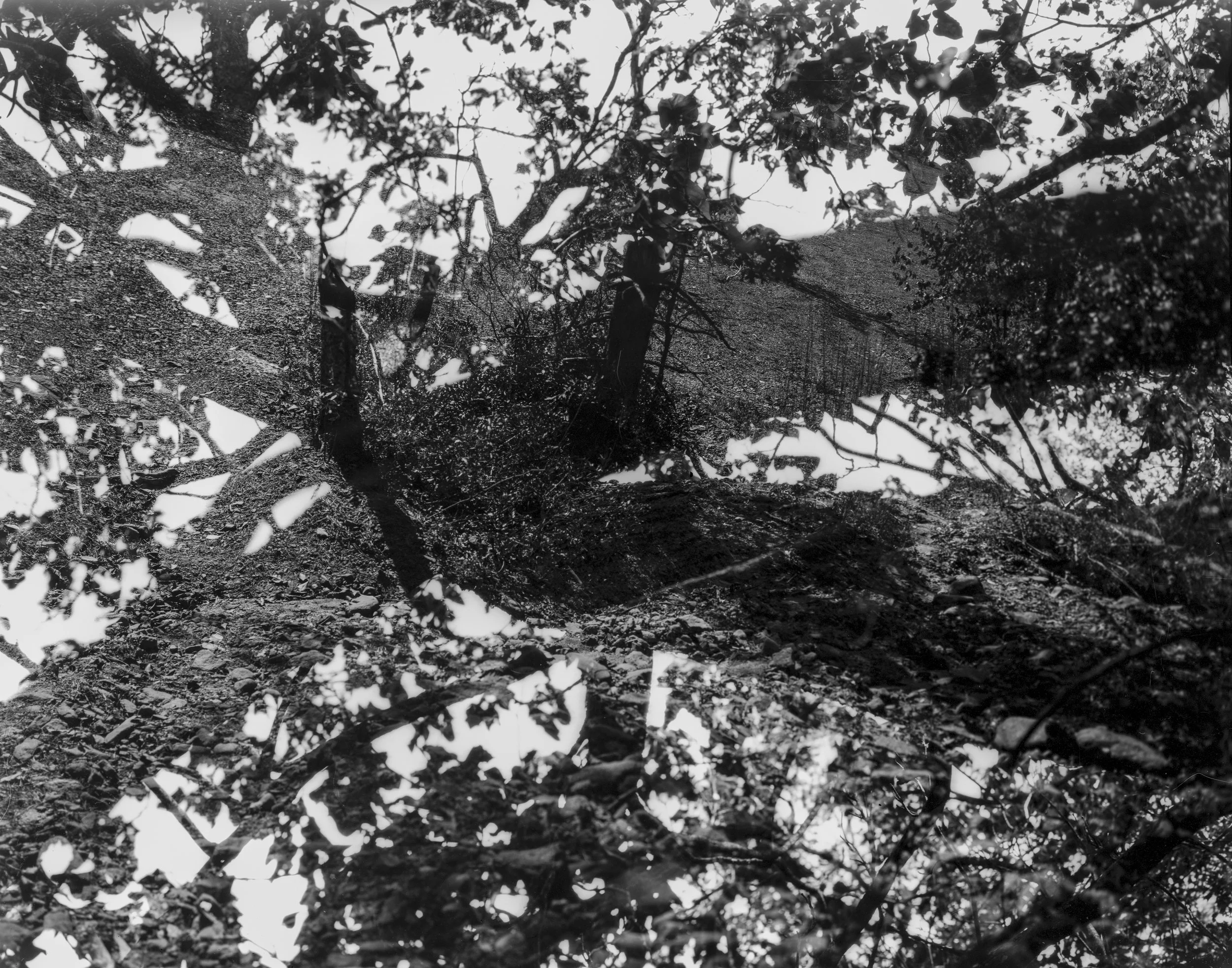
Meredith Davenport, Eventual unconsciousness, 2025, 40 x 50”, archival ink jet print
ML: What initially drew you to working with landscape as a way to talk about history, labor, and environmental impact?
MD: In 2017, I was on sabbatical from my teaching job and I participated in the Art and the Environment Residency at Banff Centre for Arts and Creativity. At that time, I was building a project about honeybees and the residency brought together artists and curators working on themes around the environment. I met two other artists there named Micha Bandini and Rachel Bacon who both lived in Europe. Micha asked us if we would like to be in a research group that looked for an answer to the question “how can artists respond to the climate crisis?” For years, we met monthly together on Skype to read on and discuss this topic. We started with Timothy Morton’s book The Hyperobject(3) but then moved into other texts and shared our work with each other. Micha eventually left the group. Rachel and I continued to work together. Rachel was interested in working on something around coal mining and had researched the anthracite areas of Pennsylvania. She had some funding to travel to those areas and I joined her.
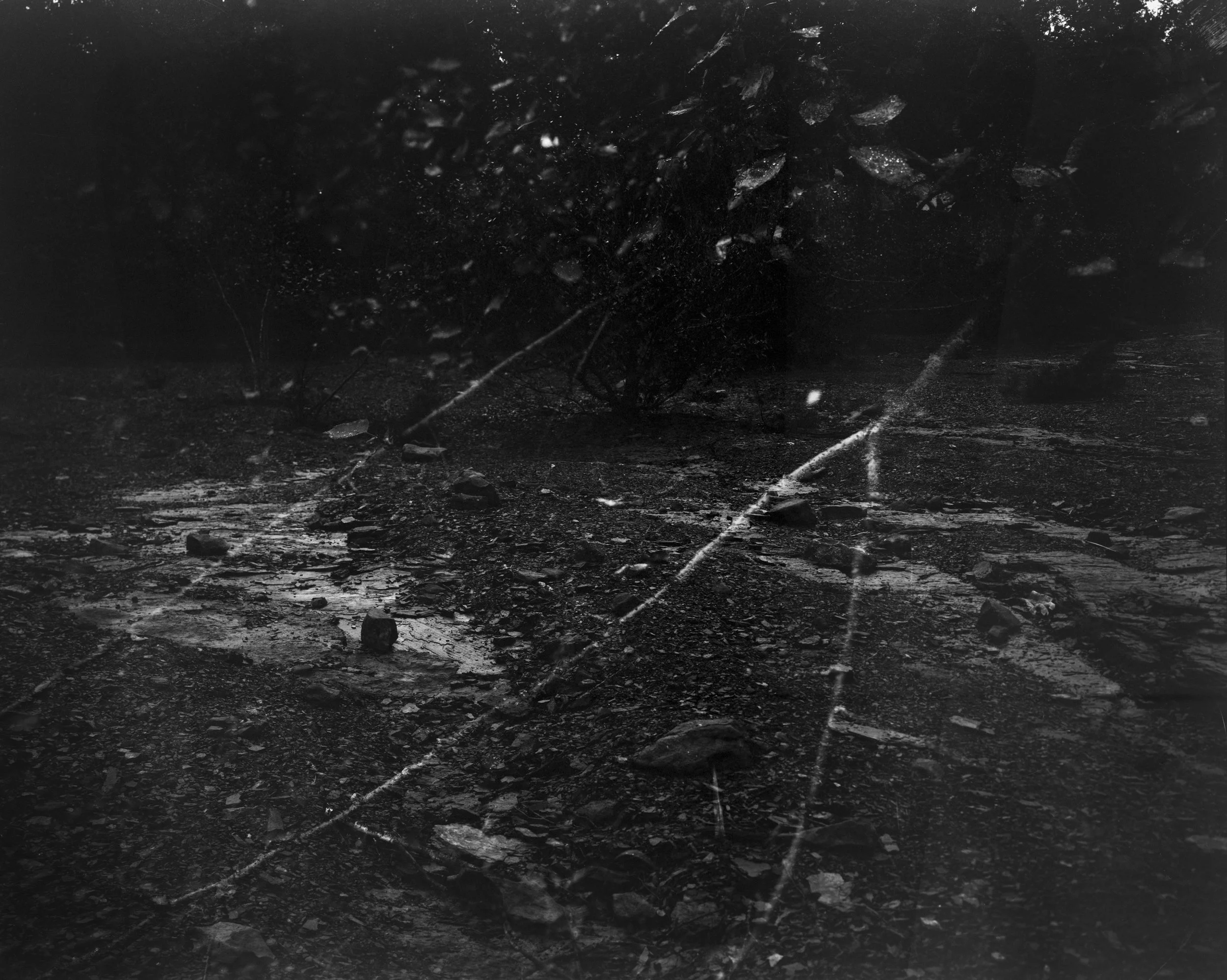
Meredith Davenport, Centralia, 2025, 40 x 50”, archival ink jet print
That led to a series of research trips over several years where we met with people in the activist, mining, and science communities to learn more about the impact of mining on this specific place. The research and conversations with Rachel on Zoom led to a residency at Soaring Gardens in Laceyville, PA and the exhibition Hybrid Zones at the HUB-Robeson Gallery at Penn State. The process was slow and challenging but the work that arose from that initial question is where I am today. Research has always been a core component to any of my work, beginning with the long form journalism I did years ago. I find information and the world we live in to be infinitely inspiring and my response to its unpredictability leads me to exciting and unexpected places.
ML: In the series Hybrid Zones, you work with historic processes like carbon printing alongside large-format analog photography. What draws you to these materials and techniques?
“I think when you are dealing with such hard ideas it is important to find a way to play”
MD: When I started visiting the open pit mines in Pennsylvania, I was struck by their sublime and dark beauty that is held by these extremely damaged ecosystems created by industrial extraction. I initially made digital photographs of those spaces as research but found them lacking as a final response. I was interested in subverting or challenging the traditional portrayals of the landscape in photographic imagery. During our research, Rachel and I visited historic archives and there were many stereographic images of these mining spaces. The images were eerily peaceful glorifications of mines and mining operations. Later I would learn the term “extractive gaze” which describes the visual language that arose from the large format cameras used by the US Geological Survey in the early 1900s. I began to bring an old Graphlex film camera that my friend Joan Lyons had given me. I quickly realized the possibility of intentionally double exposing the images which was a fun way to subvert the preciousness of the frame and the enforced one point perspective of a single image. There was the added bonus that it was fun. I think when you are dealing with such hard ideas it is important to find a way to play. Joseph Campbell spoke about the “joyful participation in the sorrows of the world”(4) and these images do that I hope.
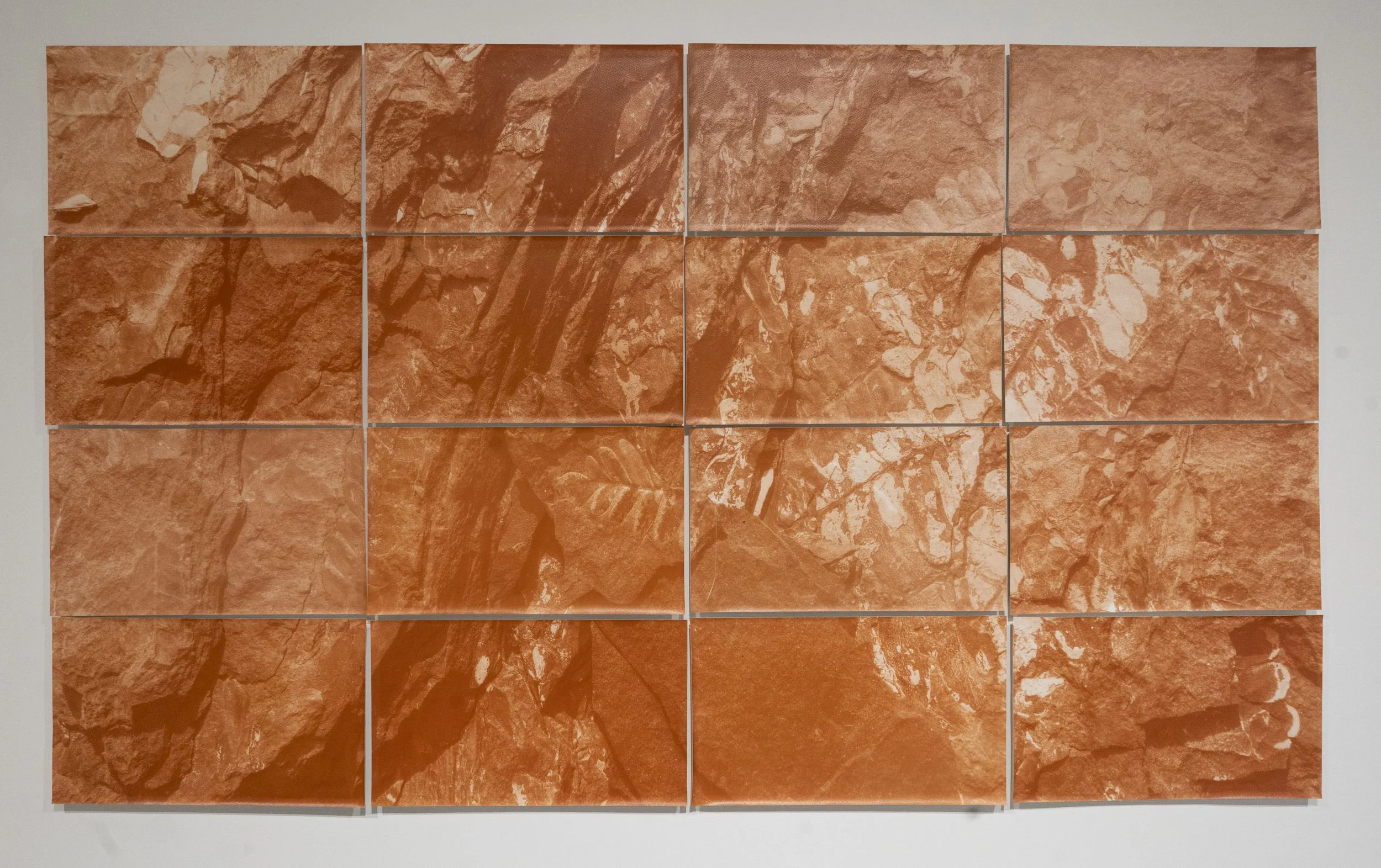
Meredith Davenport, Untitled, 2025, 50 x 60”, emulsion of acid mine drainage on cotton rag
I work primarily with x-ray film because it is cheap, double sided and not sensitive to red light so I can develop by inspection. It has a very low ISO which means the exposures are long and hard to completely control which I love. The connections between the use of x-ray film related to the body is also interesting to me. I had been experimenting with carbon printing for another project and wanted to find a way to apply the process of carbon to the exploration of the impact of this material socially, historically and politically. The tension between the carbon process which requires enormous amounts of control with these completely random double exposures mirrors the tensions between control and enmeshment that we are having in our conversations about the climate crisis.
ML: How does the physicality and slowness of analog and historical processes affect the meaning of your images?
“It’s important to me that the labor in these landscapes is considered because so many bodies were sacrificed to these mining sites that fueled the industrial revolution.”
MD: It’s important to me that the labor in these landscapes is considered because so many bodies, both human and non-human, were sacrificed to these mining sites that fueled the industrial revolution. I believe that suffering is ongoing because the people living in the mining communities carry the inheritance of the physical, socio-economic, and psychological impacts of mining. It feels weirdly fitting that the processes I am using are slow and unique to the materials I am working with. There is a lot of failure built into the double exposures because I don’t know what I am exposing on top of. That is intentional. I like the slow, unpredictability of this way of working. Anyone who has done any carbon printing can tell you that failure is inevitable on the path to a decent print. The carbon process allows me to use pigments and materials from the landscapes I am working in. The process uses organic material like gelatin and India ink combined with one toxic chemical Potassium Dichromate which is easily neutralized by vitamin C. Because there is only one chemical used in the preparation of the image, carbon prints are some of the most stable and archival images in analog photography. This mirrors the stability of the carbon molecule itself.
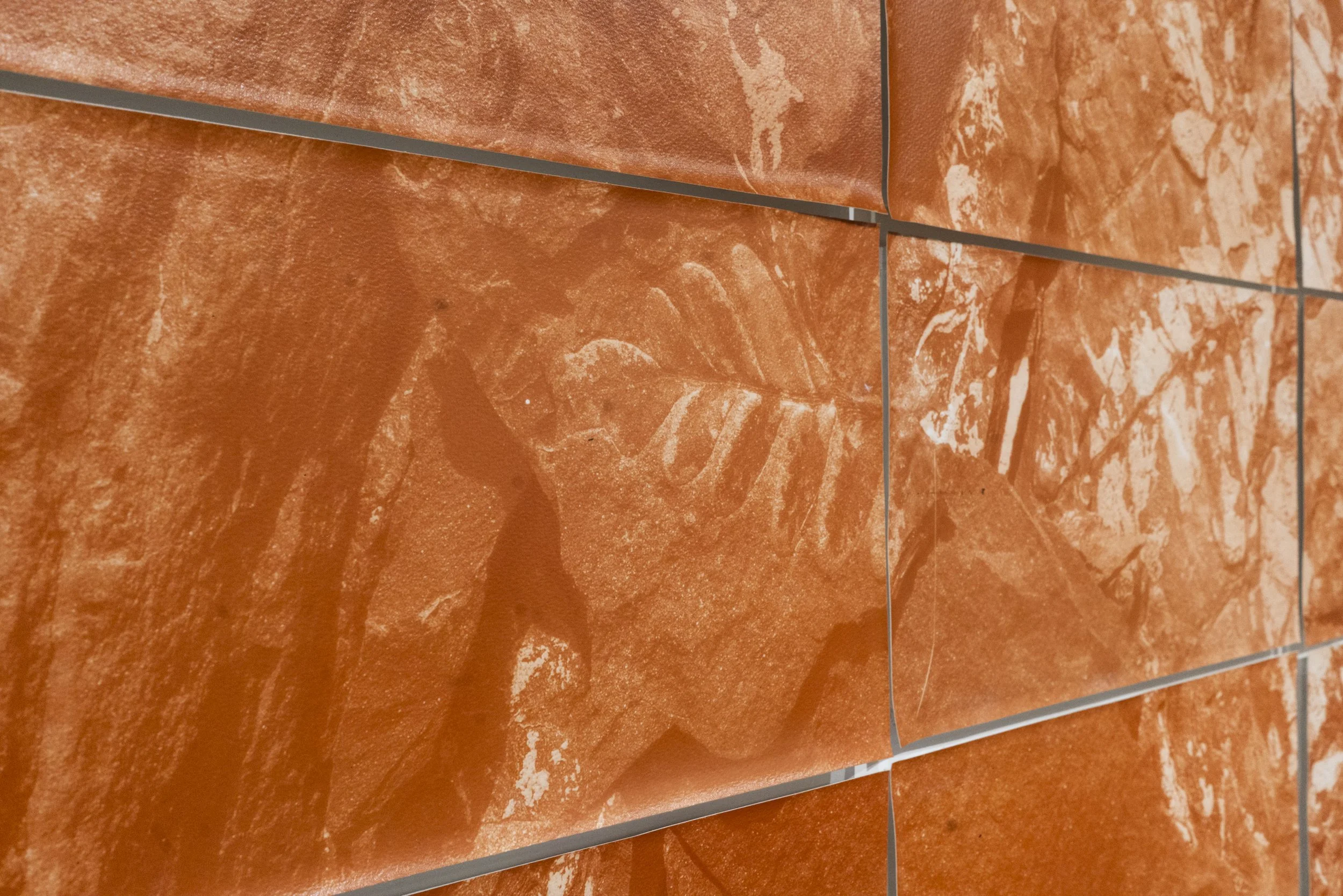
Meredith Davenport, Untitled(detail), 2025, 50 x 60”, emulsion of acid mine drainage on cotton rag
ML: What challenges did you encounter while documenting sites shaped by acid mine drainage and open pit mining?
MD: Responding to these fragile yet very visual landscapes is challenging because it is easy to make “National Geographic” like imagery. Having worked for National Geographic in the past, I am very aware and capable of making those images but they fall into a kind of twisted “extractive gaze” in my mind. The bright orange rivers flowing through stark and beautiful forests is strangely evocative yet they describe an industrial horror that needs to be witnessed. It’s like the image of a polar bear floating on the last piece of Artic ice - sublime and heartbreaking but something we have seen many, many times.
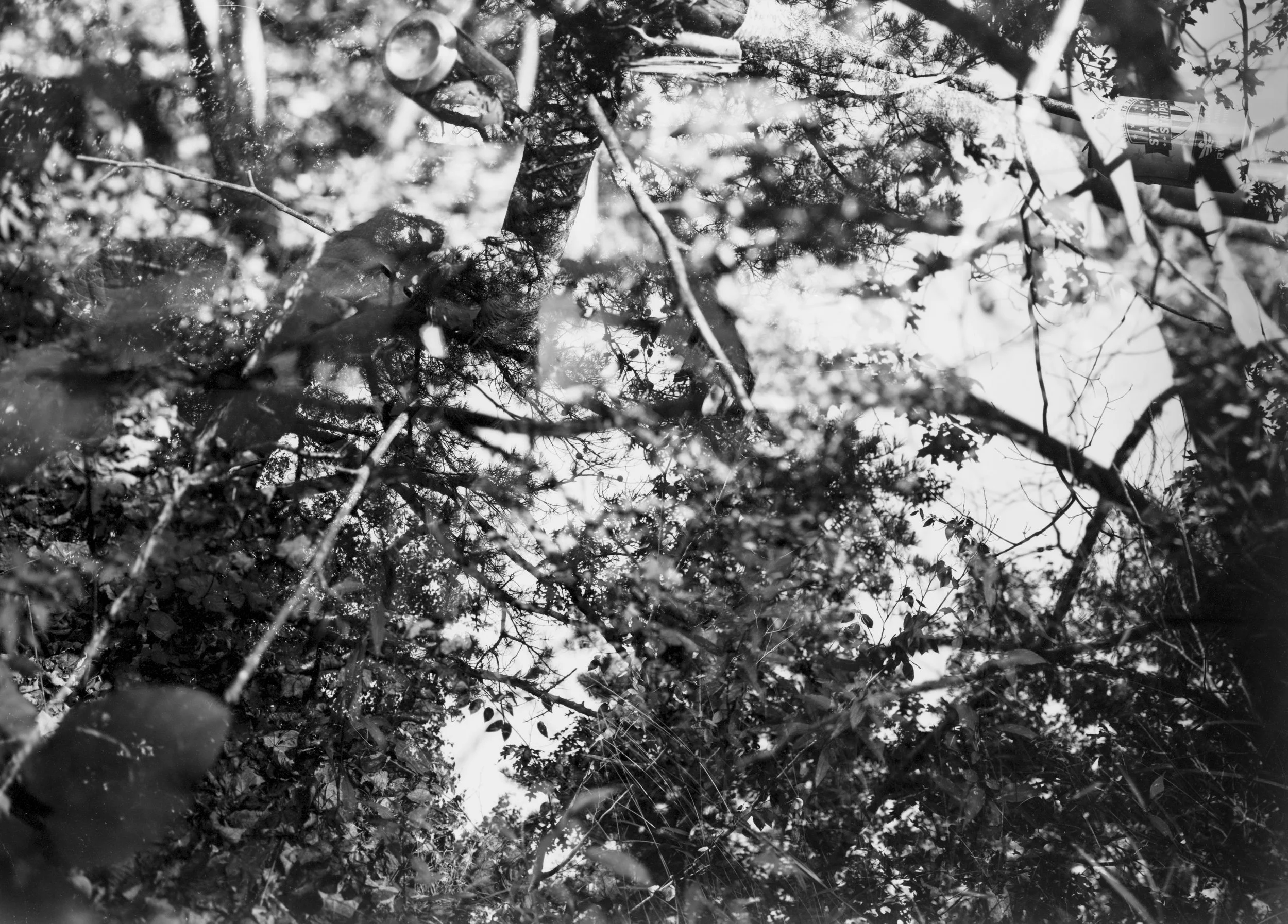
Meredith Davenport, Untitled, 2025, 40 x 50”, archival ink jet print
ML: The landscapes you photograph are visually arresting yet deeply damaged. What do you hope this duality evokes in viewers?
“I am wrestling with how to engage people with the suffering of the world that feels truthful, useful, and not superficial. ”
MD: I am wrestling with how to engage people with the suffering of the world that feels truthful, useful, and not superficial. These spaces hold human and non-human stories and lives. I worry that the media discourse on the climate crisis is defeatist which is one of the reasons I like Donna Haraway so much. She talks about “making kin”(5) with these non-human elements and builds a kind of playful patchwork quilt of thinking that is hopeful to me. I want to do the same thing - to see these spaces and their histories clearly for what they are and the pain they hold while inspiring people to connect more deeply with all of it in our three dimensional world through art.
ML: How does the idea of what lies beneath the surface, both physically and historically, inform your visual approach in Hybrid Zones?
MD: There is so much to say about what lies beneath the surface in anthracite mining. Rachel and I visited places where abandoned tunnels underneath the towns had poisoned the air seeping in through peoples’ basements. This situation forced the entire town of Centralia to be relocated. In other regions, water contaminated by acid mine drainage is polluting both residential homes and businesses. The ideas of concave spaces, the disorientation of darkness, and the lack of horizon underground all live in both our works.
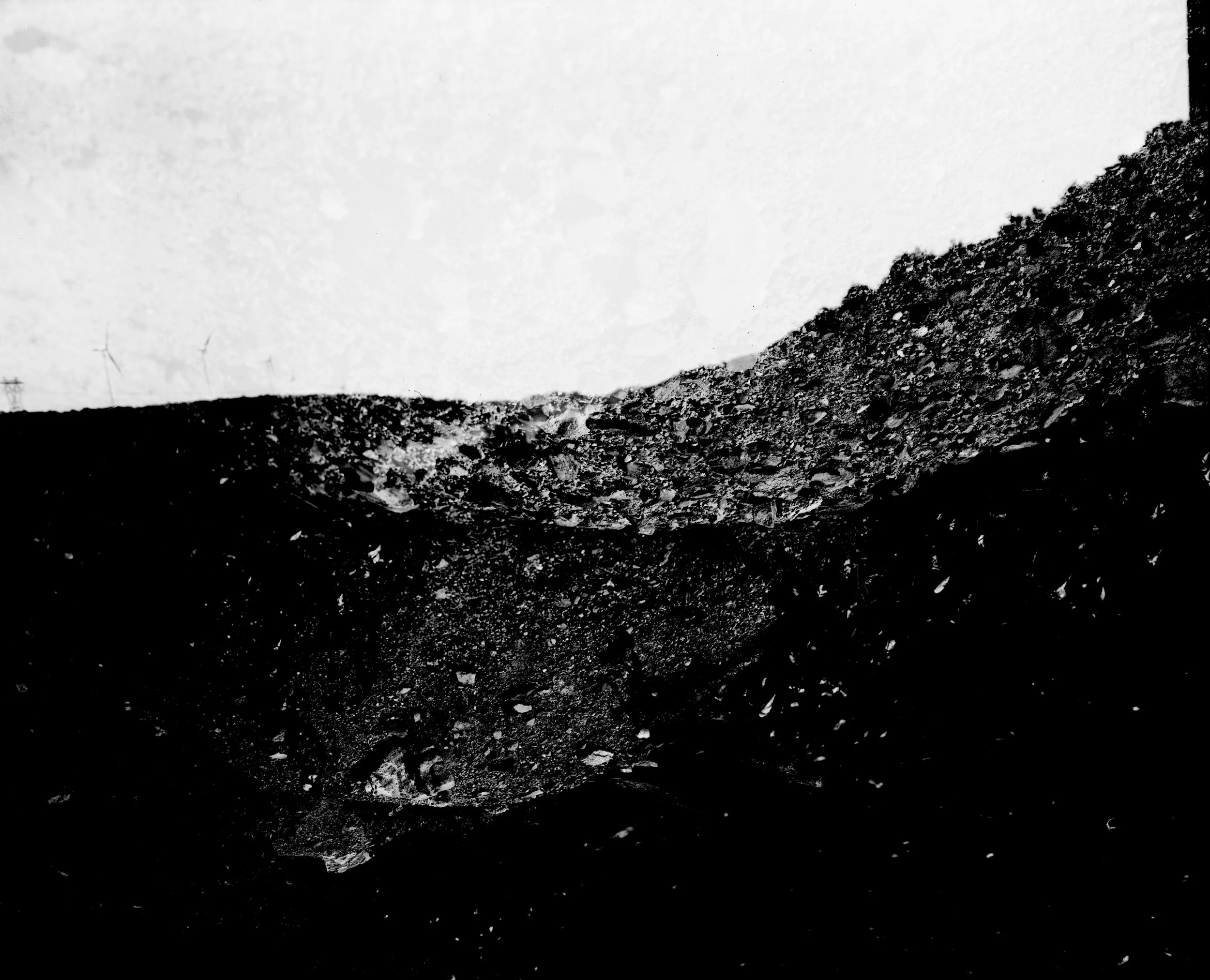
Meredith Davenport, Injected light weight fly ash, 2025, 40 x 50”, archival ink jet print
It’s hard sometimes to talk about this work without invoking the inevitable metaphors of layers, veins, and pockets of space surrounded by earth that are related to the physical, psychological, and social spaces we were working in. The layers of fossils that live beneath the surface areas of anthracite were created 300 million years ago by dying trees. Mines and slag heaps that were formed hundreds of years ago, and that have been mined for anthracite, helped us to think about deep time and our fragile place in the larger time scales we are working in. I love the idea of fossils as the first photographs. I am not sure where that originated but Siobhan Angus mentions it in her book Camera Geologica and it has had an impact on my work.
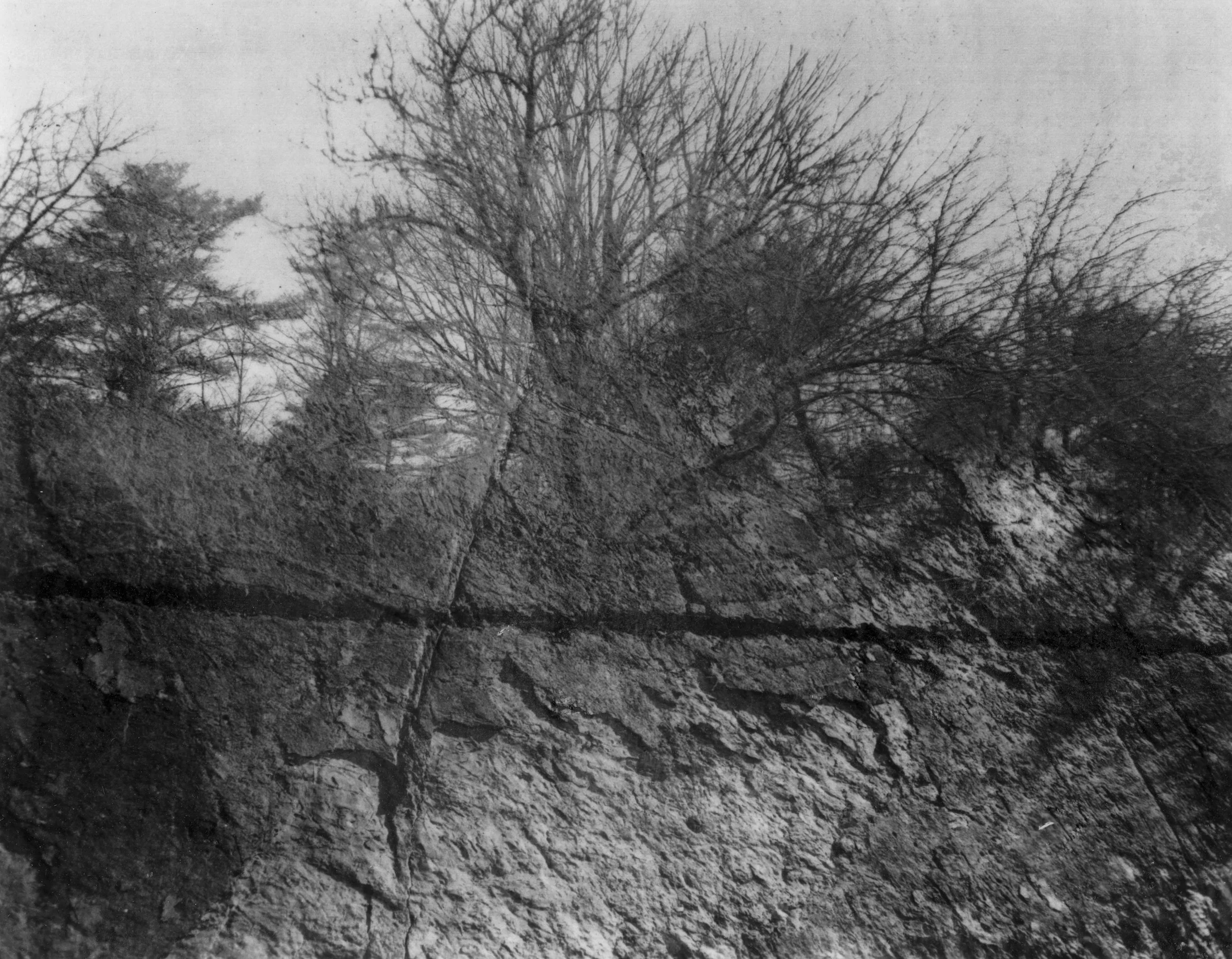
Meredith Davenport, The barrier has not been breached by the fire, 2023, 40 x 50”, carbon print
ML: Can you talk about how carbon printing conceptually connects to coal, labor, and the industrial history embedded in this project?
MD: The process of carbon printing is a layering of carbon and gelatin (which is made of bone and skin) which connect to many aspects of mining, geology, and extraction. The images are literally made of small mountains and valleys of emulsion on the surface of the paper. There is a nostalgic beauty in the prints that I hope will contrast with the disorienting contemporary content. It has been interesting to use the photographic tools and processes of the time when these sites of extraction were active in the early 1900s. Both the man-made damaged landscapes and the photographic tools and processes belong to that time. I am using these tools to subvert and think about photography’s role in the way we think about industrial extraction today. In a way I am trying to rework the visual language that was built these tools a century ago.
“I am using these tools to subvert and think about photography’s role in the way we think about industrial extraction today.”
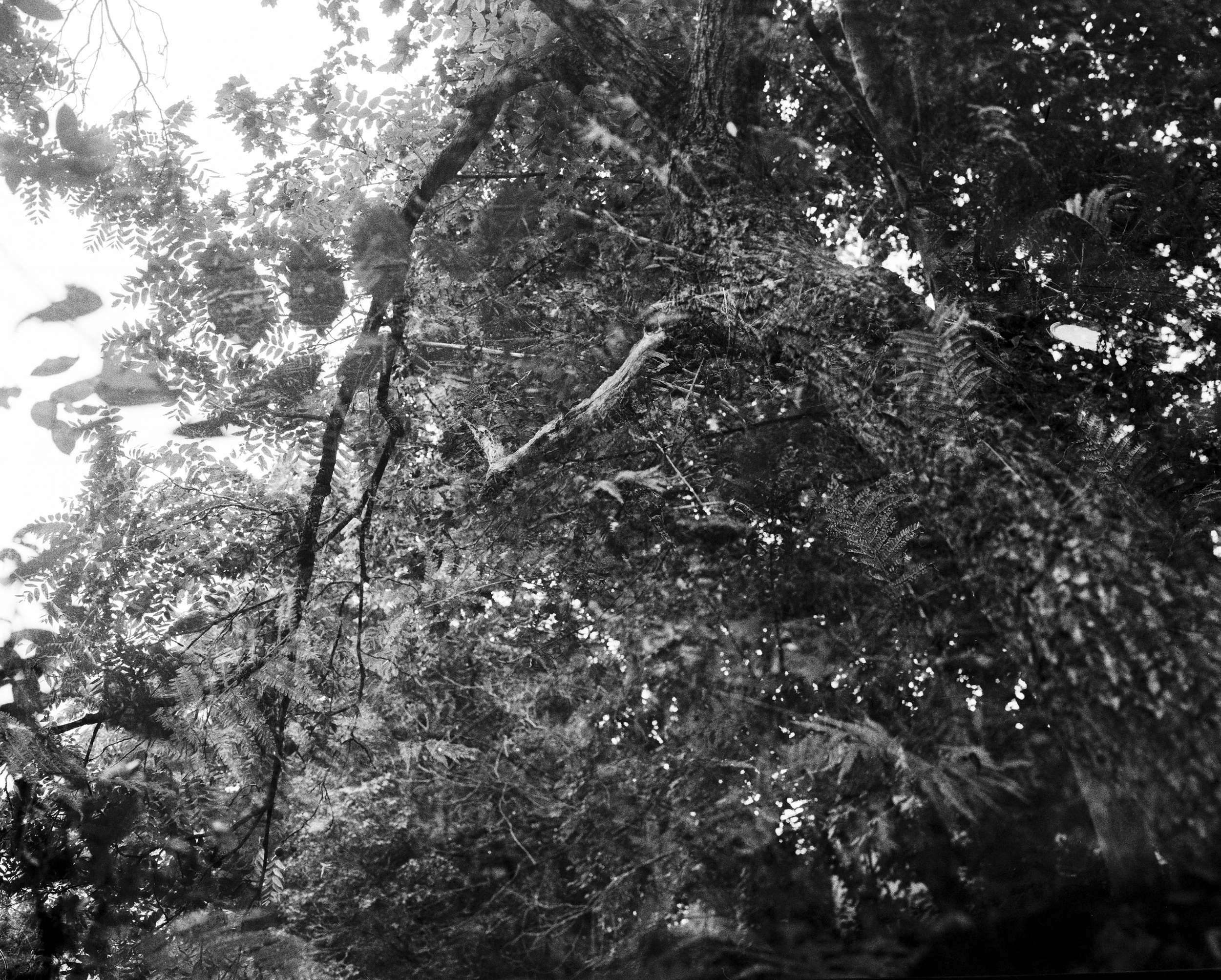
Meredith Davenport, Untitled, 2025, 40 x 50”,archival ink jet print
ML: Since Hybrid Zones is ongoing, how do you know when an image belongs within the project or when the project itself is shifting?
MD: Rachel and I spent a long time doing the onsite research for this work so I think in some ways the phase of making the work is just beginning. There are so many directions that I want to explore beyond the double-exposed landscape series so the work is already shifting. I have learned to trust the process and let the ideas find their way and develop. Most of the new ideas are still young, obvious, and they need to mature. I imagine that I will be working on this for at least 3-4 more years. It takes me time to move through my self-doubt and find the deeper, more interesting approaches underneath my first instincts.
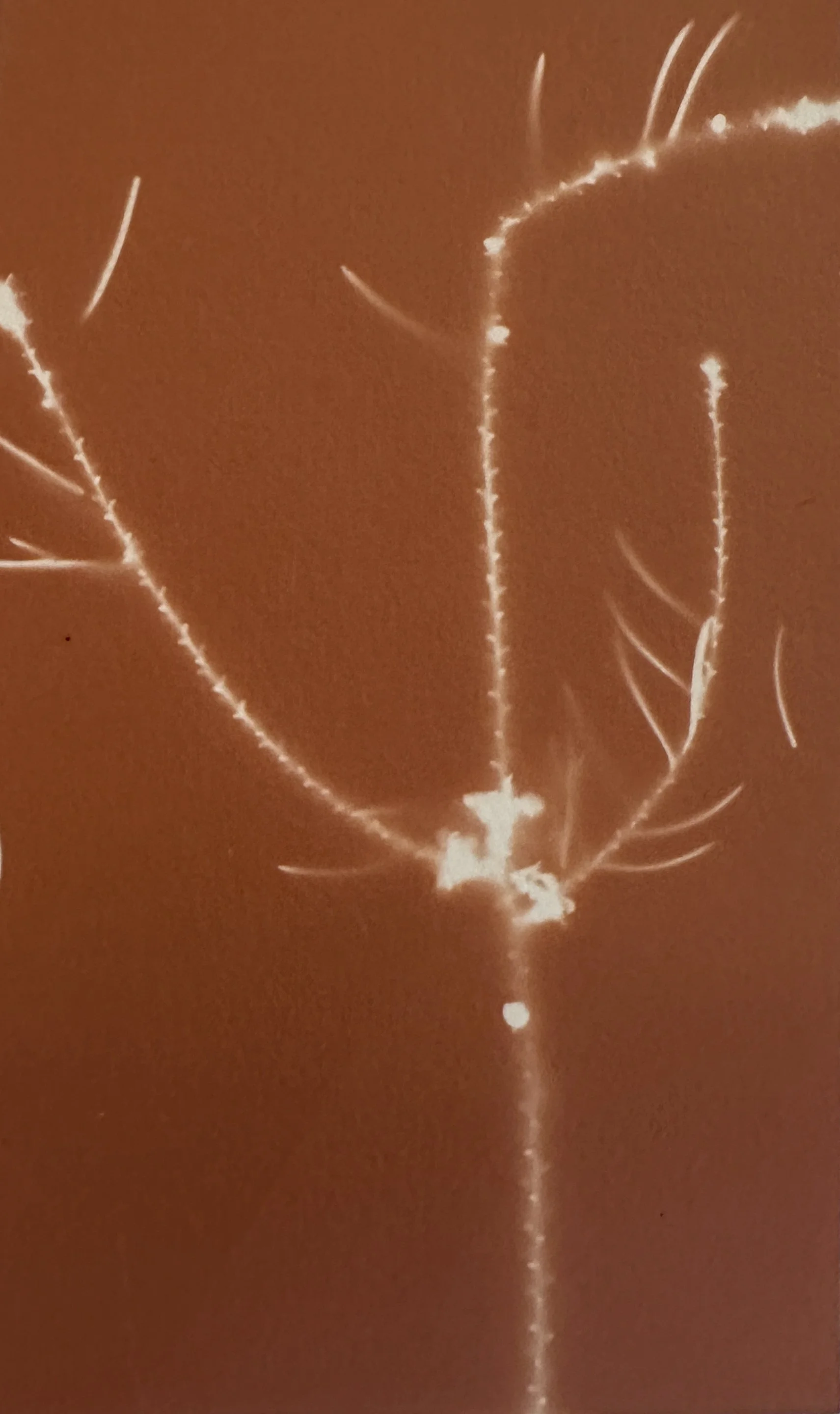
Meredith Davenport, Untitled, 2025, 5×7”, emulsion of acid mine drainage on cotton rag
ML: Part of what I find intriguing with your work is how you subtly challenge the viewer to explore and expose multiple layers of meaning embedded in your process. Your work is often deeply personal while also exploring larger ecological, cultural, or environmental issues. For example, the project 8,817 Goodbyes centers on the death of your urban beehive, but is about so much more. What prompted you to turn this experience into a body of work?
MD: My partner was diagnosed with cancer and died within 8 months of that diagnosis. He was a beautiful human and an incredible artist. It was one of the most intense times in my life. I felt so many emotions - small, huge, fleeting, permanent- it was a very FULL experience that is hard to describe. After he died, I wanted to find a way to be with him and remember him, and to keep my mind occupied in a positive way. I also wanted to find refuge in my creative practice. One of his best friends was married to a beekeeper. I had always wanted him to get a bee hive because his backyard was perfect for keeping bees. He had made a beautiful ink drawing of a honeybee that I loved. I decided to immerse myself into urban bee keeping as a way to mourn him. It was kind of the perfect thing to do. It required a lot of focus in the beginning to learn about and set up the hive so it kept my mind busy (like a bee ;)). Working with the bees was both enchanting and painful when they stung me. That experience mirrored the unexpectedly complex process of grief that I was living through.
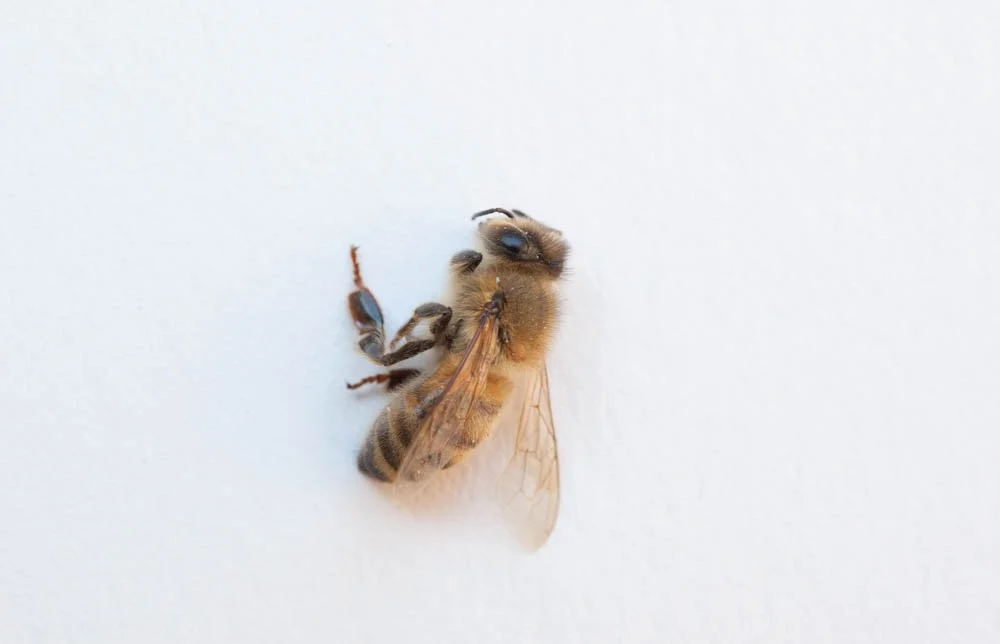
Meredith Davenport, 8859 from the series 8,817 Goodbyes
The bees were so fun to watch and sublime to work with. Even the sticky sweet byproduct of their labor felt in alignment with what I was experiencing both before and after my partner died. The hive was attacked in the late summer by another hive. I thought I had stopped the raid before damage was done but within a few months I realized that the hive was dying. The bees that were alive would leave the dead ones at the entrance to the hive and I started gently collecting them and photographing their bodies on my front porch. It was a painstaking process to document each bee but I started noticing their gestures in the moment of death. Some seemed almost joyful and free while others were contorted and in fetal positions. Each little moment of death expressed the range of feelings I was experiencing as I mourned my partner. One minute I would be laughing as I remembered or imagined something he would say and the next I would feel hollow and broken inside. Memorializing each bee in an image helped me feel less alone.
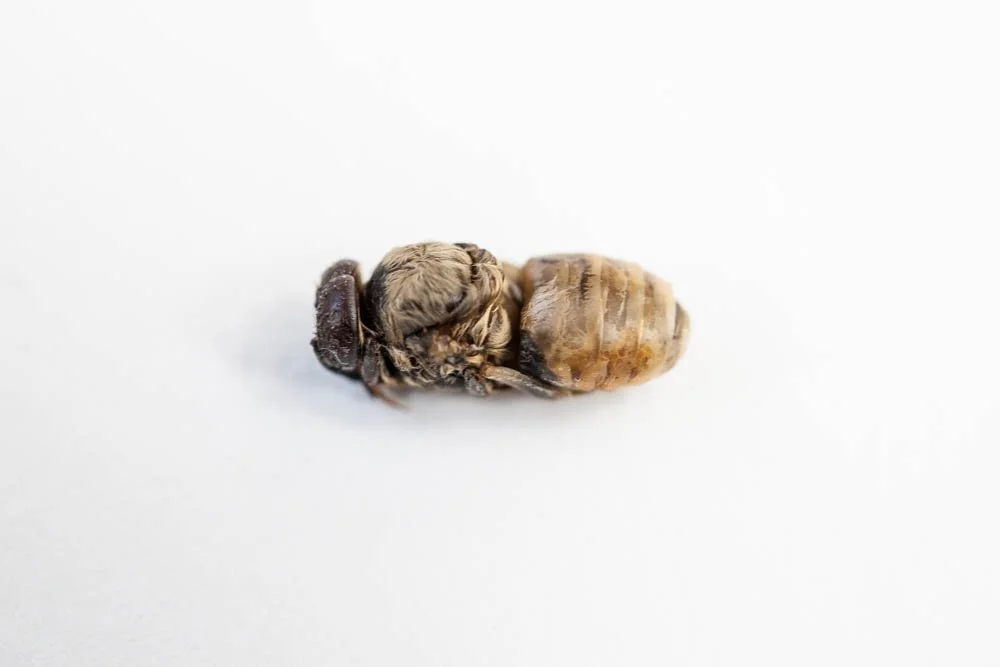
Meredith Davenport, 7431 from the series 8,817 Goodbyes
ML: At a time when environmental protections are being rolled back and support for the arts is being erased, how are you coping? Finding hope? Imaging the future?
“My latest survival strategy is to love with the same ferocity and at the same volume as the hate that is being sown in the world right now. ”
MD: Like the dead bees, I have experienced a lot of states of being during these past few years - fear, horror, defeat and rage. My latest survival strategy is to love with the same ferocity and at the same volume as the hate that is being sown in the world right now. Exactly the same. I refuse to allow the distractions and the strategy of “flooding of the zone” to control my response and engagement in the world. I think that we are moving through a process of profound change that is violent and uncomfortable. This will bring us to a new place. I want to be a part of that world building because change is inevitable and we can choose how we respond to this moment. I volunteer and do work in my community because if we don’t work towards the world we want and imagine each detail of where we want to go- the hate will win.
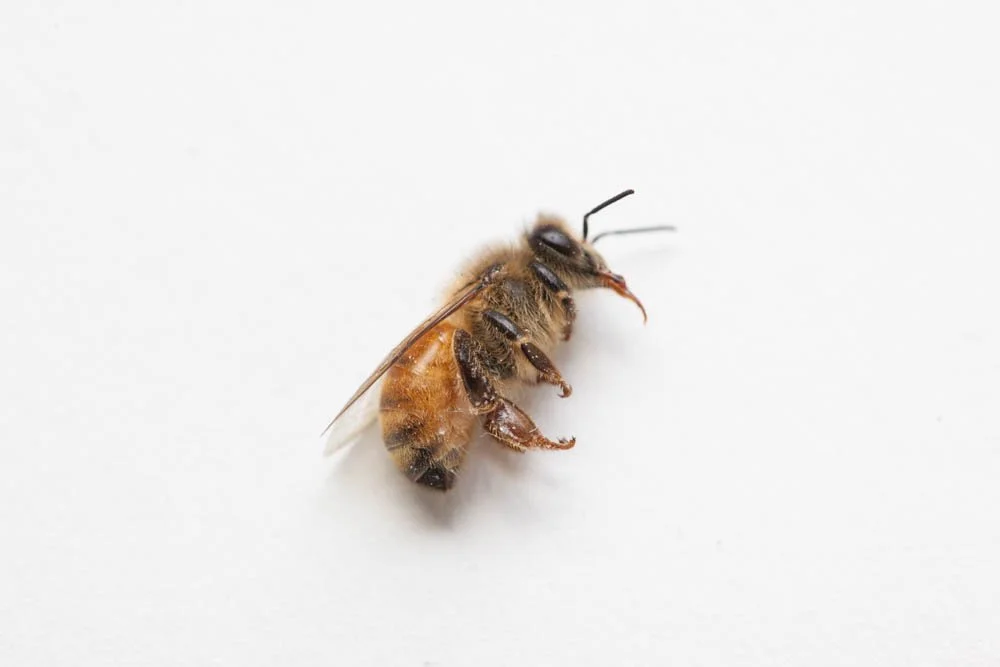
Meredith Davenport, 7552 from the series 8,817 Goodbyes
ML: What questions are you currently asking yourself as an artist and how do you image those questions will shape your future work?
MD: In both of the projects I am working on I am thinking about how the work is contributing to, or of service to the people I am sharing it with. I work on issues and with ideas that are often painful and I don’t want my responses to these issues to perpetuate the violence the work is trying to address. How can I make work that confronts hard things authentically but also engages in solutions or healing, or makes space for that? I realize that is a big and idealistic expectation for art but I want to at least not be perpetuating the trauma or violence that exists already.
“In both of the projects I am working on I am thinking about how the work is contributing to, or of service to the people I am sharing it with.”
ML: As an image-maker who is also a long-time educator, how do you feel that your time in academia influences your creative practice?
MD: Last spring I worked with a group of students who were documenting climate change stories for the Associated Press. It was so exciting to see the students meeting with community leaders and businesses and finding stories about the impact of the climate crisis on Lake Ontario, including the wine producers in the Finger Lakes and even the salt mines in Western New York. My art practice builds on ideas out in the world and it was so great watching students negotiate these kinds of opportunities to be out in the world, meeting and talking with people and learning to research and develop the stories. At my core and across disciplines, I am a storyteller and researcher and I love to share that and learn with the students.
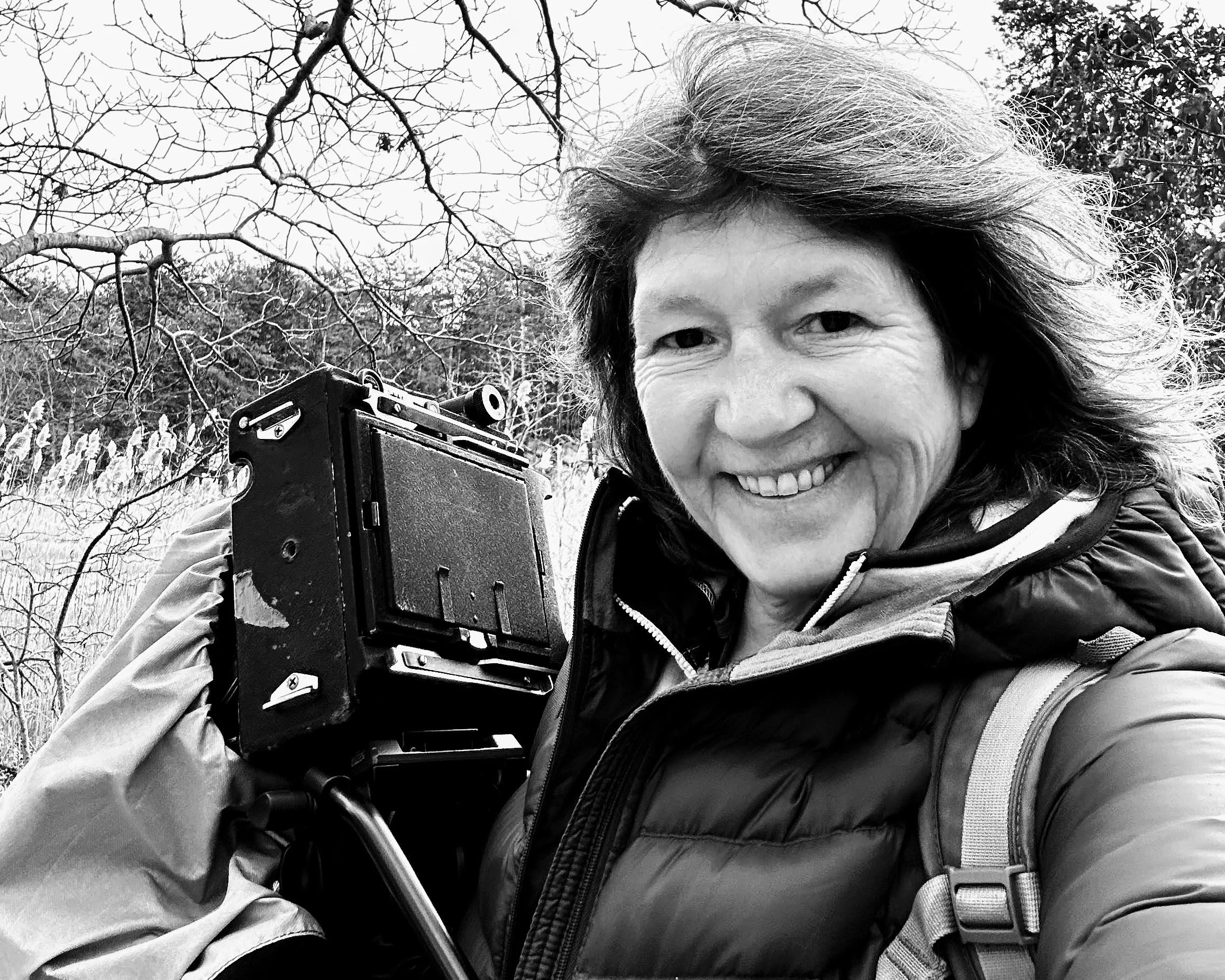
ML: In addition to academia, what communities, organizations, or spaces have helped to foster your creative practice?
MD: Visual Studies Workshop has supported me tremendously. I was grateful to be one of the first artist-in-residence and have done several other residencies with them over the years. Their programming supports so many artists in this area. Antenna Paper Machine, a community arts organization in New Orleans, LA, also has had a big impact on my work. I did a residency with them and they published my book Membering(6). I have done several residencies at Yaddo in Saratoga Springs, NY, which is a truly special place. My place of employment, the Rochester Institute of Technology, has given me funding for several projects and the precious time it takes to make work. I am also a member of the online community for artists called Netvverk.
ML: What projects or ideas are occupying your attention at the moment? What feels urgent or most important?
MD: The work from Hybrid Zones is an ongoing obsession. I want to keep making those images and build on those ideas. I am also working on another project about my family history with slavery in Louisiana and Rhode Island. Both of these projects feel urgent in different ways. I think it’s important for me as an artist to build spaces where people can engage with hard things in open, playful, and constructive ways.
Siobhan Angus, Camera Geologica: An Elemental History of Photography (Durham, NC: Duke University Press, 2024).
Richard Powers, The Overstory (New York: W. W. Norton & Company, 2018).
Timothy Morton, Hyperobjects: Philosophy and Ecology after the End of the World (Minneapolis: University of Minnesota Press, 2013).
Joseph Campbell, A Joseph Campbell Companion: Reflections on the Art of Living, ed. Joseph Campbell Foundation (Novato, CA: New World Library, 2011).
Donna J. Haraway, Staying with the Trouble: Making Kin in the Chthulucene (Durham, NC: Duke University Press, 2016).
Meredith Davenport, Membering (New Orleans: Antenna Paper Machine, 2022).