

Frances Bukovsky
Frances Bukovsky (they/them) is a photographer living in Marshall, North Carolina. They use embodied photographic practices that draw from their perspective as a chronically ill, neurodivergent, trans/non-binary person. Their practice focuses on photography as a tool for building relationships and highlighting interdependence and care, both for human and more-than-human bodies. They are a co-founding member of the Kinship Photography Collective, which aims to deepen empathy, intimacy, and connections with the natural world and each other through community collaboration. Bukovsky’s work has been shown in venues such as the United Nations Headquarters (New York), The Bascom: A Center for the Arts (North Carolina), and University of Georgia Circle Gallery (Georgia). They have published monographs with Fifth Wheel Press and Ramble Editions and are included in the permanent collection at University of California-Irvine College of Health Sciences.
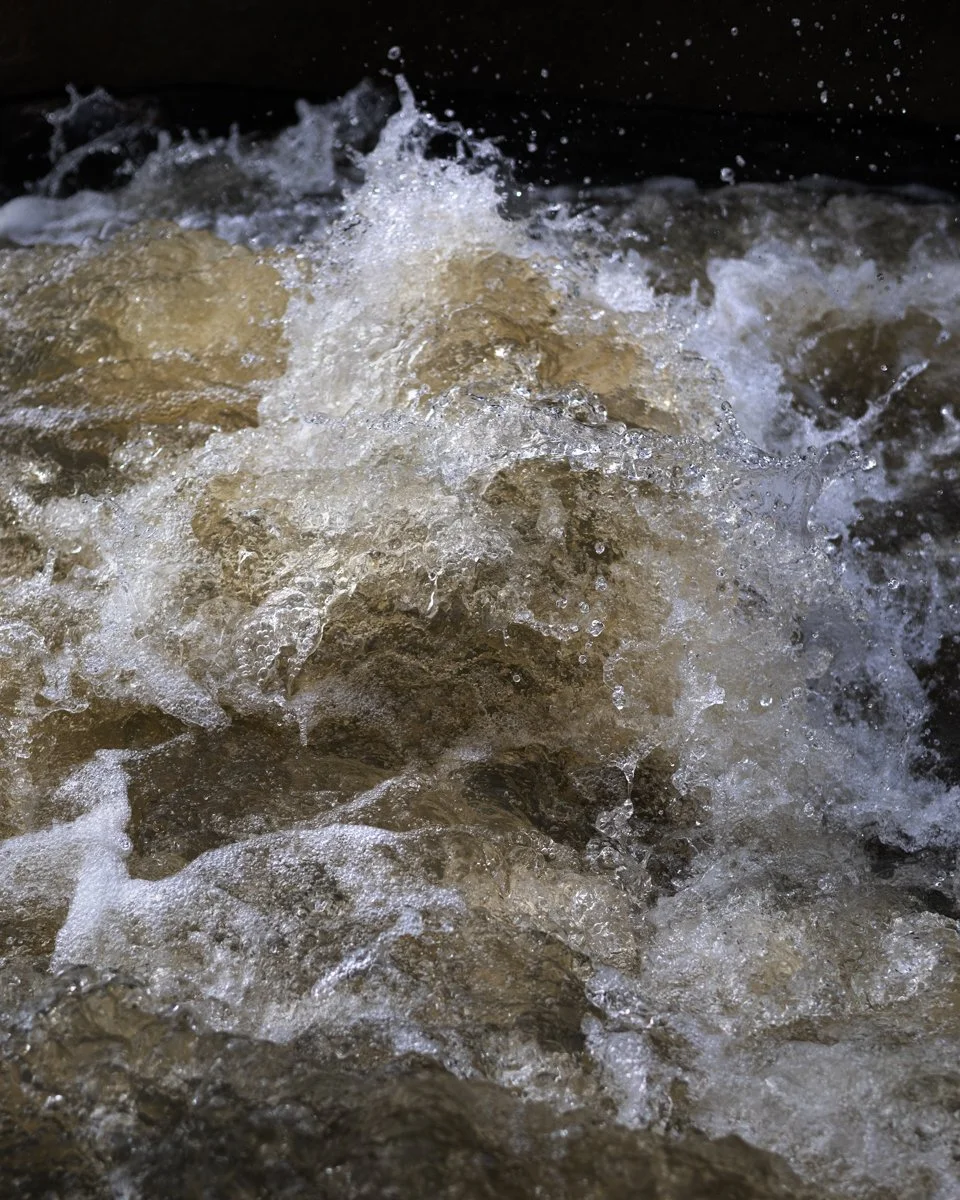
Frances Bukovsky, Erosion, 2024, 11x14”, Archival Digital Inkjet Print
What happens when we stop thinking of the camera as a tool for observing the world and instead use it to enter into relationship with it? For photographer Frances Bukovsky, image-making can become a practice of attention, one that begins with the body but extends outward, toward the places, people, and other living beings with which we are entangled.
Based in Marshall, North Carolina, Bukovsky’s work brings personal experience into conversation with larger questions about belonging, vulnerability, illness, identity, and our relationships with the more-than-human world. Their photographic practice challenges the idea of the self as separate or autonomous, asking instead what might become visible when we understand our lives as shaped by networks of mutual dependence and care. They are a co-founder of the Kinship Photography Collective, a community devoted to using photography to cultivate deeper connections between people and the natural world.
In this conversation for the GroundTruth Institute Archive, Bukovsky reflects on the possibilities of photography as a relational practice, the experience of finding home in both body and place, and the ways that paying closer attention might change how we understand our connections to one another and the world around us.
Margaret LeJeune: Your work often begins with the body as a site of experience and knowledge. Can you tell us about your journey into photography and how your experiences with chronic illness, disability, and queerness shaped the way you came to understand photography?
Frances Bukovsky: It really does start with the body for me. My first experiences with photography were through disposable cameras and family albums. The women on my mom’s side of the family were faithful documentarians of every gathering, vacation, and special occasion. Opening those albums was an invitation to telling stories, to connection.
That desire for connection is what brought me to photography. I grew up with a sense of otherness that I didn’t quite have language for at the time, in a very small rural town, which amplified the intensity of that feeling. Photography became a way that I could look for the connections between myself and the world around me and build relationships.
When I experienced complications from my health conditions in my early 20s, photography morphed into a way to self-witness and was a path back into embodiment after dissociating for several years. There was a way that the camera provided both the intimacy of self-witnessing and the distance of being the observer.
In the years that followed, I became more consciously obsessed with the connections between bodies, the ways bodies move through the world, and most recently, how we define and value bodies, particularly because of practicing in community with Kinship Photography Collective, but also because of the experiences of my own body.
The edges of bodies became blurred for me-how can I untangle my humanness from the bacteria of the blood infection that altered my central nervous system? Or from my environment when my immune system would react to anything and everything, in constant negotiation with changing environmental factors? Or when the sudden drop in air pressure from a storm shifts my bones and causes migraines?
I’m also really interested in the ways that our physical bodies influence the ways that we photograph and how when we practice photography from a place of embodiment it can allow us to engage with the world in ways outside of our own individual perception.
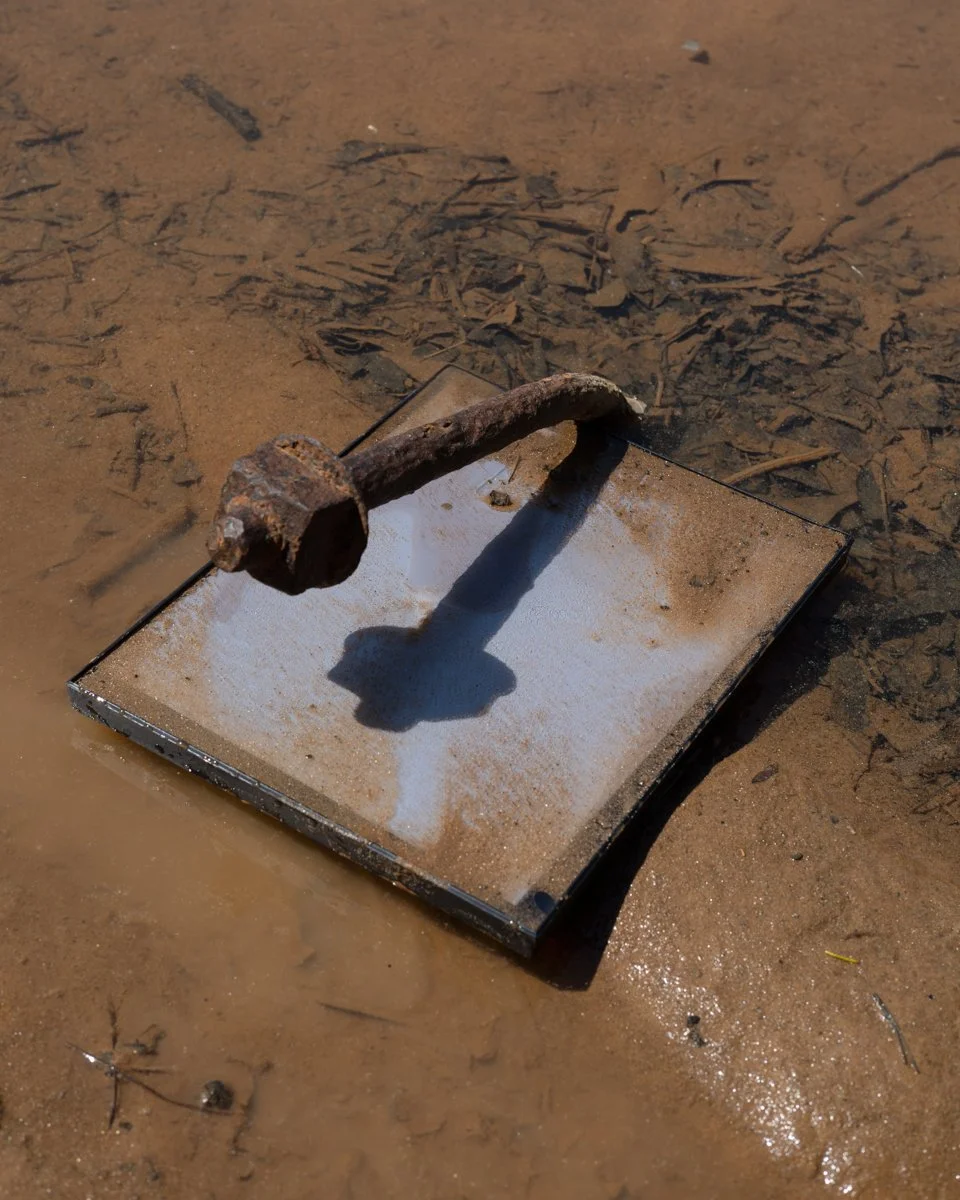
Frances Bukovsky, Process: Trolley Spike, 2024, 8x10”, Lumen Print
ML: Across your practice, you move fluidly between self-portraiture, documentary photography, camera-less processes, writing, and research. What draws you to an interdisciplinary approach and how do these different methods allow you to express ideas that photography alone might not?
FB: One of the things I’ve learned through exploring neurodivergence and my own experience of it is that my creative practice is an externalized view of my information processing. I’ve always been interested in a variety of subjects and ideas, but I’ve discovered that I rely on different processes of creating in order to understand what I am learning better.
So much of my practice happens in an intuitive way, so it's hard to describe exactly how each process functions, but each one is necessary for the health of the others. The books I’m reading and concepts I’m exploring subtly direct what I am photographing, how I am sequencing, what work is getting shared. The writing helps me dig up that intuitive process and make sense of it in a way that can be communicated. Self-portraits and documentary photographs are often me processing some experience - sensory, mentally, physically, and trying to find the connections in the world I am existing in within that moment. And camera-less processes are exciting, they’re the place where I am nudging the process along, guided by all of that research and reflection, but ultimately the process and the environment are in control of the final image.
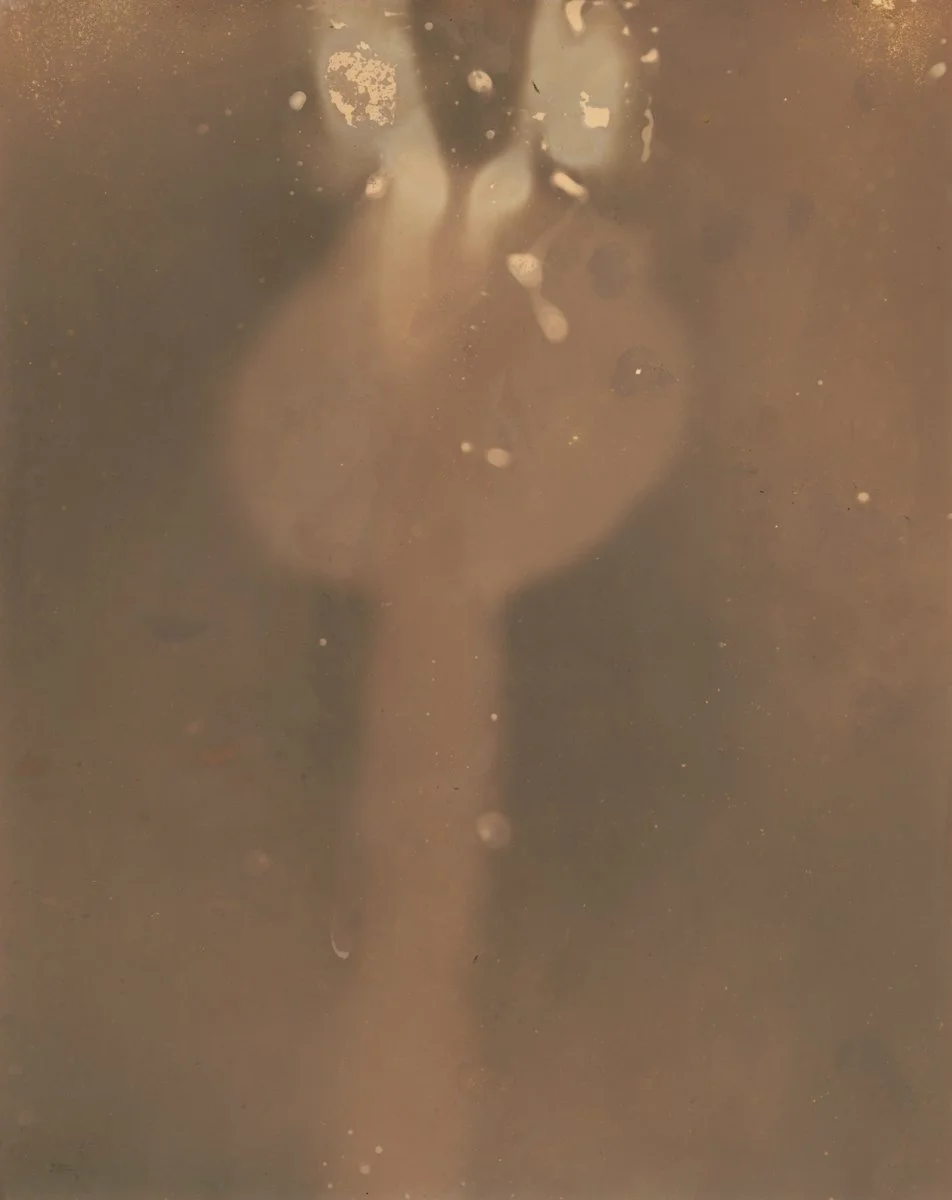
Frances Bukovsky, Trolley Spike, 2024, 8x10”, Lumen Print
ML: Your project statement for A Cherished Embrace of Iron and Water describes discovering Glendale, South Carolina through both archival research and sensory experience. What was your first encounter with Glendale like, and what surprised you once you began spending time there?
FB: My first encounter with Glendale was through the Goodall Visiting Fellows Program at Wofford’s Goodall Environmental Studies Center. I initially spent three weeks there in springtime, walking the trails and visiting the ecological reflection sites, photographing this new place excitedly. My feet would get tiny blisters from walking on the frigid shoals barefoot too early in the morning, but I loved the feeling of old, old stone holding me as I laid out photographic paper to catch the shadows of trolley spikes.
The last week of the residency, the weather turned and the trails burst alive in that way that southern spring does. I remember laying down by the old home site, deer grazing nearby, the air a floral sea of purple wisteria freshly blooming. I started getting in the water, Lawson’s Creek still holding the memory of winter in its temperature, but I couldn’t resist.
There is a magic to Glendale that is hard to put to words. One can walk out to a beautiful pond and sit in a bird blind, listening to a symphony of bird calls while also hearing tire sounds from the nearby road and construction noises across the river. The sun drips gold in the early evening along the creek during the summer, and in some pockets of the trail one can forget that they aren’t in the middle of the wilderness. It is a place that feels at once separate from daily life, as well as intimately lived within.
I think the most surprising thing about Glendale is how much it has become a beloved place for me. What began as an interest forged through an artist residency and curiosity has become a genuine relationship. I go there for reasons outside of photography-to take a hike along Lawson’s Creek, sit and have coffee near the mill site, or to have a picnic with my partner.
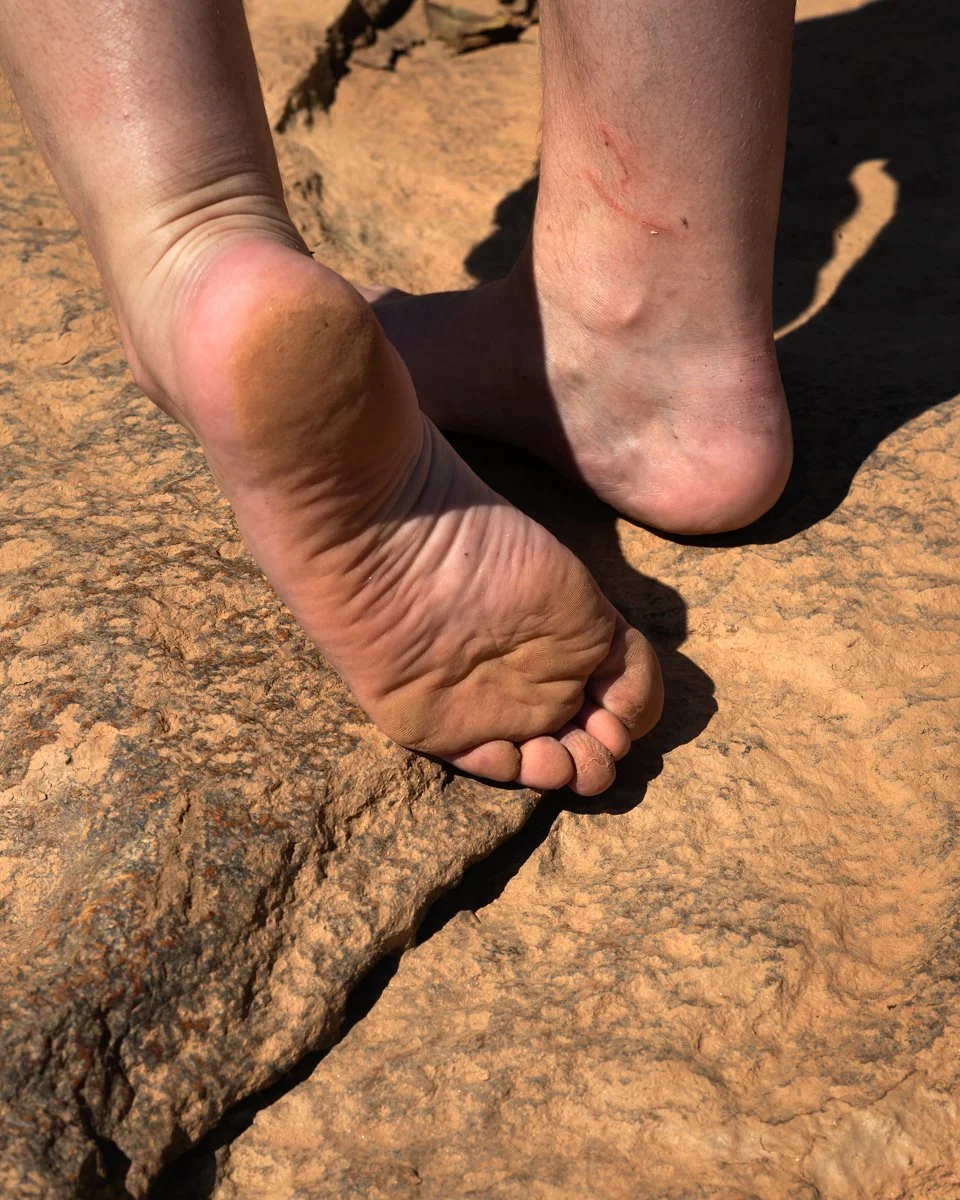
Frances Bukovsky, Tattered, 2024, 11x14”, Archival Digital Inkjet Print
ML: Rather than treating history as something fixed in the past, this project suggests that history remains physically present in landscapes. How did you begin to recognize traces of industrial history within the ecology of Glendale and what did those traces teach you about the relationship between memory and place?
FB: Through the Goodall Fellowship, I had access to some support materials that laid out more of the context of the history of Glendale, and of nearby Spartanburg as well. I also had access to a few maps that showed where different industrial sites were, so I knew where to look physically in the landscape for signs of industry.
I was struck by how rapid change can be within a landscape. The only remnants of a trolley line that ran between Glendale and Spartanburg around 100 years ago were railway spikes in the shoal rock. The lasting mark of an iron works was a channel cut through the creek for a mill wheel. Walking through tangled wisteria at a home site that was tended to in my great-grandparents’ time taught me a lot about how easy it is to think that the way things appear now is as they have always been.
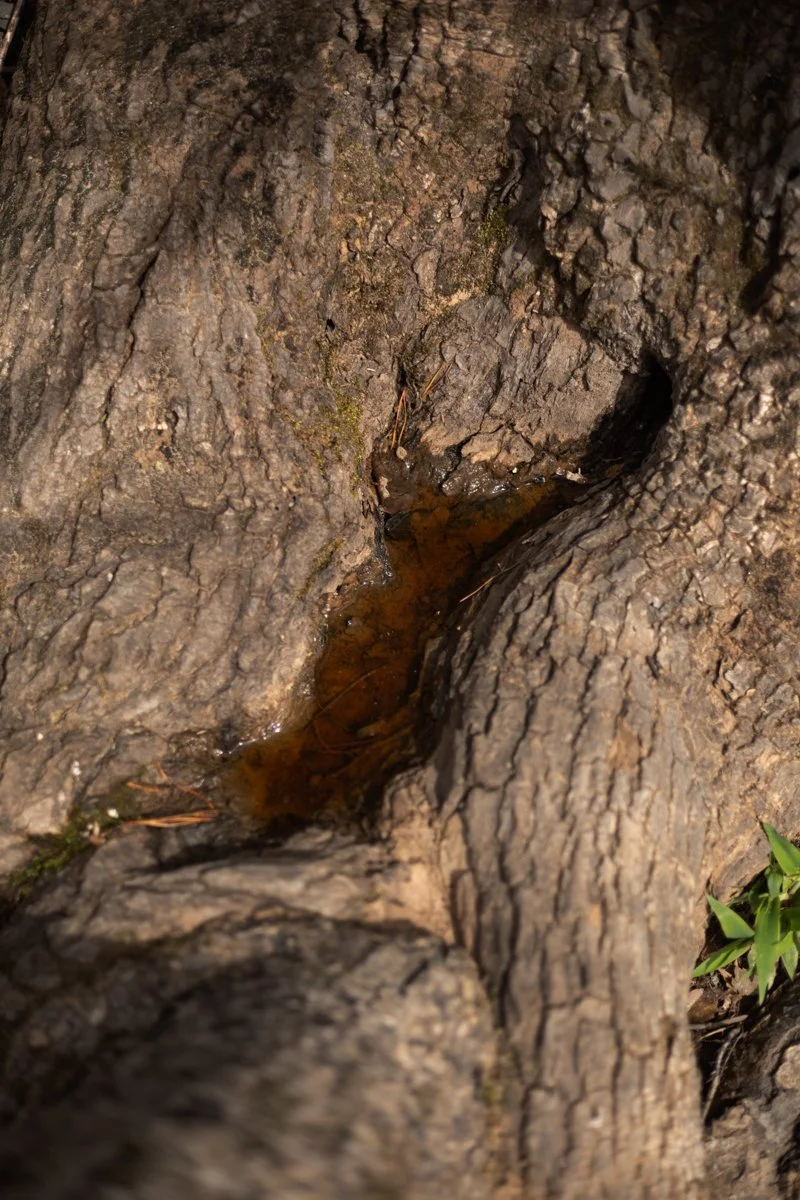
Frances Bukovsky, Font, 2024, 12x18”, Archival Digital Inkjet Print
ML: You write that your work seeks to suspend linear time in favor of moving between geological, historical, and sensorial perspectives. Could you talk about what it means to experience time in this way and how photography can make that layered experience visible?
FB: I feel like I am always moving between times and timescales in my own life. I often experience the present “now” within the context of or in connection to other moments, and can have jarring experiences of being dislocated from time in many ways, my mind juxtaposing experiences from the past with the present moment. This way of experiencing time is present in my photographic practice, where I can feel myself step into an almost suspended time that is layered with the movement of the present.
While researching for this project, and also spending time physically in Glendale, I had a similar experience of searching for the connections between time scales and a somatic feeling of being at once connected to the past, as well as a part of a possible emerging future. A lot of this was influenced by reading about the history of Glendale, while also engaging with others on the trail and in the community.
Being at Glendale, especially paying close attention to the markers of what had transpired in lifetimes before mine, as well as the shifting ecology of the space, made me more curious about the intersection of time scales, particularly across contexts of time. Industrial clock time feels much different than the ways time moves in our bodies, in other bodies. The stillness of rock and the rushing of water feel very different, and my body in relation to both feels different.
In this project, I used photography to explore that through juxtaposition. Sometimes, this was my body against rock or in water, and sometimes this was the ruins of a mill tower photographed through the shallows of the creek, or the brick peeking through the grass, or through creating lumens with archival prints in the environment.
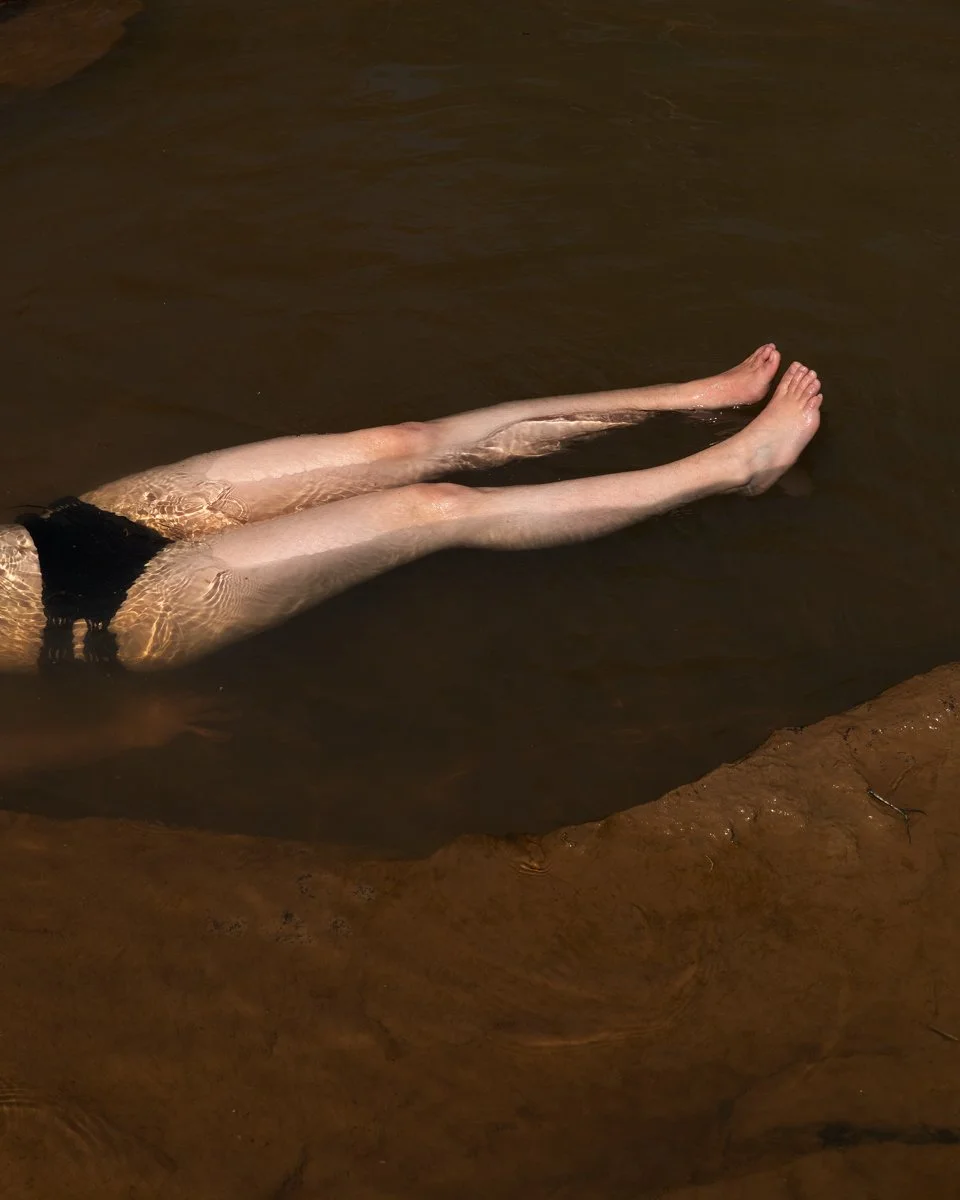
Frances Bukovsky, Leisure and Labor, 2024, 11x14”, Archival Digital Inkjet Print
ML: The title A Cherished Embrace of Iron and Water evokes both industry and ecology, hardness and fluidity, permanence and change. How did you arrive at this title and what meanings does it hold for you after completing the project?
FB: Titles are always funny things for me. Whenever I’m in a project, I’m reading and writing and making the work, and at some point once I’ve realized that I’ve got something I’m really interested in, I’ll start to notice words or phrases that get stuck in my psyche. Rumination is a large part of my creative process, I sometimes joke that my creativity gives my anxiety something productive to do.
I began to ruminate on iron, largely because of the high levels of iron oxide present in the soil in upstate South Carolina and across Appalachia. In particular, I was interested in the connection between the iron in the soil and the iron of our blood. They are chemically different forms of iron, however iron is incredibly important to our blood health as well as soil health. Water is also incredibly important to our bodies and the land’s body, and was very present at the site.
I was also thinking a lot about erosion while walking along the smooth shoals, and erosion not just as destructive, but as revelatory and generative. To erode something is to reveal what is underneath-a history, a memory, a belief. The water eroded the rock of Lawson’s creek over a millennia, two elements embracing and changing each other.
The word cherished also kept returning to me. Glendale feels cherished. It's not quite something I can put language to, and it is quite possible that it is a feeling that I am bringing to the place, but being there and having experiences of running into a young family who spoke about how much they valued the greenspace near their new home, walking the tended gardens and trails, having a black cat adopt me as a friend for a week and ride on my shoulder while photographing, sitting in the creek listening to cicada song at twilight-those experiences are just a few that really made the place feel like it is cherished by the community.
I was ruminating on all of these things, the industrial history of the mill and the ironworks that had been up the creek, the geologic history of erosion, the coming together of land and the human body. Eventually, A Cherished Embrace of Iron and Water popped into my head and held steadfast.
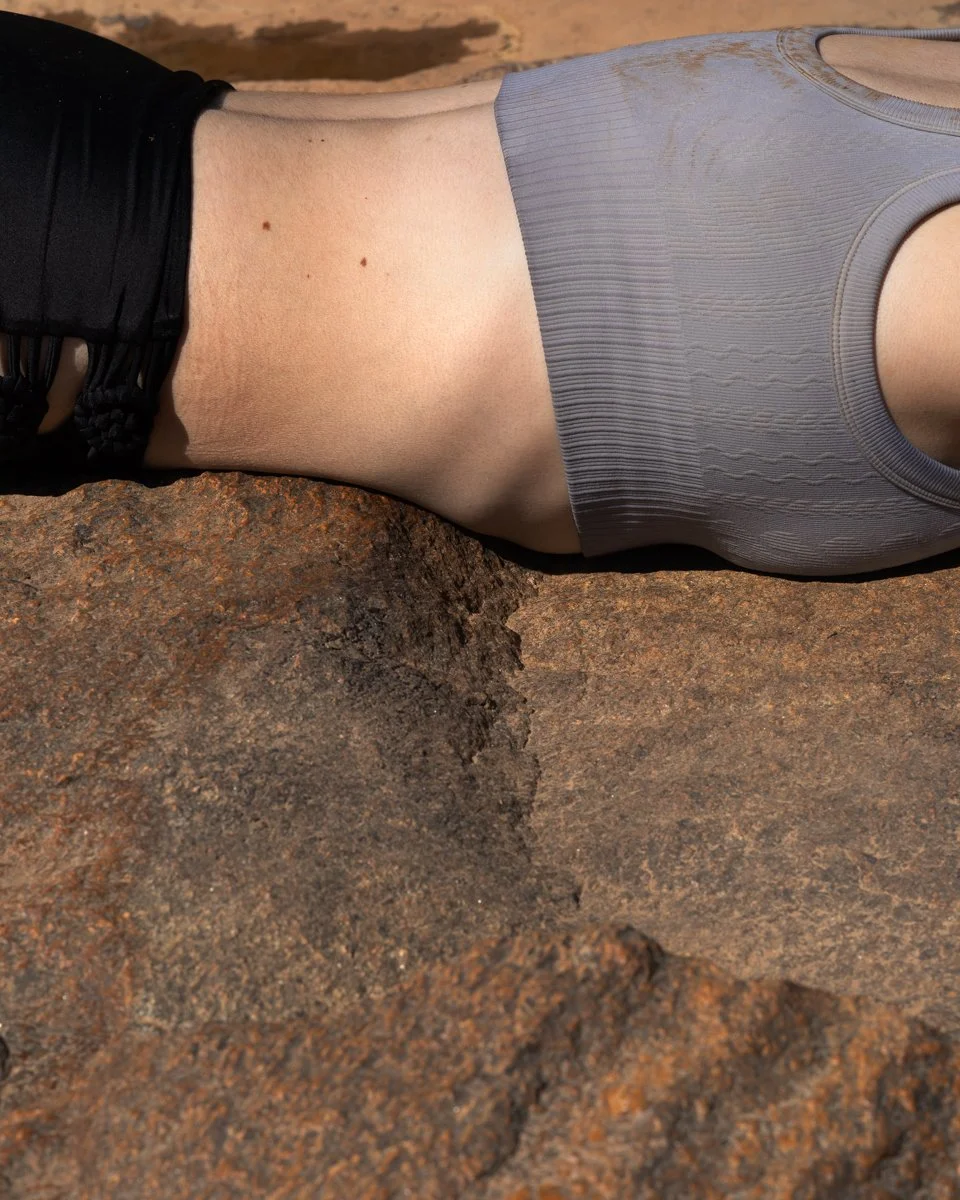
Frances Bukovsky, Breath Exchange, 2024, 11x14”, Archival Digital Inkjet Print
ML: Lumen prints occupy an important place within this work because they physically incorporate materials gathered from the landscape. What interests you about camera-less photographic processes and how do they change your relationship to the places you photograph?
FB: Camera-less photographic processes are where I let myself play and give up control the most in my practice. They feel like magic, and they invite a much needed spaciousness in my practice. Lumen prints take time-most of the prints I make have a thirty to forty minute exposure time. I feel tethered to them while they are exposing, and often hover nearby otherwise I will lose track of the print. There is a certain invitation to deeply immerse myself wherever they are exposing. I will often notice things that I hadn’t previously while waiting for the prints to expose, particularly about how the light moves and what that might reveal.
Where in other parts of my practice, I might have some semblance of an idea of how an image might turn out, or at the very least there is a more cerebral technical process happening on some level, camera-less photography allows me to sink into a very tactile place where I’m simply seeing what will happen if I put a photosensitive medium in contact with the world.
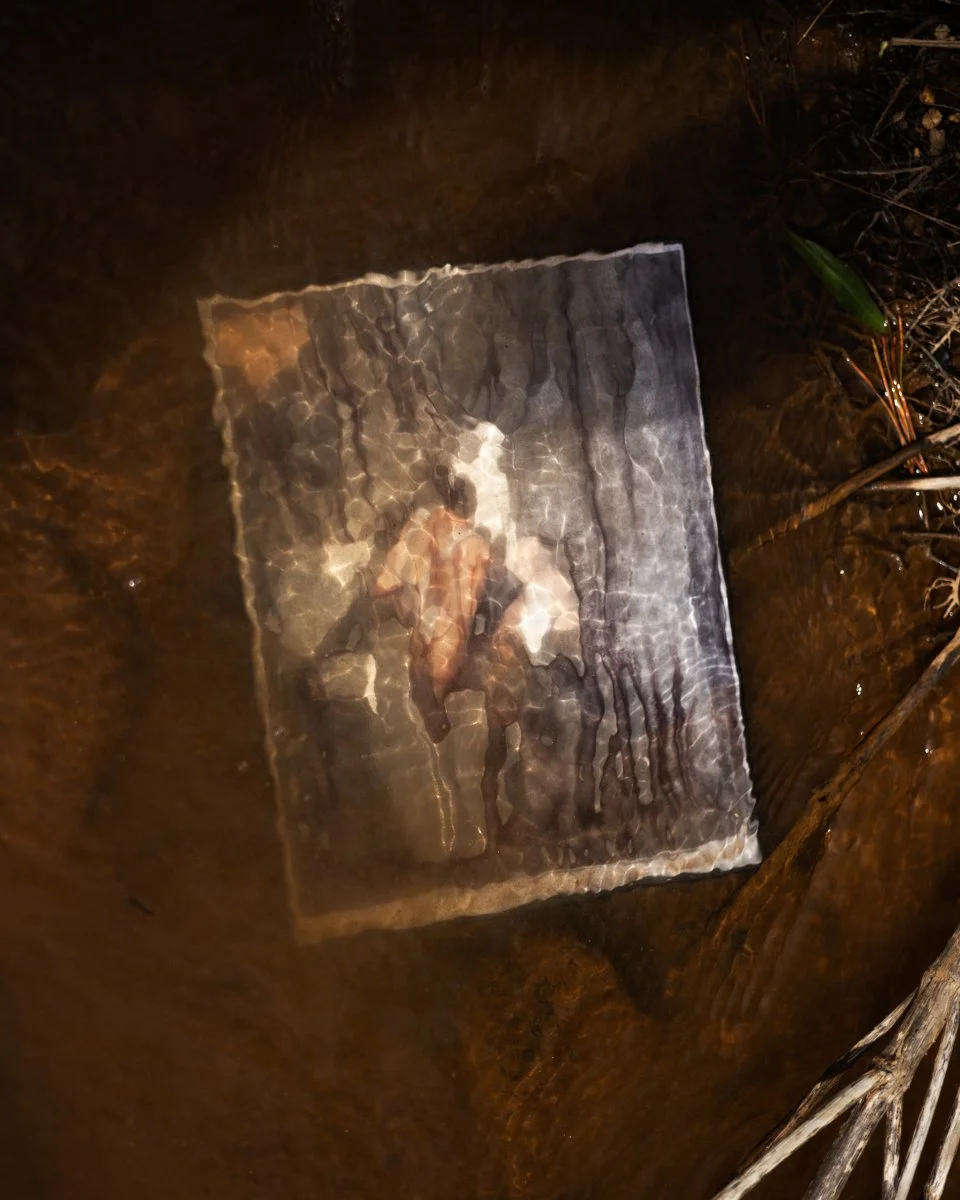
Frances Bukovsky, Process: Beyond, 2024, 8x10”, Lumen Print
ML: Many photographers describe themselves as observers, but your work often suggests collaboration with landscapes rather than documentation of them. What does it mean to build a relationship with a place and how does that relationship influence the images you make?
FB: For me, building a relationship with a place means showing up openly and honestly over time, with the intention of curiously attending to the place without knowing exactly where the relationship will lead. Having a deeper relationship to a place changes the way I see that place and the way I move through it. It is carried in my body with me when I leave.
The images I am able to make when I have returned to a place enough times to have created a relationship with it are of a more intentional kind of noticing that go beyond the surface impression of visiting a place once or twice. It is like knowing someone well enough to notice they have a new freckle, or that they’re having an off day by the particular way that they say they’re “fine.” Through careful noticing, there is a possibility for deeper connection.
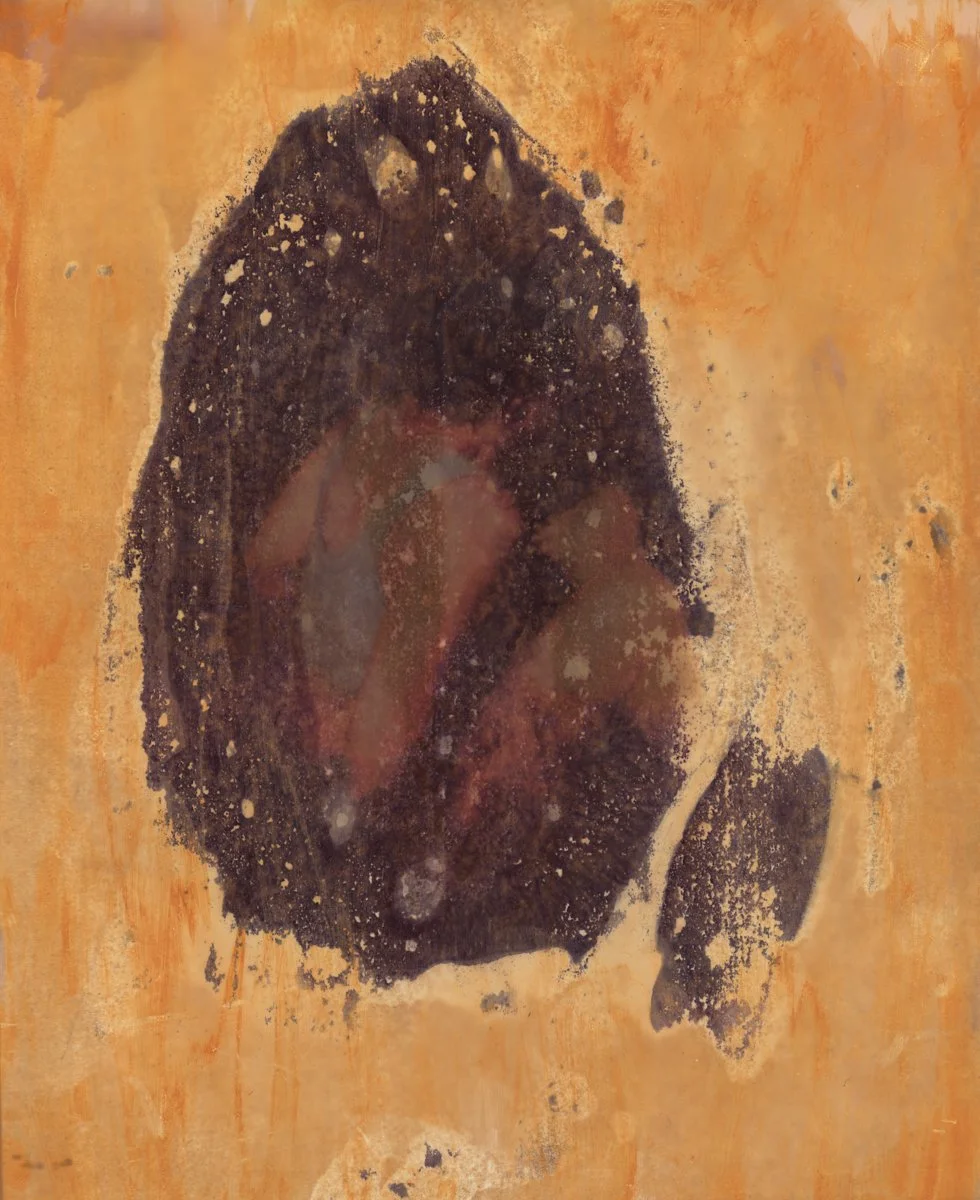
Frances Bukovsky, Beyond, 2024, 8x10”, Lumen Print
ML: Your artistic practice consistently asks viewers to pay closer attention to bodies, environments, materials, and systems that often go unnoticed. How has living with chronic illness shaped your understanding of attention and observation?
FB: I have gotten the sense that creative practice is an integral part of the way I process experience and information, and this question brought up a lot of interesting things for me regarding attention and observation. In my creative practice, my attention is infused with curiosity and something akin to care. When I think of how attention and observation have existed in other areas of my life, particularly in connection to chronic illness, I can see how this desire for attention to be an act of holding rather than accusation has been transmuted by creative practice.
Within my experience of chronic illness in the context of the American medical system, being observed has felt like being simultaneously accused and dismissed, attention directed to my body feels both sharp and quickly veering away. I have often left appointments yearning to be seen more fully, or more gently. While I cannot shift how my body is viewed within a particular system, that yearning has translated to my photographic practice.
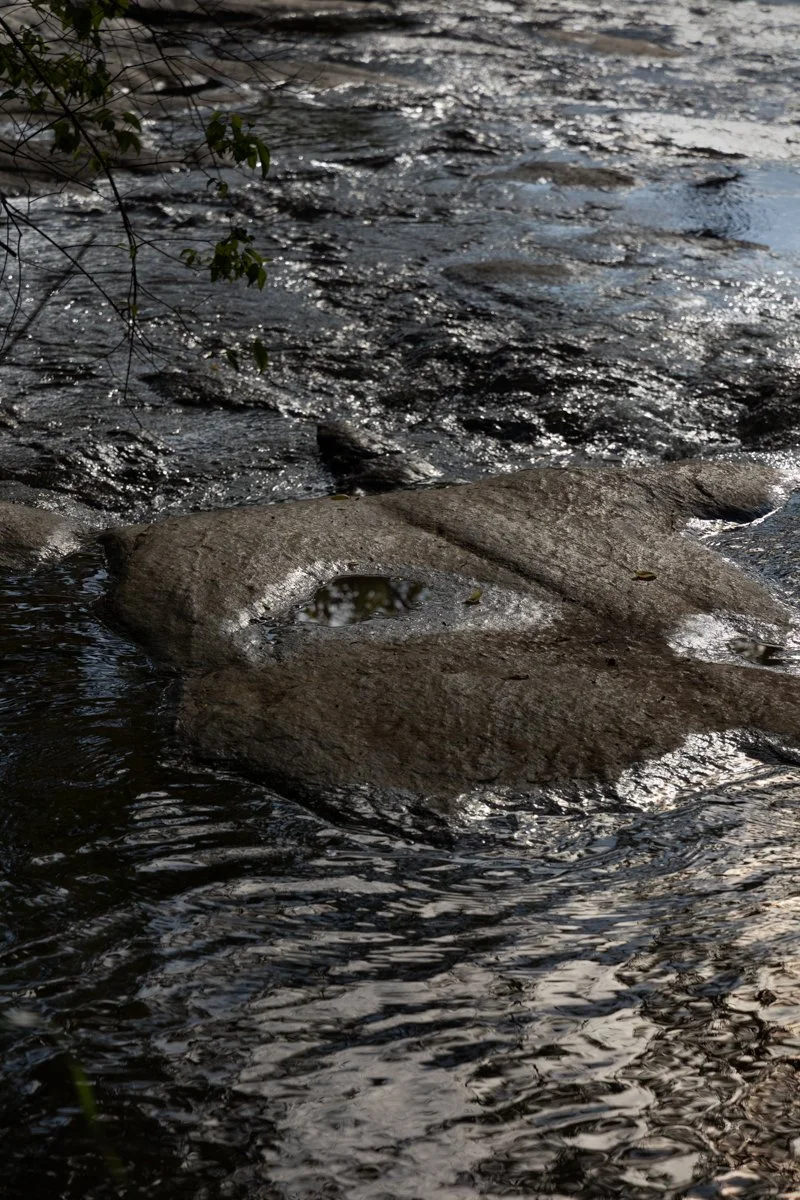
Frances Bukovsky, Portal, 2024, 12x18”, Archival Digital Inkjet Print
ML: Throughout your work there is a recurring interest in bodies and landscapes as interconnected rather than separate. How has ecological thinking influenced your understanding of the human body, and conversely, how has embodied experience influenced the way you think about ecology?
FB: Ed Yong’s I Contain Multitudes(1) opened my mind to the question of “what is a body?” As someone who lives in a body that has been changed by a lifetime of interactions with the microbiological world through a variety of infections, finding language and scientific context for our bodies being ecosystems was a huge shift in my thinking. At the time I was also deep in questions posed by the Kinship Photography Collective during our Between Bodies call, in which I felt called to redefine what we consider a body.
Around this time I also read Lightning Flowers(2) by Katherine Standefer, in which she breaks down the supply chain that produces the ICD (implantable cardioverter-defibrillator) that she has. Through reading about how her body contains minerals extracted through labor half a world away, and then shipped and assembled, passing through all of these hands and environmental scenarios, I began to see the human body as less singular and more deeply intertwined with the world we live in.
I also experienced two years of a rare migraine disorder that produces migraines that last for weeks or months at a time. During that time, my sensory processing and perception of the world were highly altered, which led to a chronic feeling of dissolution of my own body. I could sit on the edge of a river and watch the sunlight glitter on the surface, and feel as if there was no distinction between my body and the river and the movement of light. While those episodes are now very rare for me, they showed me a different way of relating to the world that has lingered in my life.
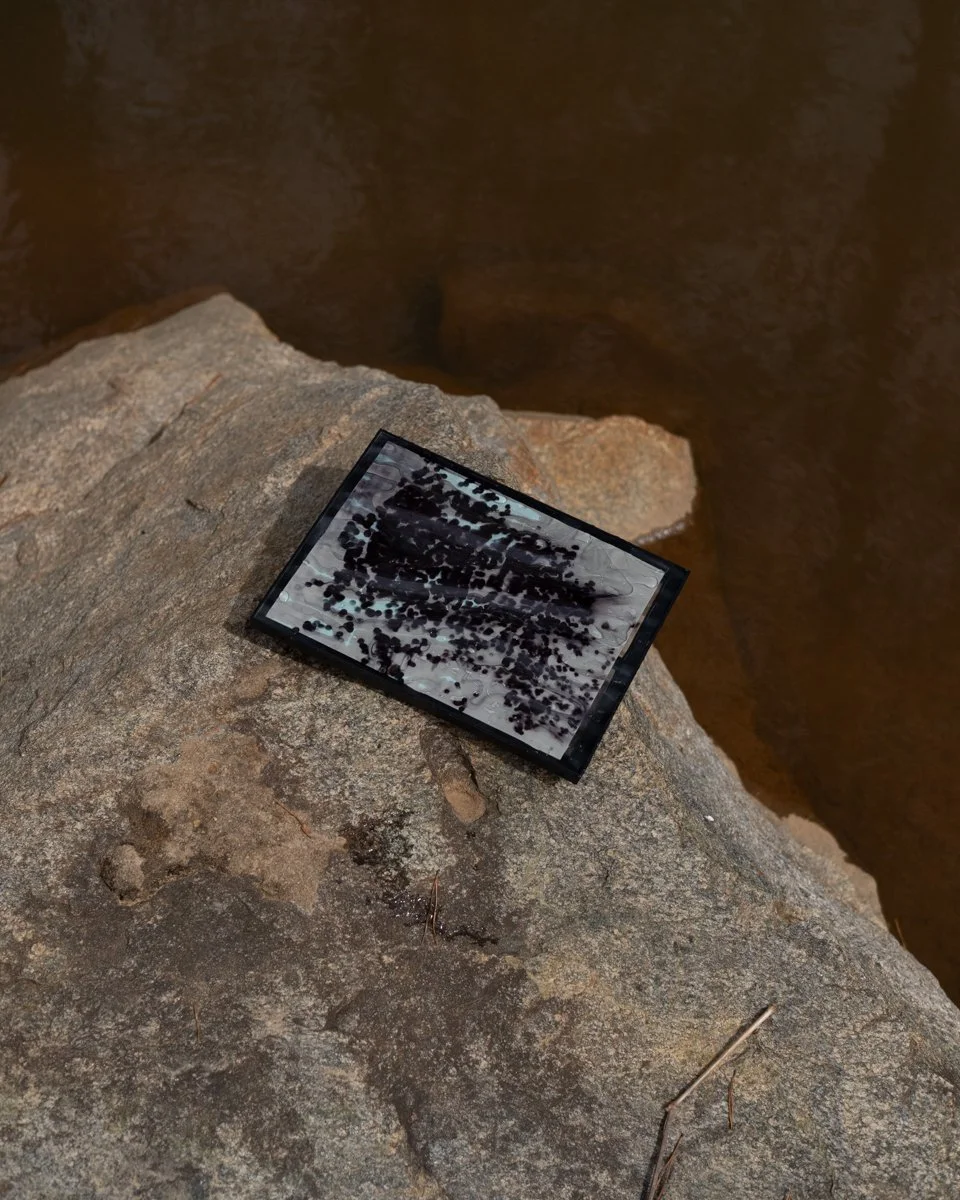
Frances Bukovsky, Process: The Way Sun Reflects on Water, 2024, 8”x10”, Lumen Print
ML: In your practice groups, you invite participants to work with elemental forces like water, fire, and air as creative collaborators. What have these elemental explorations taught you about photography and how do they connect to your broader artistic philosophy?
FB: In 2025, the Kinship Photography Collective explored Elementals as our call-for-engagement, drawing from the five-part series Elementals released by the Center for Humans and Nature(3). It was fascinating and a challenge to both practice and facilitate around the elements. In the practice groups, I am posing questions and investigations that interest me in my own practice. I found myself asking how to engage more deeply with the elements, and how the elements could shift or change my practice, alongside how to pose questions that would do the same for practice group participants.
I was surprised, mostly, as I often am during practice groups, at the direction the work took, and what I learned. I typically have a vague idea of where I think a group is going to head, and I found for each of the four elements I was immensely surprised and headed in a totally different direction. Above all, working with the elements taught me a lot about play and experimentation in photography. Sometimes the most exciting developments can occur when we are open to outside forces or following an unlikely thread.
They also taught me not to assume what the lesson is before it is taught-each element revealed itself as multi-dimensional with multiple points of entry. I thought Fire might lead me down a path of expression of anger and grief, and instead I found myself meditating on care. I felt called to Earth for rest and found it there alongside a depth to my practice I hadn’t expected. Water invited connection, and Air brought me into an unseen, internal space.
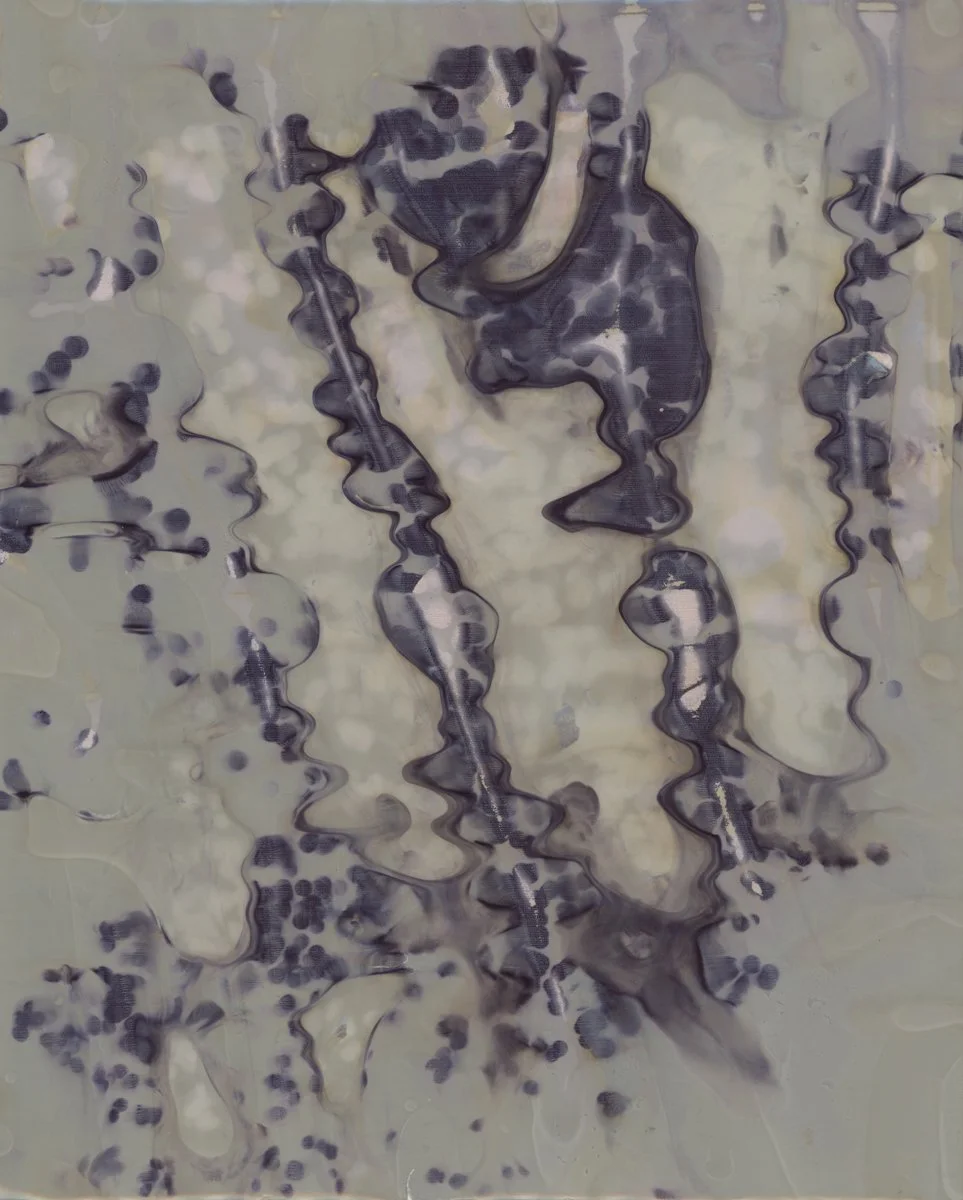
Frances Bukovsky, The Way Sun Reflects on Water, 2024, 8x10”, Lumen Print
ML: Water appears repeatedly throughout your work, not only as a physical substance but also as a metaphor for transition, grief, memory, and transformation. What is it about water that continues to hold your attention as an artist?
FB: Water is in all of us. We carry water in our cells and are connected to every other molecule of water through the water cycle simply by being alive. That universal connection feels close to what my practice searches for. The closest I ever feel to having defined edges of my own body is when I am in water and receive the sensory feedback of water pressing against my skin. I also live with Sjogren’s disease, which causes dry eyes and dry mouth-symptoms that have significant impacts on my ability to eat and see, and makes water exceptionally precious to me.
We have an entire human history of water rituals, and yet so much of our current society does not respect or value water, as is seen by the rampant pollution and lack of care taken with our waterways and water sources. There is something in that contradiction for me-whenever I go to water it feels like coming home, and I suppose I’m extending that invitation to others. I have had multiple bodies of water in my life that have been life changing places where I would bring my own grief and feelings of transition and transformation.
Water is also simply beautiful, always interesting, always different. It gives me pleasure to observe light dance with water, to notice all of the ways the river has changed while I’ve been away.
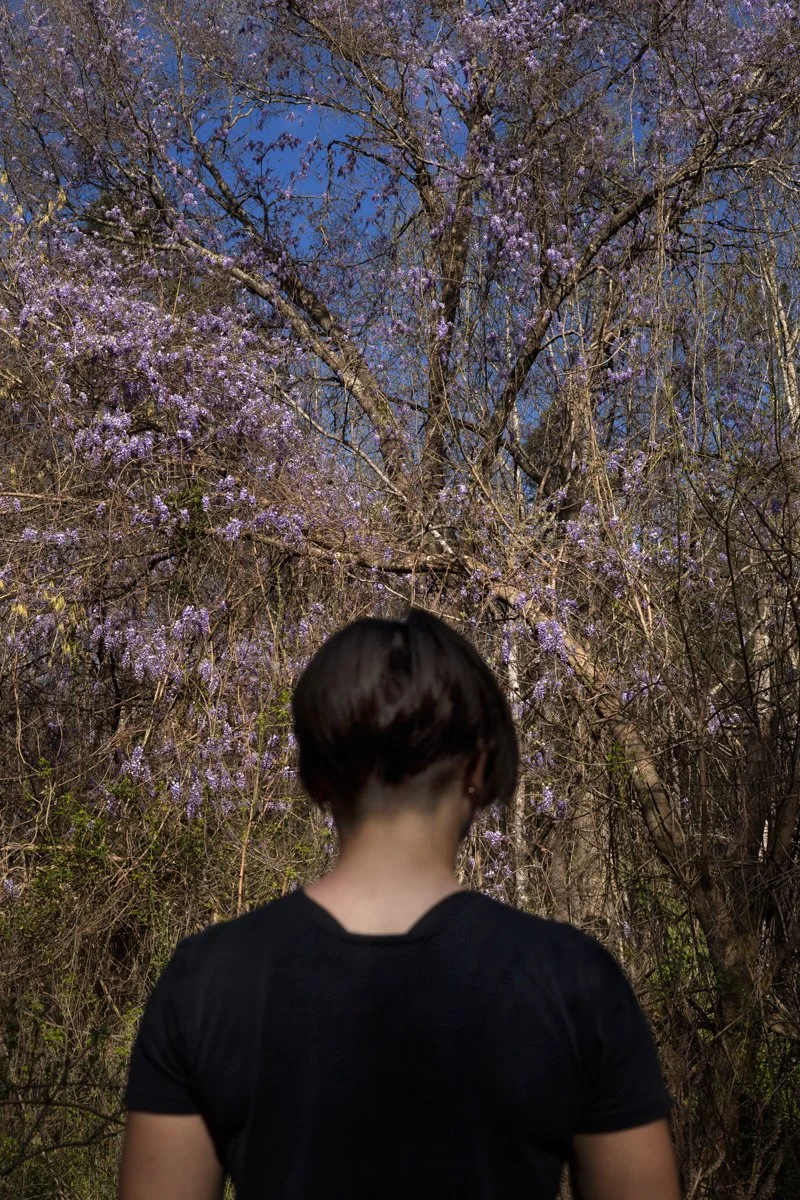
Frances Bukovsky, Where You Once Stood, 2024, Archival Digital Inkjet Print
ML: Your projects frequently connect intimate personal experiences with larger systemic structures such as disability rights, environmental change, and the medical-industrial complex. How do you navigate the balance between vulnerability and political critique within your work?
FB: I think a lot about how to contextualize images and the ways in which they are shown. Of course, once the work is out there you lose a certain amount of control over where the image might end up, but I put thought into framing work in a way that grounds it within both the image itself and the world that image was made in. A significant amount of political discourse takes place in a theoretical sphere that strips humans, more-than-humans, and place itself, of our embodied reality, and my work responds to that by staying close to that which I photograph.
When I create work with others, I have a very strong code of ethics based on consent that is discussed in advance. People who photograph with me discuss the intent of the work, where the work might appear, and I include them in unfolding discussions and developments about that work. They also have a say in the images used and shared, and this is never a finished dialogue. This has felt really important to my practice whenever I have worked with others.
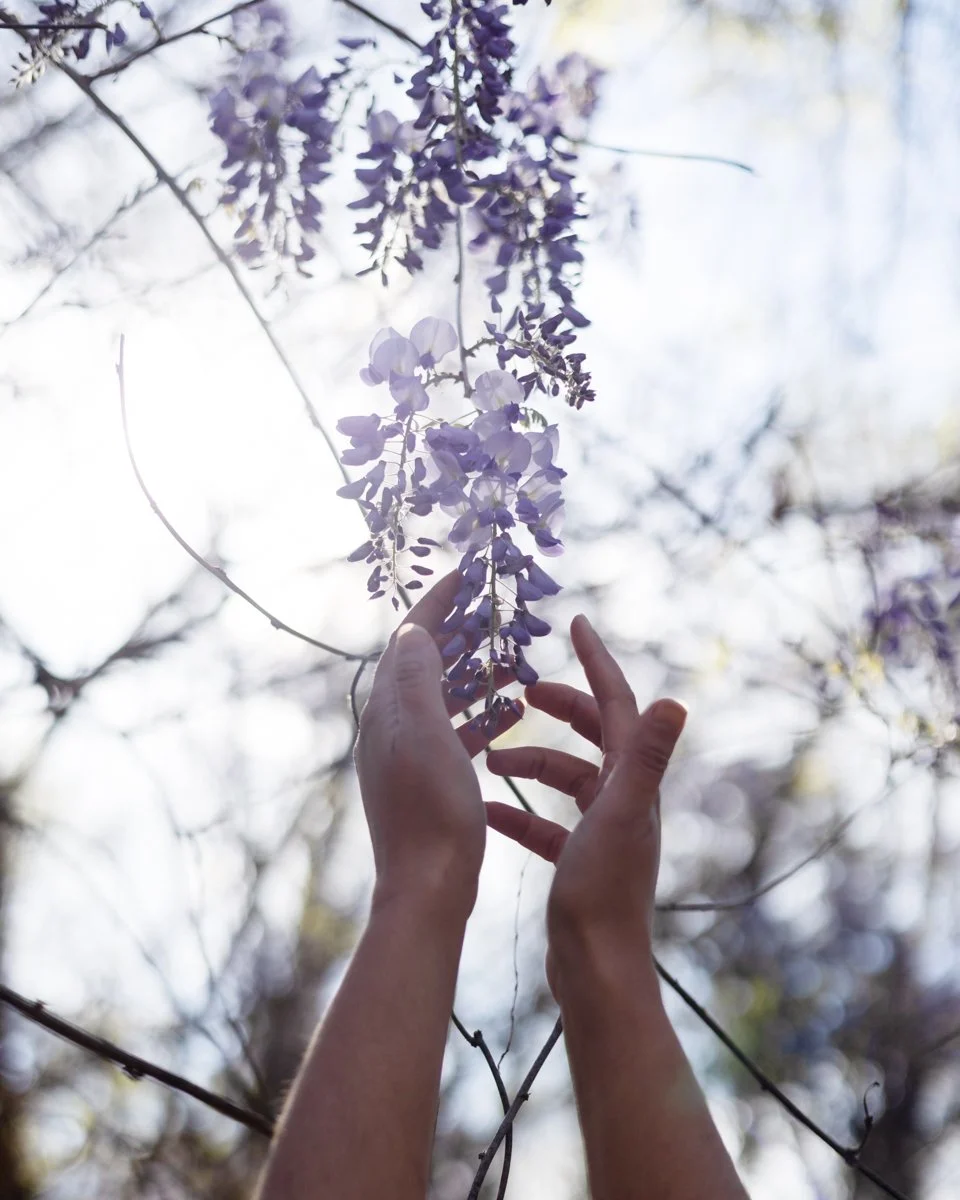
Frances Bukovsky, Beyond II, 2024, 11x14”, Archival Digital Inkjet Print
ML: The Glendale project explores a landscape shaped by industrialization, environmental change, and shifting relationships between people and place. What conversations do you hope this work opens about the ways communities inherit both ecological and historical legacies?
FB: I hope that it offers a space for both grief and care, and how there is care in grief, and through grief we can care deeply, and through caring deeply we can learn and build new ways of being. Having grown up in a post-industrial Appalachia, I have seen a lot of weariness, and a lot of disenfranchisement in my own communities, and a certain type of detachment. Grief is painful, it causes change through the process of undergoing it. But we also do not have to grieve alone, in an individual or even in a species sense. Donna Haraway invites us to “stay with the trouble,” and that calls for hard, but love-filled work.
I also want my work to be a call for connection, for someone to realize that they already have an abundance of relationships in their life that can be tended, whether those are human or more-than-human relationships. Sometimes those relationships are complicated and require long, difficult looks at hard histories, and difficult questions about how repair can occur, if it can occur. Sometimes those relationships are joyful, like a summer afternoon spent by the creek. Those relationships can lead to different and sometimes unexpected futures.
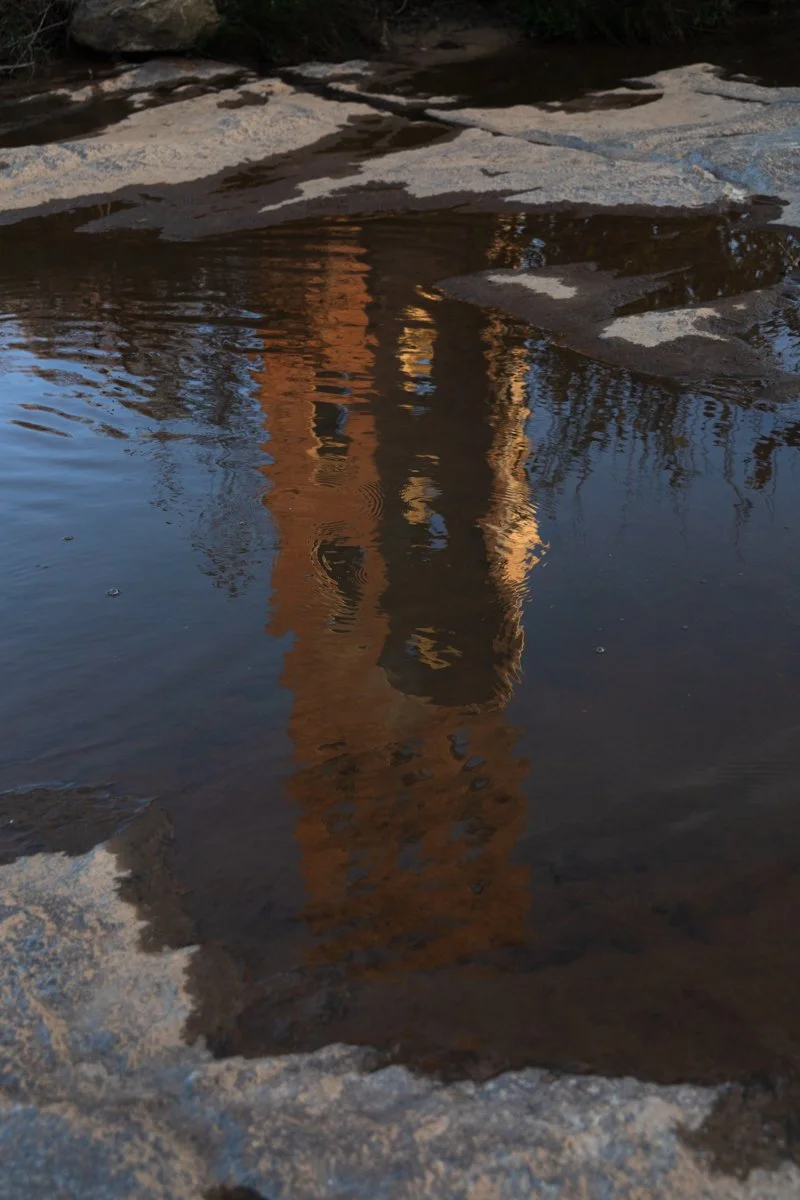
Frances Bukovsky, Through Time, 2024, 12” x18”, Archival Digital Inkjet Print
ML: Your work often slows viewers down, asking them to spend time with subtle textures, layered images, and quiet moments. In a culture increasingly defined by speed and constant visual consumption, what role do you think slowness plays in contemporary photographic practice?
FB: I think it is increasingly necessary. Visual consumption has progressed to the point that photographs are constantly devalued and disregarded, and I think slowness offers a space to not only restore that value, but to develop a different relationship with images and a different relationship with making images. There is a depth that comes with making images over time.
Slowing down my photographic practice has led to a more thoughtful way of existing as a person. I think slowness in contemporary photographic practice can introduce slowness in other ways of being, ones that are necessary as we face the environmental and social consequences of hyper-consumerism and hyper-individualism.
Slowness also offers different paths into photography, allowing for more access and different perspectives for people for whom speed is not an option.
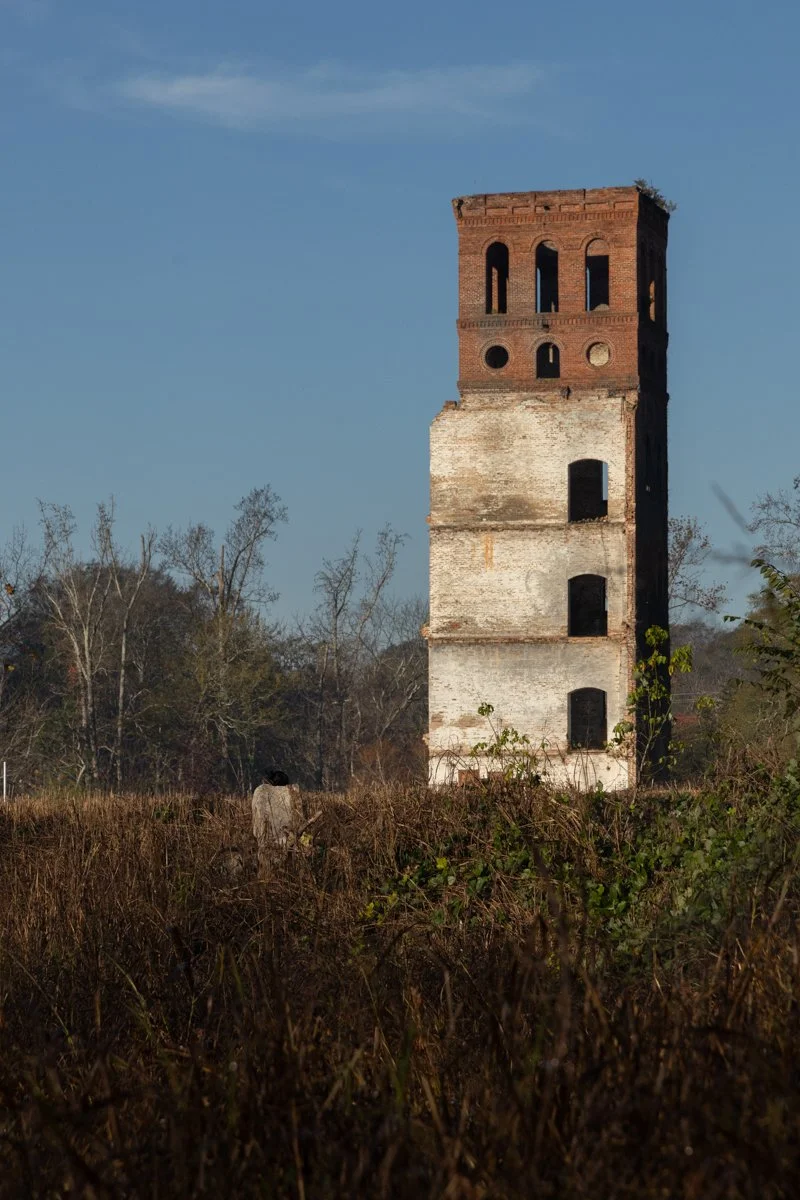
Frances Bukovsky, Black Cat II, 2024, 12x18”, Archival Digital Inkjet Print
ML: Research is clearly central to your creative process, but your projects never feel overly didactic. How do you balance archival knowledge with intuition, sensory experience, and emotional response when developing new work?
FB: I am nothing if not a ruminative person, both behind the camera, as well as in my own life. Something, an idea or fact that I’ve read, a line from a poem or song, a string of words, a memory from childhood, will get lodged in my head and loop on a spiral. It begins to direct my lens. Sometimes I have a strong feeling of an image that needs to go with the rumination to close the loop and sometimes there is a sense of searching. I’ll begin to ruminate visually over time, photographing similar things without realizing it, not understanding why I have thirty different self portraits of different hand gestures on my hard drive until suddenly a piece will slide into place. Maybe I read a new book or had a conversation with someone, and then it all makes sense and I have more direction.
I also photograph a lot as a near daily practice that is essential to my life. This allows me to sink into that sensory experience and there is no pressure for any singular image to be a part of a project (unless I am specifically making images for a project). I have noticed that even if I am not consciously considering a project, what I have been researching tends to direct my lens in a more subconscious way.
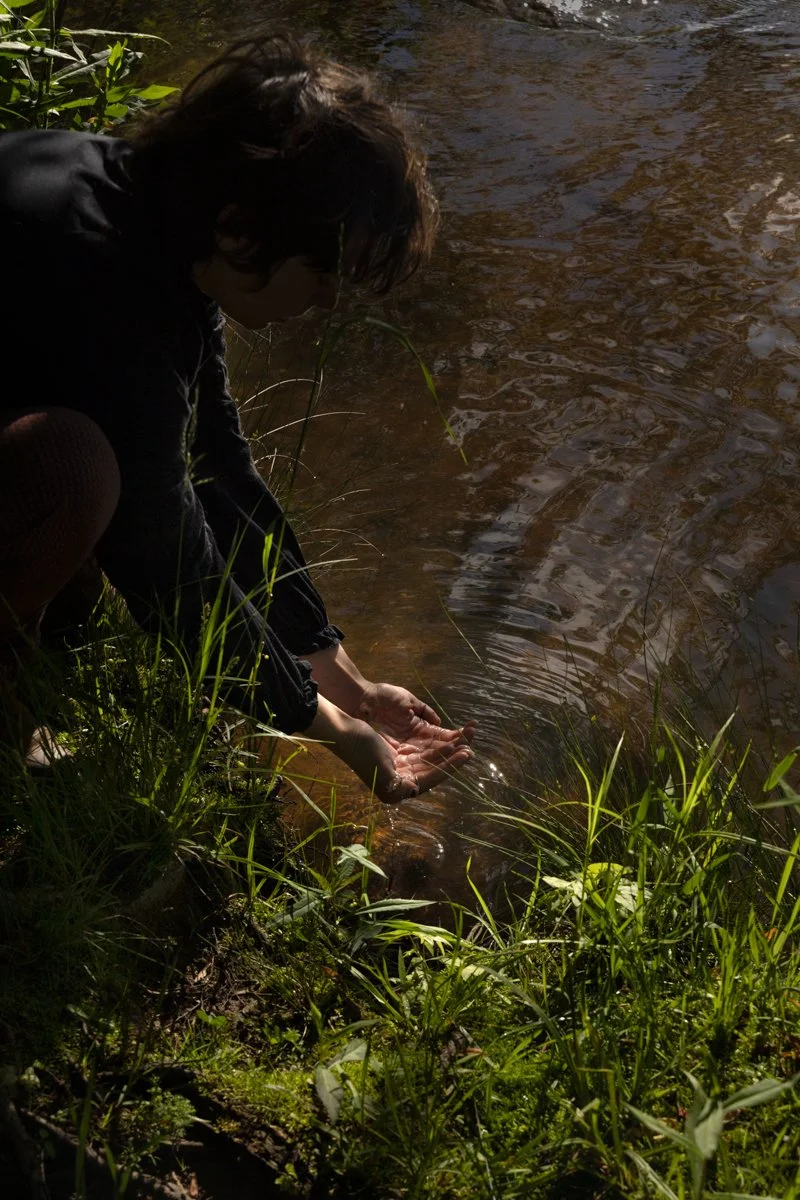
Frances Bukovsky, What We Cherish, 2025, 12”x18”, Archival Digital Inkjet Print
ML: As a co-founding member of the Kinship Photography Collective, you've helped foster communities centered around care, experimentation, and shared learning. How has working within collaborative artistic communities influenced your own practice and your understanding of photography as a relational medium?
FB: Oh, it has shaped everything. I would not be the photographer, artist, or person I am without Kinship’s community. I was formally educated in a competitive art environment where I internalized a lot of unhealthy and ableist expectations of my own practice. That sense of competition also made me feel like a very lonely artist. So much of my social life these days revolves around art practice, whether that of my own, my friends, or the community around me.
Being a part of creating, sustaining, and participating in Kinship helped me realign my art practice with my own values and come to a much deeper relationship to art-making and to other artists. One of the most exciting things for me has been to realize just how much of a creative ecosystem Kinship is. I couldn’t make this work without participating in the exchange of ideas, knowledge, perspectives, and conversation that occurs in Kinship.
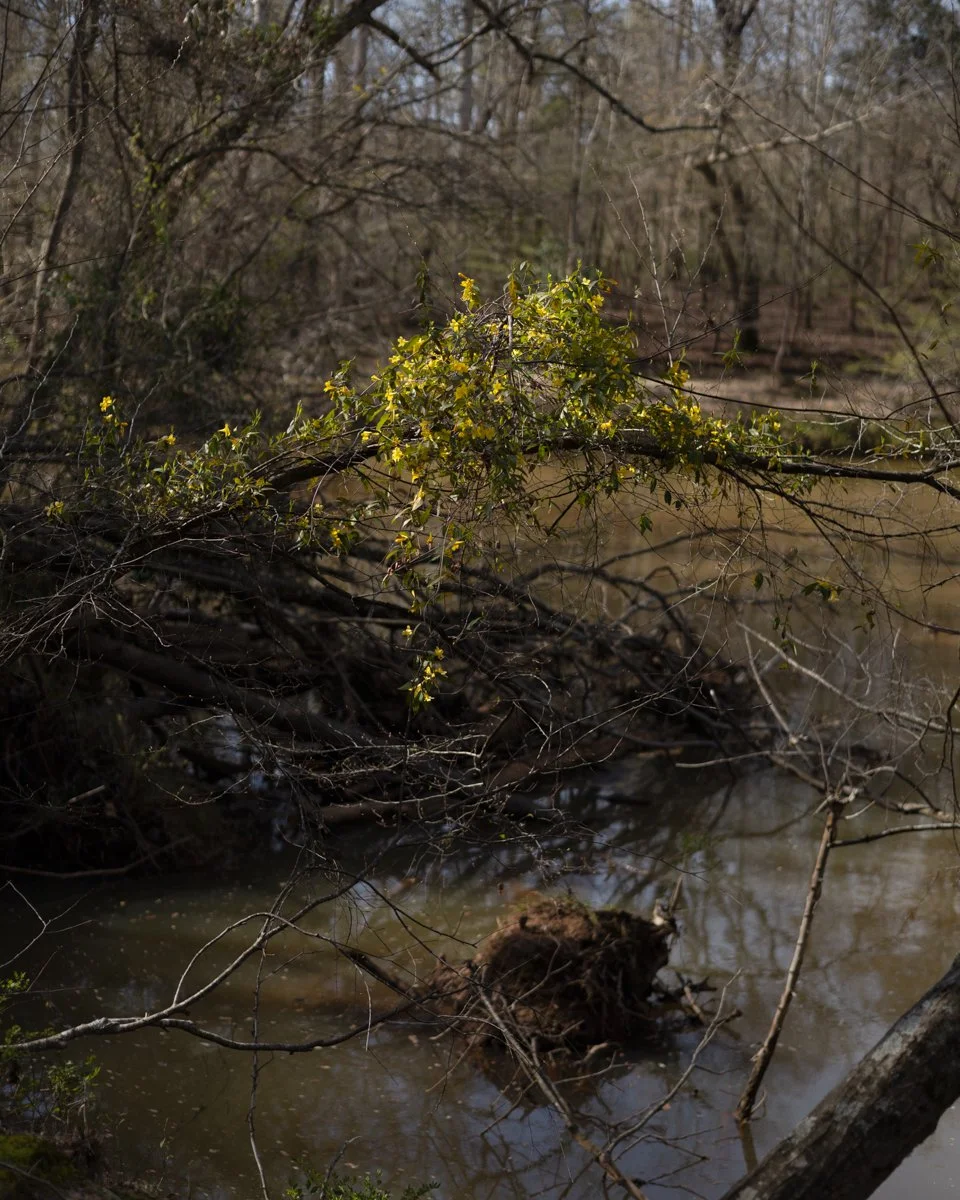
Frances Bukovsky, Jessamine in Spring, 2024, 11x14”, Archival Digital Inkjet Print
ML: Looking back at A Cherished Embrace of Iron and Water, was there a particular image, encounter, or moment in the landscape that fundamentally changed the direction of the project or your understanding of Glendale?
FB: There was a moment for me when I realized that I wanted to continue this project beyond my residency at the Goodall Center. I met my now-partner during those initial three weeks and this project became delightfully bound up in creating intimacy within the unfolding relationship to place as well as the unfolding relationship to my partner. He grew up in Glendale and being invited into his own relationship to this place shifted how I was showing up to the work. Hiking a trail with someone who has been hiking there for ten years is a much different experience than wandering alone in the woods.
Forming that connection also logistically changed the project. I found my time at Glendale expanding beyond my initial three week visit as I would photograph there most times that I visited my partner over the first two years of our relationship. It was also incredibly helpful to present the project to someone who grew up as a part of the community and knew the landscape there over time. Having the resource of feedback from someone of the place helped me stay grounded in the more embodied experience of the place.
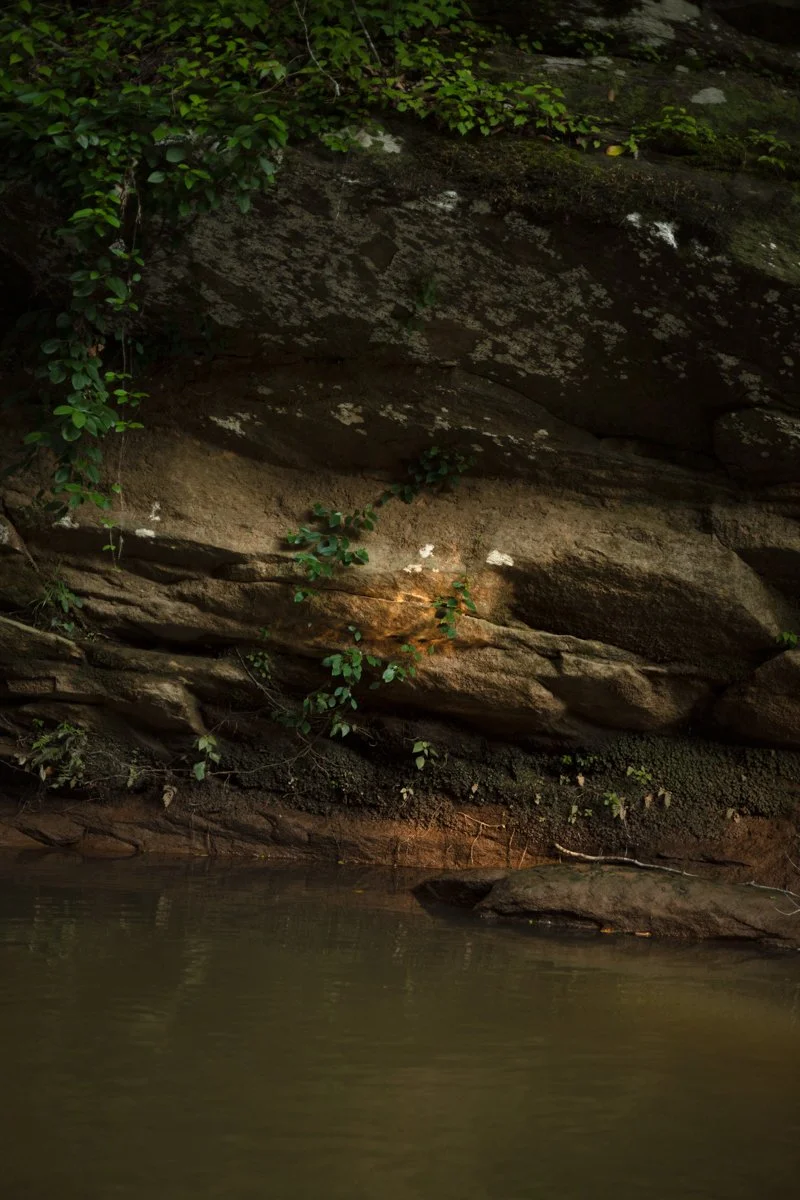
Frances Bukovsky, Thin Place on the Lawson Creek, 2025, 12x18”, Archival Digital Inkjet Print
ML: If someone were to encounter A Cherished Embrace of Iron and Water fifty or one hundred years from now through the GroundTruth Institute archive, what would you hope they understand, not only about Glendale, but about this moment in our relationship with bodies, landscapes, and the more-than-human world?
FB: I hope that they would look back at this work, and all of the projects made through the Goodall Fellowship, and see the beginning era of something that has since continued to flourish in ways that are perhaps unexpected. I hope they would see the beginning of a return to our bodies, landscapes, and the more-than-human world, and more than it being a beginning, I hope they see it as a history that continues as a future full of care.
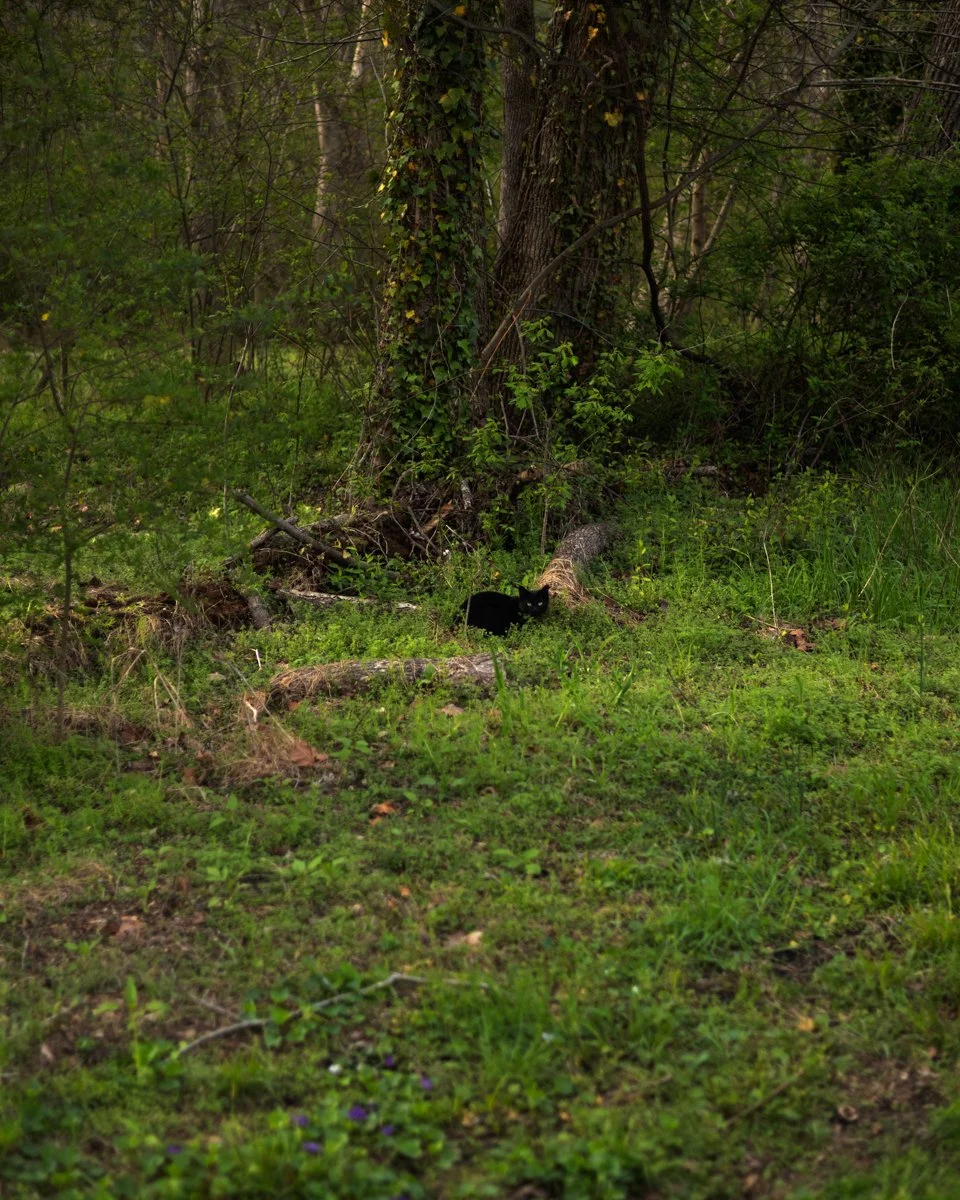
Frances Bukovsky, Black Cat I, 2024, 11x14”, Archival Digital Inkjet Print
ML: What is holding your interest at this moment? Is there current work/research you are pursuing?
FB: Many things: time, Appalachia, sensory processing, rivers, myths and narratives of healing, queer ecology, how to create embodied photographs of dreams. My practice often dwells in a delightful chaos. I am also currently finalizing my body of work, Upheaval, which is a narrative of home-seeking in body and place within Appalachia. I am actively seeking publishers for a photobook of the project. I am also immersed in Kinship’s current call for engagement, Time. I have been practicing feeling my own relationship to time through my body’s experience of it and how to shift that through photography.
Yong, Ed. I Contain Multitudes: The Microbes Within Us and a Grander View of Life. New York: Ecco, 2016.
Standefer, Katherine. Lightning Flowers: My Journey to Uncover the Cost of Saving a Life. New York: Little, Brown Spark, 2020.
Van Horn, Gavin, and Bruce Jennings, eds. Elementals. 5 vols. Humans & Nature Press, 2024.