
Vibha Galhotra
Vibha Galhotra (b. 1978) is a Delhi-based conceptual artist whose multidisciplinary practice unfolds at the intersection of ecology, politics, and poetic inquiry. Working across photography, video, sculpture, installation, site-specific interventions, and public art, her work critically engages with the entangled realities of climate change, globalization, capitalism, and consumerism. Situated within the discourse of the Anthropocene, Galhotra’s practice interrogates the fragile and often fraught relationship between human systems and the natural world. Internationally recognised, Galhotra’s work has been exhibited at leading institutions including the Asia Society, Martin-Gropius-Bau, Kiran Nadar Museum of Art, and Kunstmuseum Wolfsburg, and was featured in Desert X AlUla 2026, one of the world’s foremost site-specific contemporary art exhibitions. She has presented solo exhibitions at Jack Shainman Gallery, Goodman Gallery, and Nature Morte. Her accolades include prestigious residencies such as the Rockefeller Foundation Bellagio Center, alongside international recognitions including the Asia Arts Future Award. Her works are held in significant public and private collections worldwide, including NIROX Sculpture Park, Seattle Art Museum, Singapore Art Museum, the Essl Collection, the Bill & Melinda Gates Foundation, and The Margulies Collection.
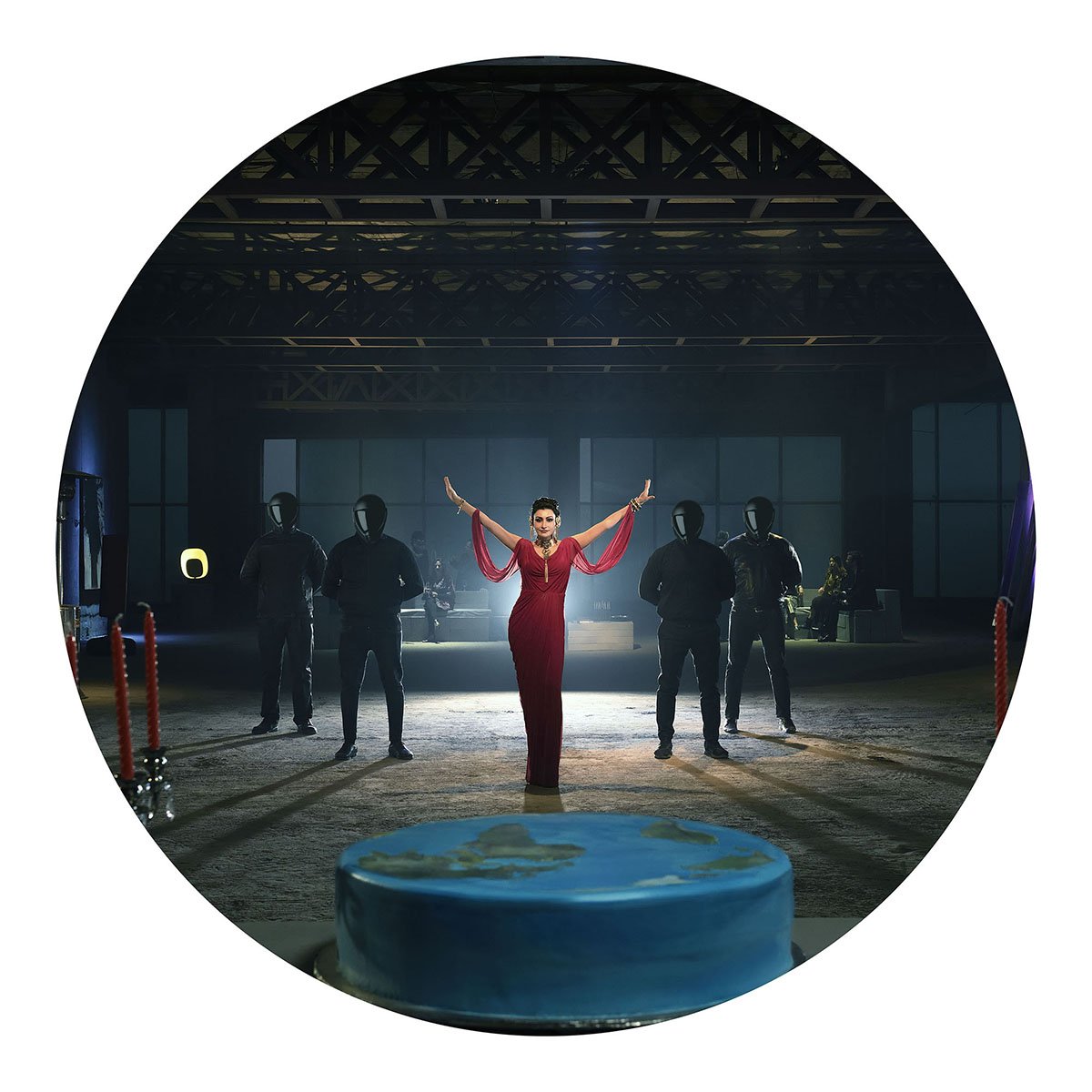
Vibha Galhotra, The Final Feast (Staged Photoworks), 2020, 60” x 140”, archival print on photorag hahnemuhle paper
Margaret LeJeune: In my conversation with Vibha Galhotra for the GroundTruth Institute archive, we discuss Galhotra’s multi-disciplinary approach to working in the Anthropocene. Through her projects, we are confronted with a world that does not end in a single moment of catastrophe, but rather one that unravels slowly, almost imperceptibly, through air thickened by toxins, rivers choked with waste, and landscapes reshaped by human ambition. Together we explore the questions, observations, and evolving concerns that inform her work, offering insight into how artistic practice can engage with urgent ecological realities while imagining alternative ways of relating to place, history, and the future.
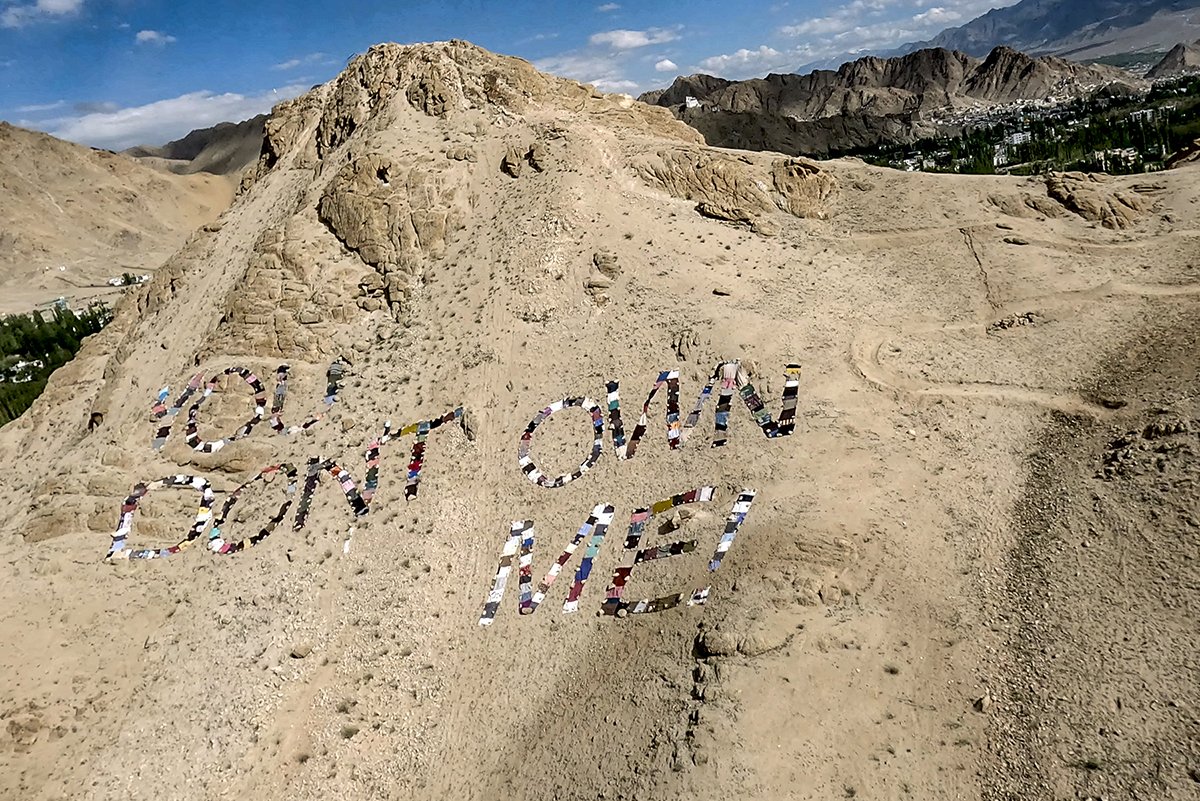
Vibha Galhotra, You Dont Own Me! (Site Specific), 2023, 30’ x 256’, found and collected discarded clothes
ML: You’ve described your practice as a constant negotiation between humans and their ecosystem. When did this awareness first take root for you?
VG: I think this awareness began long before I consciously understood it as “ecology” or environmental concern. It emerged through lived experiences — through growing up close to nature, travelling frequently with my family to quieter landscapes, and observing how deeply human emotions and ways of living are shaped by land, water, climate, and community.
My father was someone deeply connected to nature, and those early experiences stayed with me subconsciously. Later, when I moved through urban spaces like Delhi, the contrast became impossible to ignore. I witnessed rivers turning toxic, air becoming unbreathable, agricultural lands disappearing, and an increasing psychological disconnect between people and the natural world. These changes were not abstract environmental issues anymore; they became emotional and existential realities.
During my student years in Santiniketan in the late 1990s, I became deeply interested in land art and site-responsive practices. Being in Santiniketan was transformative because the relationship between art, landscape, craft, and philosophy felt interconnected rather than separated into disciplines. Around that time, I began experimenting with the land itself as material, site, and collaborator. That experience fundamentally altered how I understood artistic practice.
Over time, I realized that my work was not only about environmental degradation, but about the larger anxieties, ambitions, violences, and contradictions embedded within contemporary civilization. The ecosystem became both a literal and metaphorical space through which I could reflect on human behaviour, fragility, and impermanence.
Even today, I do not see nature as something outside us. I see humans as part of a larger ecological and cosmic system that we continuously try to dominate, control, and separate ourselves from, often with devastating consequences.
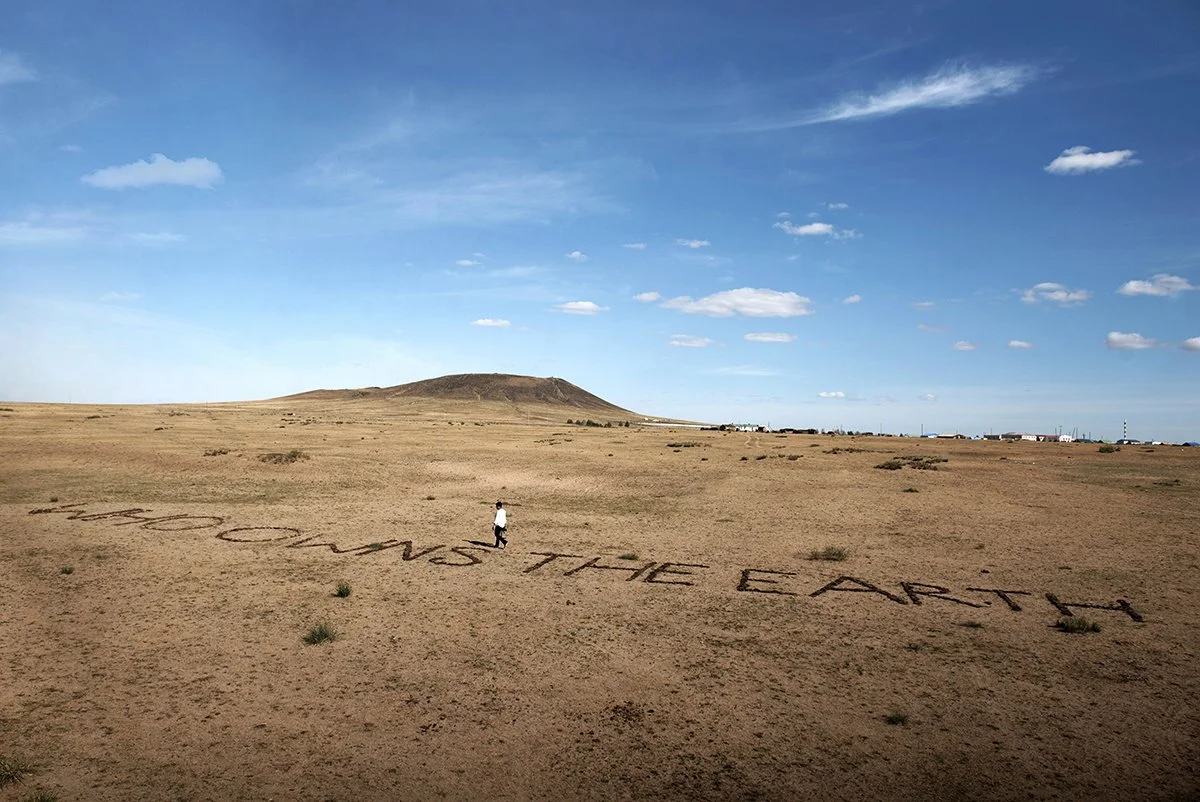
Vibha Galhotra, Who Owns the Earth?, 2016, 3 x 30 meters, mixed media installation , 4th Land Art Biennial LAM 360°, Mongolia
ML: Growing up in Kaithal, and later living in Delhi, how have these environments shaped your creative practice?
“Rather than being shaped by a single place, I feel my practice has been formed through a continuous movement between landscapes, geographies, and experiences. If my early years nurtured an intimacy with nature, cities like Delhi revealed the consequences of our growing estrangement from it. Much of my work exists within that space of tension, reflection, and inquiry.”
VG: I grew up across different cities in Haryana before my family eventually settled in Chandigarh. Those early years exposed me to varied landscapes, communities, and ways of life. Although development and industrialization were gradually expanding, there still remained a sensory closeness to nature that shaped my emotional memory. These experiences created an early awareness of interdependence, of how weather, water, agriculture, labor, and community are deeply connected.
My art education then took me to the eastern part of India, to Santiniketan, where I pursued my Master's degree in Printmaking. Looking back, my years there were transformative. The university's rural setting, philosophy, and relationship with the landscape organically led me towards land art and site-responsive practices. In Santiniketan, art was not isolated from everyday life, nature, craft, or community. That environment profoundly influenced how I understood artistic practice and continues to inform my thinking today.
After completing my studies, I explored different places to live and sustain myself before eventually moving to Delhi around 2004–05. All these shifts taught me a great deal, and I continue to learn from both lived and travelled experiences. In many ways, my practice exists somewhere between these journeys and encounters.
Delhi exposed me to the accelerated realities of urban expansion, pollution, consumerism, inequality, and ecological degradation. Living in the city made me confront the contradictions of modernity, how cities often function through extraction, invisible labour, environmental damage, and displacement. Delhi is a place where pollution is simultaneously hyper-visible and normalized. People continue living, celebrating, building, and consuming while surrounded by toxicity. That contradiction has deeply informed my work.
My engagement with the Yamuna emerged from this confrontation. Coming into close contact with the river around 2009 became a turning point. I was struck not only by its physical condition but also by the collective indifference surrounding it. A river once considered sacred had become ecologically devastated, yet it continued to occupy an important place in cultural and spiritual consciousness. That tension between reverence and destruction became central to many of my works.
Rather than being shaped by a single place, I feel my practice has been formed through a continuous movement between landscapes, geographies, and experiences. If my early years nurtured an intimacy with nature, cities like Delhi revealed the consequences of our growing estrangement from it. Much of my work exists within that space of tension, reflection, and inquiry.
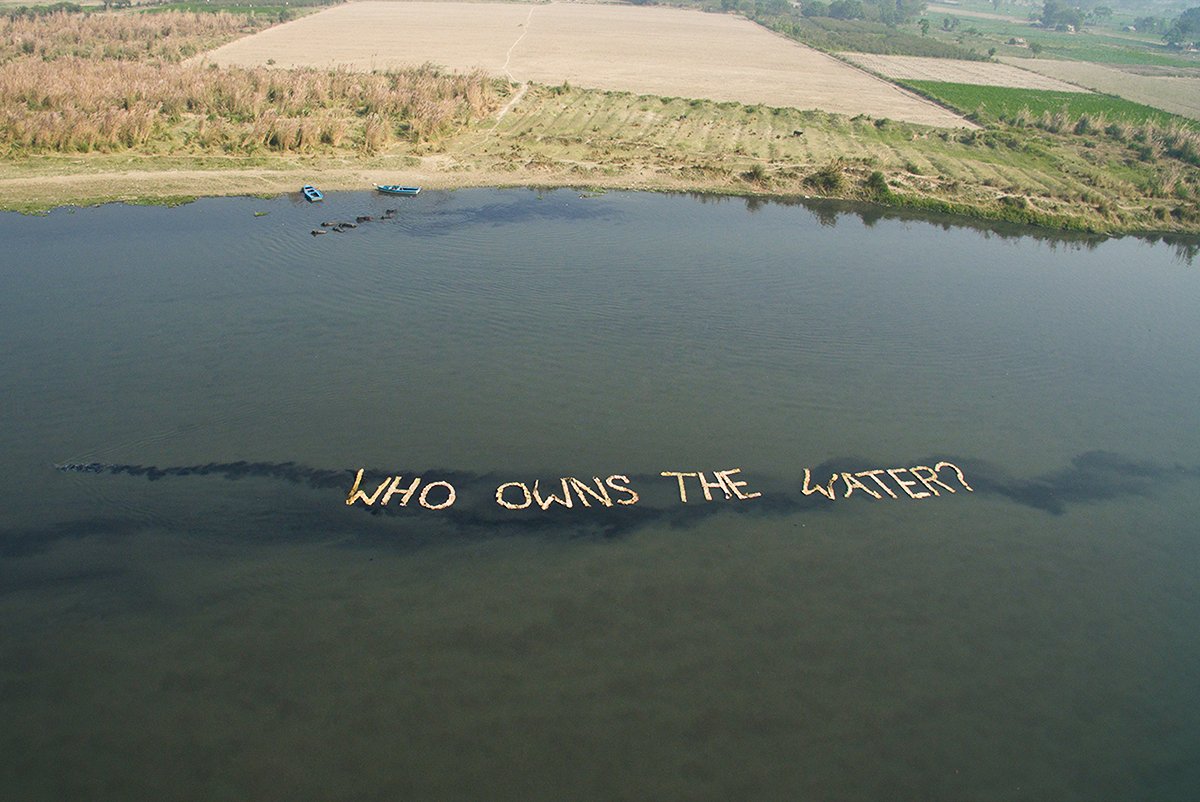
Vibha Galhotra, Who Owns the Water?, 2016, 6 x 60 meters, bamboo, leaves and jute thread
ML: Your projects often begin with intensive research. Would you walk us through what this looks like in terms of knowledge building and immersive understanding?
VG: Research is an integral part of my practice, but it rarely follows a linear path. Most projects begin with a question, an encounter, an image, or a particular discomfort that stays with me over time. From there, I start gathering material from multiple sources—scientific studies, historical records, mythology, literature, conversations, field visits, newspaper archives, and personal observations.
I am interested in understanding how different forms of knowledge intersect. A single project might involve environmental data, cultural histories, local narratives, and philosophical inquiry. Rather than treating these as separate domains, I look for the connections and tensions between them.
Field research is particularly important. Whenever possible, I spend time in the locations connected to a project, observing landscapes, meeting communities, and paying attention to details that cannot be found in books or reports. These encounters often shape the direction of the work as much as formal research.
At a certain point, however, research must move beyond information. I am not interested in illustrating facts. Instead, I try to absorb the material until it begins to transform into form, image, gesture, or metaphor. The final work may appear minimal or poetic, but it is usually built upon layers of accumulated research and lived engagement.
For me, research is less about finding answers and more about developing a deeper relationship with a subject. It is a process of listening, observing, and allowing unexpected connections to emerge.
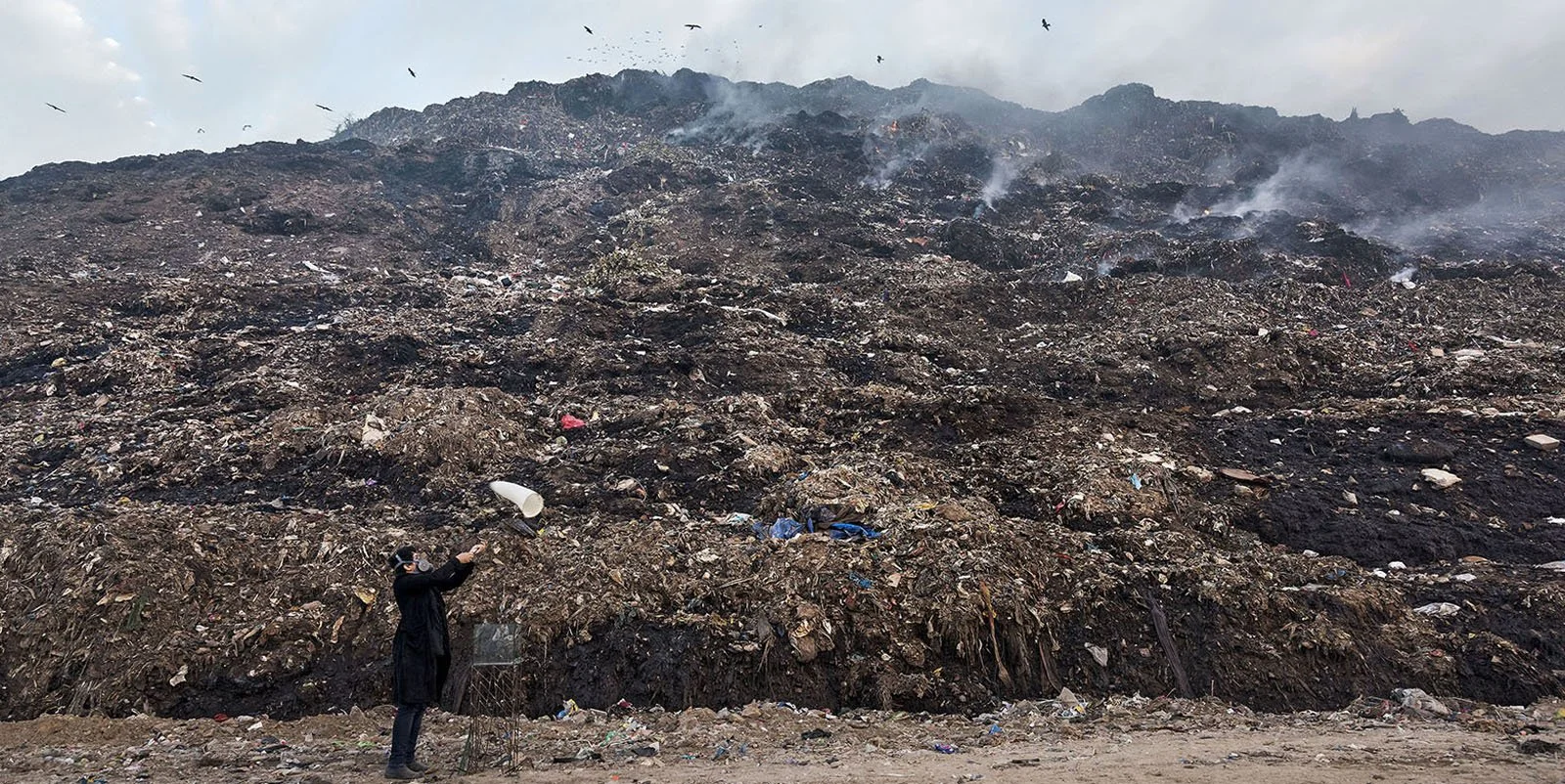
Vibha Galhotra, Breath by Breath, 2016, 60” X 120”, staged photoworks, digital print on archival paper
ML: You move fluidly between sculpture, film, photography, performance, and installation. Do ideas come to you in a specific medium, or does that evolve over time?
VG: For me, storytelling is always more important than the medium itself. Most works begin with a question, an image, a narrative, or a concern that I want to explore. The medium emerges later, depending on what allows that story to be communicated most effectively.
Many of the subjects I engage with including ecological crisis, environmental degradation, consumption, displacement, and our changing relationship with nature, are widely discussed today. We are living through these realities, yet they are often normalized, denied, or absorbed into everyday life. The challenge, then, is not simply to present information but to create a moment of reflection, empathy, or even discomfort that allows people to encounter these issues differently.
This is where the medium becomes important. Some ideas require the physical presence of sculpture or installation, while others need the immersive qualities of film, performance, or participation. Different mediums create different forms of engagement and emotional response.
I am also drawn to the challenges that come with working across disciplines. Often a project pushes me toward a new material, process, or medium because that is what the story demands. Those challenges keep the practice alive and allow me to continue learning.
Ultimately, the medium is a vessel. What interests me most is finding the most meaningful way to connect an idea with an audience and create an experience that lingers beyond the encounter itself.
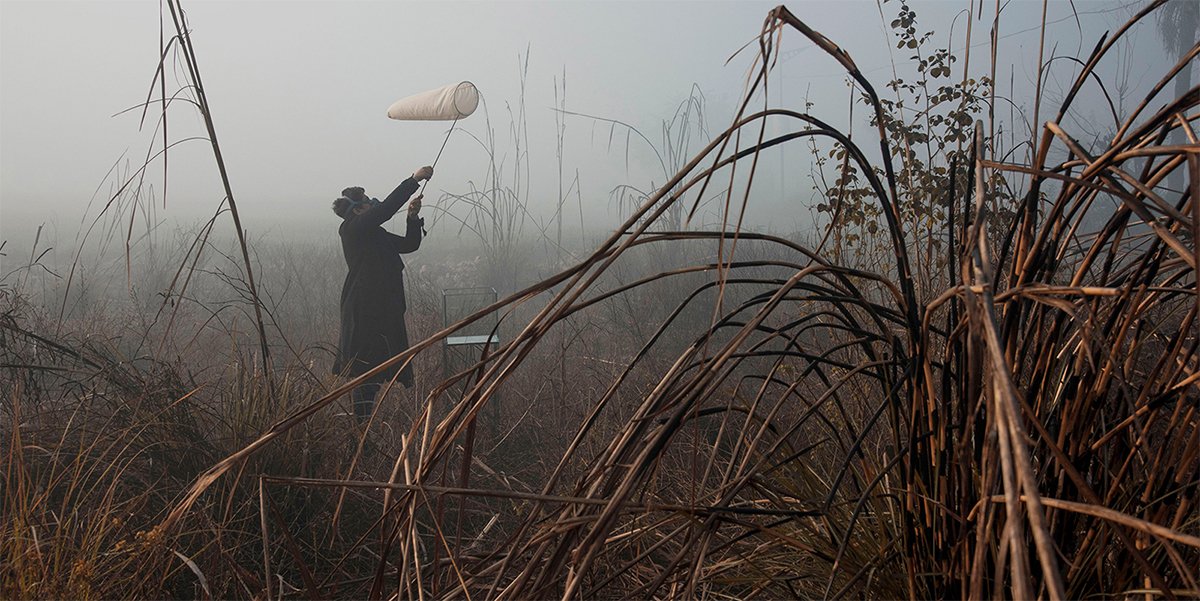
Vibha Galhotra, Breath by Breath, 2016, 60” X 120”, staged photoworks, digital print on archival paper
ML: Much of your work engages with the realities of the Anthropocene. Do you feel artists have a responsibility to address climate change?
VG: I don't think every artist has a responsibility to address climate change directly. Art cannot emerge from obligation alone. However, I do believe artists have a responsibility to remain attentive to the realities of their time.
“We are living through a period of profound environmental, political, and social transformation. Climate change is no longer a future scenario; it is already shaping how we live, move, work, and relate to one another. In that sense, it inevitably becomes part of the conditions within which contemporary culture is produced.”
We are living through a period of profound environmental, political, and social transformation. Climate change is no longer a future scenario; it is already shaping how we live, move, work, and relate to one another. In that sense, it inevitably becomes part of the conditions within which contemporary culture is produced.
For me, the Anthropocene is not simply an environmental crisis but a reflection of larger questions about progress, consumption, power, and our relationship with the natural world. These are questions that have increasingly found their way into my practice.
What art can offer is not a solution, but a different way of seeing and feeling. Scientific reports, policy discussions, and data are essential, but art can create spaces for reflection, empathy, and imagination. It can make visible what has become normalized and help us confront realities we often choose to ignore.
I do not see the artist as a savior or activist by default. I see the artist as a witness—someone who observes, questions, and reflects the complexities of their time. If a work can provoke deeper awareness or encourage a more thoughtful relationship with the world around us, that is already significant.
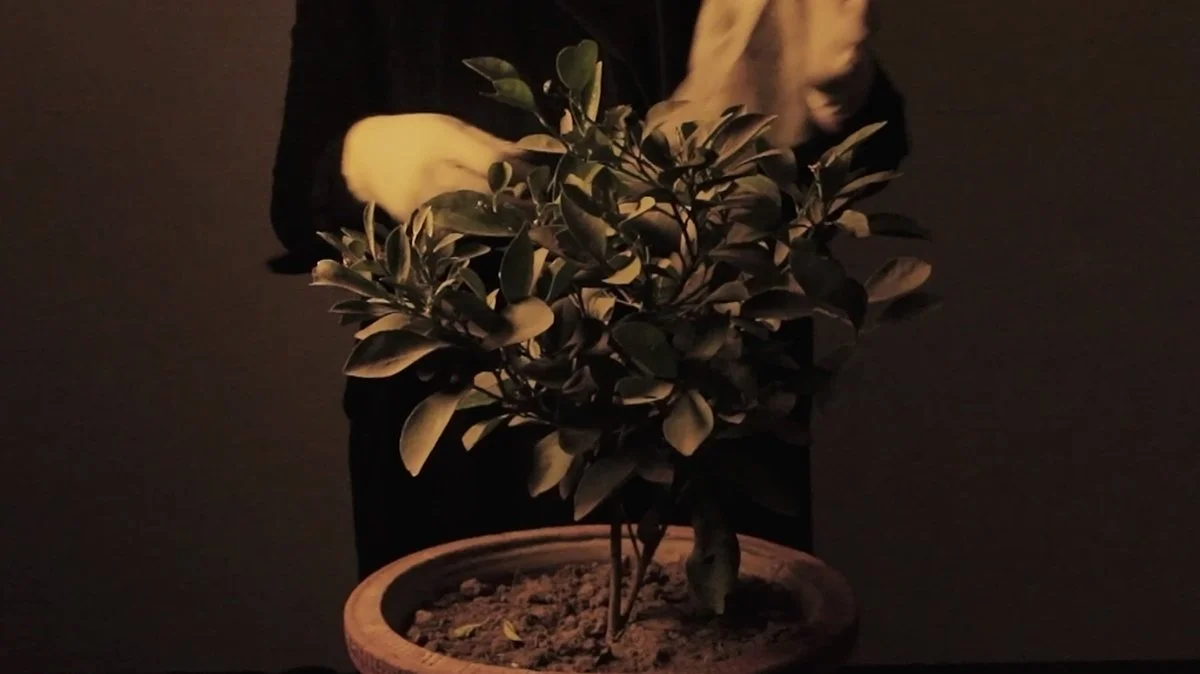
Vibha Galhotra, Cleansing (still from the video), 2016, duration 13m 42 s, single channel video
ML: Your work confronts environmental collapse, but it’s never purely bleak. How do you balance alarm with reflection or even hope?
VG: I don't consciously try to balance alarm with hope. Both exist simultaneously in the world we inhabit.
What fascinates me are the contradictions of our time. In India, for example, we still struggle with realities such as untouchability, while at the same time humanity dreams of colonizing other planets and unravelling the mysteries of the universe. We are capable of remarkable achievements, yet often unable to address some of our most immediate social and ecological challenges.
I believe I'm less interested in warning people and more interested in creating space for reflection. Nature constantly reminds us of our fragility, impermanence, and interconnectedness. If hope exists in my work, it comes not from optimism but from the possibility of awareness and change.
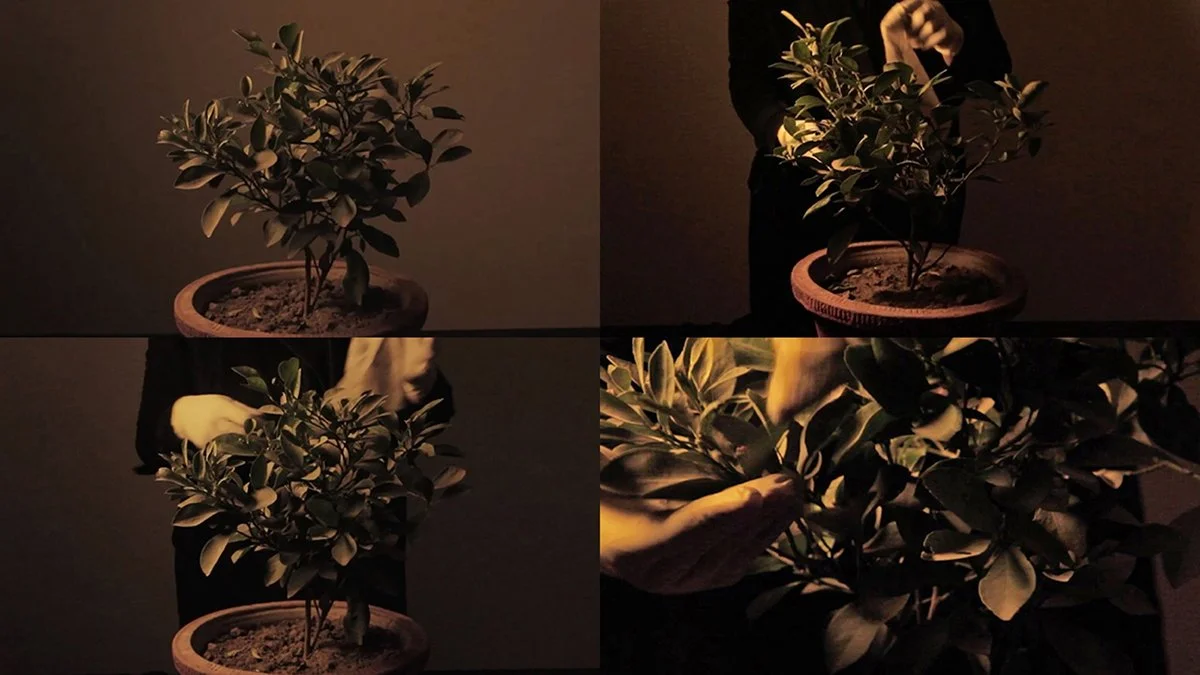
Vibha Galhotra, Cleansing (stills from the video), 2016, duration 13m 42 s, single channel video
ML: In cities like Delhi, pollution is both visible and invisible. How do you translate something as intangible as air quality into visual form?
VG: One of the reasons I became interested in pollution is precisely because it occupies this strange space between visibility and invisibility. We cannot always see it, yet we breathe it, absorb it, and live with its consequences every day.
In cities like Delhi, pollution has become so normalized that we rarely question its long-term impact on our bodies and minds. I often think about the ancient idea of Yat Pinde Tat Brahmande—what exists in the universe exists within the body. We are made of the same elements as our environment. If the air, water, and soil around us are polluted, then in many ways we are polluted too.
Rather than representing pollution literally, I try to make its presence felt. In a performative video work, Cleaning (2016), I left a potted plant outdoors for fifteen days during Delhi's peak pollution season. Every day, layers of dust and oily residue accumulated on its leaves, slowly obstructing photosynthesis. At the end of the process, I cleaned each leaf by hand. It took nearly two hours. The work became a simple but powerful reflection on what we cannot see accumulating inside our own bodies while we continue with daily life as if nothing is happening.
My interest lies in revealing what has become invisible through familiarity and questioning our remarkable capacity to normalize conditions that should deeply concern us.
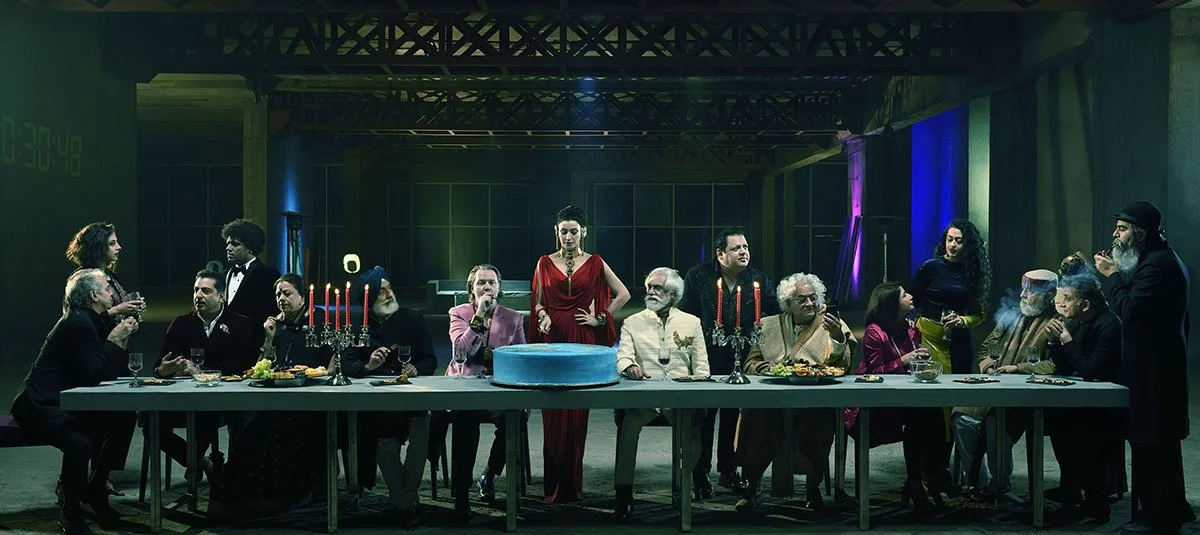
Vibha Galhotra, The Final Feast (Staged Photoworks), 2020, 60” x 140”, archival print on photorag hahnemuhle paper
ML: In Final Feast, you reinterpret The Last Supper through a contemporary lens. What parallels between that story and today felt most urgent to you?
VG: What interested me in The Last Supper was the idea of a gathering at a moment of profound consequence. In Final Feast, I approached that reference through satire, using it as a lens to reflect on the social, political, economic, and ecological crises of our time.
The work emerged from my concern with the growing concentration of power and resources in the hands of a few, while the consequences of those decisions are borne by the many. We live in a world where economic growth is often celebrated as progress, yet it has also produced immense inequalities and unprecedented pressure on natural resources. Increasingly, even the commons—air, water, land, and cultural resources—are subjected to systems of control, ownership, and extraction.
In the work, the globe itself becomes the feast. The characters gather around it with composure and sophistication, consuming a world that appears both fragile and wounded. I was interested in this tension between privilege and crisis, abundance and scarcity, awareness and indifference.
At its core, Final Feast is a reflection on human greed and our collective tendency to continue consuming despite knowing the consequences. It asks who gets to make decisions about the future of the planet, and who ultimately bears the cost of those decisions.
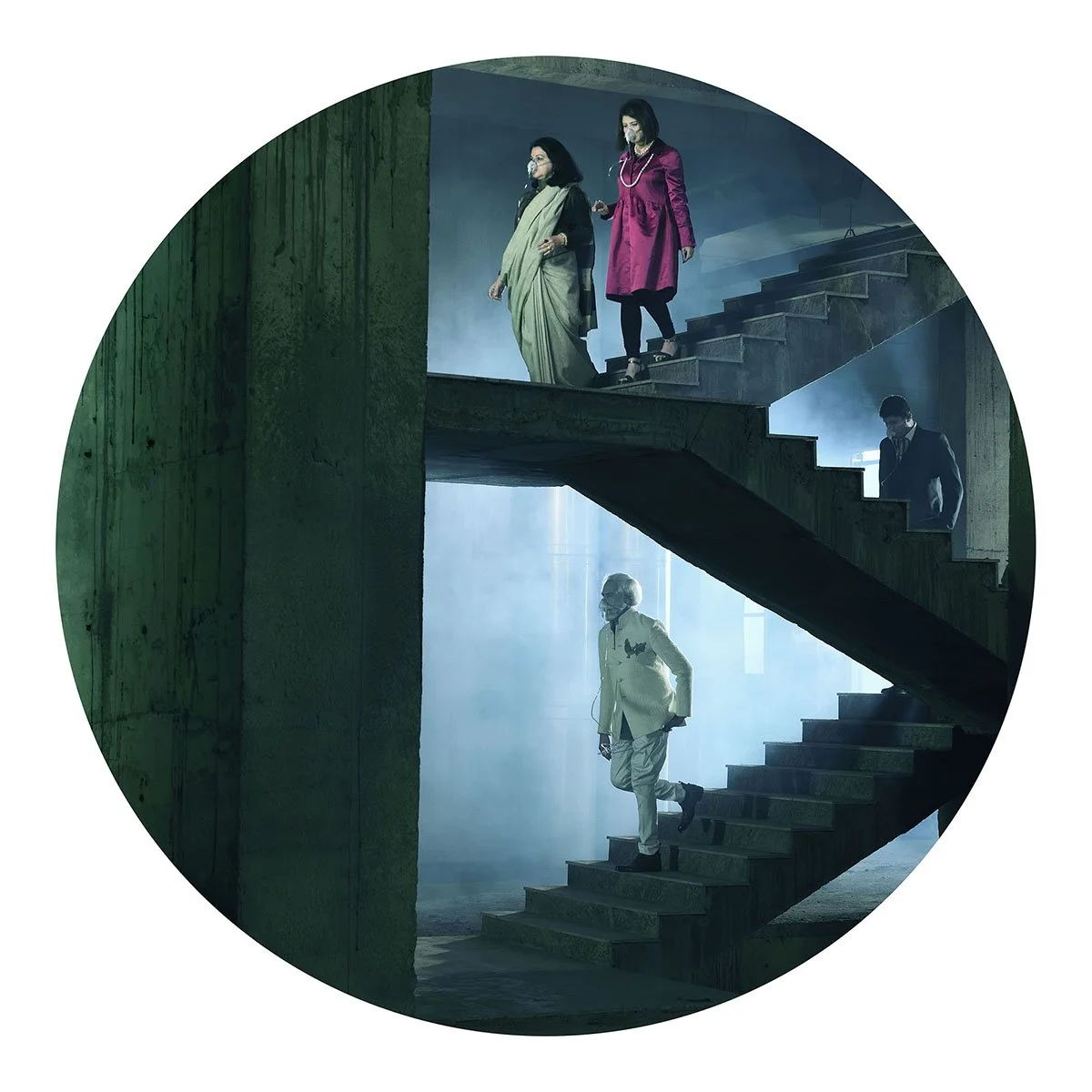
Vibha Galhotra, The Final Feast (Staged Photoworks), 2020, 60” x 140”, archival print on photorag hahnemuhle paper
ML: The figures in Final Feast feel detached, almost eerily calm. What kind of emotional response were you hoping to evoke with this work?
“Often, the most unsettling aspect of our contemporary condition is not the catastrophe itself but our ability to continue functioning normally in its presence. ”
VG: The detachment of the figures was very intentional. I was interested in creating a sense of discomfort through their calmness rather than through overt expressions of crisis or panic.
Often, the most unsettling aspect of our contemporary condition is not the catastrophe itself but our ability to continue functioning normally in its presence. We read about wars, ecological collapse, displacement, inequality, and environmental degradation, yet we continue with our routines and celebrations. Over time, crises become part of the background of everyday life.
In Final Feast, the characters appear composed, elegant, and absorbed in their own actions, almost indifferent to the larger consequences unfolding around them. That emotional distance mirrors a world where privilege often creates insulation from the realities experienced by others. We live at a time of extreme disparity, where immense wealth and excess coexist alongside poverty, scarcity, and displacement.
I wanted the viewer to experience a sense of unease and self-reflection. Rather than asking who these figures are, the work invites us to consider our own position within these systems and the ways in which we may have become desensitized to the inequalities and crises unfolding around us.
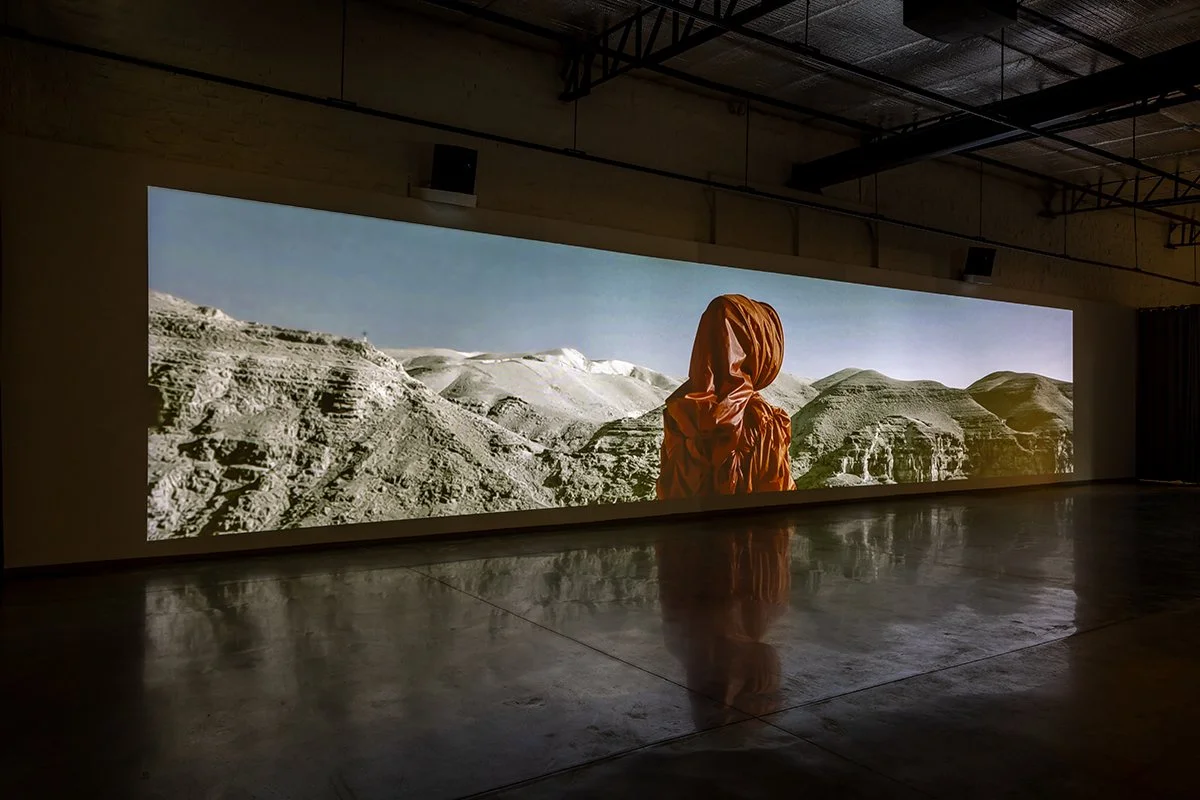
Vibha Galhotra, Un(promised), 2022, projection 9’ x 42’, duration 17:23m, single channel film- panoramic projection
ML: Your film [Un]promised follows a wandering, collapsing figure. Who or what does this protagonist represent?
VG: The protagonist in [Un]promised is intentionally unidentifiable. We do not know the figure's gender, race, caste, class, nationality, or even who is behind the hazmat suit. I wanted the character to exist beyond these categories and become a nomad moving through both space and time, carrying the memories and consequences of a world shaped by environmental destruction, political failures, war, displacement, and exploitation.
The work emerged from a desire to reflect on the promises of modernity, globalization, and endless progress that have increasingly revealed their limitations and contradictions. The wandering figure moves through landscapes marked by loss, scarcity, and uncertainty, yet continues forward despite exhaustion and collapse.
In many ways, the protagonist represents all of us. Through the body and memory of this solitary figure, I wanted to speak about a humanity struggling to reconcile what has been lost, what remains, and what kind of future is still possible. The film also touches upon a growing condition of our age, loneliness and alienation. Despite living in an increasingly connected world, many people experience profound isolation. The protagonist's inability to encounter another sign of life becomes a metaphor for that emotional and psychological state.
At the same time, the film is a reminder that while human systems may fail, the larger forces of the Earth continue. As I often say, “Exuberance on the earth is constant, with or without us.”
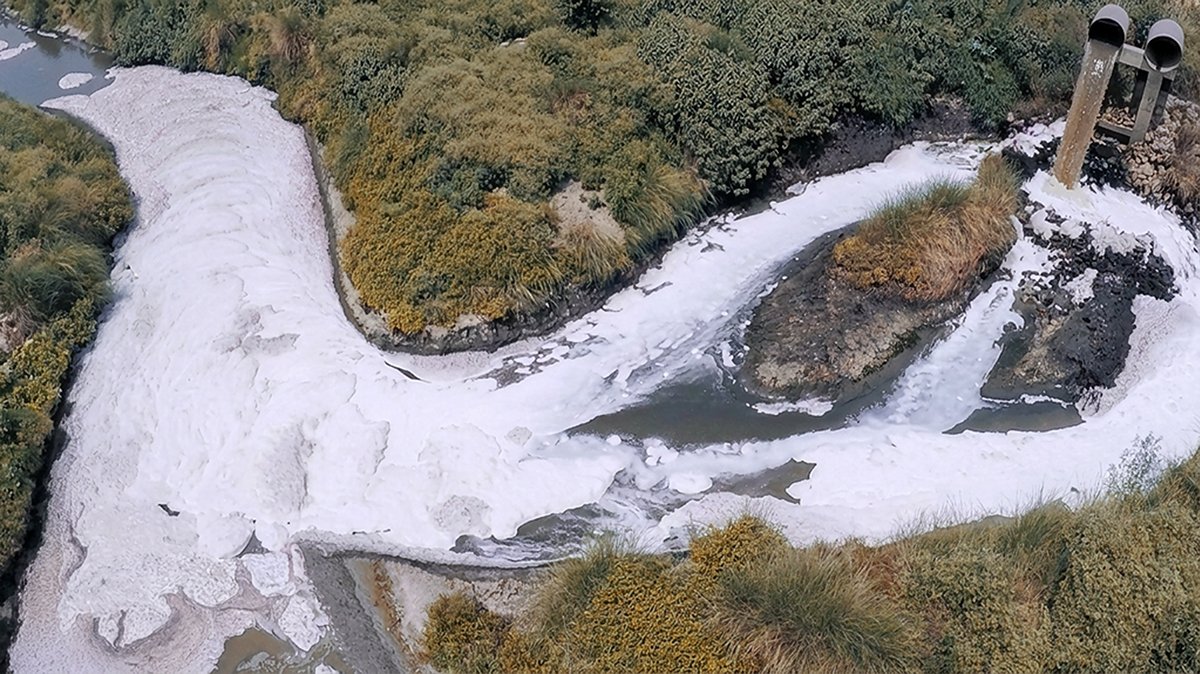
Vibha Galhotra, Manthan (still from the film), 2015, duration 10m 43s, single channel film
ML: In the project Manthan, you draw from mythology to address the ecological crisis. How does revisiting ancient stories help inform or inspire your work?
VG: I do not approach mythology as something belonging to the past. I see it as a living repository of human experience, carrying stories about desire, greed, power, conflict, sacrifice, and transformation that continue to resonate today.
What interests me is how these ancient narratives can be re-read through contemporary realities. In Manthan, I draw upon the Hindu myth of Samudra Manthan, where gods and demons churn the ocean in search of the nectar of immortality. The story is fascinating because the search for nectar also releases poison, reminding us that every act of pursuit carries consequences.
In the film, I reinterpret this myth through the ecological condition of the Yamuna. Instead of churning the cosmic ocean, the act becomes an attempt to churn the sludge and toxicity out of a polluted river. The work reflects on water as the nectar of life while also addressing the environmental, political, and economic struggles surrounding its ownership, access, and survival.
I am less interested in retelling myths than in re-reading them. Many of these stories contain profound insights into the relationship between humans, nature, and the cosmos. Manthan was, in many ways, a refusal to give up hope, a gesture that asks whether we can still find the will to repair what we have damaged before it is too late.
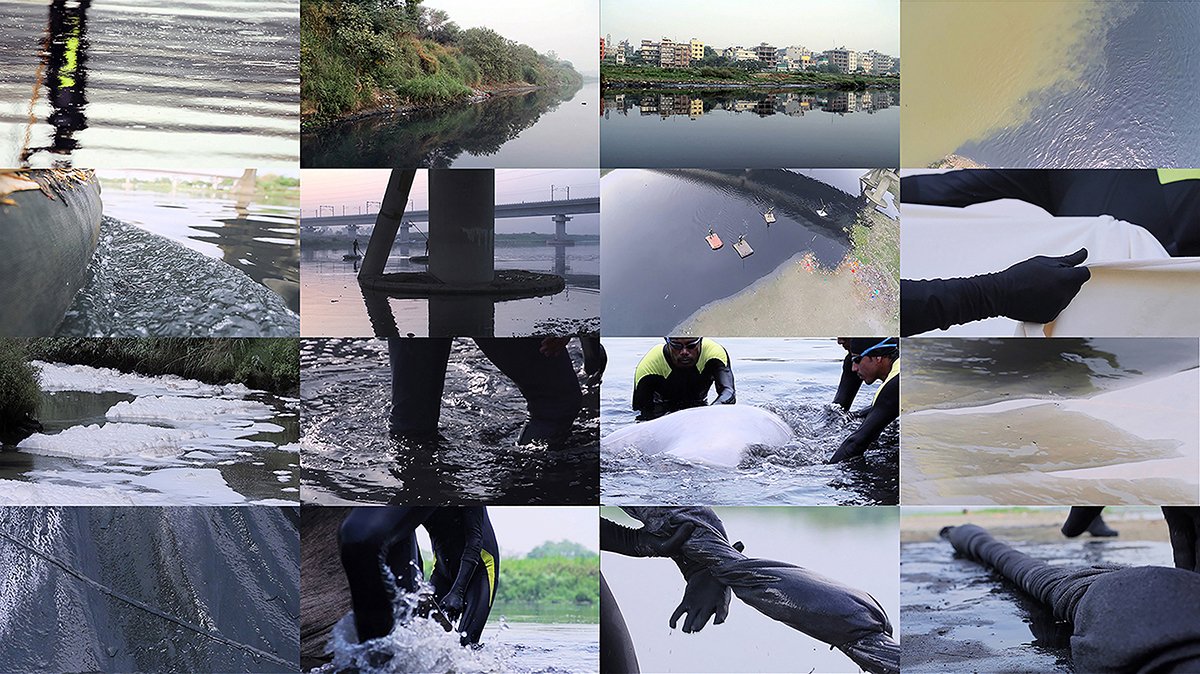
Vibha Galhotra, Manthan (stills from the film), 2015, duration 10m 43s, single channel film
ML: You describe your work as negotiating between belief and reality. Can you elaborate on how spirituality and empirical knowledge coexist in your practice?
VG: My understanding of the coexistence of belief and reality emerged through a very specific encounter that has stayed with me for years and profoundly shaped my practice.
One winter Sunday morning in 2009-10, while documenting the Yamuna, I came across a stretch of the river that had become little more than a cesspool of sewage because very little freshwater had been released into it. Nearby, a couple had just completed a ritual and were preparing to take a holy dip. Out of concern, I tried to stop them and explained how polluted the water was. They listened, but went ahead anyway.
After the dip, the man approached me, and we had a conversation that has never left me. For me, the river was visibly contaminated, a reality supported by everything I could see and measure. His response was simple: “It is my mother.” At that moment, I realized we were looking at the same river through entirely different yet equally powerful realities. Mine was rooted in observation; his in faith, memory, and devotion.
That encounter left me with a profound dilemma that continues to inform my work. I became interested in how belief and reality can coexist, sometimes in conflict and sometimes in dialogue. Rather than choosing one over the other, I try to understand the space between them. As an artist, I am interested in holding these contradictions rather than resolving them.
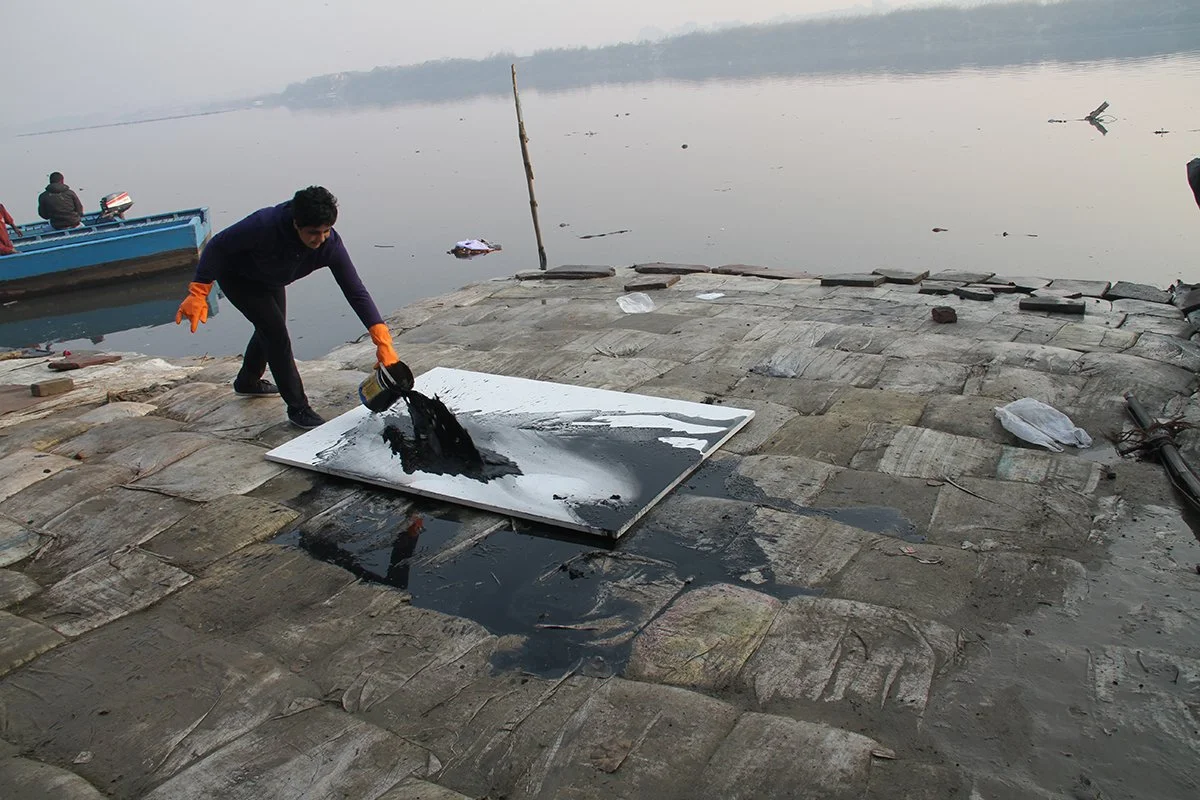
Vibha Galhotra, Process documentation from Sediment and other untitled…,2010-12, 60” x 48”, sediment from River Yamuna on board
ML: Much of your work responds to the Anthropocene. Do you see art as a form of resistance, documentation, or intervention within this epoch?
VG: I think art can be all three, depending on the context and intention of the work.
Some works function as a form of documentation—not necessarily in a journalistic sense, but as a way of bearing witness to the realities of a particular time. They become records of our anxieties, desires, contradictions, and collective failures.
“Art alone cannot change policy, stop a war, or reverse environmental damage. However, it can shift perception, create conversations, challenge assumptions, and open spaces for imagining alternatives. Sometimes that shift in consciousness is where meaningful change begins.”
At the same time, art can be a form of resistance. In a world increasingly driven by speed, consumption, distraction, and short attention spans, the act of slowing down and encouraging reflection can itself become a political gesture.
Whether art can truly intervene is a more difficult question. Art alone cannot change policy, stop a war, or reverse environmental damage. However, it can shift perception, create conversations, challenge assumptions, and open spaces for imagining alternatives. Sometimes that shift in consciousness is where meaningful change begins.
For example, Future Fables, a project inspired by the relentless expansion of cities, as well as the debris generated by conflicts across the globe, demolitions, and natural disasters. Using repurposed concrete and construction waste collected from local sites, the work treats these discarded and damaged materials as symbolic remnants of our era. The work reflects on the environmental, cultural, and political consequences of urban growth while transforming the residue of destruction into narratives of absence, loss, memory, history, and cultural resilience.
For me, art is less about providing solutions and more about asking necessary questions. Its value lies in its ability to make us look again at what we have chosen not to see.
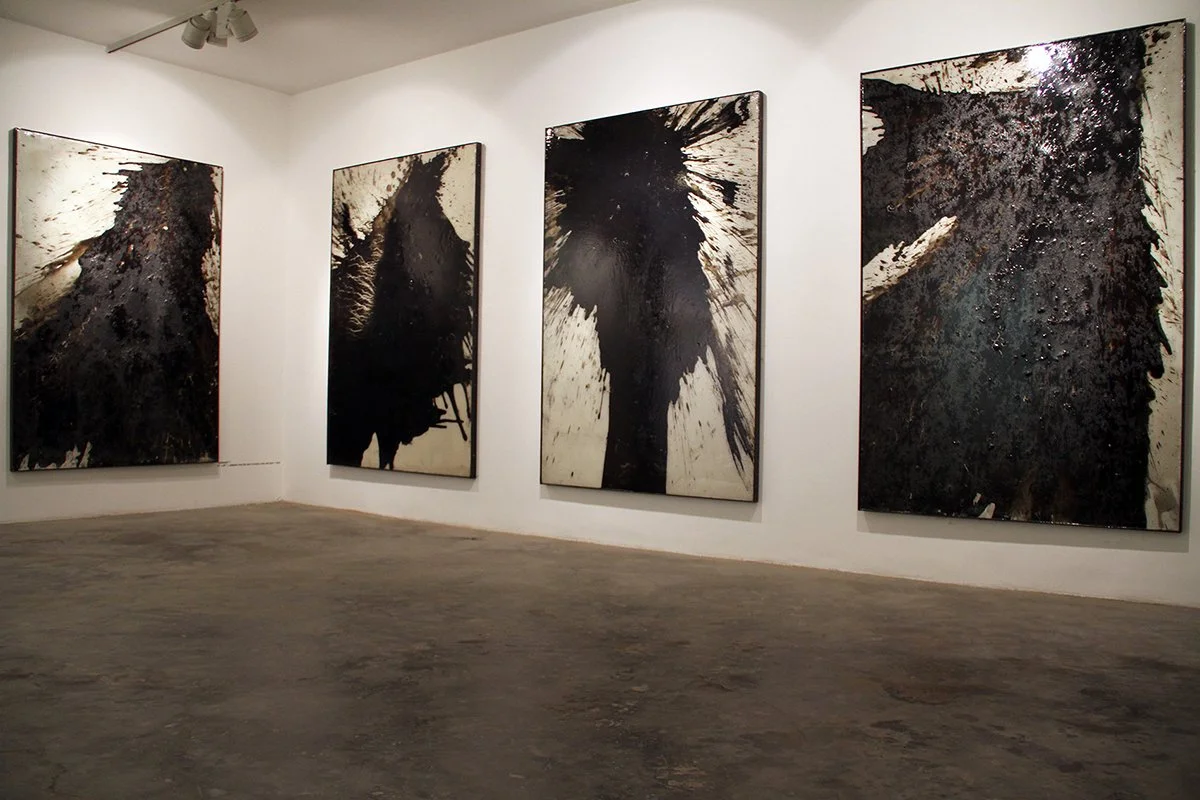
Vibha Galhotra, Sediment and other untitled…,2010-12, 60” x 48”, sediment from River Yamuna on board
ML: You’ve been critical of consumerism and late capitalism. Do you think we’re capable of fundamentally changing these systems?
VG: I am interested in the human desires that continually produce such systems. Throughout history, the names have changed, but the impulses often remain the same—accumulation, ambition, control, status, expansion, and the belief that more is never enough.
What fascinates me is that we live in an age of unprecedented abundance and unprecedented anxiety at the same time. We have access to more information, technology, comfort, and connectivity than any generation before us, yet loneliness, dissatisfaction, political failures, societal stubbornness, and ecological destruction continue to grow. That contradiction suggests that the crisis may be deeper than economics alone.
Perhaps the real challenge is not changing a system but rethinking what we value. Modern societies have become remarkably efficient at producing wealth, consumption, and instant access to information, yet far less successful at nurturing contentment, belonging, responsibility, or a meaningful relationship with the world around us. Despite being constantly connected, many people feel increasingly isolated. Despite endless stimulation, we struggle with boredom. Despite unprecedented convenience, we seem perpetually dissatisfied.
I don't know whether we are capable of fundamentally changing these systems. What I do know is that every civilization eventually encounters the consequences of its own excesses. The question is whether we are able to recognize those limits before they are imposed upon us.
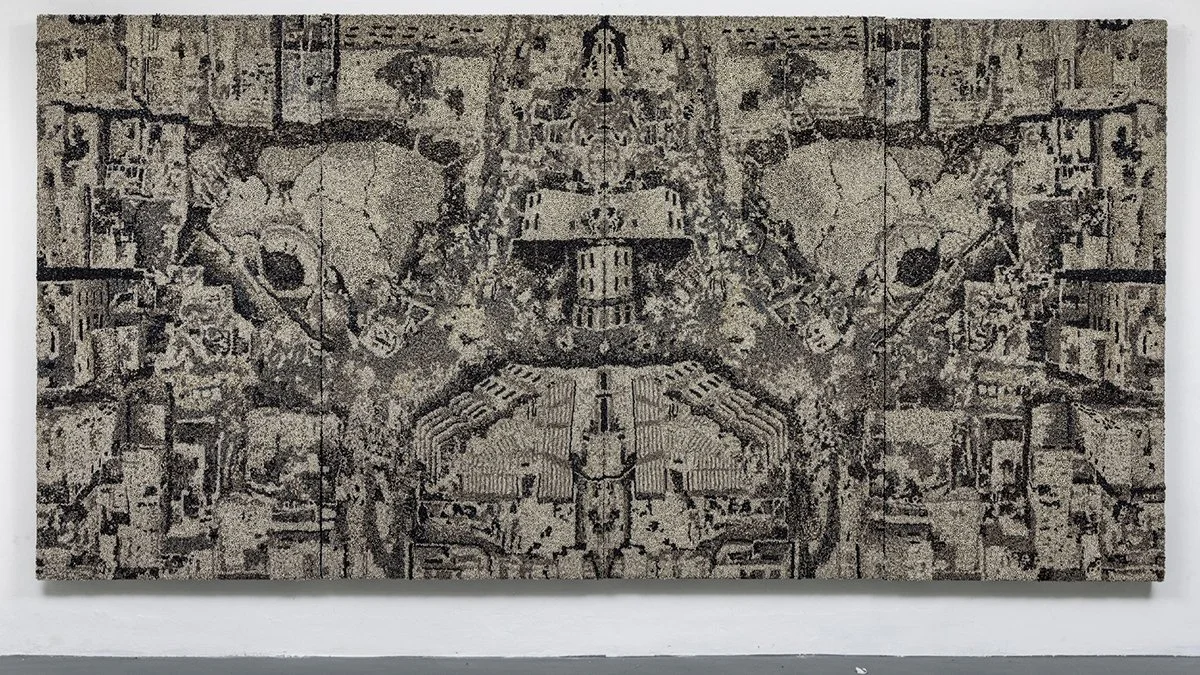
Vibha Galhotra, Fractured, 2025, 78” x 156” x 4”, Ghungroos, fabric, wood & steel
ML: You’ve questioned contemporary education systems for prioritizing market-driven skills. What would a more ecologically-conscious education look like to you?
VG: One of the limitations of contemporary education is that it teaches us how to compete and produce, but not necessarily how to relate—to each other, to our surroundings, or to the consequences of our actions.
I think we have gradually distanced ourselves from traditional knowledge systems that cultivated a more intuitive understanding of local ecologies and coexistence. Today, we often assign economic value to every inch of land while paying little attention to the relationships that sustain both the environment and ourselves.
An ecologically conscious education would not treat nature as a separate subject. It would encourage students to understand the connections between environment, culture, economy, and everyday life. Some of the most valuable lessons come not from classrooms alone but through direct engagement with landscapes, communities, and diverse ways of living.
Ultimately, education should help us become better inhabitants of the world, not just more efficient participants in the economy.
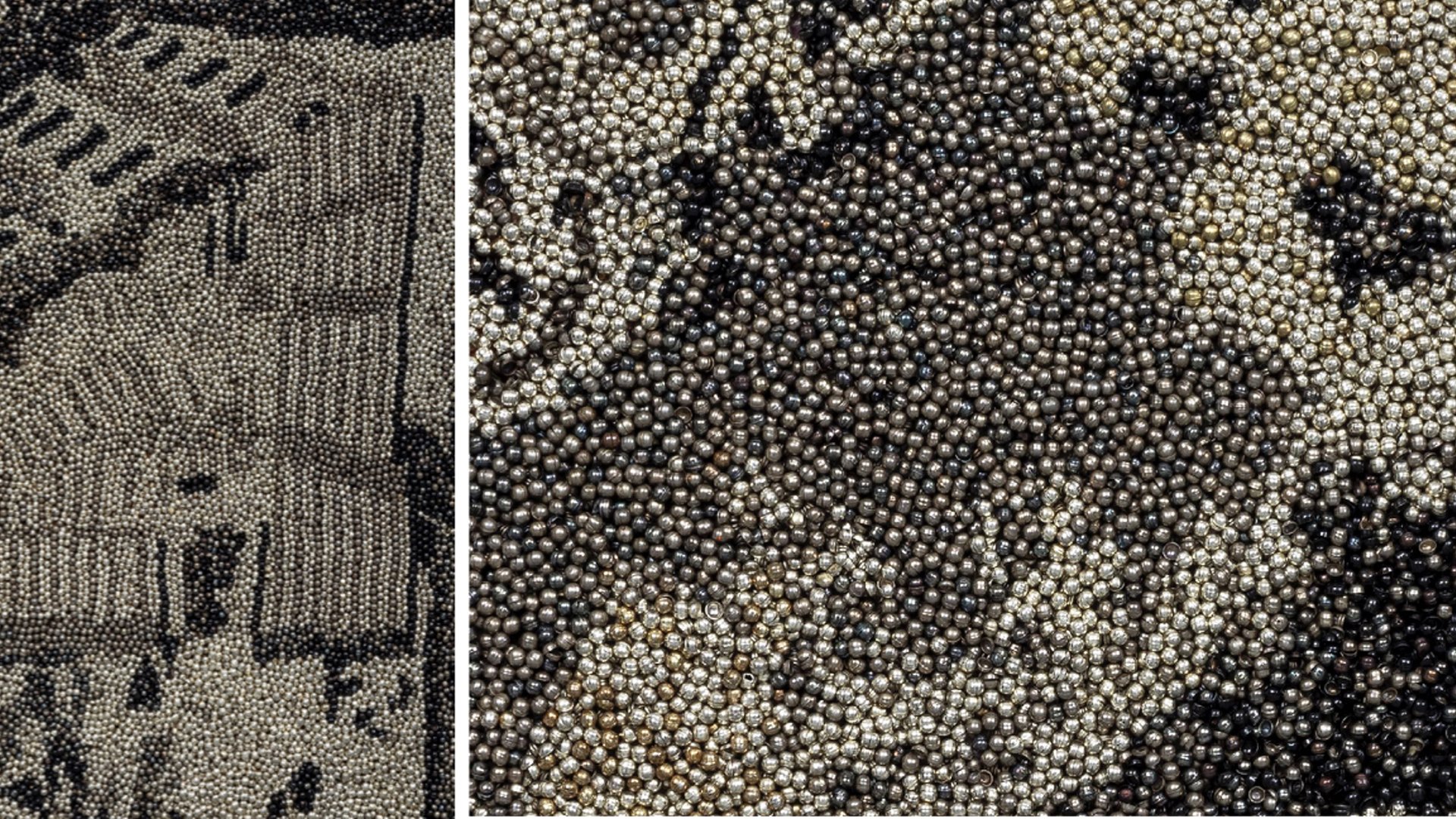
Vibha Galhotra, Fractured, 2025, 78” x 156” x 4”, Ghungroos, fabric, wood & steel
ML: At the core of your practice is the question: “What can one do as an artist?” How has your answer to that question evolved over time?
VG: Art has always been a reflection of its time and a record of its history. When I was younger, I perhaps believed more strongly that art could change the world. Today, I find myself increasingly drawn to questions rather than answers.
One of my recent works is titled I Don't Know, and in many ways that phrase has become increasingly relevant to me. We are living in an age of overexposure—of information, AI, misinformation, endless consumption, and constant demands on our attention. We are expected to have opinions on everything, all the time, yet understanding often feels more elusive than ever.
As an artist, I also find myself negotiating another contradiction. There is something deeply appealing about the idea of retreating into the studio and simply painting flowers, detached from the urgencies of the world. Yet the realities of paying bills, sustaining a practice, remaining relevant, and navigating an increasingly competitive society make that ideal feel like a luxury in itself.
Perhaps that is why I am drawn to saying, “I don't know.” It is not a position of defeat but of honesty. I sometimes feel that we consume ideas, products, experiences, and even identities not because we truly need them, but because we want to belong.
So my answer has evolved from wanting to change the world to paying closer attention to it. As an artist, I do not seek certainty. I seek attentiveness, curiosity, and the willingness to remain with difficult questions.
ML: At a time when the world can feel on the brink, what keeps you hopeful or at least committed to continuing this work?
VG: I am not sure hope is the right word. Some days it is hope, and some days it is simply curiosity, responsibility, or the need to keep asking questions.
What keeps me going is the understanding that uncertainty has always been part of the human condition. Every generation has confronted its own crises, fears, and transformations. Ours may be unfolding at an unprecedented scale, but it is not the first time humanity has stood at a crossroads.
I also continue to find inspiration in people, landscapes, ideas, and acts of care that persist despite difficult circumstances. As an artist, I feel a responsibility to pay attention to the world I inhabit and to leave behind a record of how it felt to live through this particular moment in history.
Perhaps commitment is more important than hope. One continues not because the outcome is guaranteed, but because the act of observing, questioning, making, and imagining remains meaningful in itself.
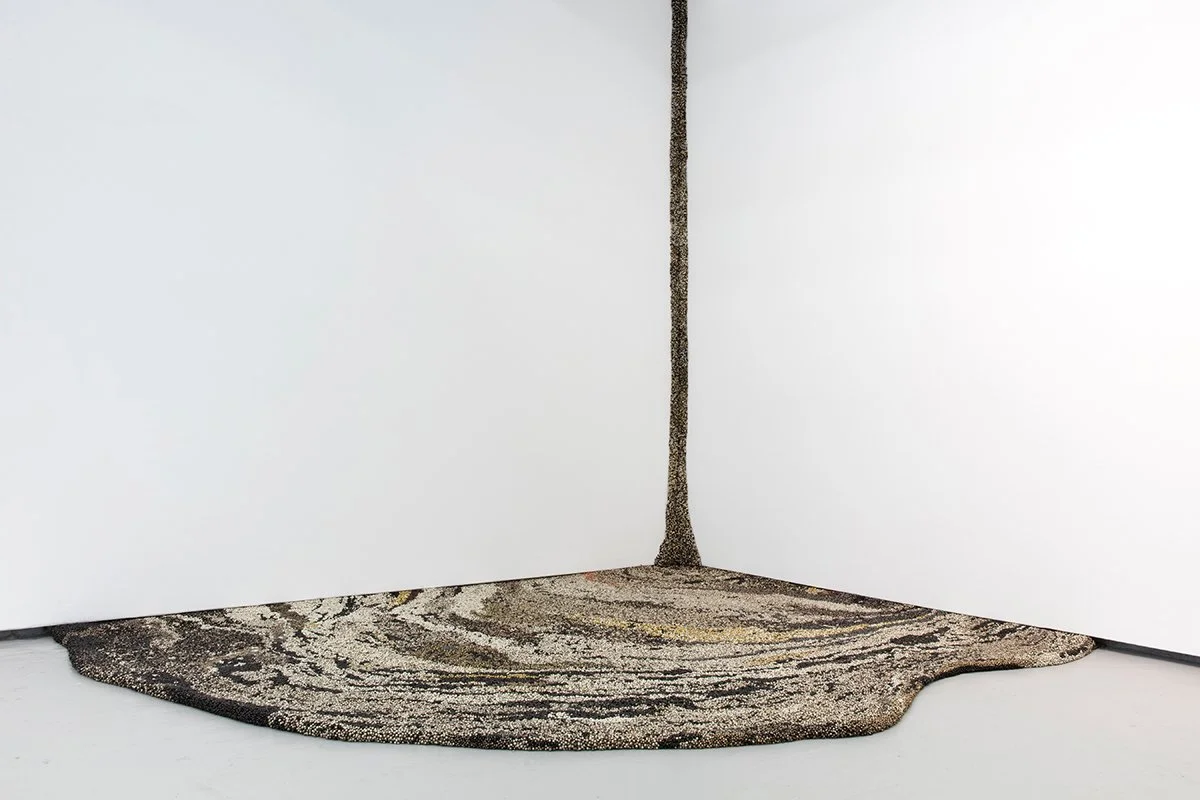
Vibha Galhotra, Flow, 2015, 129” x 93” x 112”, nickel coated Ghungroos, fabric
ML: From which artists, writers, scientists, musicians, poets, and other creative or intellectual figures do you draw inspiration, and in what ways do their works shape the contours of your thought and imagination?
VG: My influences come from many different places and disciplines, and they continue to evolve over time.
As a student, I was deeply influenced by artists such as Christo and Jeanne-Claude, Andy Goldsworthy, Richard Long, and Joseph Beuys, whose expanded understanding of art challenged conventional notions of material, site, and audience. The works of Ramkinkar Baij, Somnath Hore, K.G. Subramanyan, Alberto Giacometti, Lucio Fontana, Jannis Kounellis, Diego Rivera, Ana Mendieta, Louise Bourgeois, and Magdalena Abakanowicz taught me different ways of thinking about materiality, memory, the body, labour, trauma, and history.
Cinema has been equally important. Filmmakers such as Andrei Tarkovsky, Peter Greenaway, Alejandro Jodorowsky, and Matthew Barney have shaped my understanding of time, symbolism, ritual, narrative, and the poetic possibilities of image-making. Musicians and artists like Björk have inspired me through their ability to move fluidly between technology, nature, experimentation, and emotion.
My reading moves across mythology, philosophy, ecology, science, anthropology, history, and literature. Thinkers and writers such as Carl Sagan, Amitav Ghosh, Rebecca Solnit, Donna Haraway, Bruno Latour, Vandana Shiva, and others have expanded my understanding of the complex relationships between humans, technology, ecology, culture, and planetary futures.
At the same time, some of my deepest influences do not come from books or institutions. Travel, conversations, landscapes, rivers, traditional knowledge systems, craftspeople, farmers, and communities have often taught me as much as any formal education. Much of my work emerges from these encounters.
Ultimately, inspiration for me is less about specific disciplines and more about curiosity itself—the willingness to remain open to wonder, complexity, contradiction, and the unknown.
ML: Is there anything else you would like to add?
VG: I have become increasingly cautious of certainty. The older I get, the more I realize how little I know.
Perhaps that is why I continue making art. Not because I have answers, but because I remain curious. I am a constant learner, and I have learned to accept change rather than resist it. Every ending carries the possibility of a beginning. I may not witness where every journey leads, but perhaps the work continues that conversation beyond me. Every new project forces me to unlearn something, question an assumption, or look at the world from a different perspective.
What interests me today is not only what we are losing, but also what we are becoming. We are living through a strange moment in history—simultaneously connected and isolated, informed and confused, powerful and fragile. We have access to unprecedented knowledge, yet often struggle to make sense of it.
Rather than trying to arrive at definitive conclusions, I find myself increasingly interested in paying attention. Perhaps that is enough. To remain curious, to keep learning, and to continue asking questions that may never be fully answered.