

Sofía López Mañán
Sofía López Mañán is an Argentine artist, photographer, and filmmaker whose work examines how we construct the idea of nature, and what that reveals about us.
Her practice sits at the intersection of documentary, visual essay, and philosophical research into the cultural construction of the natural world. Collaborating with biologists, ethologists, philosophers, and indigenous communities, she investigates the projections, fantasies, and inherited narratives that shape how we relate to the non-human world.
She has been awarded grants from the National Geographic Society, Pulitzer Center, Ami Vitale Documentary Grant, and On the Edge Storytelling Grant, among others. Her work has been exhibited internationally and published in The New York Times Magazine, El País, and Gatopardo, among others. Her debut documentary, Kamatsu's Odyssey, was selected for BAFICI 2024.
A Book of Nature, published by Sed Editorial in 2026, is her first book. Her current project, WeHorses, supported by National Geographic, explores the cultural and scientific construction of the ideal horse.
Sofía López Mañán, Untitled from The Orange Gold, 2023, digital capture
Visual storyteller Sofía López Mañán creates work that invites us to reconsider how we relate to the more-than-human world. Through conversation-based projects, collaborative research, and immersive storytelling, she explores the intersections of marine ecology, ecological empathy, and interspecies communication. Working alongside biologists, veterinarians, and ethologists, Sofía has developed a creative practice that bridges scientific inquiry and lived experience, opening new ways of listening to and learning from the lives of other species. In this conversation for the GroundTruth Institute archive, we discuss the role of dialogue in her practice, the collaborative nature of ecological storytelling, and how art can foster deeper relationships with the environments and beings that sustain us.
Margaret LeJeune: Could you please share a bit of your origin story including where you grew up, the experiences and influences that shaped you early on, and how your educational background contributes to your current creative practice?
Sofía López Mañán: I grew up on the outskirts of Buenos Aires, in a neighborhood with four siblings, two dogs, and hardworking parents. After finishing school I studied fine arts, art became a lifeline, a space for emotional decompression. For more than twenty years I've also maintained a practice of meditation, fasting, and plant medicine, not as a belief system, but as a method. A way of tracking what is mine and what I'm imposing onto the other. That distinction turns out to be central to this work.
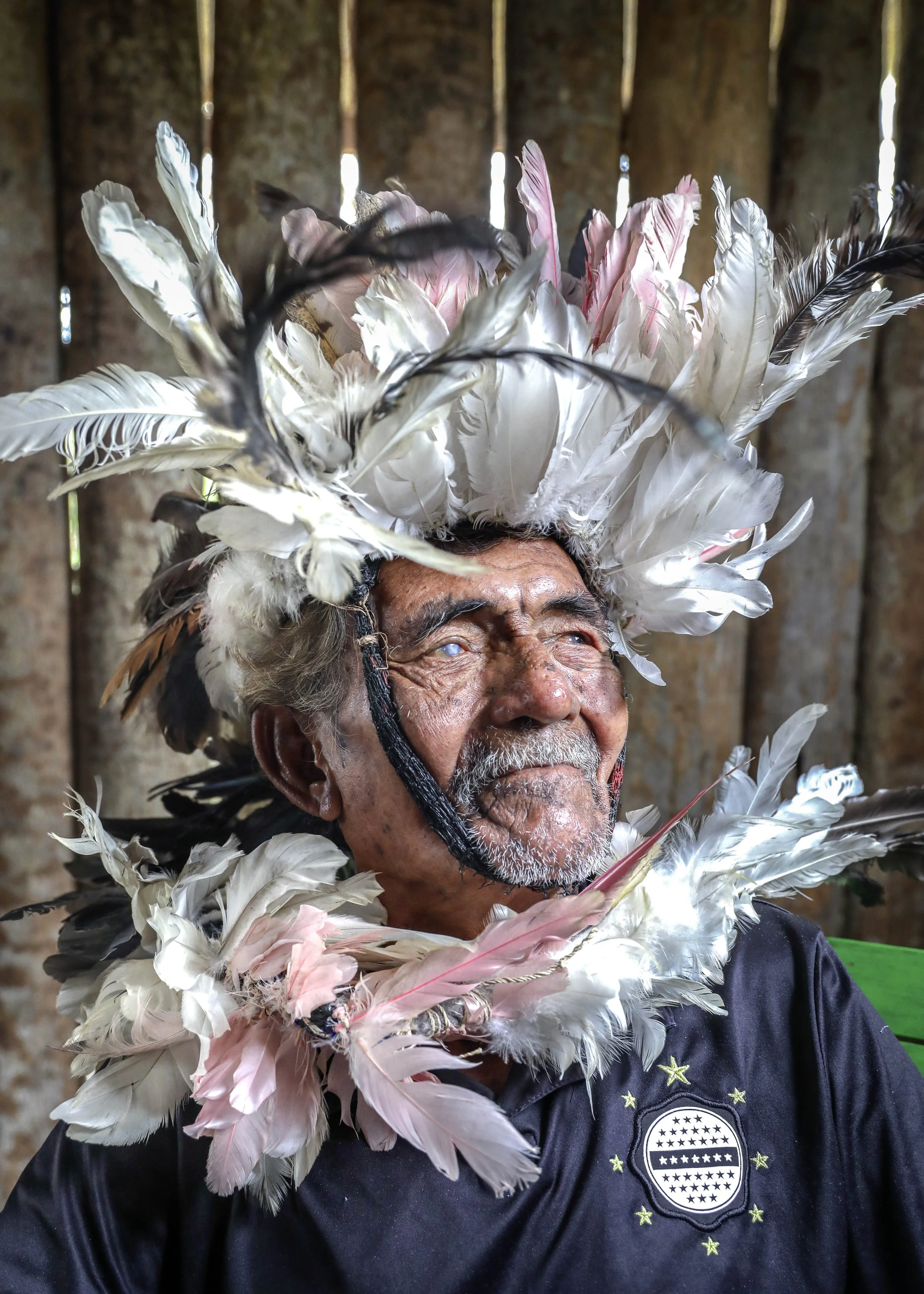
Sofía López Mañán, Untitled from The Earth Kidney, 2022-3, digital capture
ML: Your work often explores the relationship between humans and biodiversity. What first drew you to this subject and how has your understanding of that relationship evolved over the past decade?
SLM: I arrived here almost by accident. About ten years ago I was hired to document the transformation of the Buenos Aires Zoo into an Eco-Park. I had told myself a story, that all the animals would be transferred to sanctuaries quickly, like a kind of Noah's Ark. I wasn't too hard on myself for that naïveté when I realized many other people had imagined the same thing.
Working alongside biologists, vets, ethologists and conservationists woke something in me. The way we relate to captive or domestic animals is a mirror of how we project onto the whole ecosystem, filtered through desires, fantasies, inherited narratives. The Noah's Ark idea is a religious story that shapes how we see conservation whether we're aware of it or not. There is never a direct encounter with the other; there is always a screen in front — what we imagine the other to be.
That realization forced me to rethink my role as a communicator. I began pulling my work together into a single body, more flexible, more experimental, with a larger objective: to question how we relate to the world around us. At some point I understood that what I was really investigating wasn't wildlife or conservation in the traditional sense. It was the idea of nature itself, how we construct it, what we project onto it, what that reveals about us. Nature, I came to understand, is a cultural construct. Not because the non-human world isn't real, but because we never encounter it directly. We encounter our version of it.
I have that screen too. The difference is that I try to be conscious of it and question it constantly.
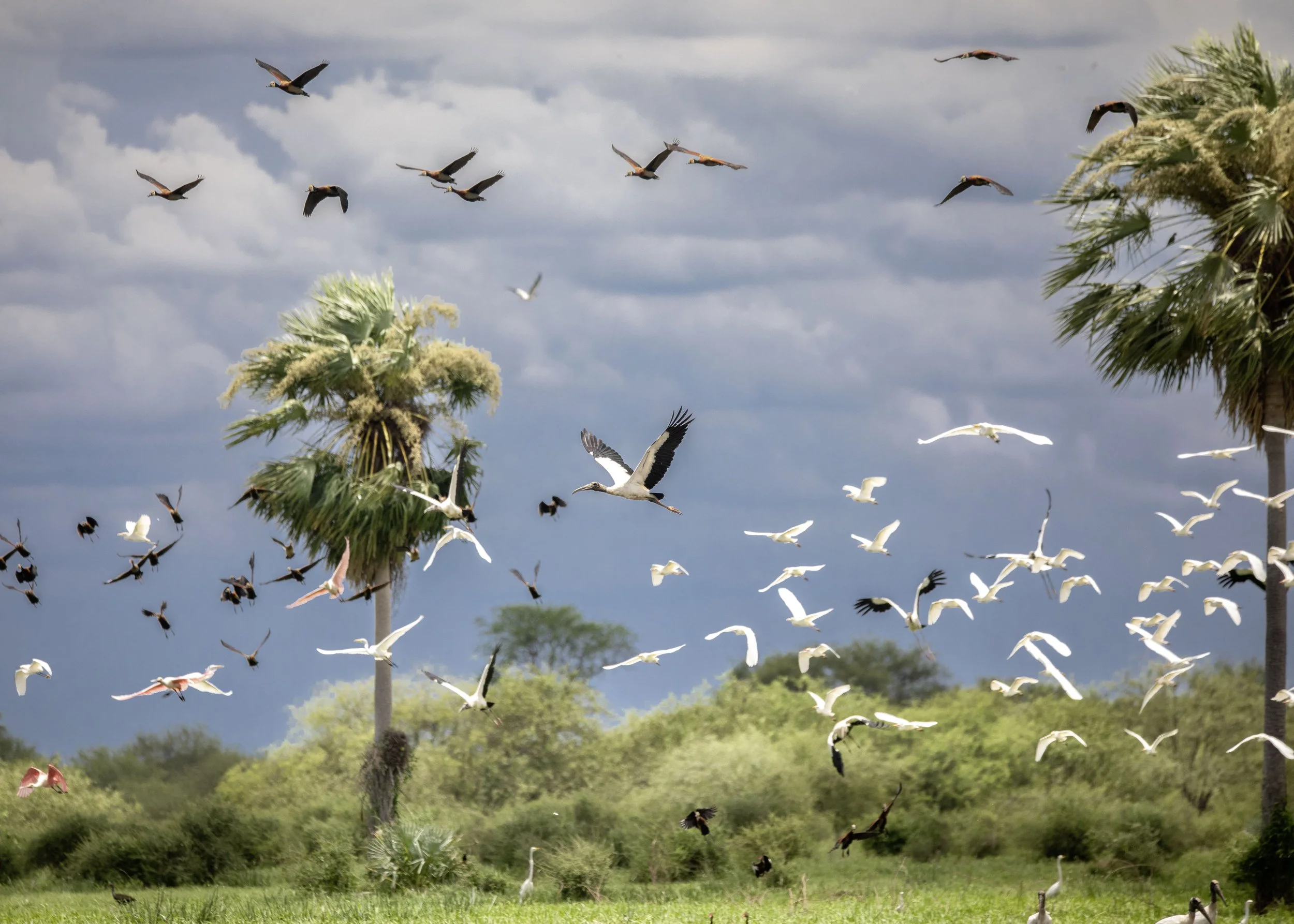
Sofía López Mañán, Untitled from The Earth Kidney, 2022-3, digital capture
ML: You have a background in both filmmaking and photography. How do these two mediums shape the way you observe, investigate, and tell stories?
SLM: My background is in the arts, primarily conceptual art. The medium we choose to communicate with always connotes something. For every project, the engine is research and curiosity. I never begin without trying to understand multiple perspectives on the same axis.
I think of research as a creative motor: it's through conversations and texts that I begin to imagine things, images I sketch out that later become photographs or scenes for a documentary. Those images are like paintings I construct mentally. They are the questions that move me, and ultimately the narrative spine of everything I make.
Photography forces me to condense everything into a single frame — one question, one moment. The viewer receives it and constructs the off-frame themselves: what was edited out, the fill-in-the-blanks. Cinema adds time and sound. It feels more immersive. They are two different paths toward the same inquiry.
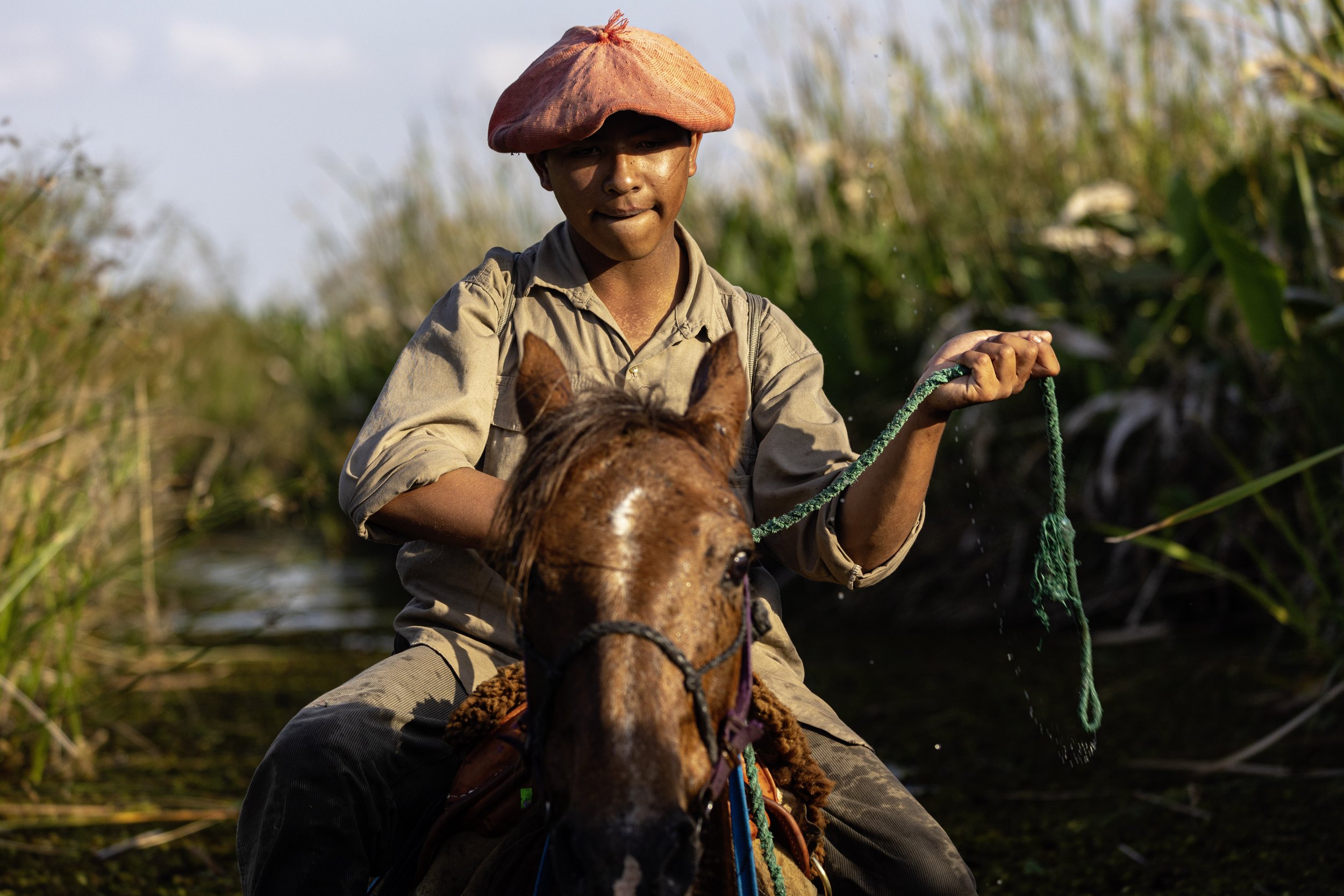
Sofía López Mañán, Untitled from The Earth Kidney, 2022-3, digital capture
ML: How has scientific knowledge influenced your photographic practice and your understanding of conservation?
SLM: Scientific knowledge helps me build better questions. I'm a chronic questioner. I don't think of knowledge as rigid or definitive, I think of it as a framework that can support certain observations. And then we can debate what observation even means, what the observer brings, what context shapes what is seen.
There are many ways to practice conservation, many ways to think about our place on this earth. The more I listen, the more I notice that most of us want more or less the same things — it's the form that varies.
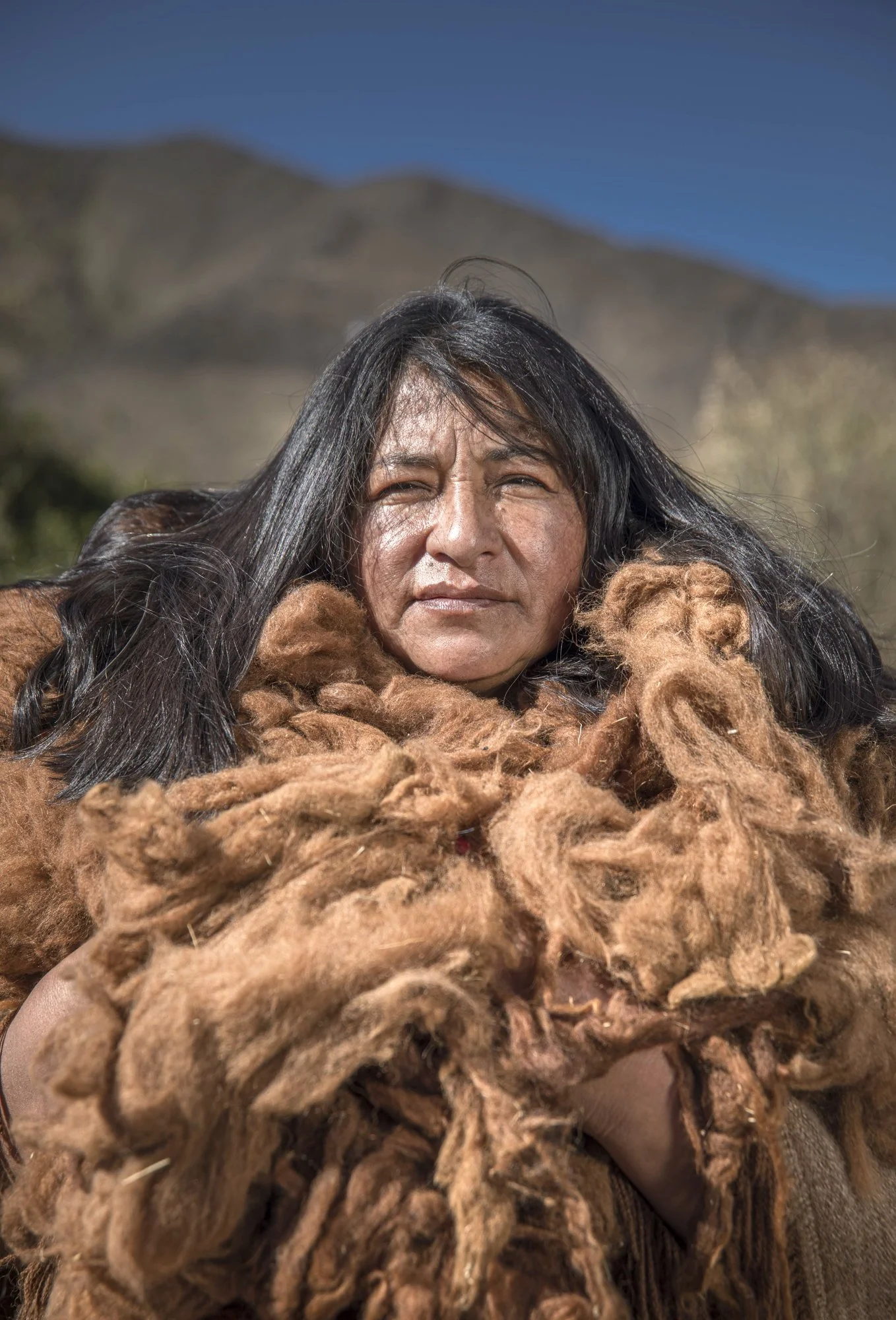
Sofía López Mañán, Untitled from The Bird King, 2022, digital capture
ML: Through your collaboration with the Andean Condor Conservation Project, you explored the relationship between condor conservation and Andean cosmogony in The Bird King. What did you learn from bringing together scientific and spiritual understandings of the natural world?
SLM: Science contributes tracking systems, satellite monitoring, captive breeding programs with measurable survival rates, concrete tools for addressing real threats. The spiritual value of the condor is equally essential, because it is precisely through cultural significance that communities protect and respect the animal. When something enters culture, it acquires value. Stories are what bring us close to the other.
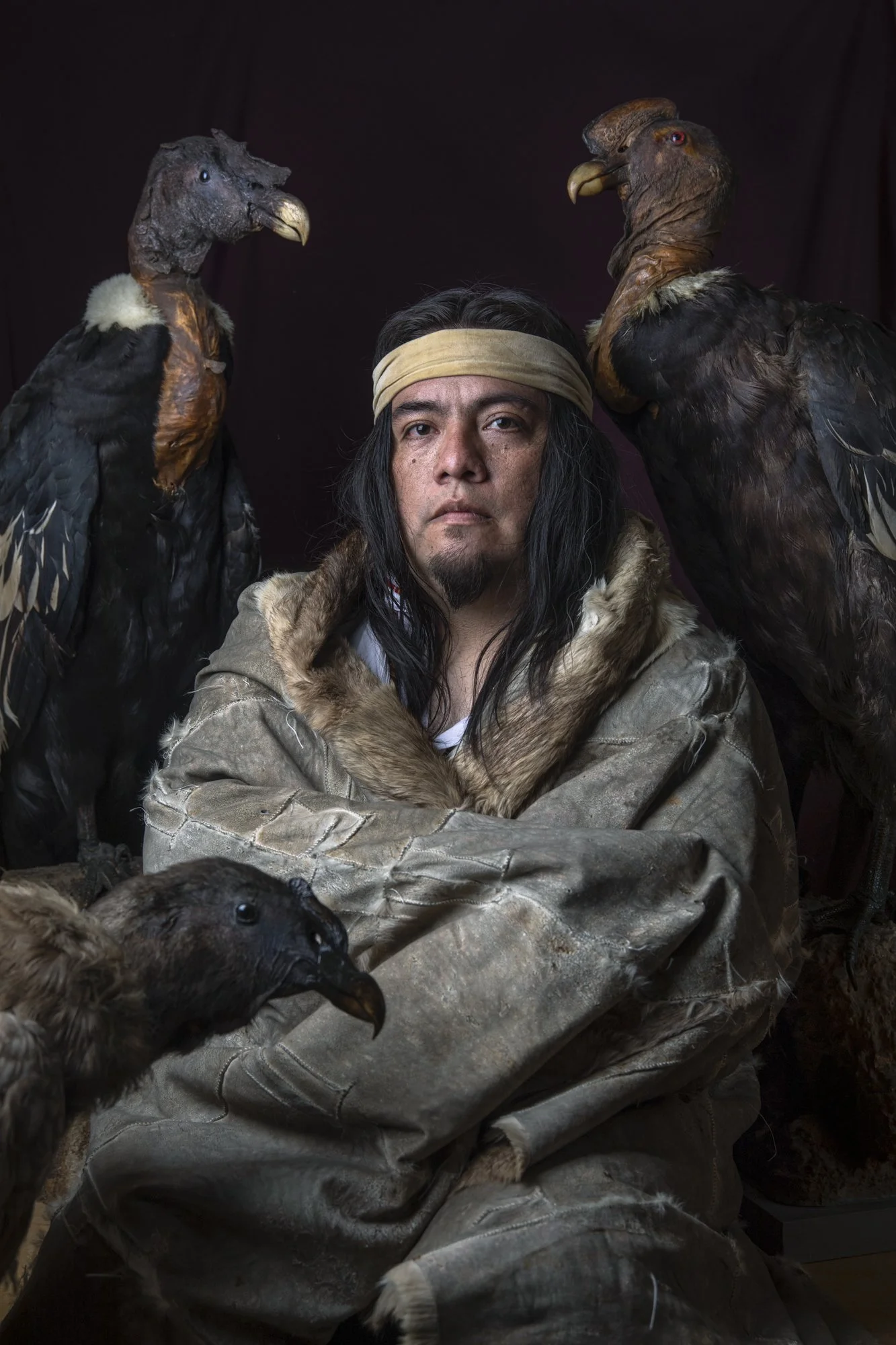
Sofía López Mañán, Untitled from The Bird King, 2022, digital capture
I worked with several indigenous communities, Günün a Küna, Mapuche, Coya, Huarpe, among others. Across all of them, the condor carries souls to the next world. It connects. That's not so different from what religions do everywhere, locate us in relation to where we come from and where we're going. For those of us who don't venerate the condor, that cosmogony still invites us to feel ourselves as part of a system, not outside it.
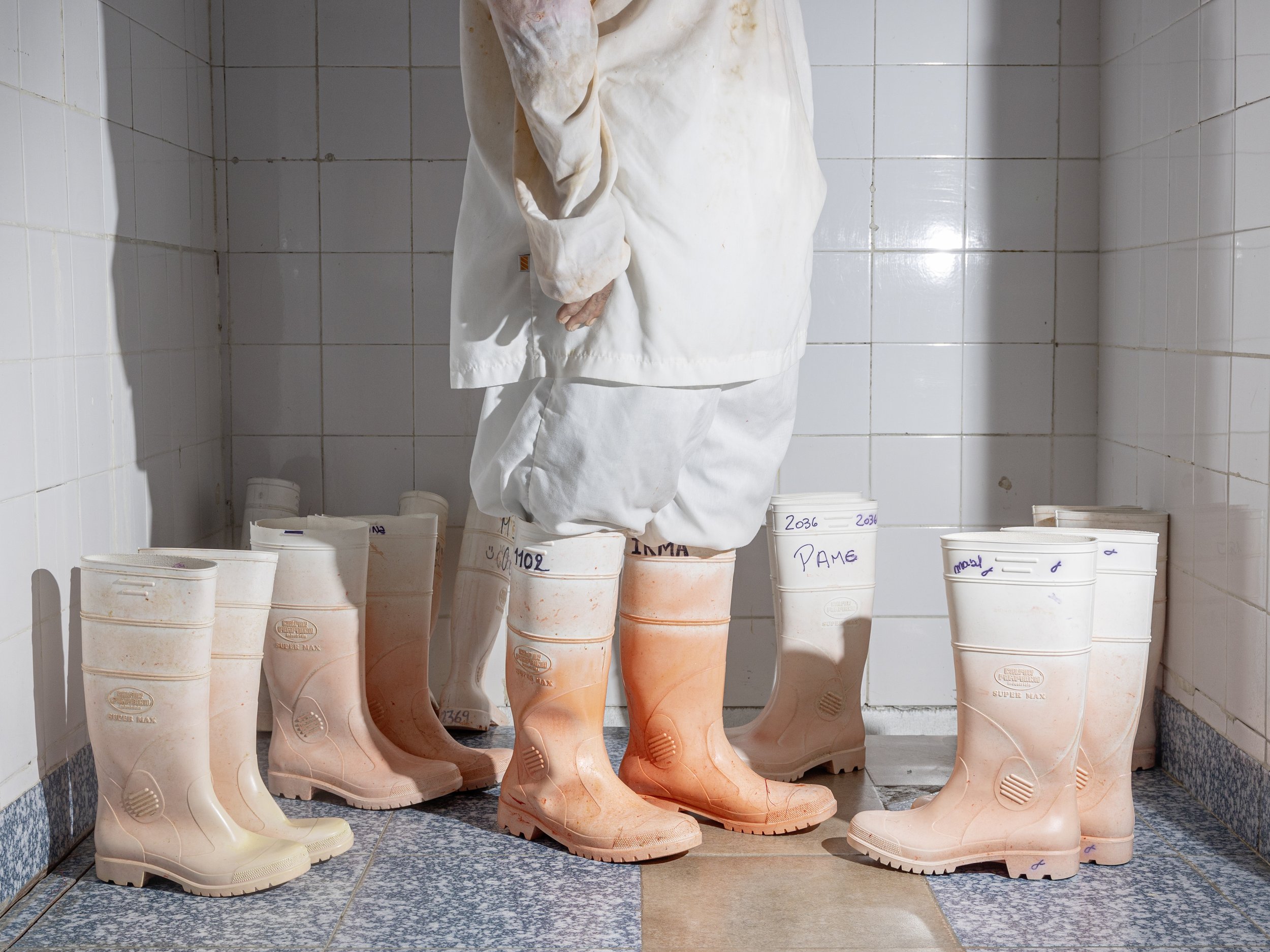
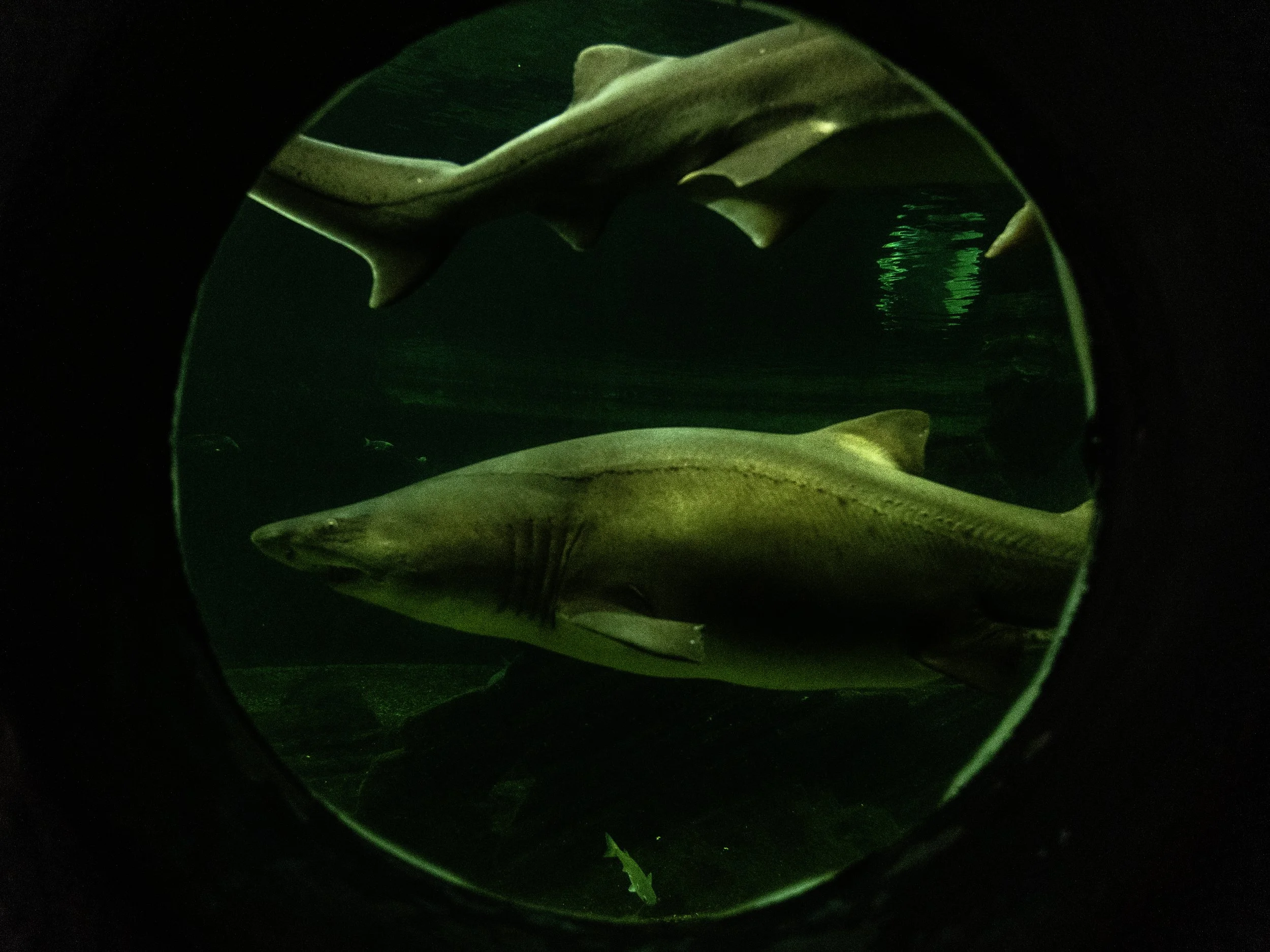
Sofía López Mañán, Untitled from The Orange Gold, 2023, digital capture
ML: Your project The Orange Gold examines the Patagonian shrimp industry and its environmental consequences. How did you navigate documenting a subject that is simultaneously an economic success story and an ecological concern?
SLM: It was genuinely complicated. The scientists we consulted, and there were many, were divided: some saw the shrimp as part of an ecosystem; others saw it as a resource. They were, in effect, talking about two different shrimp, shaped by two different frameworks. Why was the population multiplying? Some attributed it to improved fishing moratoria; others to the shrimp's physical resilience, a cousin of the cockroach, surviving any climate. Same animal, entirely different observations.
This happens with everything. The interesting thing isn't to reach a shared conclusion, that's probably impossible, but to expose that complexity, to show that the world is never as simple as cause and effect.
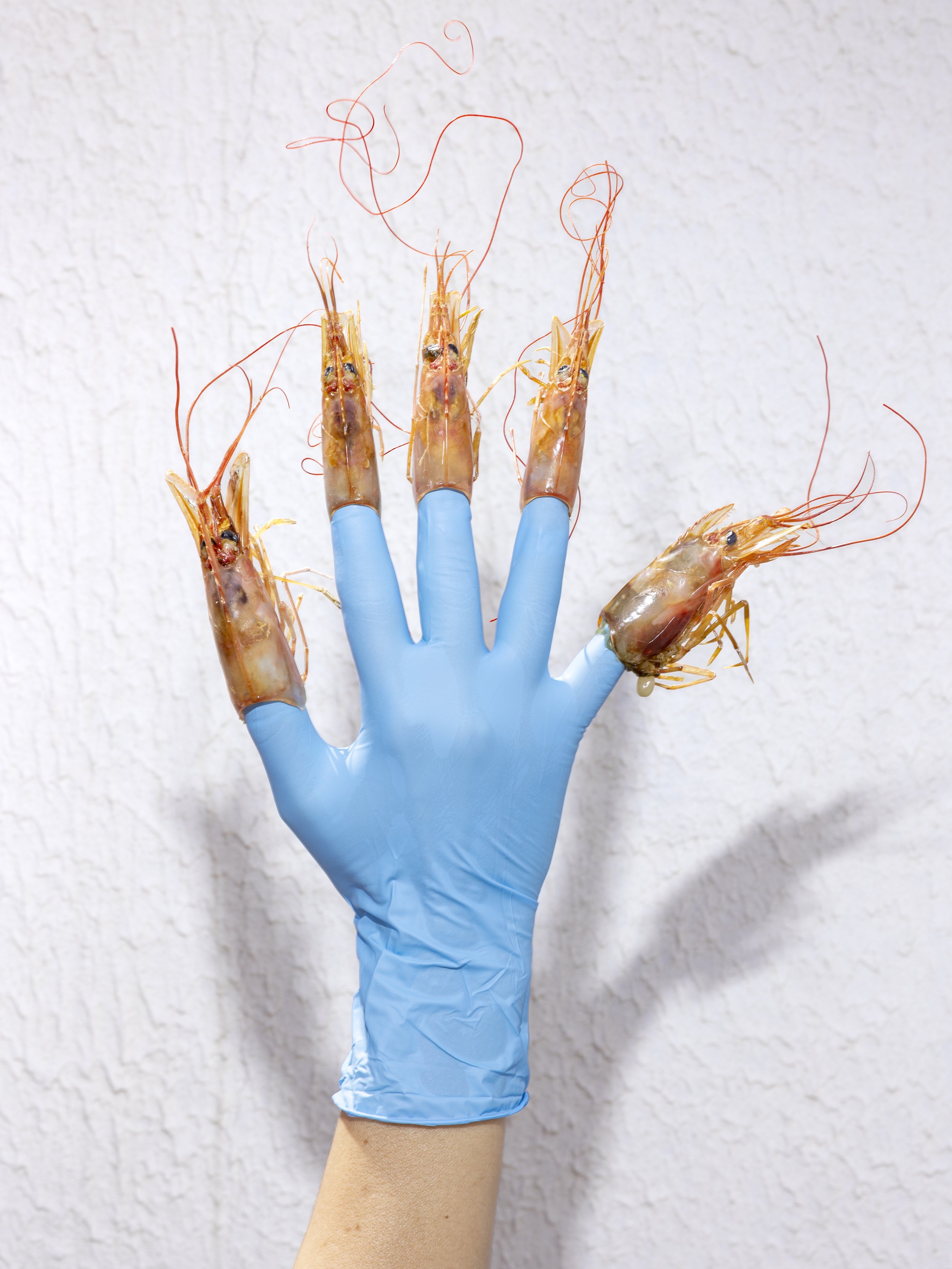
Sofía López Mañán, Untitled from The Orange Gold, 2023, digital capture
ML: What role do photographers and visual storytellers have in revealing the hidden environmental costs behind industries that are often celebrated for their economic impact?
SLM: I think telling these stories matters because it means industries can no longer operate with total impunity. The information is out there. You can keep doing what you do, but now we all know.
Our role is to give shape to a subject so it becomes a story, to create a level of empathy with an audience, to bring something distant close enough that people can actually understand it.
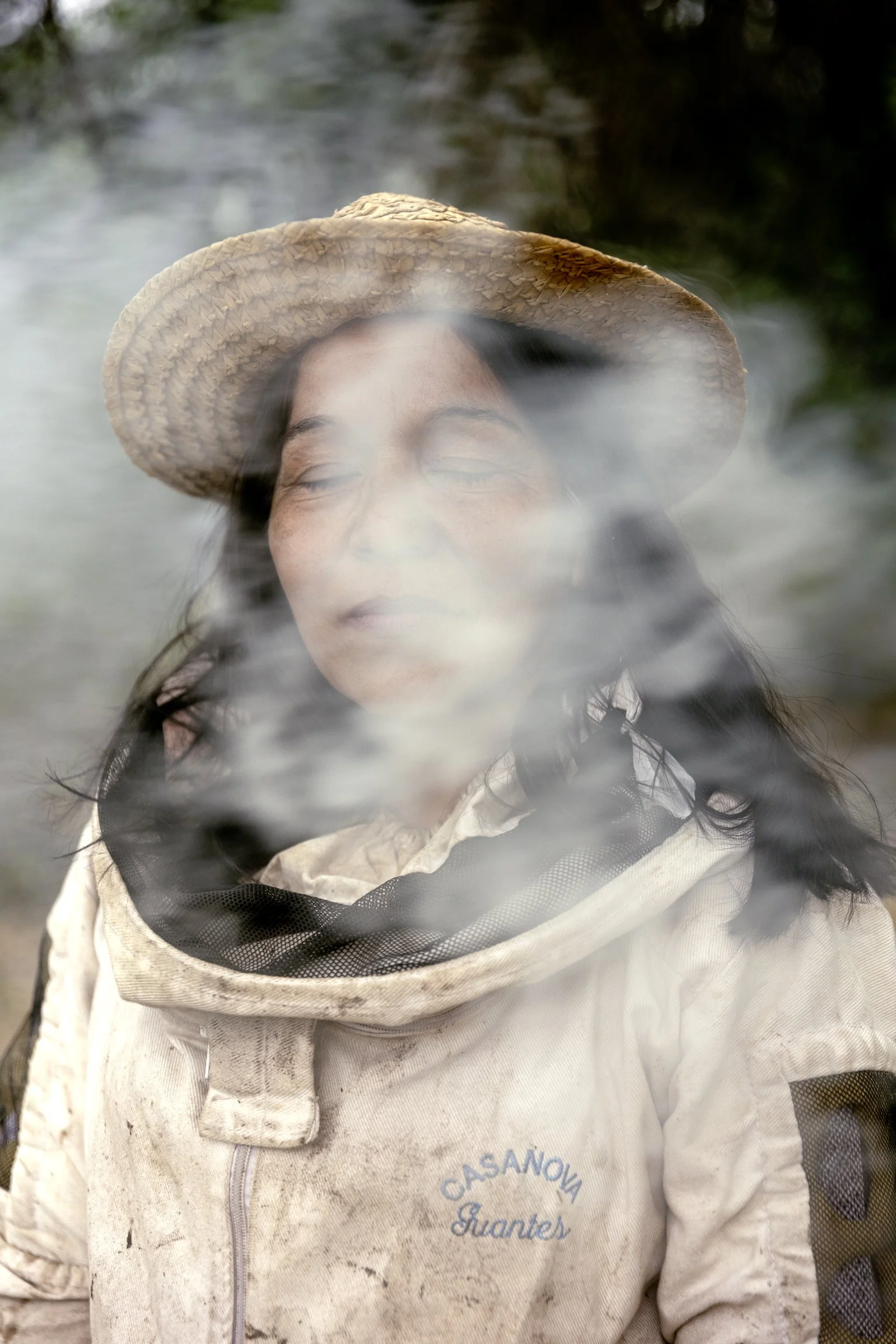
Sofía López Mañán, Untitled from A Taste of Honey, 2024, digital capture
ML: You describe dengue as a symptom of both the climate crisis and social inequities. How can visual storytelling help audiences understand these interconnected issues rather than seeing them as separate problems?
SLM: Today, talking about the environment without talking about socioeconomic conditions is retrograde. The most devastated places on earth are those with the deepest social crises — poverty, lack of clean water, food insecurity. We cannot think about protecting a species if the community that should protect it doesn't have its basic needs met.
Our dengue project was born from that exact tension. Living in Latin America, dengue is a serious problem in certain years, and what was being communicated from government channels was unclear at best. We wanted to use photography not only to document but to actually inform: how the disease originates, how it spreads, and concretely how to prevent it.
The philosopher Timothy Morton describes the climate crisis as a "hyperobject", something so vast and all-encompassing that it's nearly impossible to perceive from daily life. You start your car every morning without thinking about the climate crisis. Our challenge is to dismantle it, to fragment it, to bring it into the everyday, not to provoke numbness, but to inform.
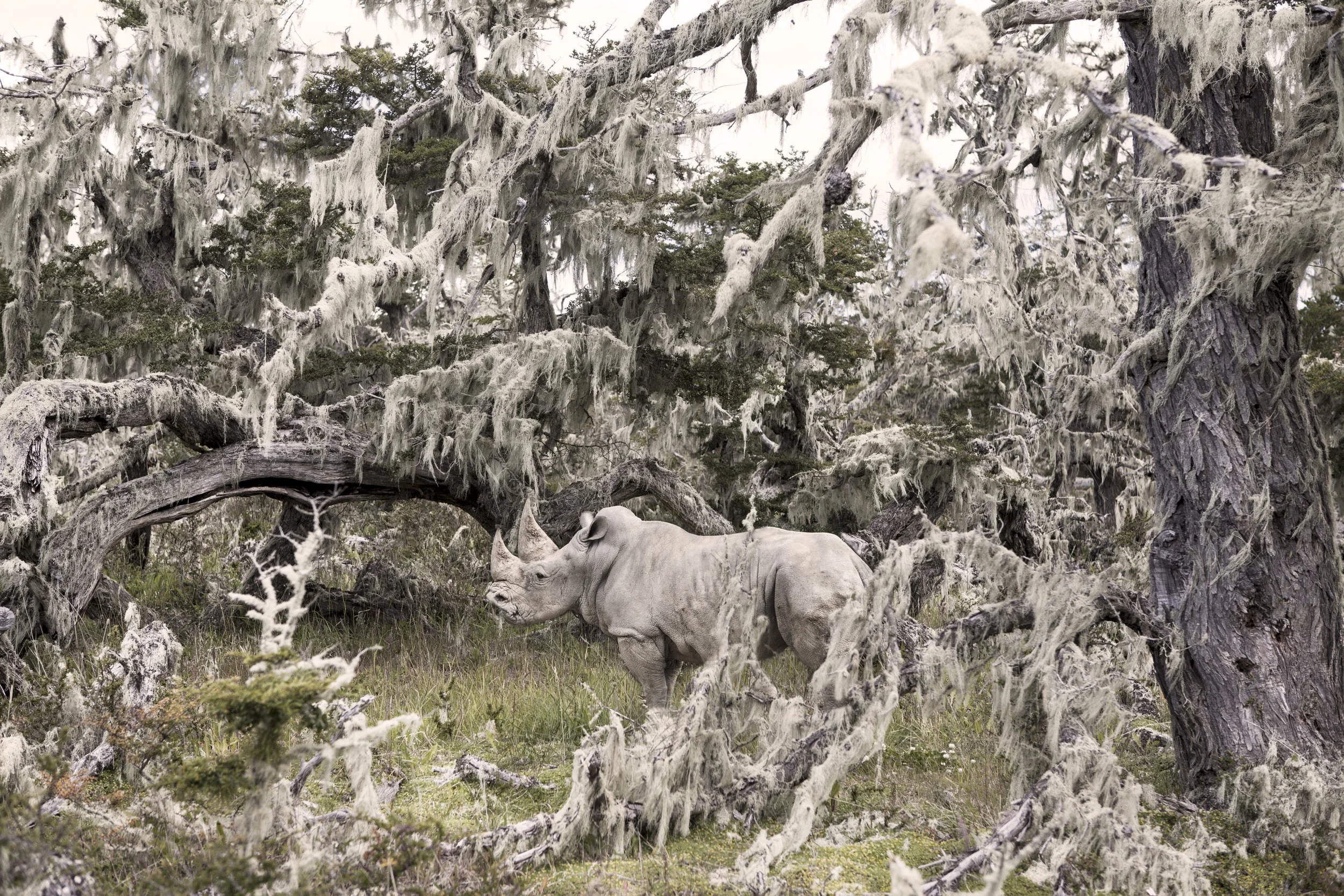
Sofía López Mañán, Untitled from A Book of Nature, 2016-26, digital capture, photo collage
ML: On your website, you tease the results of a survey called Is This Nature? Can you share an update on this project?
SLM: A Book of Nature is a research project about how we look, how we construct the idea of nature. Based on a survey with more than 600 participants, the findings show that we still perceive the world through a fundamental dichotomy: nature versus culture, nature versus the urban. Forty percent of respondents said they do not consider humans to be part of nature. Another fifty-five percent defined nature as plants and animals. Very few, countable on one hand, placed themselves inside the ecosystem.
The book was just published, in June 2026, and we're currently in the middle of the launch. What does the data tell us? I'll leave that for each reader to conclude.
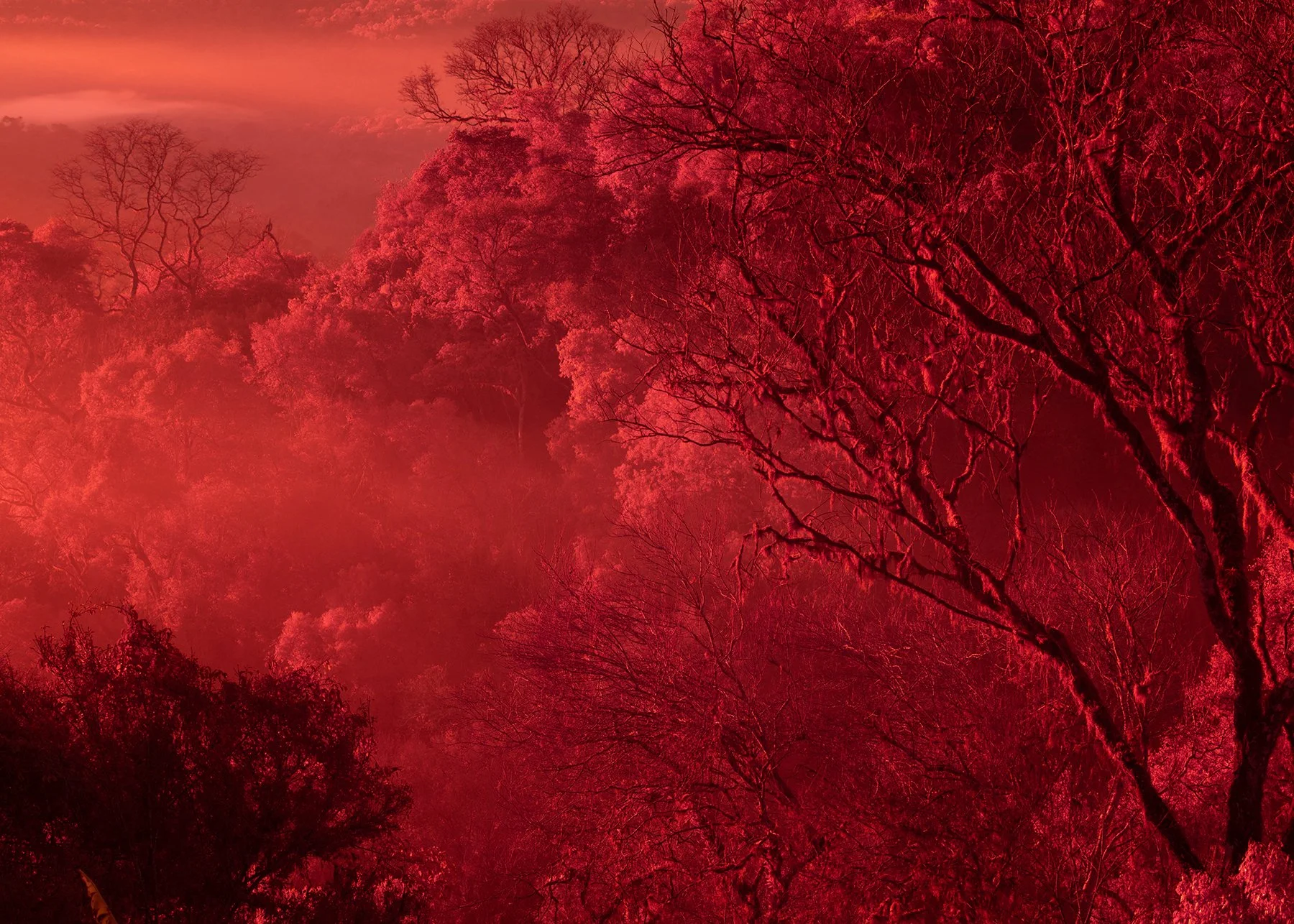
Sofía López Mañán, Untitled from A Book of Nature, 2016-26, digital capture
ML: Your work often challenges romanticized ideas of the natural world. What misconceptions about nature do you believe are most difficult to overcome in contemporary society?
SLM: The idea that we are separate from the biosphere. That our bodies are ecosystems in themselves, sustained by parasites and bacteria. That we are part of something, not outside it, not behind it, not ahead of it, and certainly not above it. Our lives and our intelligence are not superior to any other species on this earth.
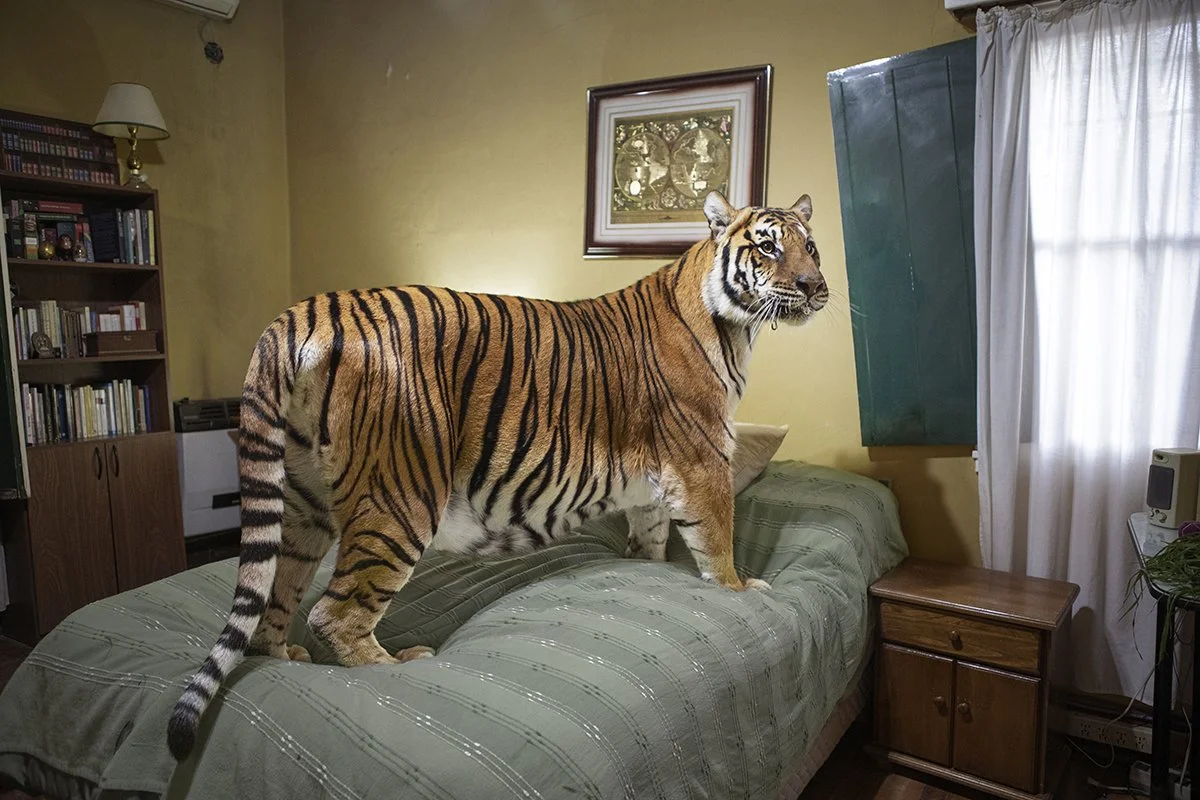
Sofía López Mañán, Untitled from A Book of Nature, 2016-26, digital capture, photo collage
ML: You write that ecology is ultimately about coexistence. What does coexistence mean to you and how can photography help cultivate ecological empathy?
SLM: To coexist is to recognize the other not for its importance or utility, not for its function in a hierarchy. It is to recognize the existence of the other and validate it simply because it exists. That is enormously difficult.
Empathy is letting ourselves be traversed by the world. As the philosopher Emanuele Coccia writes, it is being-immersed-in-the-world. Perhaps the proposal is to stop classifying in order to understand, and instead, for a moment, allow ourselves to simply be part of something without needing to comprehend it.
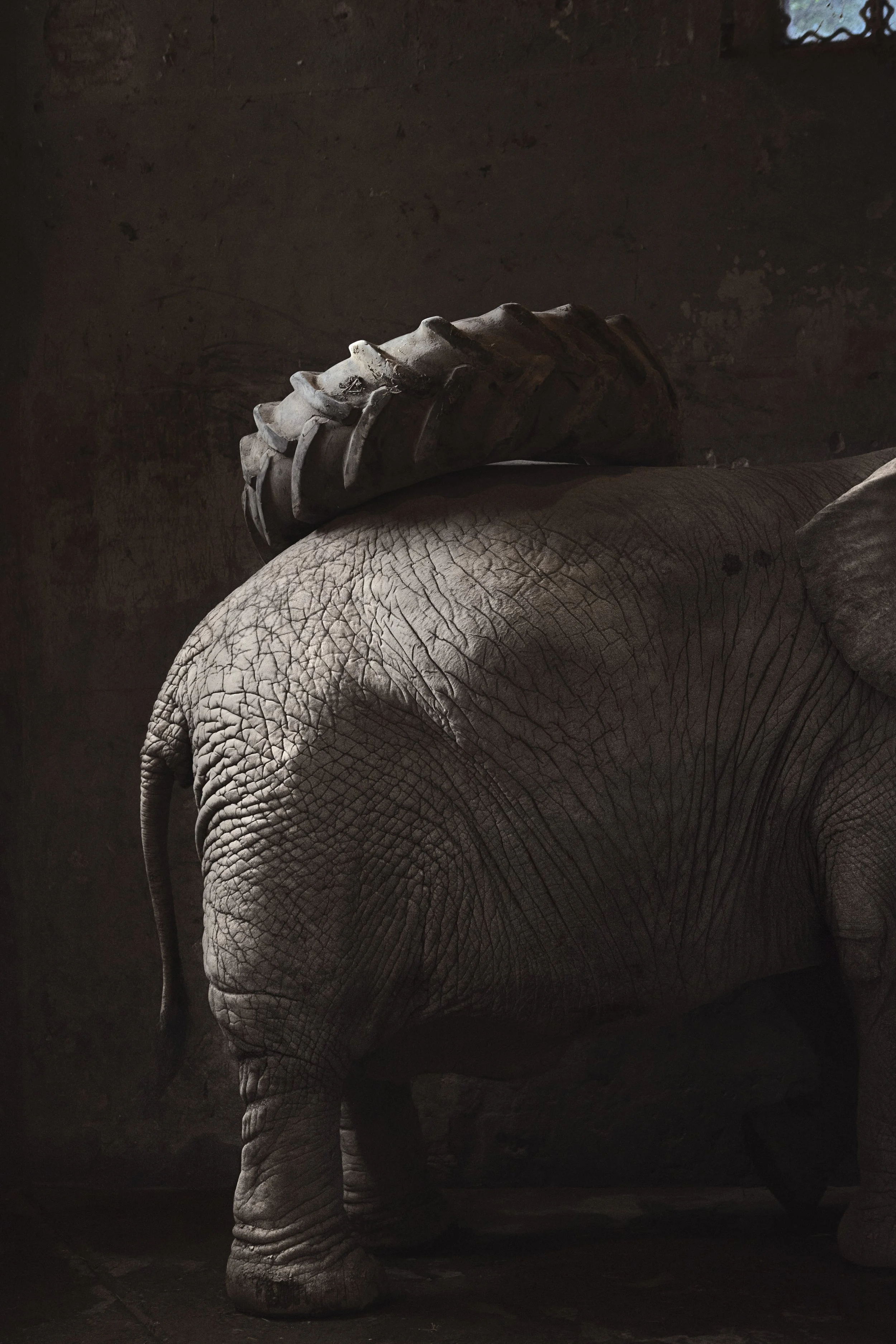
Sofía López Mañán, Untitled from An Elephant Transfer, 2021, digital capture
ML: The project An Elephant Transfer follows Mara the elephant's journey from captivity to a sanctuary during the COVID-19 pandemic. What did that experience reveal to you about human responsibility toward animals and the systems we create around them?
SLM: Mara's story is a story about paradigms. A few decades ago, going to the zoo was normal, no one questioned it. Judging what was done then with the values of today seems absurd to me.
People demanded that Mara be returned to Africa. Very Lion King. But Mara is an Indian elephant , the only thing she has in common with African elephants is a trunk and two ears. She spent her entire life in captivity. To "free" a long-lived animal who has never lived in a herd is illogical. And besides, what does freedom even mean? Where would she go? What is our idea of a space that exists outside our domination and control?
We have a fantasy when we talk about these things. The responsibility we have is to recognize that this world is shared and that it depends on all of us for it to keep functioning.
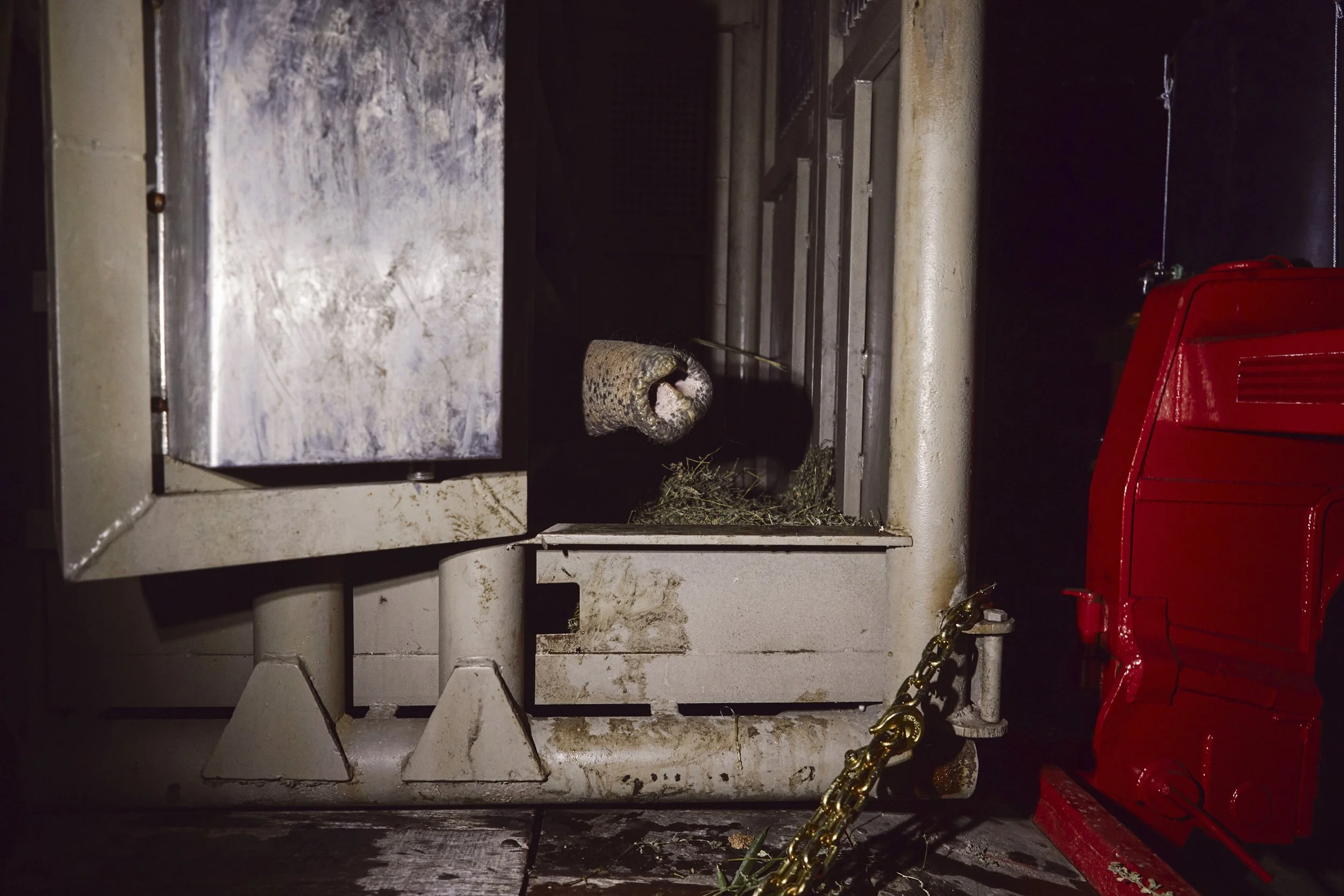
Sofía López Mañán, Untitled from An Elephant Transfer, 2021, digital capture
ML: You have worked with NGOs, government agencies, conservation projects, and independent documentary initiatives. How do you maintain critical distance while collaborating closely with institutions and advocacy groups?
SLM: I think it's the desire to understand multiple perspectives that keeps me in a listening mode rather than a defensive one. I'll admit that at some point I do form my own view, but I don't think anyone is particularly interested in hearing it. When I'm given access to document something, I try to respect and interpret how the other person sees things. It's my way of being ethical in these relationships, honoring people's work and allowing them to represent themselves.
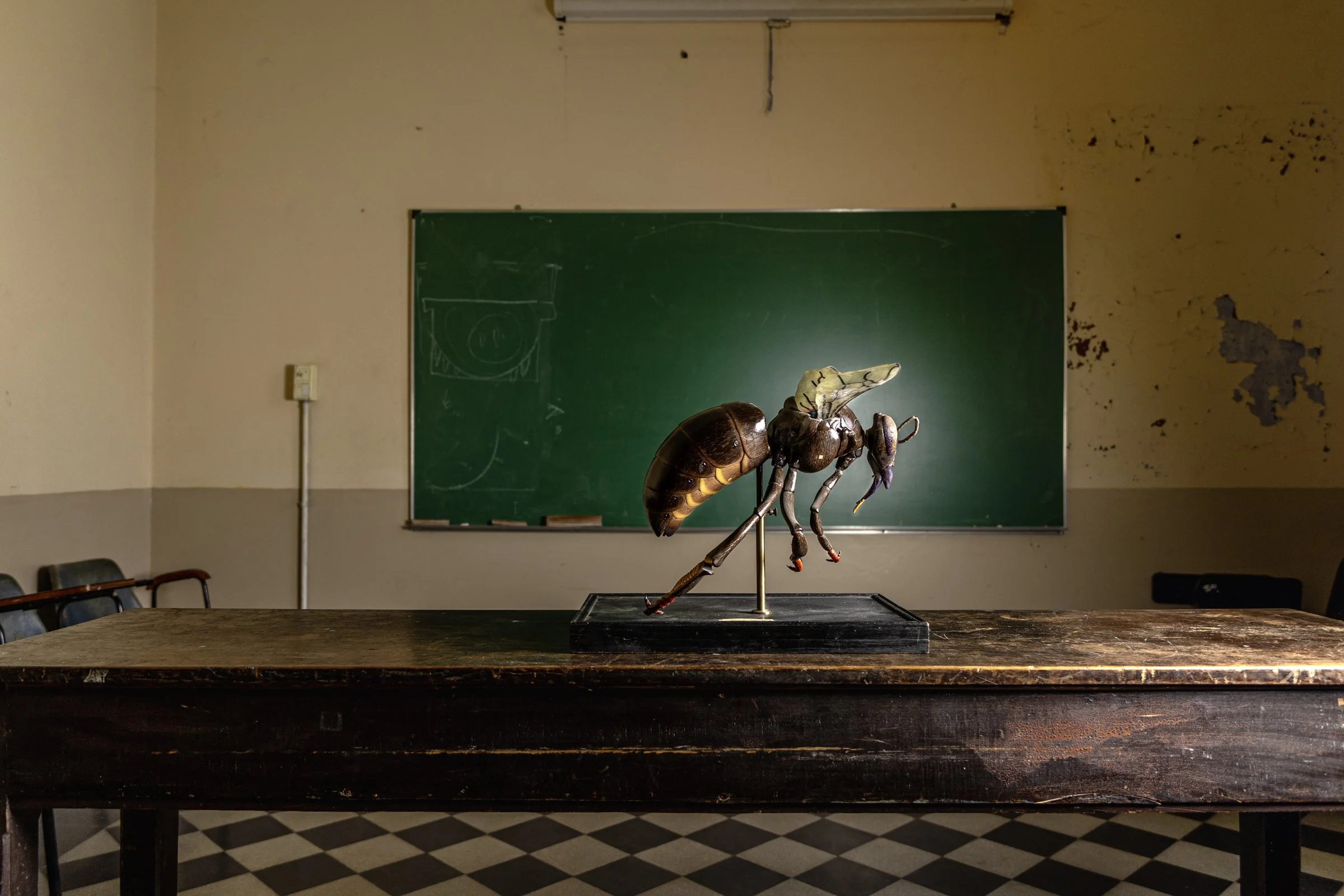
Sofía López Mañán, Untitled from A Taste of Honey, 2024, digital capture
ML: As environmental crises become increasingly visible around the world, what stories do you think remain underreported or misunderstood within environmental photography?
SLM: With so much information and communication circulating today, I'm not sure there are many subjects that haven't been covered. For me, the challenge is approaching existing topics from a new angle. My desire is to provoke critical thinking through storytelling, to create questions rather than deliver conclusions. People share and repeat information without questioning it. I'd like to disrupt that.
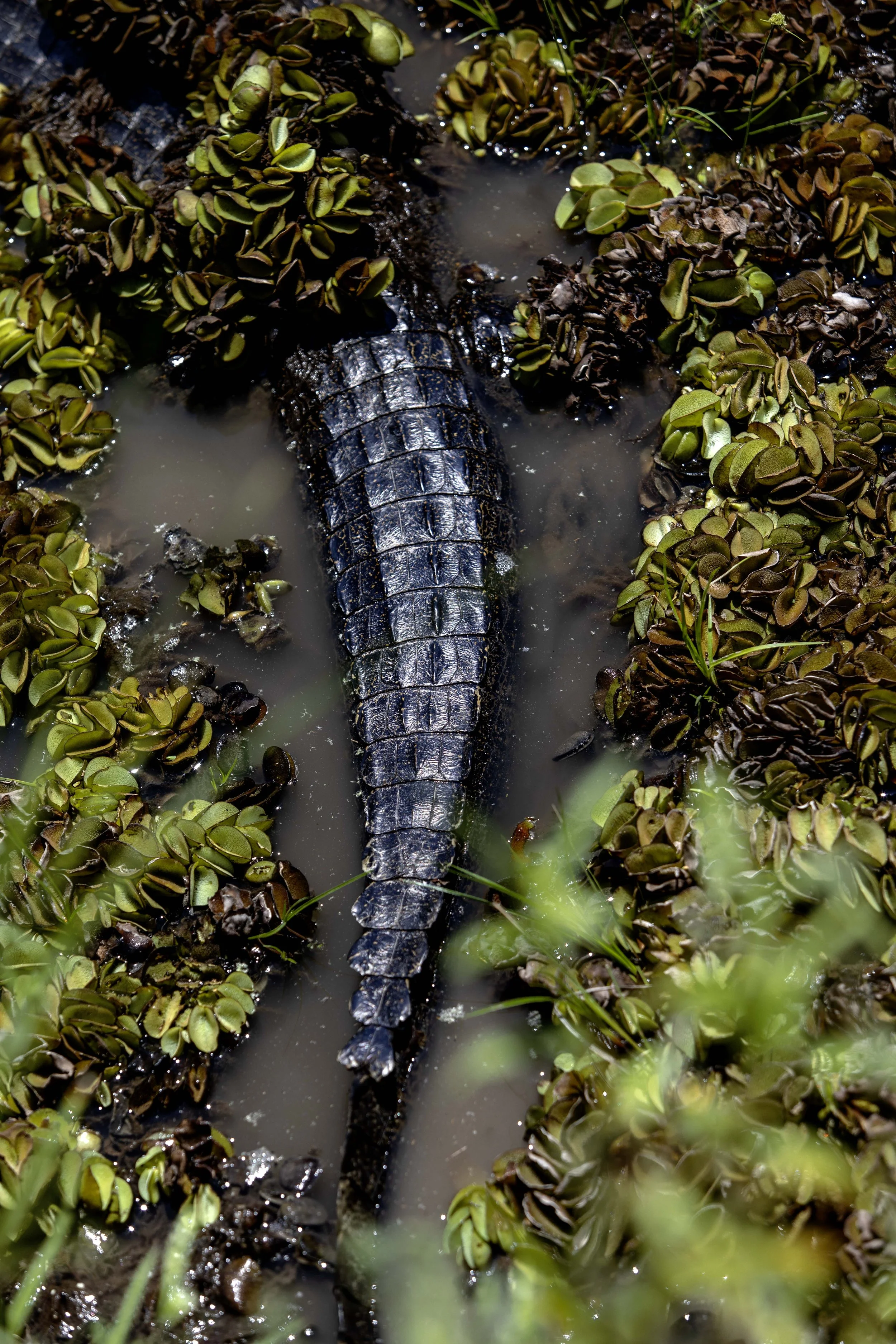
Sofía López Mañán, Untitled from The Earth Kidney, 2022-3, digital capture
ML: Several of your projects examine the tension between care and control in human relationships with animals. How do you approach these ethical complexities in your creative practice?
SLM: Care and control is a tension that runs through all relationships — within our own species and across species. The line between listening to someone and attending to their actual needs, versus imposing what I think is best for them, is razor thin. And we cross it constantly.
With companion animals I see an enormous number of pathological dynamics — projections of what we lack, what we need, what we want the other to become. The ethologist Ricardo Ferrari puts it well: we have a wolf genome on a balcony, and we've normalized it. We've taken an animal shaped by millions of years of a particular life and fitted it into ours without much question.
Control, at its core, is the desire to sustain our own narrative. The way I see things, the way I perceive the world — that becomes the correct way. That's dangerous. It's, in many ways, how we got to where we are now.
ML: Looking ahead, what questions are currently driving your work? What is occupying your attention at this time?
SLM: If we are not part of nature, then what are we? How is a human being constructed?