

Katie Shapiro’s (she/her) practice explores the ineffable—making visible what cannot be seen. Her recent work focuses on themes of motherhood, deepening her ongoing investigation into perception, presence, and the unseen. She holds an MFA from the University of California, Irvine, and a BFA in Photography from CalArts.
Shapiro’s work has been exhibited internationally, with recent and past shows at institutions including Aperture Gallery, Kopeikin Gallery, Klompching Gallery, Christopher Grimes Gallery, and The Center for Photographic Art in Carmel, CA. Her work has appeared in Artforum, The Los Angeles Times, and New York Magazine. Her work is included in numerous private and public collections, notably the Los Angeles County Museum of Art (LACMA), the Huntington Library and Art Collection, the California Museum of Photography in Riverside, and the Amon Carter Museum Library.
Shapiro has held residencies at the Banff Centre in Canada and Bullseye Glass in Pasadena, and recently attended Mass MoCA as an artist-in-residence. She lives and works in Los Angeles.
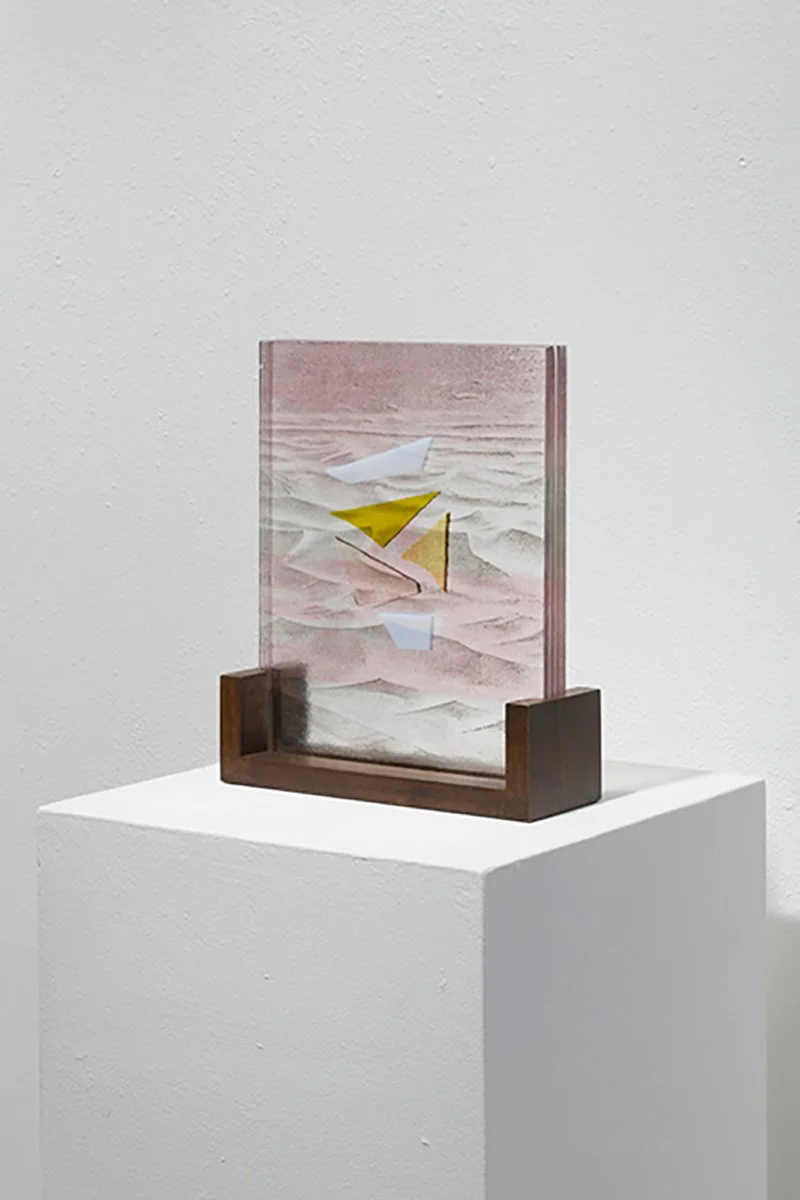
Katie Shapiro, Shells, 2018, 8x10x4 inches, kiln fired glass
Throughout her photographic practice, Katie Shapiro has explored the unseen dimensions of the world around and within us. Moving between landscapes, geological formations, spiritual sites, and the complexities of motherhood, her work considers photography as a way of making visible what often remains beyond perception. Through the layering of images and sculptural materials, Shapiro creates an evolving visual language that bridges the physical and the psychological. In this conversation, she reflects on the evolution of her practice, the influence of spirituality and Jungian thought, and how motherhood has transformed her understanding of identity, vulnerability, and the interior landscape.
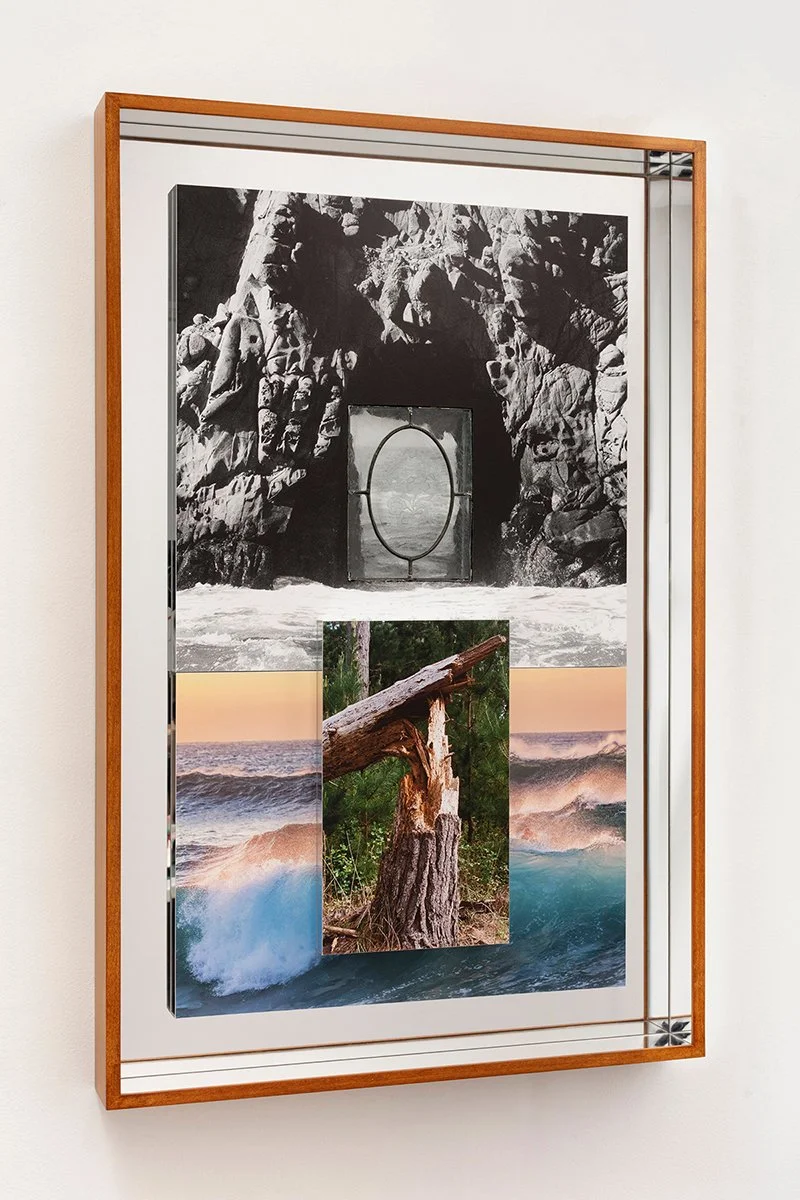
Katie Shapiro, Passing Through to the Other Side from the series The Other Side of the Moon, 2026, 34x41 inches, inkjet prints, mirror, etched glass
Margaret LeJeune: Can you take us back to the origins of your creative life? What initially drew you to photography, and when did you begin to understand the medium as something capable of revealing what cannot necessarily be seen?
Katie Shapiro: I first took a darkroom photography class in middle school and I was basically instantly hooked. I would spend my free periods, lunch periods, just about all my time in the darkroom. It was a refuge for me. I don’t think I understood the medium as capable of revealing what can’t be seen until graduate school. I think I felt it for a long time, especially with my early portrait work (revealing something interior about my subjects), but I didn’t put it into practice until graduate school. In high school I also painted a lot, and would make collages and staple them together to make new arrangements, which I think ties into my current work of putting things together in unusual ways.
ML: Throughout your practice, photography seems to function as a threshold through which reality might be questioned. You have described your work as an exploration of the ineffable; making visible what cannot be seen. How has this understanding of photography evolved over the course of your career?
KS: I think it’s worked it’s way through in metaphors for a long time. Exploring energy vortexes, impact craters and spiritual places, until I got to myself and my own invisible parts of myself that I have been exploring recently.
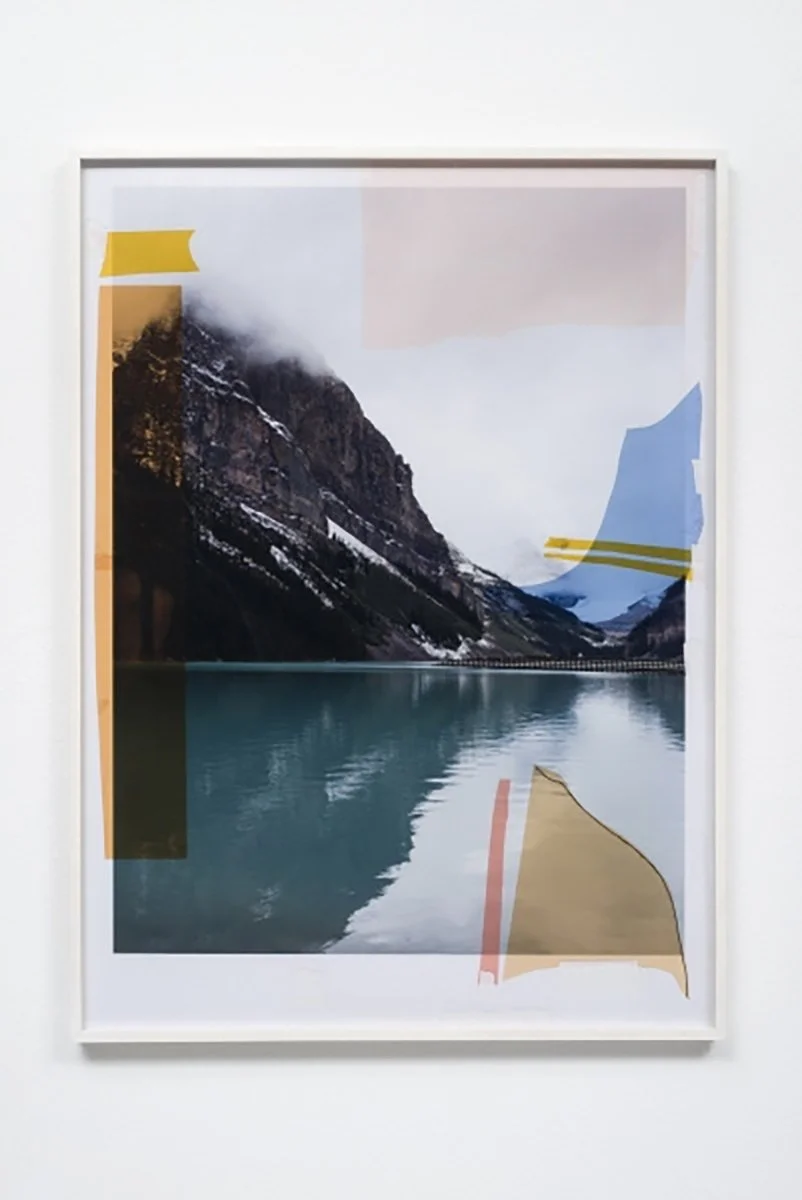
Katie Shapiro, Lake Louise Mirror from the series The Great Divide, 2015, 28x41 inches, inkjet print
ML: How did your studies at CalArts and UC Irvine shape the way you think about photography, particularly its relationship to representation, abstraction, and conceptual ideas? Were there any artists, writers, or theoretical perspectives that really shifted the way you think about looking and seeing?
KS: I think my education was largely based in conceptual art. I learned to work that way and then spent a long time unlearning it to get to my own personal truth. The biggest influence was a show catalog called “The Spiritual in Art” at LACMA that my graduate school professor Kevin Appel showed to me. I saw there were a slew of artists who, for years, were exploring the invisible, and it was profound to connect to that lineage.
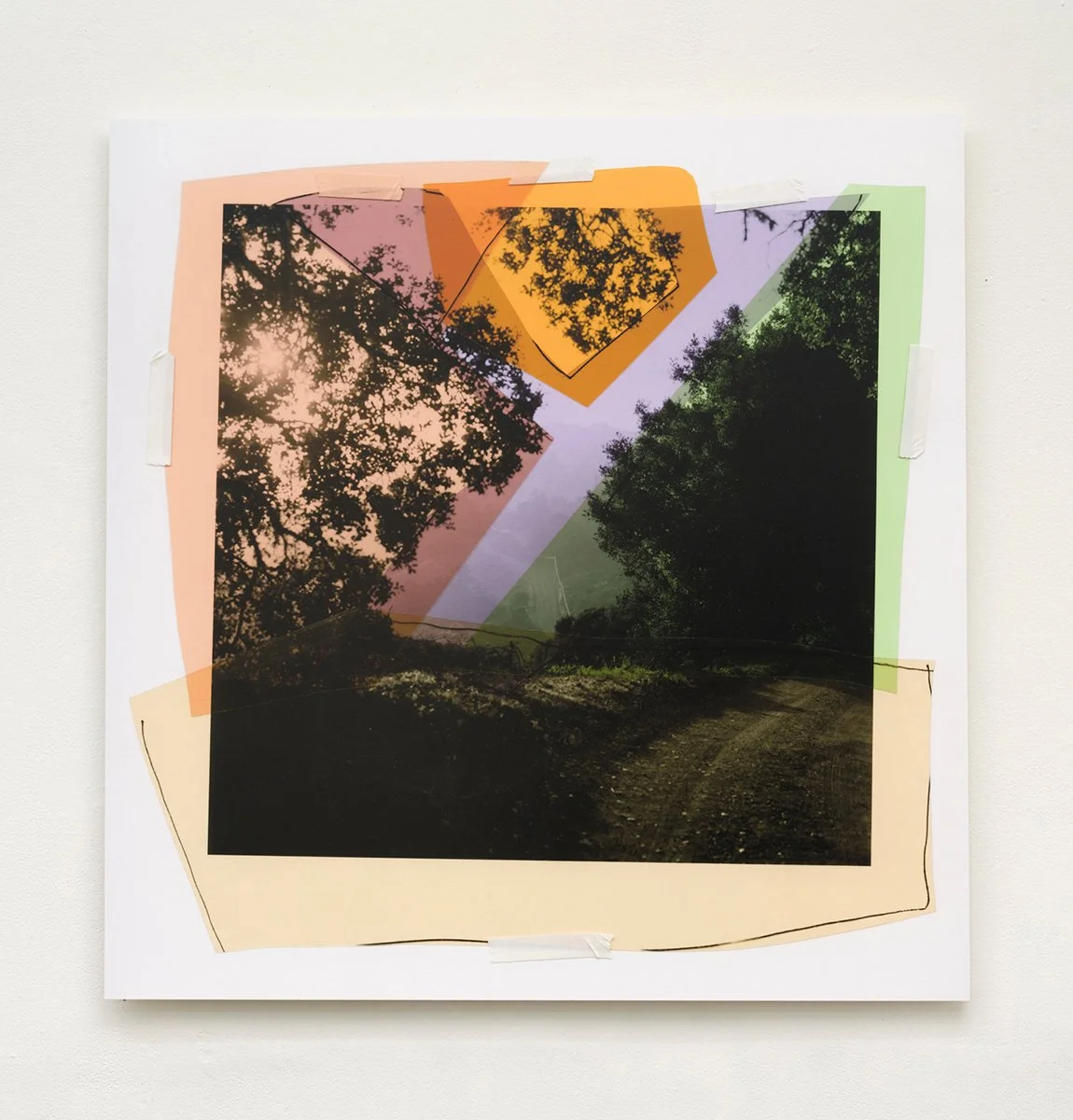
Katie Shapiro, Open Clearing from the series Big Sur, 2022, 40x40 inches, inkjet print
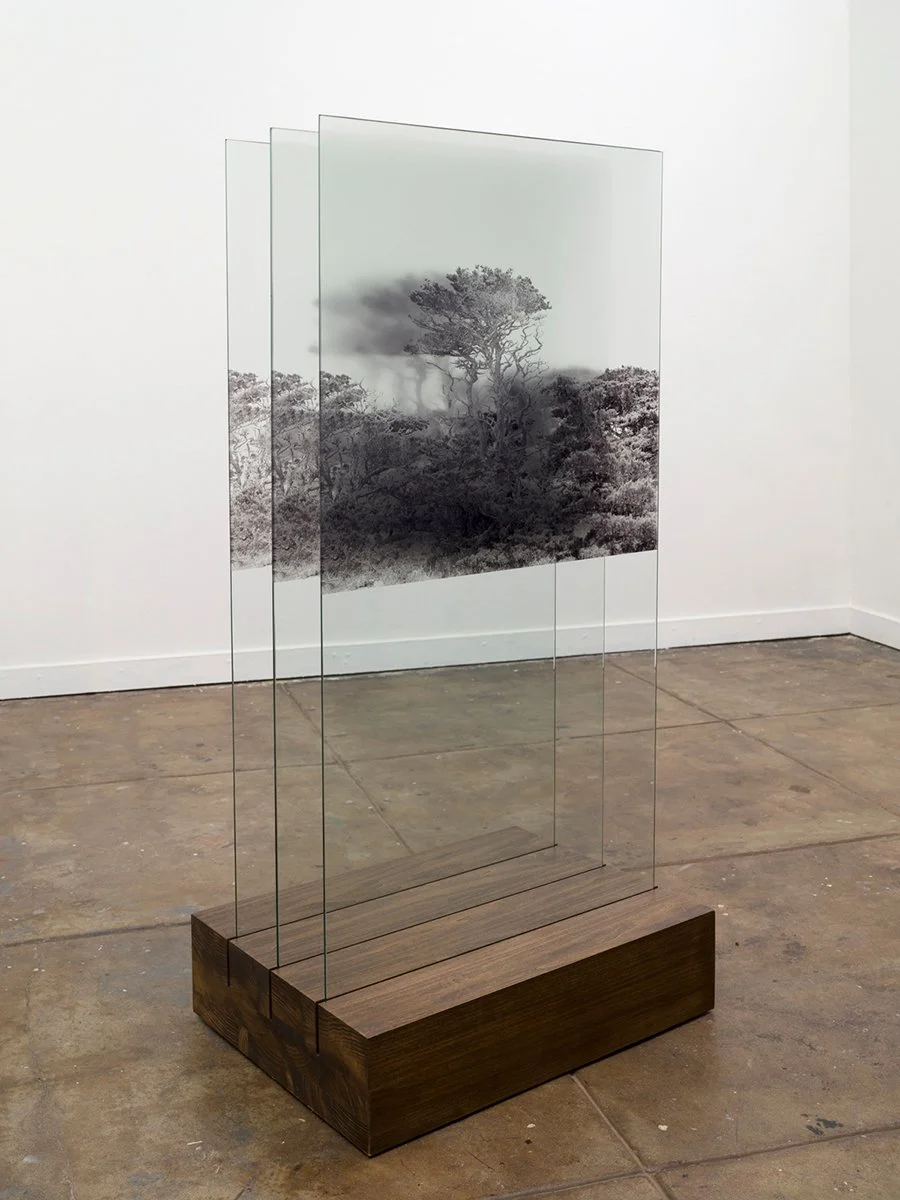
Katie Shapiro, Wiggly Tree x 3 from the series Big Sur, 2022, 51x28x24 inches, inkjet on glass, wood base
ML: In projects like Big Sur, Moab, and The Great Divide, the landscape feels like much more than just a physical place. There's a sense that these locations hold their own energy, history, emotional, or even spiritual presence. What is it that draws you to certain landscapes? How do you know when a place has something you want to explore or spend time with?
KS: I think I landed on this idea of energy vortex as a metaphor to explore invisibility. I explored places that were known to be or have energy vortexes as a guiding principle to my work. It was more of a conceptual framework than anything else and I landed on calling the work “abstract documentary” since I was melding the representational image with abstract colors and shapes over them.
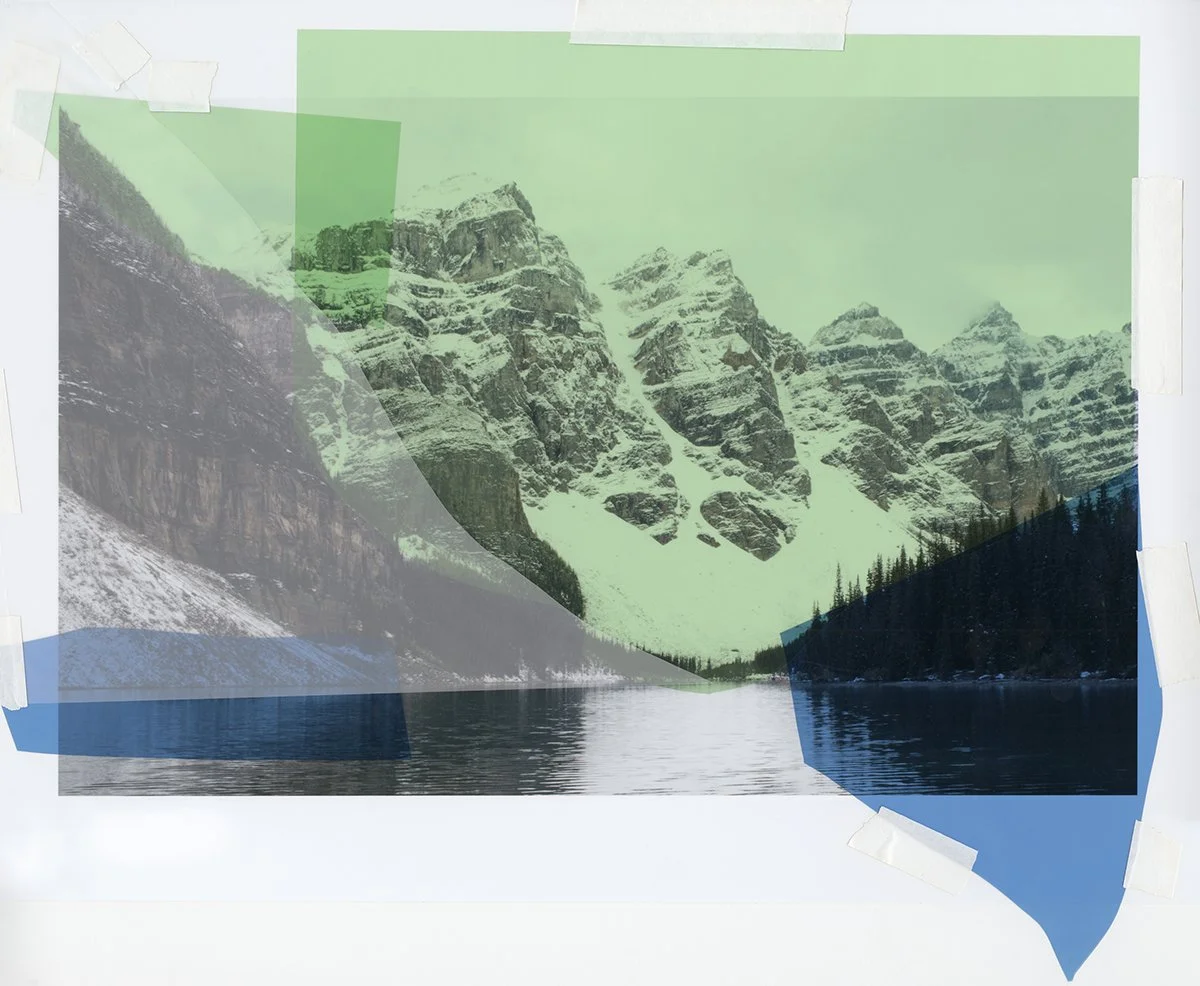
Katie Shapiro, Green Moraine from the series The Great Divide, 2015, 30x40 inches, inkjet print
ML: In The Great Divide, you encountered the account of a woman known as Star, whose spiritual vision quest in the Canadian Rockies led her to nine sacred locations associated with the Archangel Mikael. Rather than simply documenting this story, you chose to retrace her journey, visiting each location and creating photographs that you subsequently transformed through colored gels and white tape. There is an intriguing tension here between another person's spiritual experience and your own act of artistic interpretation. What compelled you to follow Star's path?
KS: I used her story as a conceptual framework to work within. Her path gave me a guide to work with and then explore once I gathered the images I took from following her path. Often that helps me give shape to my process and work is to have something conceptual to work from, and then explore in the studio once I have the images I’ve made. I believe I work that way from my training in art school.
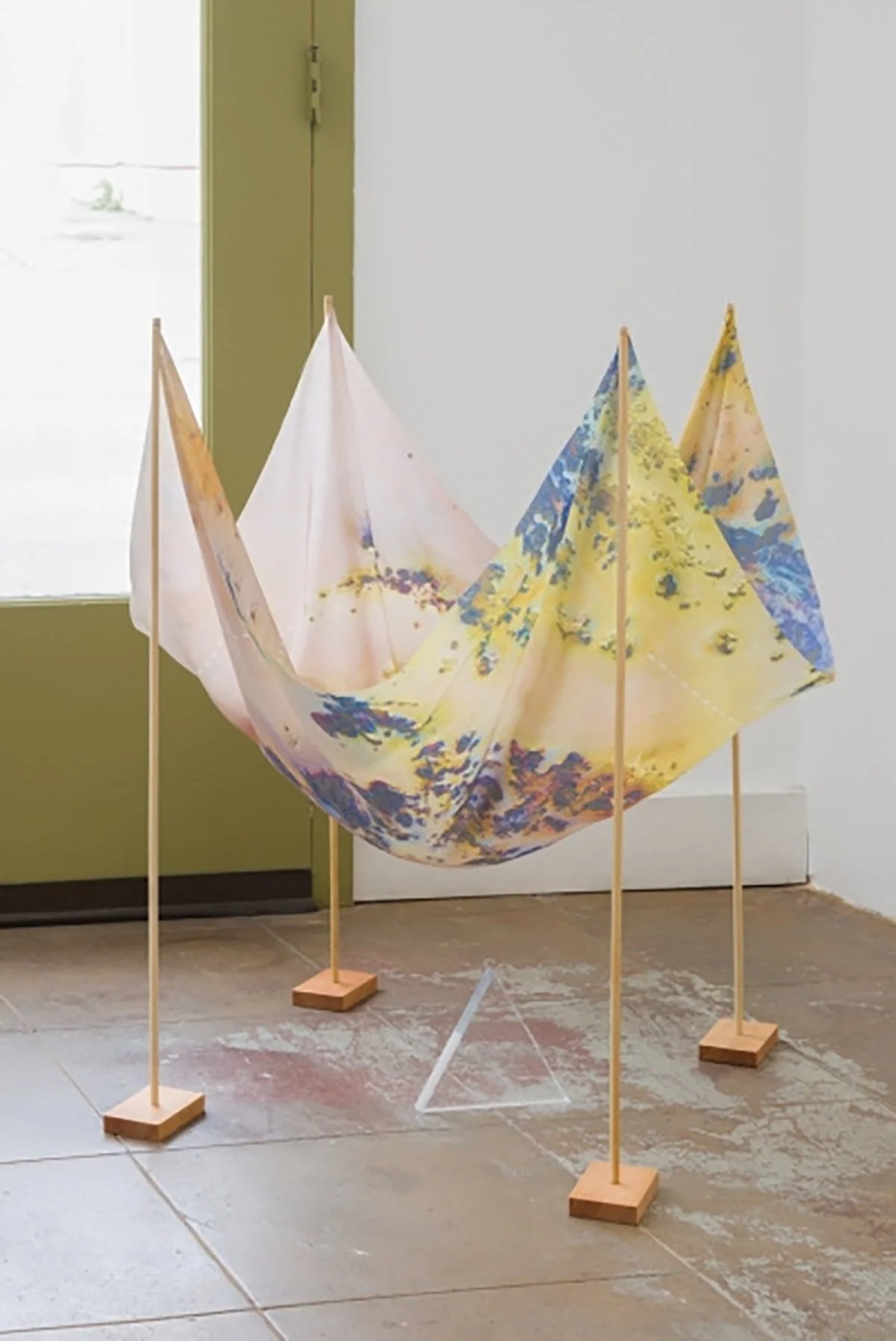
Katie Shapiro, Kabira Crater Canopy from the series Craters, 2017, wood, print on silk, plexiglass triangle
ML: In your series Craters, you draw a compelling parallel between geological impact and human trauma. Referencing Carl Sagan's description of impact craters as scars on the earth that can remain visible for billions of years, you consider the planet as a body that exposes its wounds rather than concealing them. What initially drew you to this relationship between geological and psychological trauma?
KS: It was a beautiful metaphor to me to view our mother earth as carrying and showing her wounds, while we as humans often carry invisible wounds that most people never get to see or know about. It was another invisible metaphor I could play with that felt very aligned with our inner landscapes now that I think about it…I think I was getting closer to the truth of my practice with this body of work than I realized.
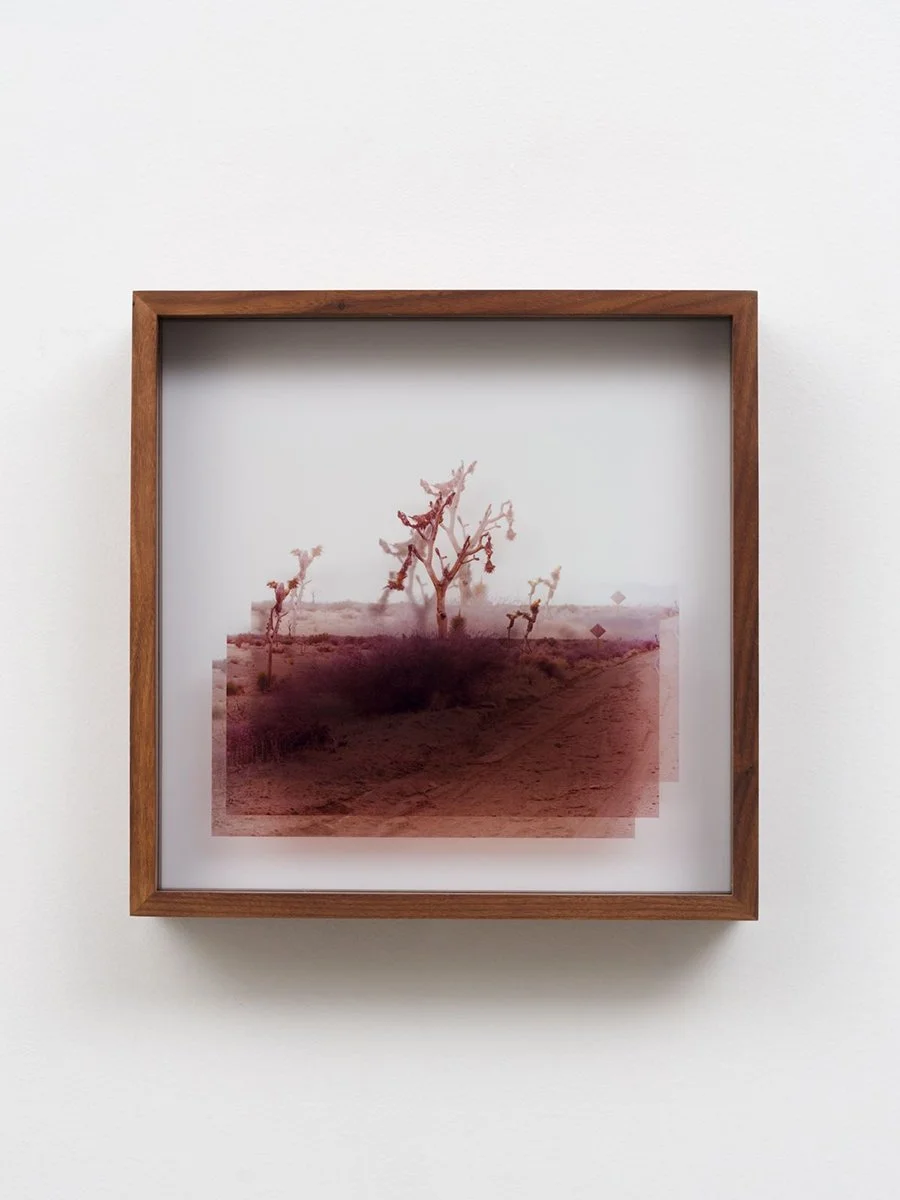
Katie Shapiro, Dying Joshua Tree from the series The Shadow, 2024, 12x12 inches, inkjet on plexiglass
ML: Your work has increasingly incorporated sculptural materials, including kiln-fused glass and Plexiglass. In The Shadow, you describe this expansion as a way of bringing physical layers into the viewing experience, allowing unconscious emotions to resonate beneath the photographic surface. What prompted this movement from the photograph as a relatively contained image toward the photograph as a layered, spatial, and material object?
KS: I think I got tired of seeing my work as a print on the wall. It felt limiting. I wanted something more from the work and so over time - with different experimentation - I developed more three-dimensional ways to present my work. I love the idea of being able to see a work, or a photograph, from different angles, to be able to walk around and move about it. That excites me.
ML: Your engagement with Carl Jung's concept of the Shadow marks an important development in your practice. In The Shadow, you layer images on Plexiglass, offsetting them from inkjet prints to create physical and visual distance between images. You describe this separation as a metaphor for the hidden aspects of identity that remain partially inaccessible to conscious understanding. How did your encounter with Jung's writing transform your understanding of your own artistic motivations?
KS: I was actually working with a Jungian analyst and I realized the work I was making in the studio was coming out as these shadows and double or triple images, so it felt like the inner and personal work I was doing with the analyst was coming out in the studio almost naturally without me fully realizing it.
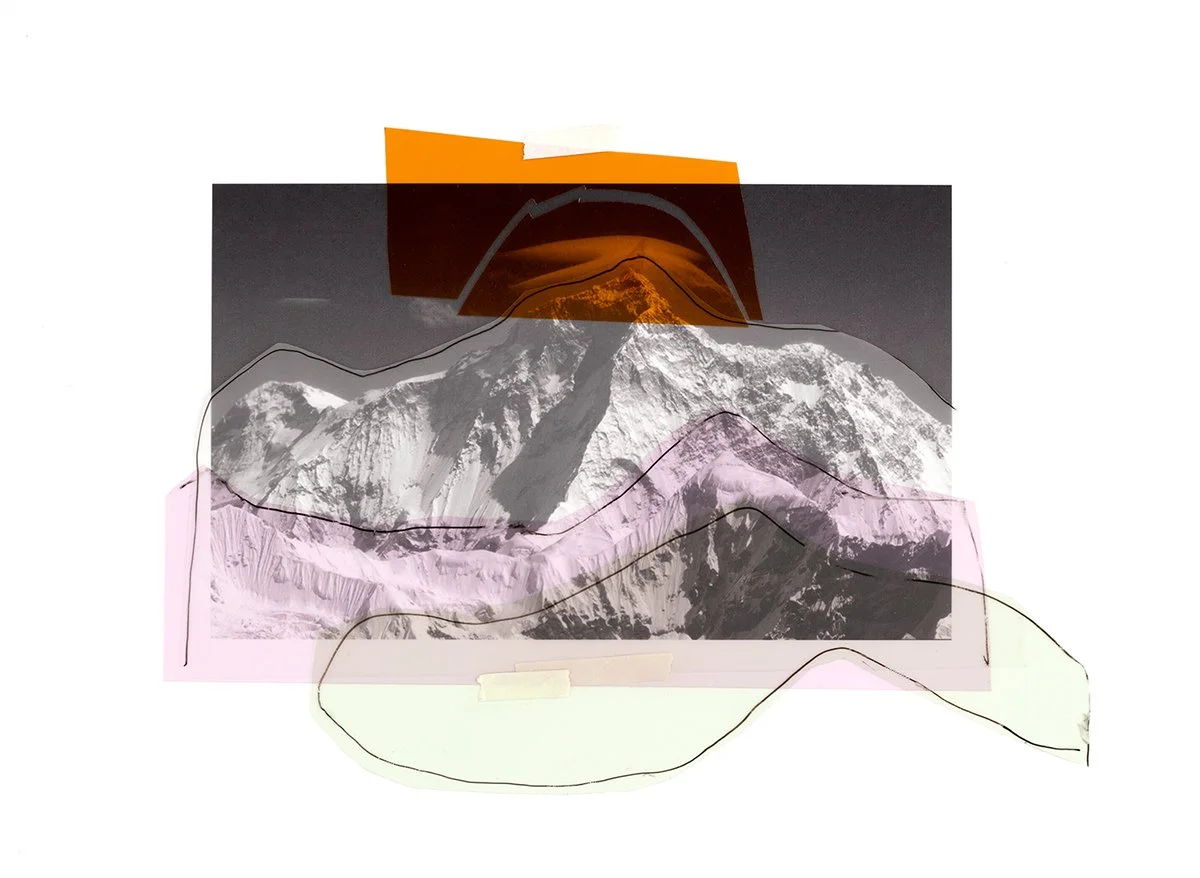
Katie Shapiro, Makalu from the series Eight Thousanders, 2020, 28x40 inches, inkjet print
ML: You’ve spoken about motherhood as a major turning point in your artistic practice. How did becoming a mother change the way you see yourself as an artist and the kinds of things you want to explore in your work? Did it bring new questions to the surface, or shift the way you understood things you were already interested in?
KS: I would say it introduced an entirely new psychological and emotional landscape; one that was much more vast and open and also vulnerable in a new way that it had never been before. I believe a part of me awoke and broke open, and I’ve been trying to work and grow with that awakening.
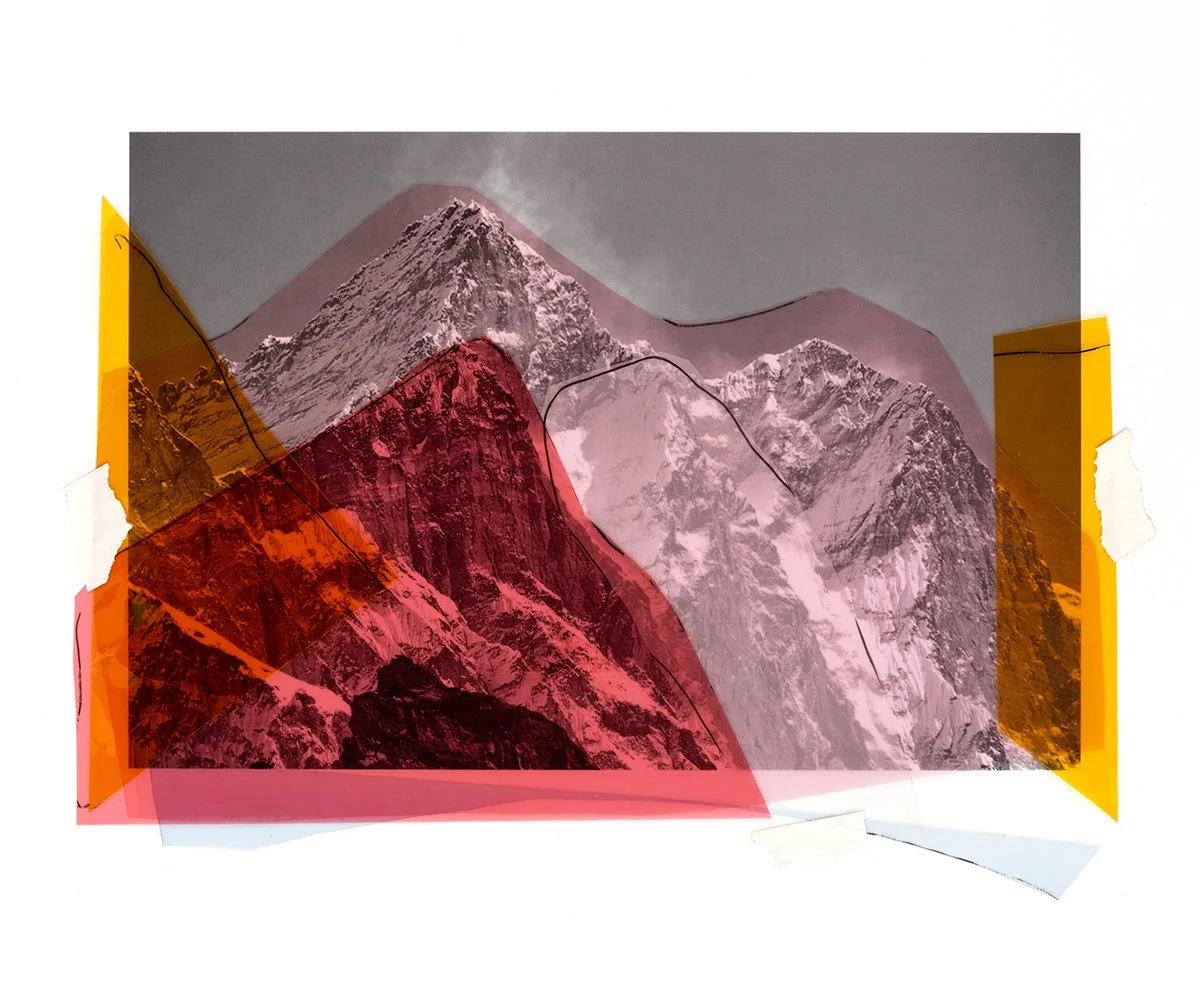
Katie Shapiro, Lhotse from the series Eight Thousanders, 2020, 37x40 inches, inkjet print
ML: In Eight Thousanders, you turn to the fourteen highest mountains in the world, whose summits reach into the death zone, where oxygen is insufficient to sustain human life for an extended period. You use found photographs of these mountains, overlaying them with colored lighting gels to evoke the physical and psychological weight of parenting during the pandemic. The metaphor feels both monumental and intimate. Why did these particular mountains become the language through which you could articulate this experience? Is there something about the sublime scale of mountains that makes it possible to communicate the otherwise invisible labor of caregiving?
KS: It was a fitting metaphor to express the herculean task of parenting two children under two during the pandemic, being trapped at home with nowhere to go. It felt like I couldn’t breathe or escape and the idea of not having oxygen at those mountain ranges felt like a fitting metaphor to express what me and many of my friends with young children were going through. And yes, also as a way of talking about the invisible labor of caregiving.
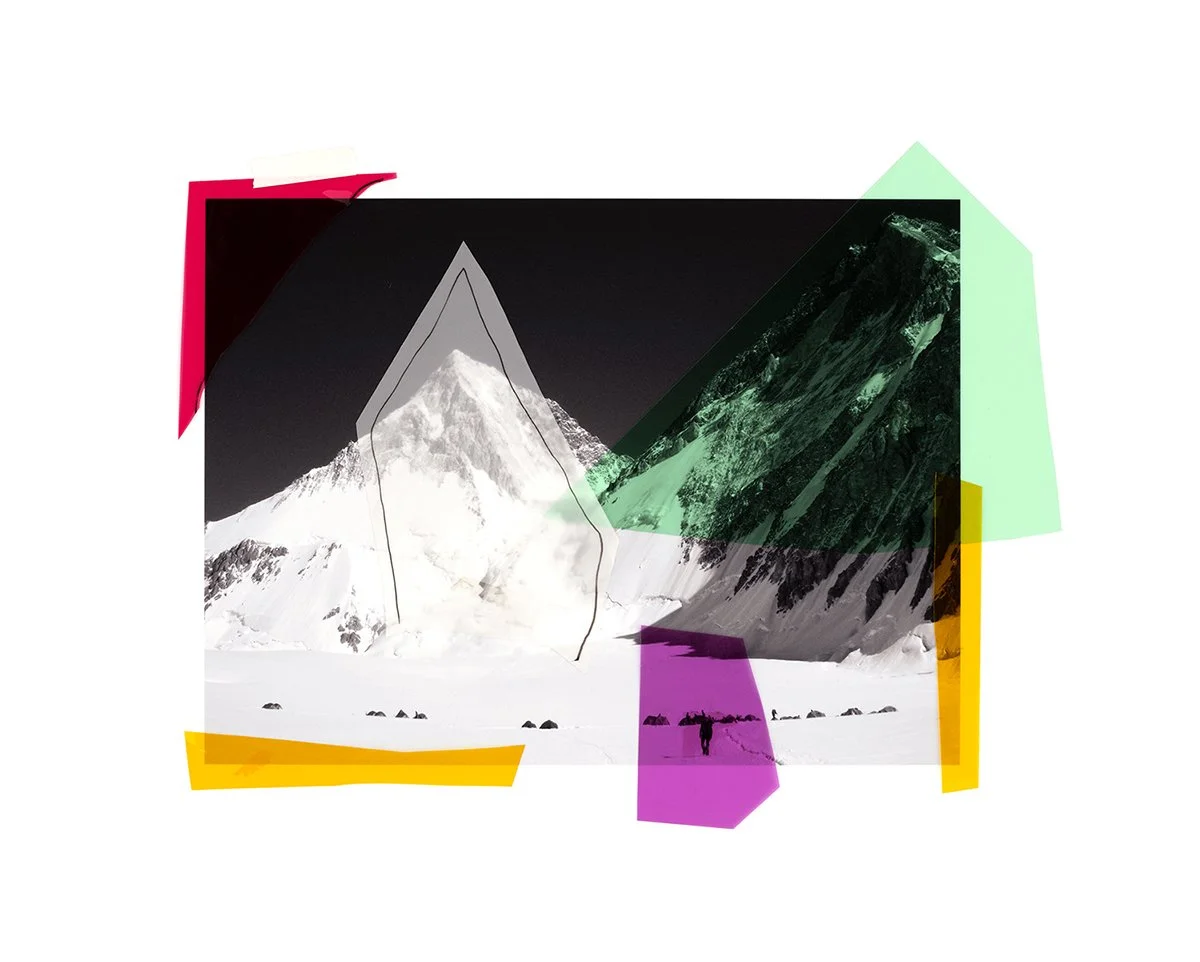
Katie Shapiro, Gasherbrum ii from the series Eight Thousanders, 2020, 32 x 40 inches, inkjet print
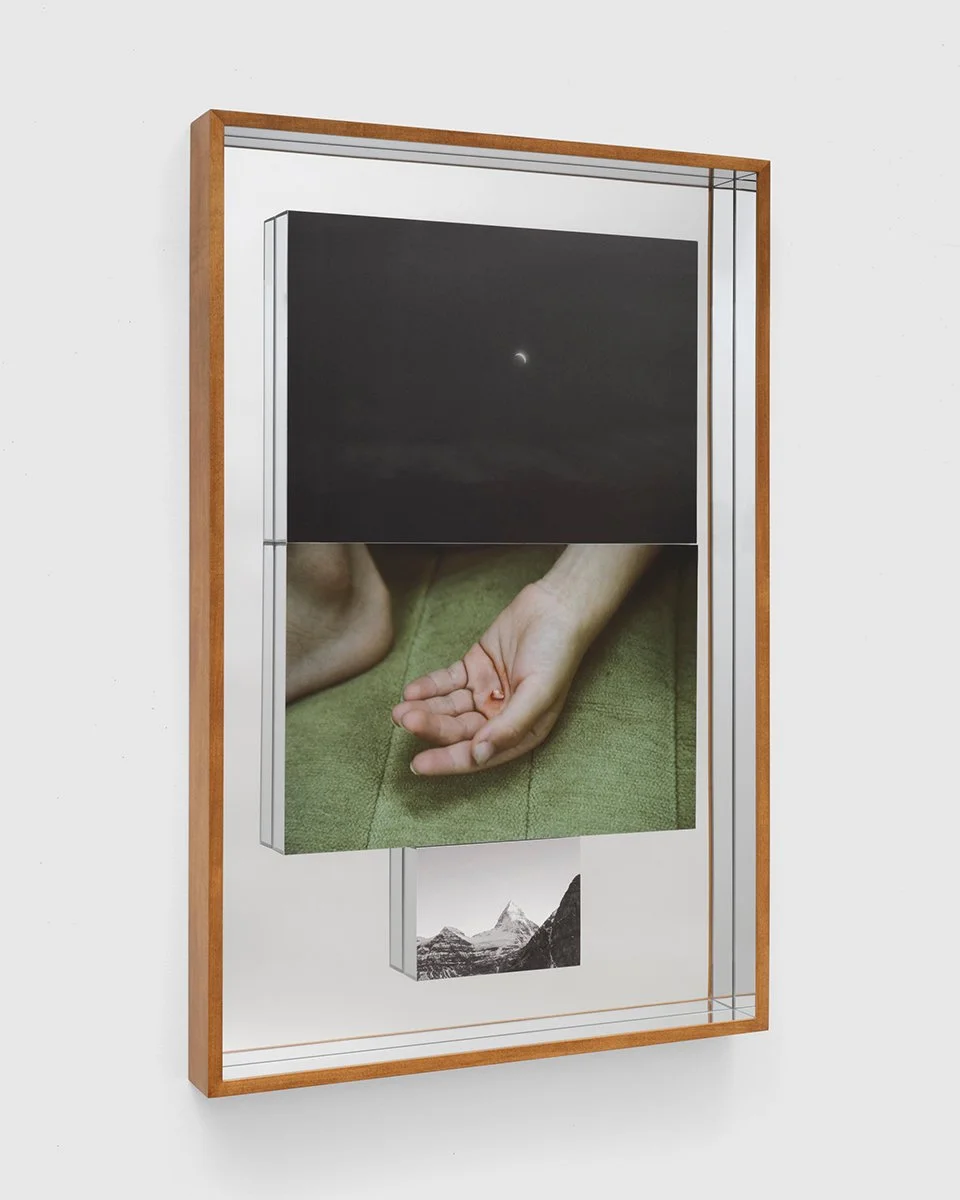
Katie Shapiro, First Lost Tooth from the series The Other Side of the Moon, 2026, 32x40 inches, inkjet print, mirrors
ML: In The Other Side of the Moon, you describe motherhood as an experience of duality; self and other, creation and loss. You draw upon imagery of the moon, stones, and fragments of your children's bodies to explore emotional and psychic terrain. There is a striking intimacy in this use of the body as a fragment or a portal into something larger. How did you arrive at these particular visual languages? And how do you negotiate the relationship between the deeply personal material of your family life and the creation of images intended to exist independently in the public sphere?
KS: I made the choice to only include fragments of my kids so as not to be about them per say but as standing in for children in general. I wanted to keep it wide enough for a large audience to be able to engage and interact with the work without it being subjectively about my specific children. The work is about motherhood as an overarching theme, but it’s also about bringing the unconscious to the conscious self and I think that can apply to people whether they have children or not.
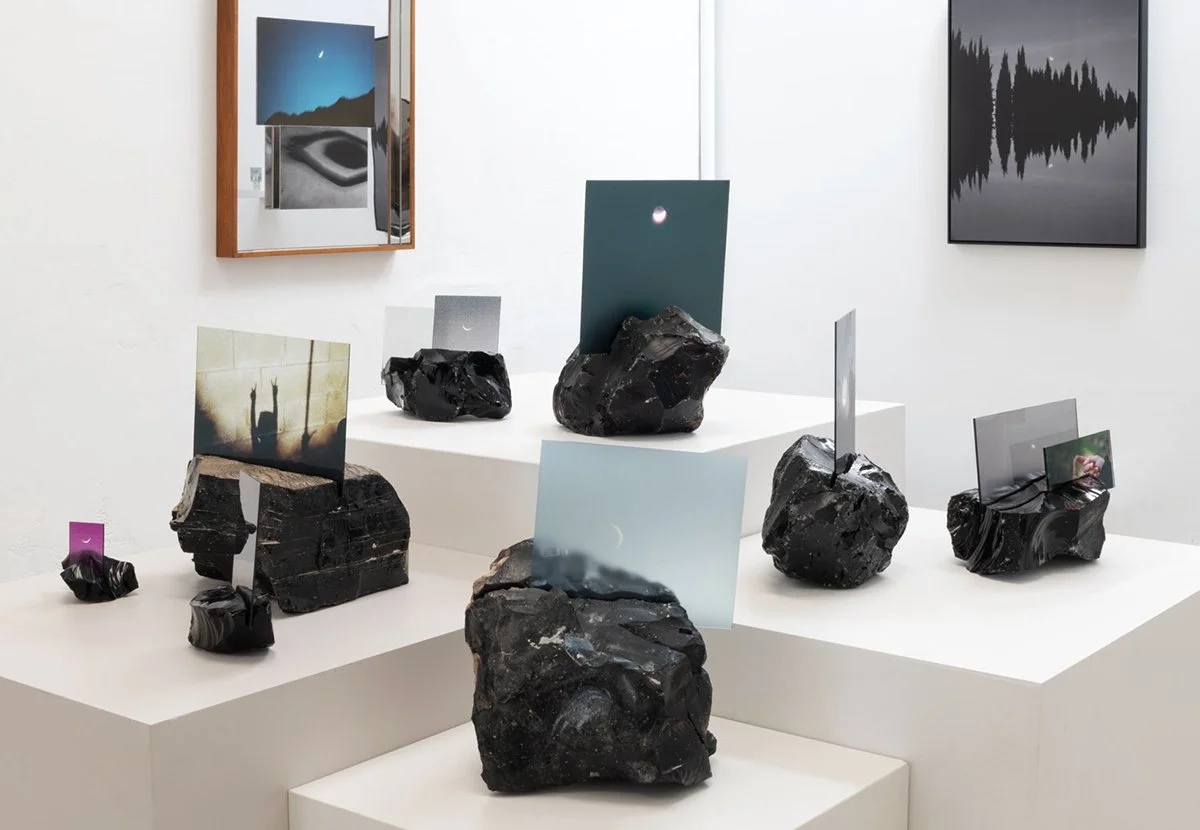
Installation of “The Other Side of the Moon” at Hannah Sloan Gallery, 2026
ML: You describe stones as anchors of healing, objects that hold the weight of geological time while simultaneously absorbing the touch of the present moment. This is a beautiful intersection of vastly different temporal scales; the nearly incomprehensible duration of geological formation and the intimate, fleeting experience of human touch. What draws you to stones as both material and symbolic forms?
KS: I’ve always been drawn to rocks and crystals; ever since I was young I collected them. It feels sort of like a natural progression to introduce them into my work and excites me to be able to join my interests in this way. I’m drawn to their beauty more than anything, and I also like to think about how long they take to form and what kinds of power they possess.
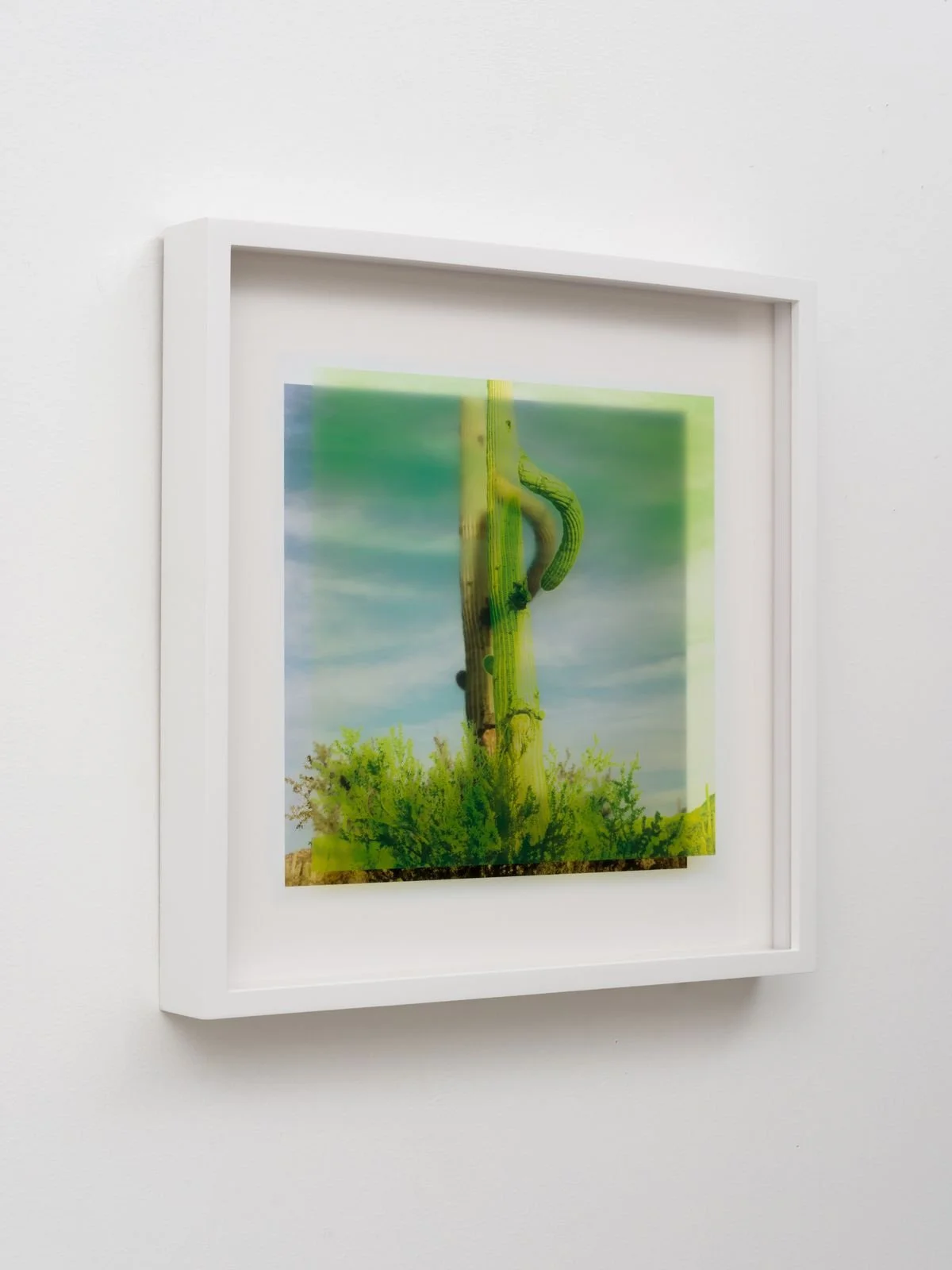
Katie Shapiro, A Touch of Neon from the series The Shadow, 2024, 14x14 inches, inkjet print, inkjet on plexiglass
ML: You have identified an experience in Saguaro National Park as pivotal to your rediscovery of artistic inspiration after becoming a mother. The towering Saguaros, their resilience within a harsh environment, and the particular glow of magic-hour light seem to have brought together several strands of your practice including landscape, spirituality, the unconscious, and personal transformation. Looking back across projects such as Big Sur, The Great Divide, Craters, Moab, Eight Thousanders, and The Shadow, what connections do you now recognize that may not have been apparent while making the individual bodies of work? In what ways has your understanding of the unseen shifted?
KS: I think I was working with interior landscapes all along, but through the lens of exterior landscapes. It took becoming a mother to realize that and understand that shift. I think my work now is more intentionally autobiographical, whereas before it was much more veiled in the subjectivity of the themes of my work.
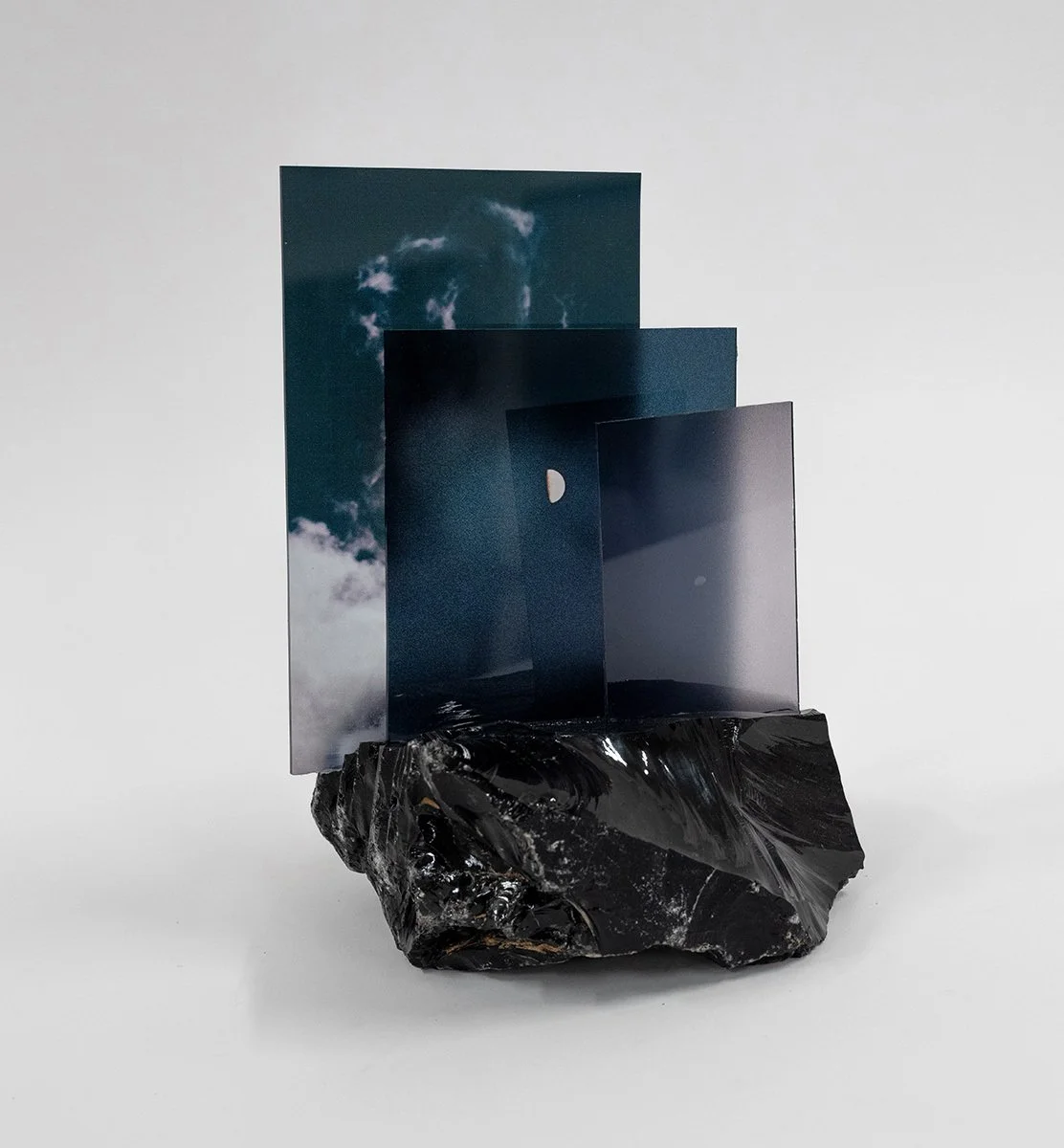
Katie Shapiro, Three Moons from the series The Other Side of the Moon, 2025, 10x7x6 inches, inkjet on glass, obsidian
ML: In describing The Other Side of the Moon, you speak of artistic practice as an act of attunement; a process of listening to the quiet continuities between matter and spirit, body and landscape, the lunar and the living. Across your career, you have developed a visual language that moves between photography, collage, transparency, sculpture, and material experimentation, continually questioning what an image can reveal. As you look toward the future of your practice, what questions remain unresolved or continue to call you forward?
KS: I think our unconscious is a fertile ground to explore and excavate so I will continue to do that in my art practice and my life - both which are intertwined, and I think have much to give.