

Christine Huhn
Christine Huhn is a visual artist, educator, and cultural heritage professional who grew up in northeastern Pennsylvania, less than five miles from the Delaware Water Gap National Recreation Area. This connection to the landscape has deeply influenced her work, which focuses on preserving cultural landscapes through film photography and historic photographic processes. She received her Bachelor of Fine Arts in Photography from the State University of New York at New Paltz and her Master of Arts in Historic Preservation from the Savannah College of Art and Design.
Christine’s work has been exhibited in galleries and museums across the U.S., including The Contemporary Jewish Museum, Lancaster Museum of Art & History, and San Francisco City Hall. In 2023, she was a recipient of the San Francisco Artist Grant. She has been awarded artist residencies at Kala Art Institute, Mojave National Preserve, Santa Fe Art Institute, and Joshua Tree National Park. Her work has been featured in various publications, most notably Annette Golaz’s Cyanotype Toning Using Botanicals to Tone Blueprints Naturally.
Over the past fifteen years, Christine has volunteered with many nonprofit organizations, including the National Park Service, the Historic Preservation Office (Washington, D.C.), and the First Exposures Mentorship Program. She currently lives in San Francisco, California, where she leads the digitization lab at the University of California, Berkeley Library.
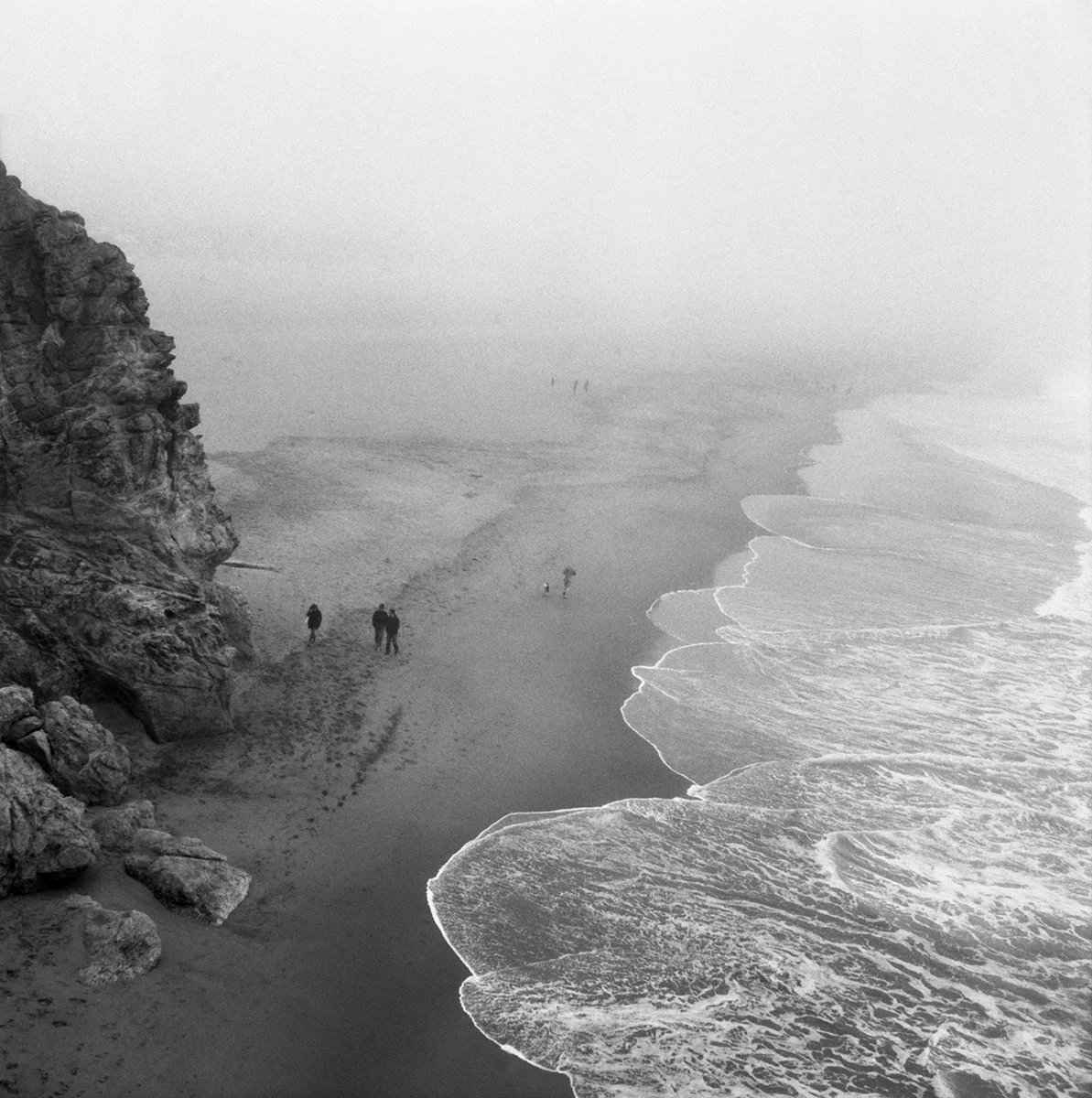
Christine Huhn, Fog at Lands End, California. 2014. 16”x20”, Silver Gelatin Print
For the GroundTruth Institute Archive, we always welcome recommendations for future interviewees, and some of our most meaningful conversations begin with nominations from members of our community. Photographer Christine Huhn was recommended to us by Deborah Jack, whose suggestion led to this thoughtful discussion about photography's ability to reveal the layered relationships between place, history, and memory.
In this interview, Christine reflects on how her photographic practice examines cultural histories and landscapes, engaging with questions of ephemerality, environmental change, and the ways photography can make visible what is often overlooked. We also discuss the impact of climate change on the environments she photographs, as well as her use of historic photographic processes, including silver gelatin film and cyanotype, and how these material techniques shape her approach to image-making and storytelling.
Margaret LeJeune: Your work often focuses on landscapes that hold layered cultural histories. How did your early experiences growing up near the Delaware Water Gap shape the way you think about landscape and memory?
Christine Huhn: There’s a place just down the road from my family’s home called Child’s Park. It’s a section of the park that contains several waterfalls and remnants of historic structures. As teenagers, my brothers, my friends, and I would hang out there. I enrolled in my first darkroom class during my junior year of high school, and this was one of the first places I photographed.
From the beginning, I was exploring landscapes filled with history and memory. I was drawn to this place, where the ruins had become overgrown and were becoming part of the landscape. From there began my curiosity about the history behind a place. I think I unconsciously started paying closer attention to the landscape around me. Driving along Route 209 through the park, you'll see dilapidated buildings, hidden structures, and old stone wall features. Many of those structures have now been removed, but I photographed them. That history is not lost.
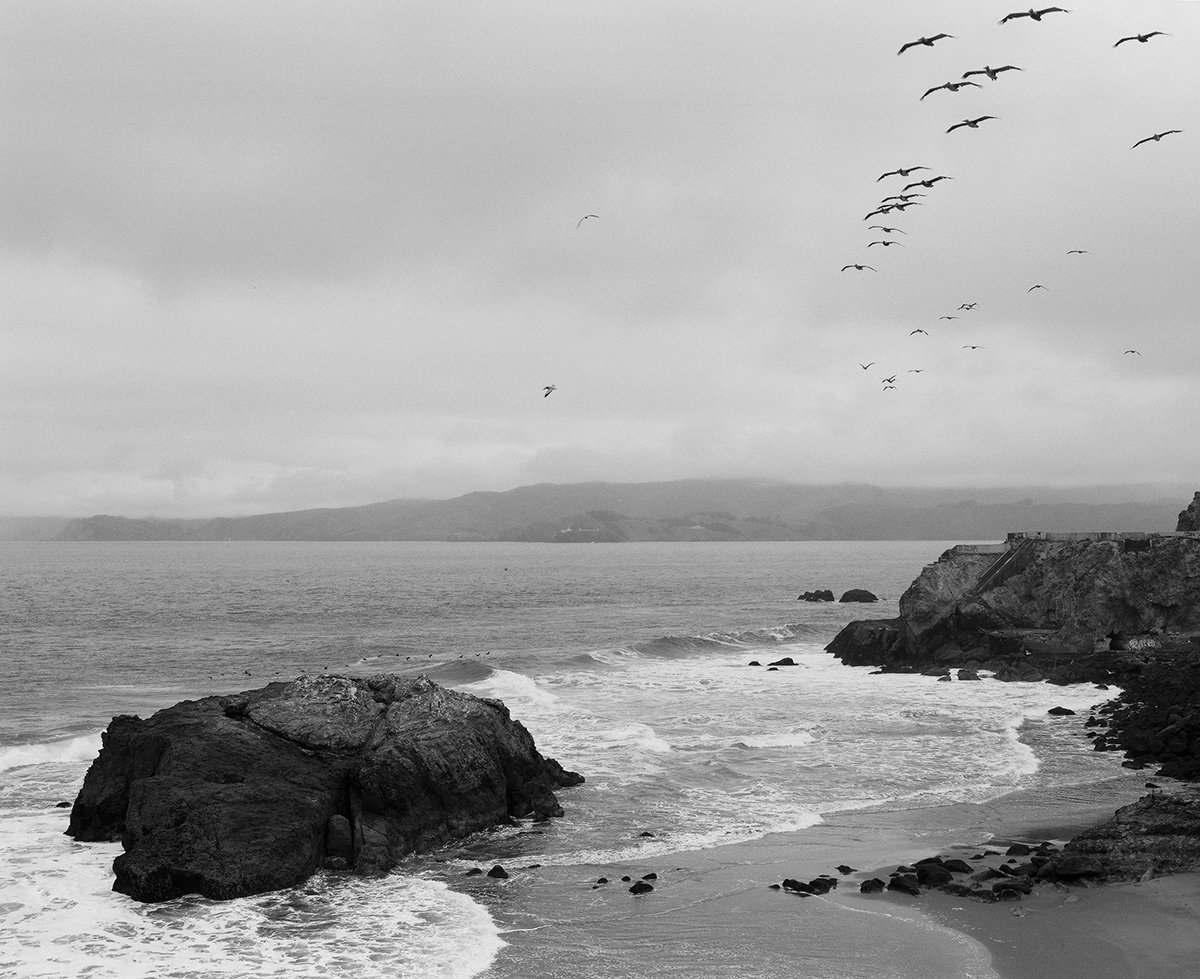
Christine Huhn, Seal Rocks at Sunrise, California, 2021, 16”x20”, Silver Gelatin Print
ML: You describe your practice as combining photography and historic preservation. How do those two disciplines inform one another in your work?
CH: It would be impossible to preserve all landscapes and all historic structures forever. When I’m in the landscape, I think about the National Park Service idea of preserving through documentation. I know when I am photographing that moment will never happen again. So I take my time, I survey the area, I wait for the right light, and I capture the image.
When I'm thinking about historic preservation, I'm looking for specific features in the landscape or aspects of a historic structure that are important to capture. I’m trying to avoid keystoning or distortion and represent the landscape as true to the original as possible. I think about exposure and photograph at times when there aren’t harsh shadows or highlights so I can capture all the details and textures. I use large and medium format cameras to capture more detail. I also take notes on the date, time, weather, and other conditions.
For me, photography becomes a way of preserving that moment and recording the landscape as it existed.
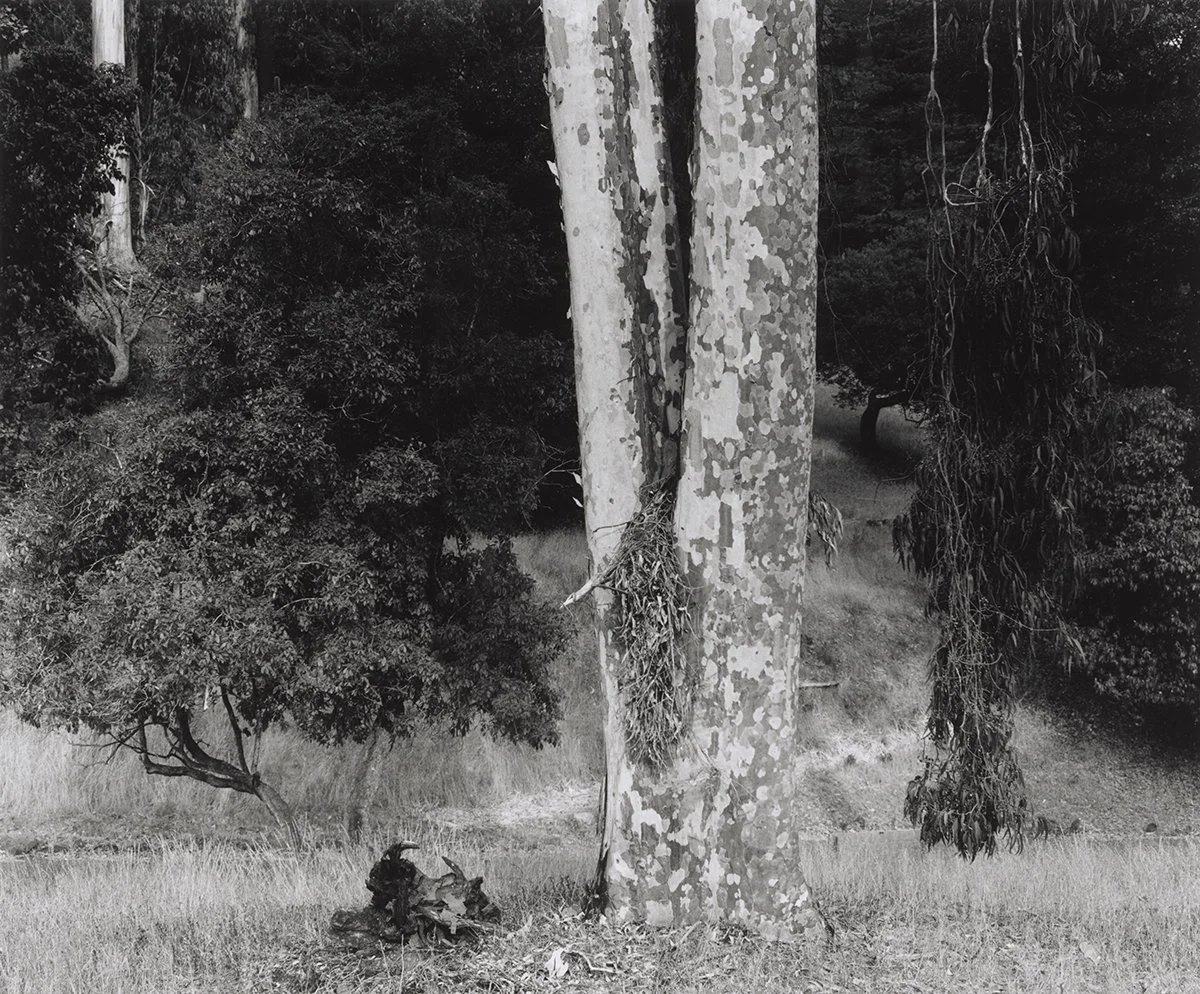
Christine, Huhn, Eucalyptus Tree at Immigration Station, Angel Island State Park, California, 2021, 16”x20”, Silver Gelatin Print
ML: In your Angel Island project, you connected your own family’s immigration story through Ellis Island with the histories of other immigrants processed through Angel Island. How did that personal connection shape your approach to the work?
CH: In 2021, Andi Wong, project manager for the Angel Island Insight Project, contacted me and invited me to be part of the project. I later became the featured photographer. At the time, I didn’t know anything about Angel Island. Andi began explaining the history of the island and the idea behind the project, a community photography event that highlighted its history. The project was in collaboration with Del Sol Quartet, who had composed music in response to the poems carved into the immigration barracks by Chinese detainees during their time there.
As Andi shared her family’s immigration story as Chinese immigrants, I began telling her about my own Jewish heritage and how my Russian Jewish great-grandparents came through Ellis Island before settling in Pennsylvania. We quickly built a connection. Andi also shared with me the Jewish history of Angel Island, which I hadn't known.
My family has never been exceptionally outspoken about our Jewish heritage. I grew up in rural Pennsylvania and New Jersey, where we were one of very few Jewish families. We just held it close to the chest. As I worked on this project and learned more about the personal histories connected to Angel Island, I finally felt connected to my own Jewish heritage. That really intensified my desire to learn everything I could about the island's history, and I think that is reflected in the work.
I later exhibited some of this work at the Contemporary Jewish Museum. It was a tremendous opportunity to connect with fellow Jewish artists and to share my work with the Jewish community in San Francisco.
The work is far from done. I'm thinking a lot about access to the island financially, transportation costs, and physical accessibility. I'd like to create an exhibition where people feel like they're there, surrounded by the landscape, even if they can't make the trip themselves.
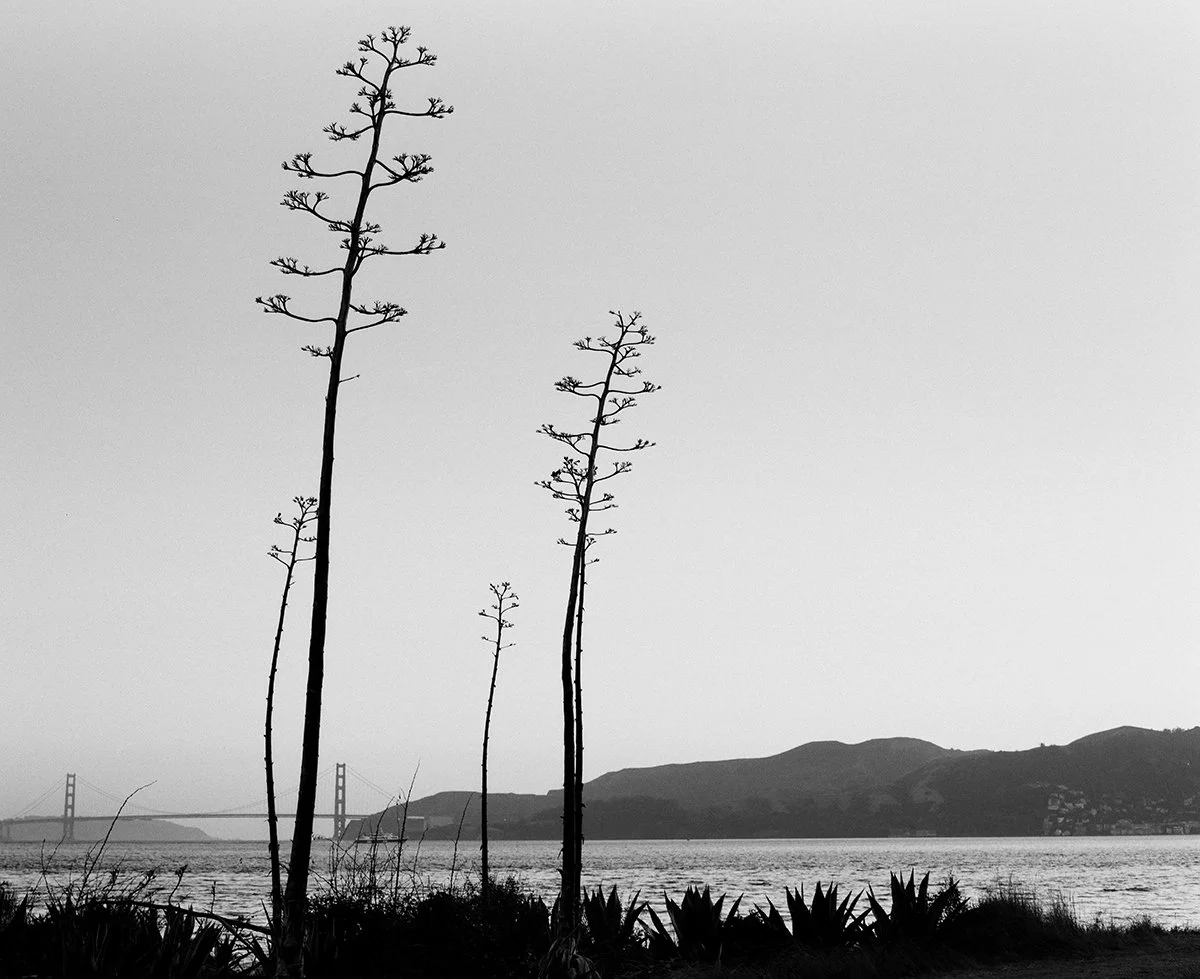
Christine Huhn, Agave Stalks and the Golden Gate at Dusk, Angel Island State Park, California, 2024, 16”x20”, Silver Gelatin Print
ML: Much of your work centers on underrepresented histories and lesser-known landscapes. What draws you to places that are often overlooked by the broader public?
CH: What draws me in is wanting to understand a place more deeply. Learning its history completely changes the way I experience the landscape.
I think it’s easy to visit Joshua Tree National Park. You can fly into Palm Springs, stay in a nice Airbnb, and go out to restaurants. It’s not so easy to visit Mojave National Preserve. It’s remote, with little to no services like food, gas, or restrooms. You need to know the desert and be prepared with food, water, appropriate clothing, and a reliable vehicle. There’s absolutely no cell service. It’s desolate. That’s one of the reasons I love it so much, but it’s a harsh landscape for sure.
I also think it’s about perception and who’s telling the story. Growing up on the East Coast, everyone knows the history of Ellis Island. Yet when I speak with friends here in San Francisco, many of them have never heard about Angel Island, especially the history that happened there. I even asked my 14-year-old mentee, Elsa, if they were teaching it in middle school. They aren't, and I'm not sure why.
Someone needs to be an advocate for these places and histories. I want my work to share their stories in hopes that people will visit or, at the very least, be informed. I think my Angel Island work has done that. When I was visiting the island two or three times a month, I was bringing friends along to hike with me, many of whom had never been there before. Through exhibitions in San Francisco, people have experienced the landscape through my photographs and then wanted to visit the island themselves.
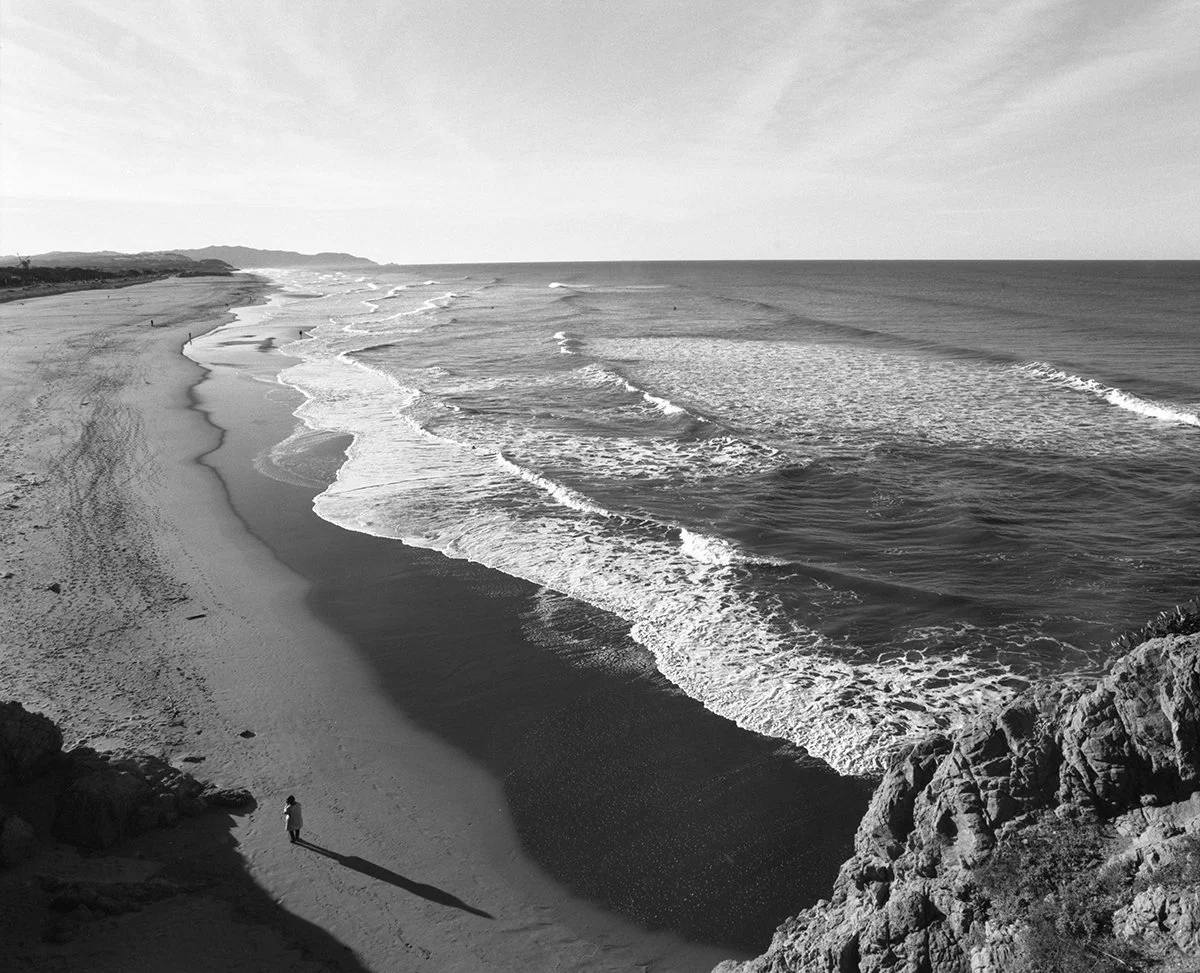
Christine Huhn, Early Morning at Lands End, California, 2019, 16”x20”, Silver Gelatin Print
ML: You often photograph at sunrise, after dusk, or during times inaccessible to most visitors. What do those quieter hours reveal about a landscape that daytime visitation cannot?
CH: It's truly special to stand in a landscape in those moments just before the sun rises. No one else is around, and all you hear are the birds as the landscape begins to wake up.
The landscape feels completely different at those hours. The light is softer, the textures become more visible, and there aren't the strong shadows and bright highlights that come later in the day. When you really know a place like I know Joshua Tree National Park or Mojave National Preserve, you know where the light is going to be and how it's going to fall across the landscape. The light changes with the seasons, and after spending enough time in a place, you begin to know and anticipate those changes. That familiarity creates a much deeper connection to the place, and it changes the way I photograph it. I'm thinking about how the Joshua trees, rock formations, and other features are illuminated rather than photographing directly into the light. After about 8:00 in the morning, the quality of the light changes, and the landscape changes with it. Those early hours allow me to experience and photograph it in a way that's simply not possible later in the day.
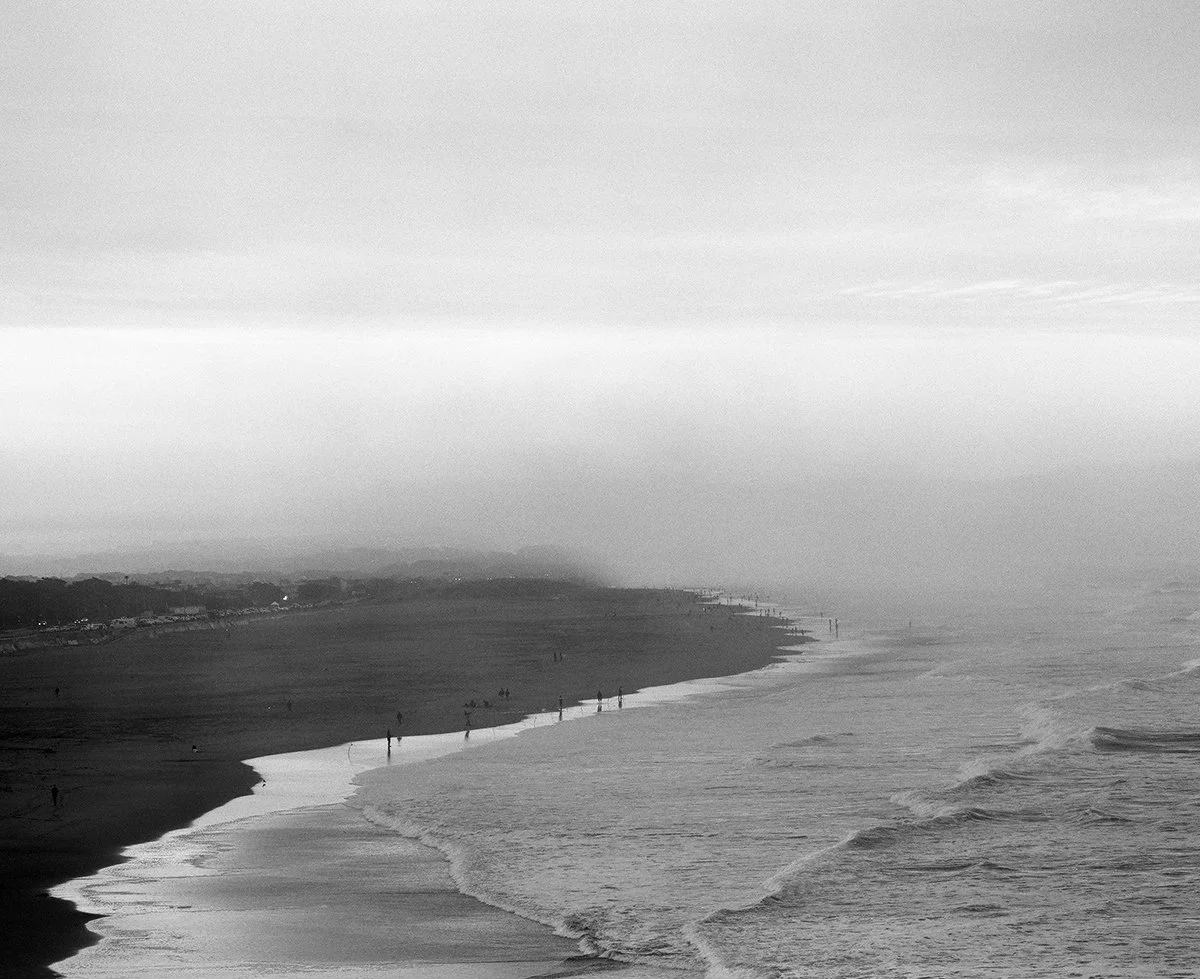
Christine Huhn, Sunrise and Surf at Ocean Beach, California, 2021, 16”x20”, Silver Gelatin Print
ML: Your process with medium format film is intentionally slow and methodical. How does working with film change your relationship to time and observation in the field?
CH: My process is slow and methodical. Working with medium format film means I'm spending a lot of time in and with the landscape. I only have nine frames on a roll of film, so every photograph is intentional. I'm paying close attention to the light, waiting for the right moment, and thinking carefully about each composition before I make an exposure.
Even though my goal is to document the landscape as truthfully as I can, working in black and white is still my interpretation of that landscape.
When I return to the darkroom, I work in much the same way. Printing is a slow, hands-on process that requires the same patience and attention as making the photograph in the field. I think that pace naturally carries through the entire body of work.
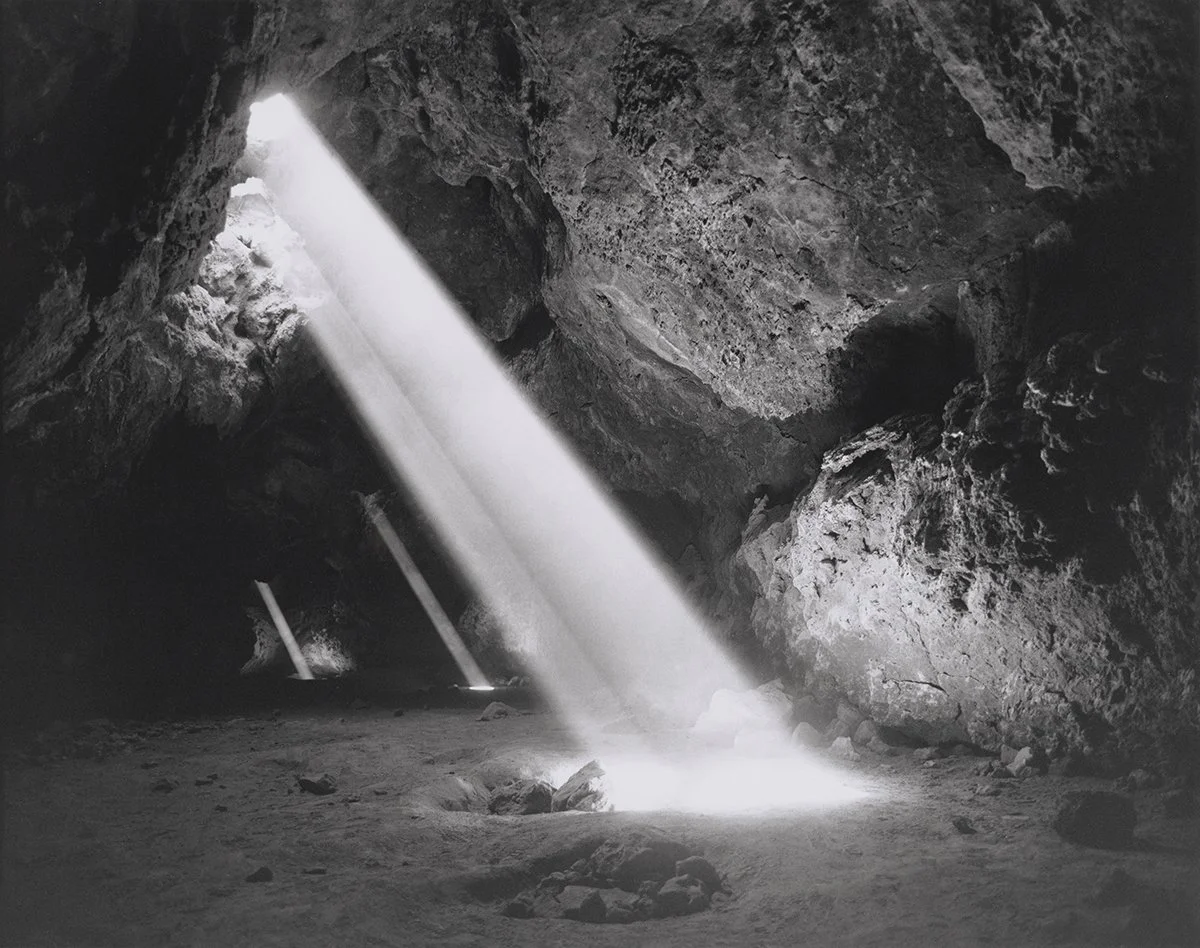
Christine Huhn, Lava Tube, Mojave National Preserve, California, 2019, 16”x20”, Silver Gelatin Print
ML: Across your projects, you repeatedly return to themes of ephemerality and change. What does it mean to you to “see time” within a landscape?
CH: One of the clearest examples for me is Sutro Baths, located here in San Francisco. I have a photograph from 2014 and another from 2019, where you can see that a large portion of the bathhouse foundation is gone. The viewer can literally see time passing between those two images. Wildfires are another obvious example. When I photograph the landscape before and after a fire, time becomes visible.
That's really what I'm trying to accomplish with my work. Sometimes returning to the same place year after year can feel like nothing has changed, but then something shifts. I don't want those changes to happen, but when they do, they reinforce how important long-term documentation is. My hope is that my photographs help people see those changes too, and recognize that landscapes are always changing, whether we notice it or not.
ML: Your photographs frequently minimize or completely omit the human figure, yet human impact is central to the work. What role does absence play in your images?
CH: I don't intentionally remove people from my photographs, but I do intentionally de-emphasize them. People are part of these landscapes, and I don't mind if they're present. I often photograph them from a distance or in a way that doesn't reveal their identity, because I don't want them to become the subject of the photograph. Instead, they help establish the scale of the landscape and remind us of our place within it.
Human impact is still central to my work, but I don't think I need to show an individual person for that to come across. You can see our presence in the landscapes we've altered, the structures we've built, and the histories these places hold. That's what I'm interested in documenting.
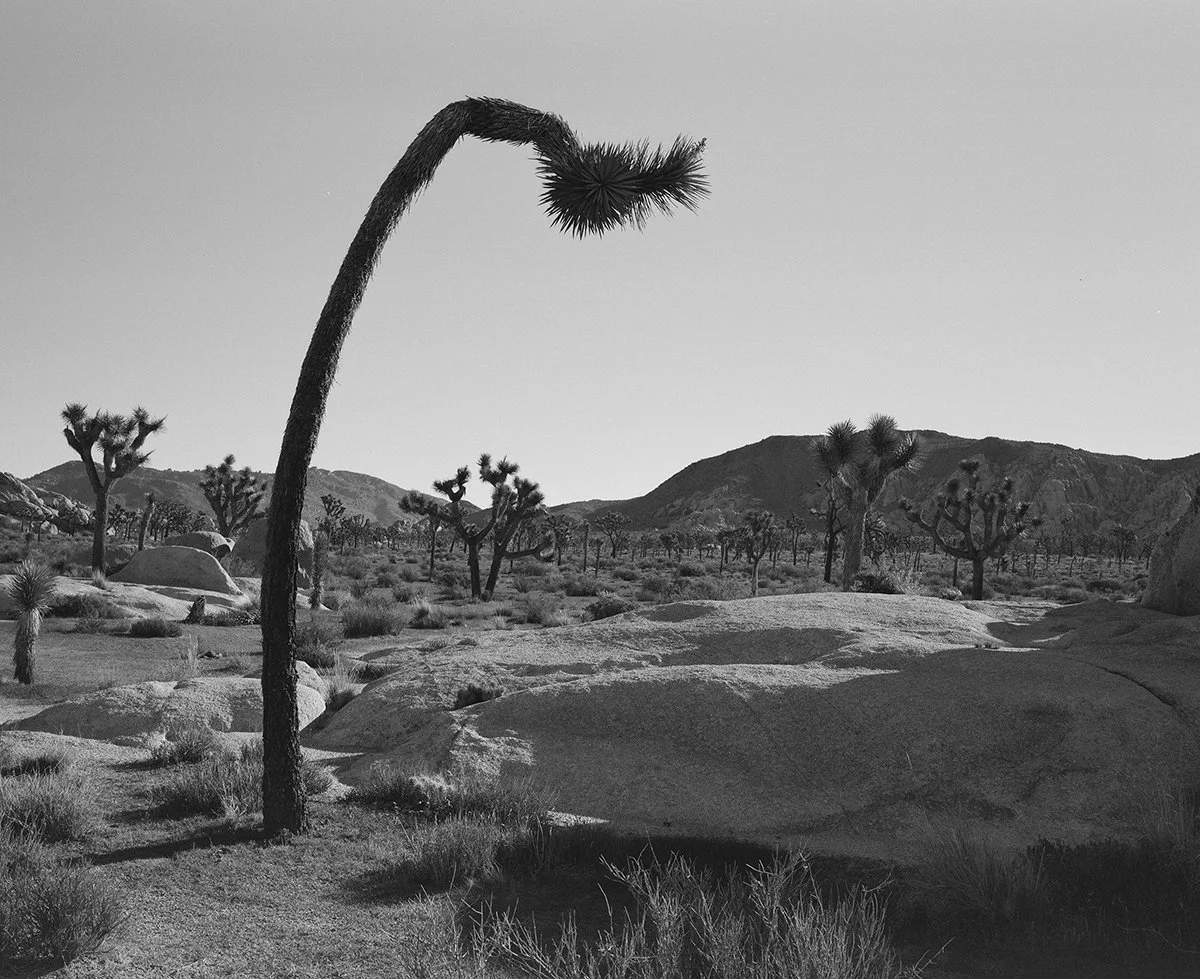
Christine Huhn, Joshua Tree and Formations no. 3, Joshua Tree National Park, 2025, 16”x20”, Silver Gelatin Print
ML: The Joshua trees in your photographs often read like portraits. What draws you to photographing them in that way rather than as part of a broader landscape view?
CH: I really appreciate that you picked up on that! I'm intentionally singling out specific Joshua trees that have unique characteristics and creating portraits of them. When I'm standing in a Joshua tree forest, I find myself drawn to certain yuccas over others. I return to those same Joshua trees several times a year to document how they've changed over time.
Photographing them this way allows me to build a relationship with an individual tree rather than seeing it as just one part of the landscape.
In an unfortunate case in Mojave National Preserve, one Joshua Tree I'd been photographing since 2019 withstood two wildfires, but when torrential winds came through in 2025, it finally collapsed. Having photographed it for so many years, its loss felt personal.
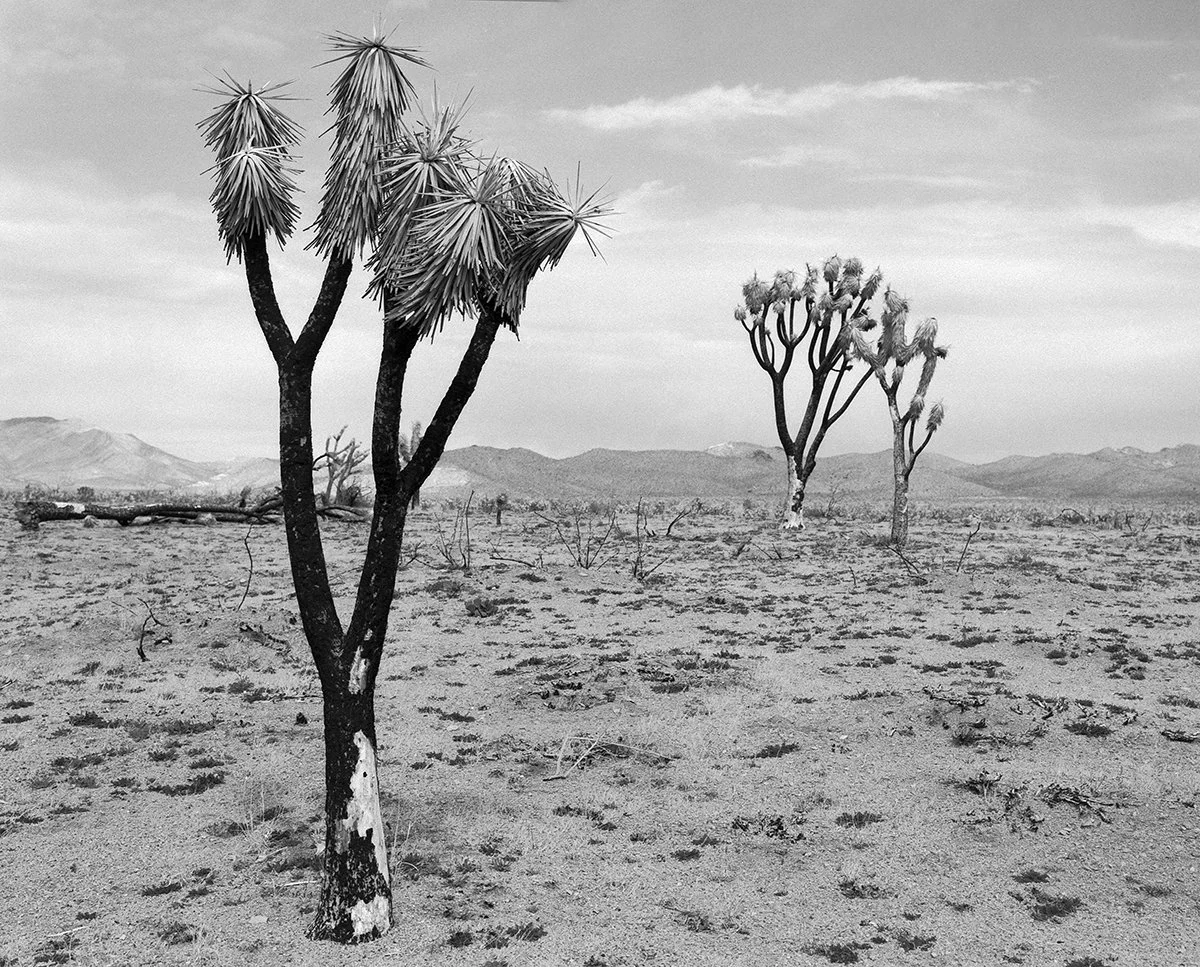
Christine Huhn, Burned Joshua Tree no. 4, Mojave National Preserve, California, 2022, 16”x20”, Silver Gelatin Print
ML: Climate change is a major undercurrent in your desert work, though the images themselves are often quiet and contemplative rather than overtly dramatic. How do you think photography can communicate environmental urgency without relying on spectacle?
CH: I'm really glad that comes across. That's something I think about a lot. I don't think every photograph about climate change needs to be dramatic. My hope is that quieter photographs invite people to slow down and spend more time looking. The longer we spend looking at a landscape, the more we begin to notice what's changed.
I think a lot about where black and white landscape photography fits into the art world today and how my work can be true to both me and the places I'm photographing. People are often surprised by how much of the landscape was lost in Mojave National Preserve because of wildfire, or by the history of Angel Island and the treatment of Chinese immigrants there. I don't think those stories need spectacle. I think they need attention, and they need people who are willing to advocate for them.
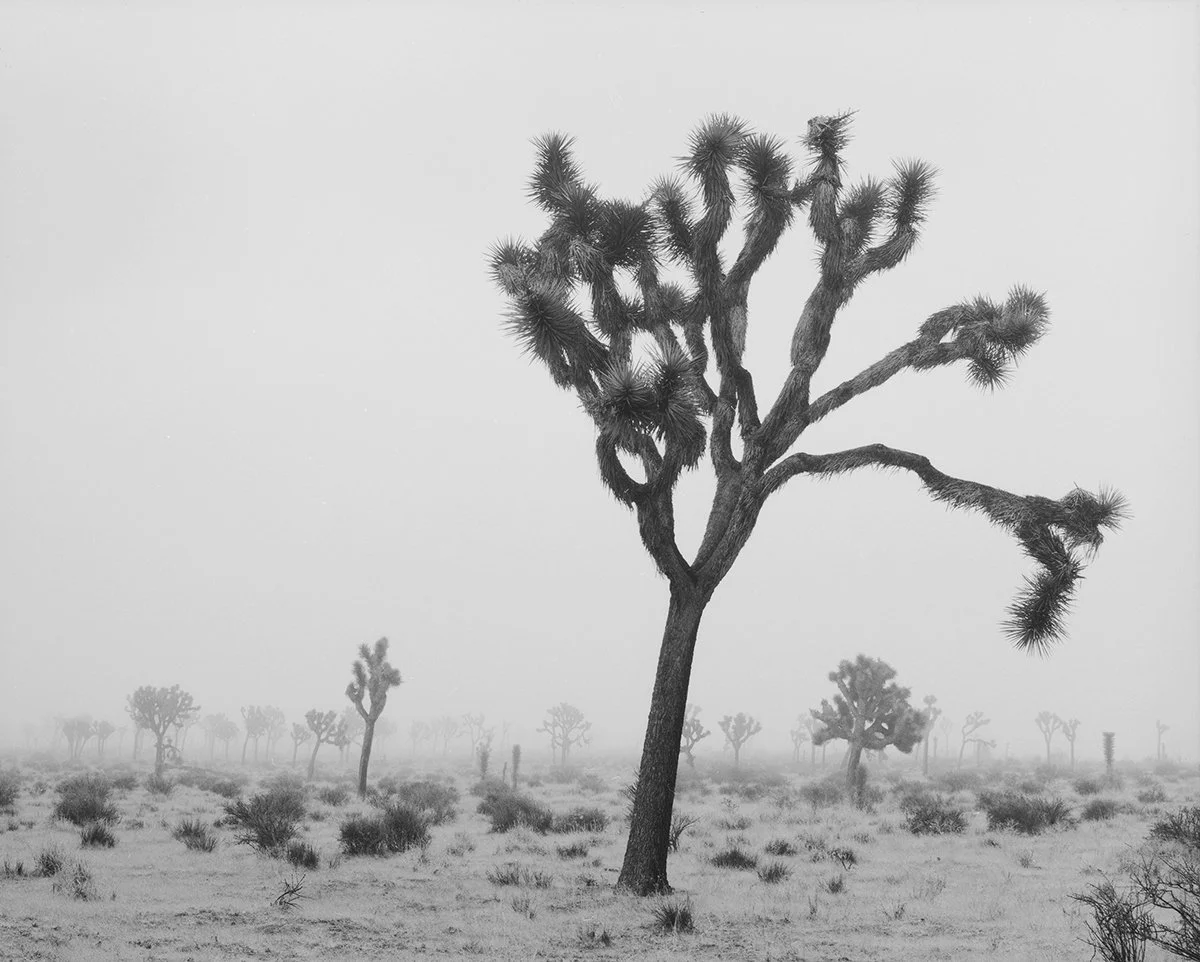
Christine Huhn, Early Morning Fog in Joshua Tree National Park, California, 2023, 16”x20”, Silver Gelatin Print
ML: You’ve said many visitors to Joshua Tree National Park are unaware of the effects of climate change on the landscape. Do you see your work as educational, activist, archival, or something else entirely?
CH: One of the main goals of my work is advocacy. Advocacy for our shared histories within the landscape, and for the landscapes themselves. I hope the work creates a greater understanding that these places won't last forever.
It's difficult to capture deep time and the effects of climate change in a single photograph, so I return to the same places over and over again. Through long-term documentation and repeated visits, I'm able to show change over time.
In Joshua Tree specifically, I photograph throughout the park, but the area I return to most often is the site of the Memorial Fire. It's one of the few areas where Joshua trees are incredibly sparse. The landscape has changed so dramatically that I can isolate individual yuccas, creating portraits of them. I'm also trying to show what's no longer there, the absence of the dense vegetation that once existed.
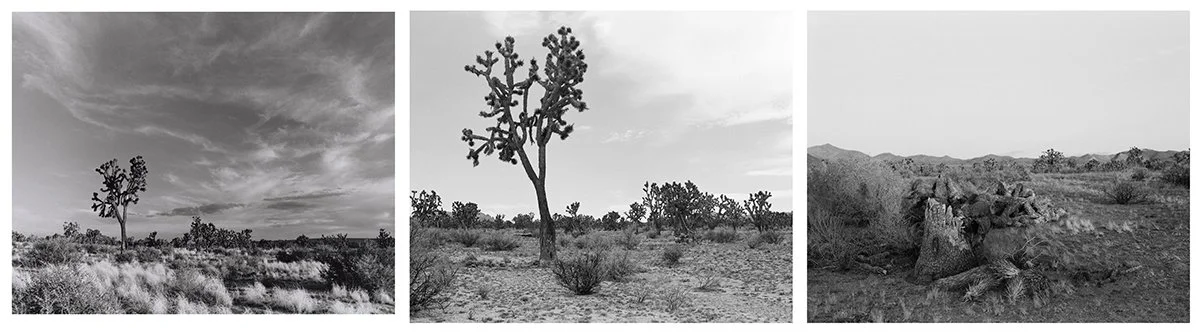
Christine Huhn, Joshua Tree Triptych, Mojave National Preserve, California, 2019, 2022, 2025, 32”x8”, Silver Gelatin Prints
ML: There’s a strong sense of solitude throughout your images. What role does solitude play in your creative process and in the emotional tone of the work itself?
CH: This is very reflective of me and who I am. I think the undertone of my work is a self-portrait in a lot of ways. That's one of the reasons I connect so deeply to Mojave.
Standing in the Mojave in the early morning, just before sunrise, all you hear is the wind. I find that incredibly calming and comforting. It's in those quiet moments that I slow down, pay attention, and really connect with the landscape.
I think that sense of solitude naturally finds its way into the work. I'm not trying to make photographs that feel lonely. I'm trying to make photographs that reflect the experience of being there.
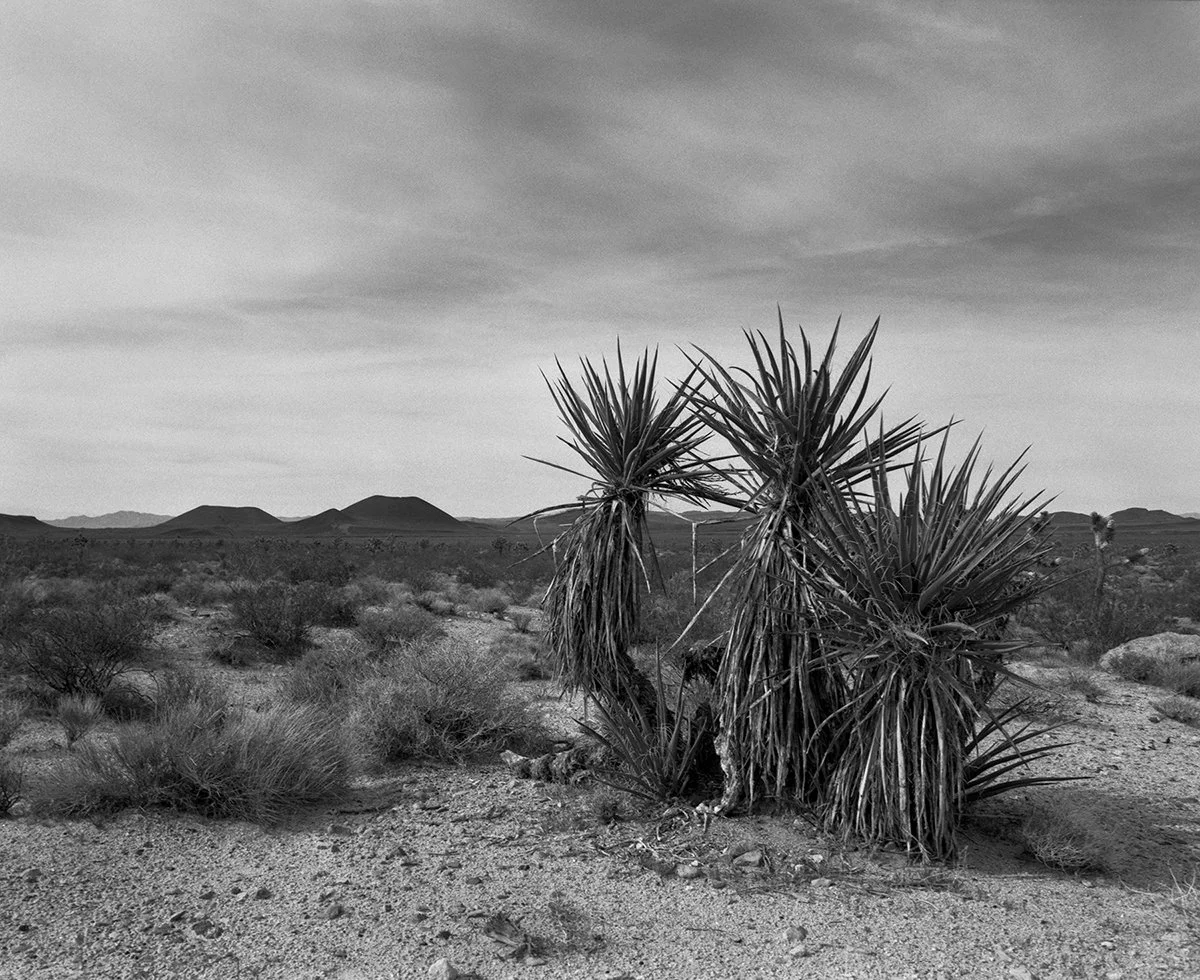
Christine Huhn, Three Wise Yuccas, Mojave National Preserve, California, 2019, 16”x20”, Silver Gelatin Print
ML: You’ve worked extensively in National Park Service sites and protected landscapes. What responsibilities do you think photographers have when documenting environmentally vulnerable places?
CH: We need to be good stewards, setting a good example for others. That means not entering abandoned structures or buildings, staying on designated trails even if the better photograph is just a little closer, respecting wildlife and keeping your distance. I always carry a couple of trash bags with me and pick up any litter I see when I'm out in the field.
I witness a lot of disrespect in the landscape when I'm visiting national parks, especially the more popular ones. I've seen visitors taking selfies with wildlife at Yellowstone and the Grand Canyon. We can enjoy these landscapes while still respecting them, because it's not just about this moment. It's about protecting them for the generations that come after us.
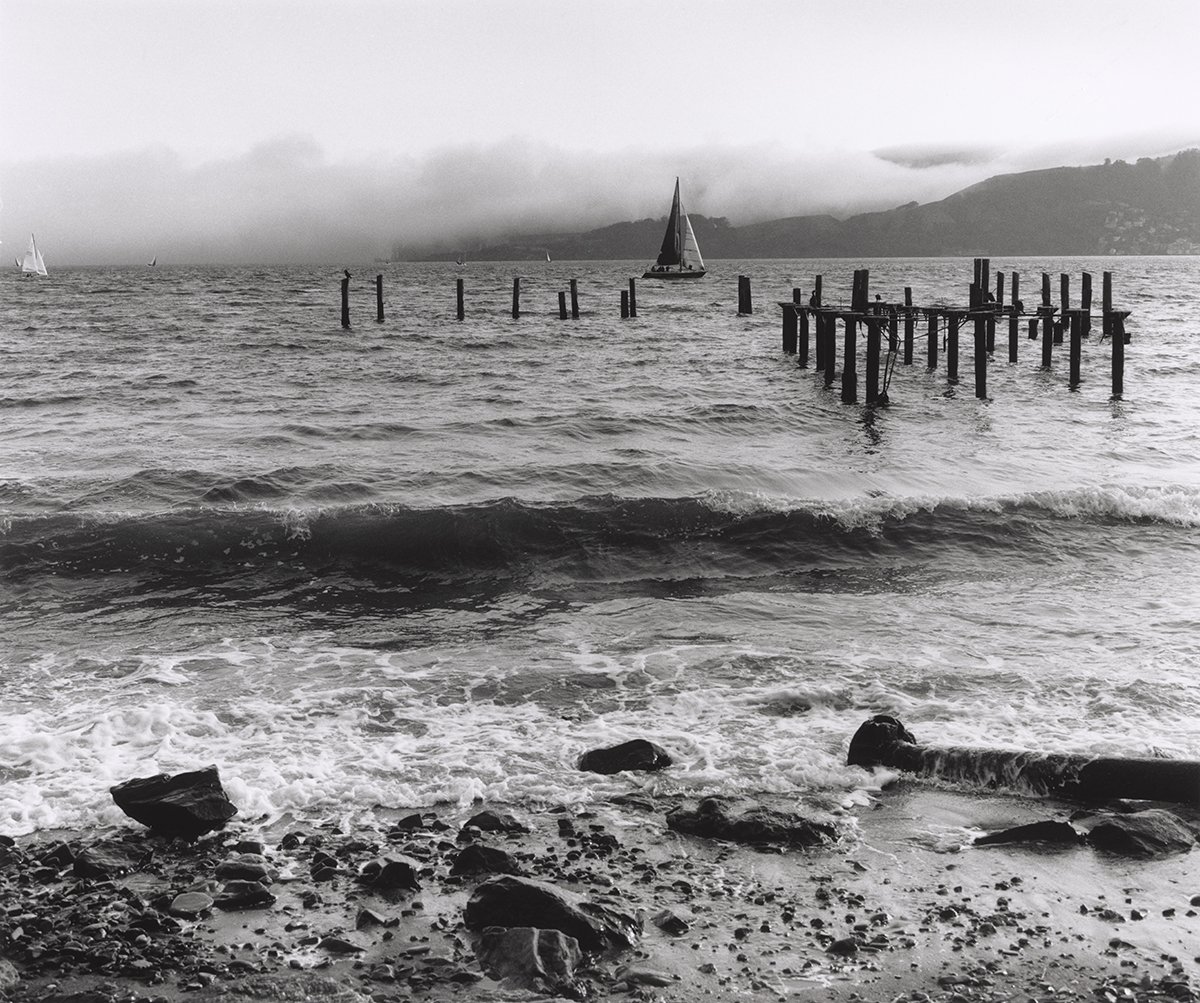
Christine Huhn, West Garrison (Camp Reynolds) Shoreline Ruins at Dusk, Angel Island State Park, California, 2021, 16”x20”, Silver Gelatin Print
ML: Historic photographic processes and silver gelatin printing are important to your practice. What does working analog allow you to express that digital photography does not?
CH: It's the tangible part of analog photography, being in the darkroom and physically creating the work by hand. It's also the qualities of film that just can't be replicated with digital.
On the flip side, I manage the digitization lab at UC Berkeley Library, where we digitize the library's collections to provide access and help preserve them. Every day I'm working with extremely high-end medium format digital cameras and advanced scanning equipment. I have a real appreciation for what digital photography makes possible, but for my own artistic practice, there's still nothing that compares to analog.
I also think about the archival qualities of the work. At this moment, film and silver gelatin prints are still among the most archival photographic materials we have. Digital preservation has advanced tremendously, but it requires continual management and migration over time. Preserving a moment for future generations is a huge part of my work, so creating something that has the potential to last just as long is really meaningful to me.
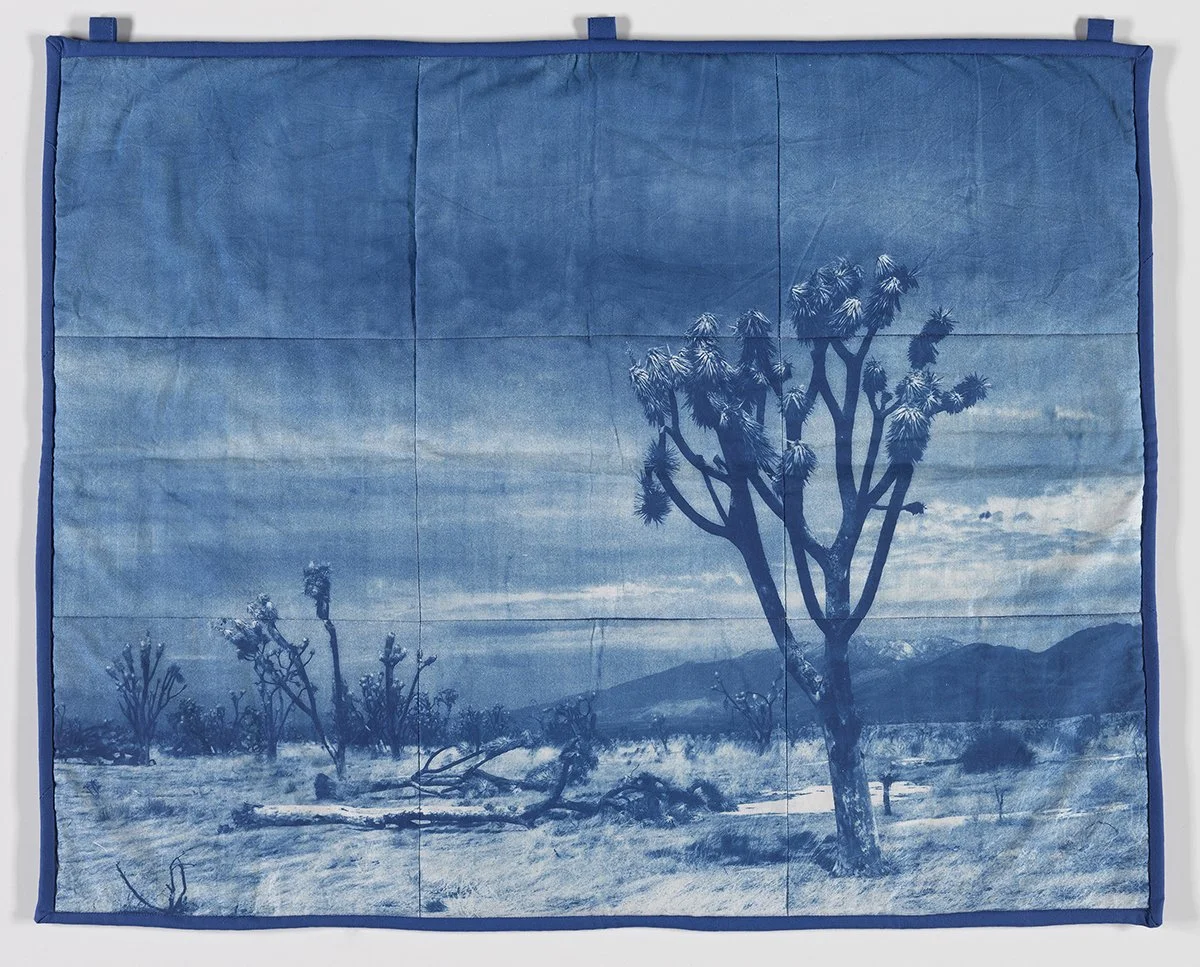
Christine Huhn, Quilt # 15, Burned Joshua Tree, Mojave National Preserve, California, 2023, Multiple Cyanotypes on Paper, 23”x28.5”, Cyanotype Quilt
ML: Whether photographing Angel Island, Mojave National Preserve, or the Golden Gate shoreline, your work continually returns to questions of memory, displacement, and transformation. What connections do you see linking these seemingly different landscapes together?
CH: What connects all of these places for me is that they're all landscapes with stories to tell. Some of those stories are about immigration, some are about climate change and wildfire, others are about military history or coastal erosion. They're often unknown or undertold histories, and learning them completely changes the way I experience a landscape.
Once I understand a place more deeply, I can't photograph it the same way again. I build a connection with the landscape, and that relationship shapes the work. My hope is that viewers experience something similar, that they leave not only seeing a landscape, but also understanding the histories it holds and why those stories matter.
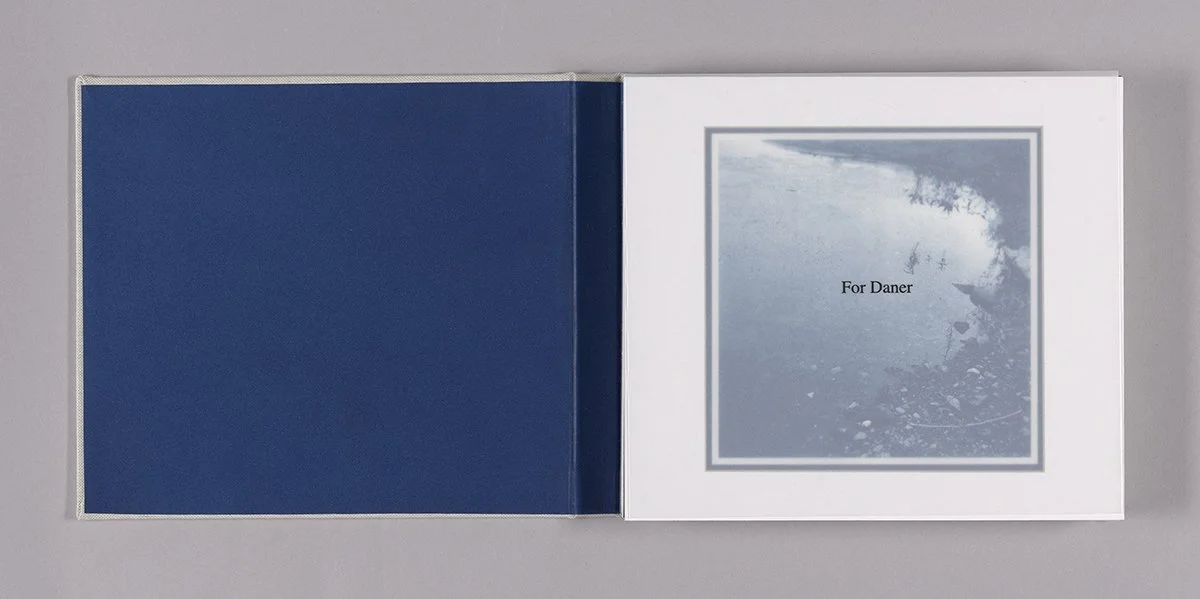
Christine Huhn, After, Flyleaf Interior Spread, 2026, 8.5"x19"x1", Cyanotype Prints and Handmade Book
ML: What ideas, projects, or goals are currently holding your interest?
CH: I’m very excited to have just completed my first artist book, entitled After. The book contains ten 6 x 6-inch cyanotype prints bound in window mats. The flyleaves and text pages were also printed using the cyanotype process.
The book is very different from the rest of my work. Most of my textile and silver gelatin pieces are printed large and hung on a wall. This book is meant to be an intimate experience, something you hold close and spend time with. I was inspired by nineteenth-century photo albums by Carlton Watkins and Edward Muybridge, although the book is very different from their work.
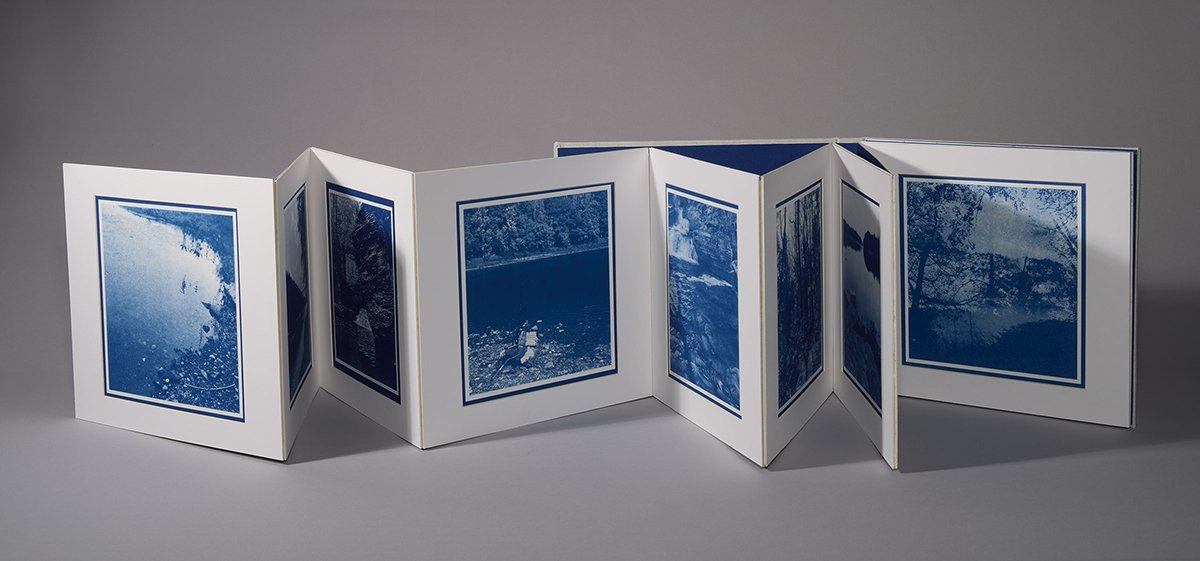
Christine Huhn, After, 3D View of Cyanotype Accordion Bound Book (recto), 2026, 8.5"x110", Cyanotype Prints and Handmade Book
In 2023, one of my closest friends passed away unexpectedly. The photographs taken along the Delaware River, in the Delaware Water Gap National Recreation Area, are where we both grew up. Several of the photographs were originally made in 2009, and I've been returning to those same places, rephotographing the landscape and responding to how it has changed for me after his passing. The book has been a way for me to process the grief I'm still sitting with.
I'm continuing to develop this into a larger body of work, and I'd love to eventually publish that edition as a monograph. I'm also really excited about artist books. They feel like a natural progression in my practice.