
Rosalba Breazeale
Rosalba Breazeale (they/them, b. 1989) is an artist, educator, and founding director of 205 Ocean Avenue Studios, working on the ancestral lands of the Wabanaki Confederacy in what is presently known as Portland, Maine. They hold an MFA from the University of New Mexico and a BFA from the School of the Art Institute of Chicago. Breazeale’s multidisciplinary practice moves fluidly across analog, digital, and alternative photographic processes, as well as soft fiber sculpture and installation, guided by a commitment to regenerative methodologies. Grounded in their identity as a Queer, Jewish, transnational adoptee from Peru, their work traces the entangled histories of land, diaspora, and European colonization, attending closely to the ecological reverberations of displacement and extraction. Their work has been exhibited widely across the United States and internationally, including with the London Alternative Photography Collective, the Halide Project, the Maine Jewish Museum, and Space Gallery, and has been featured in publications by the Sustainable Darkroom and Broadsided Press. Breazeale is a recipient of numerous honors, including the Shared.Futures Fellowship, the David C. Driskell Fellowship, and a Hewnoaks Artist Residency.
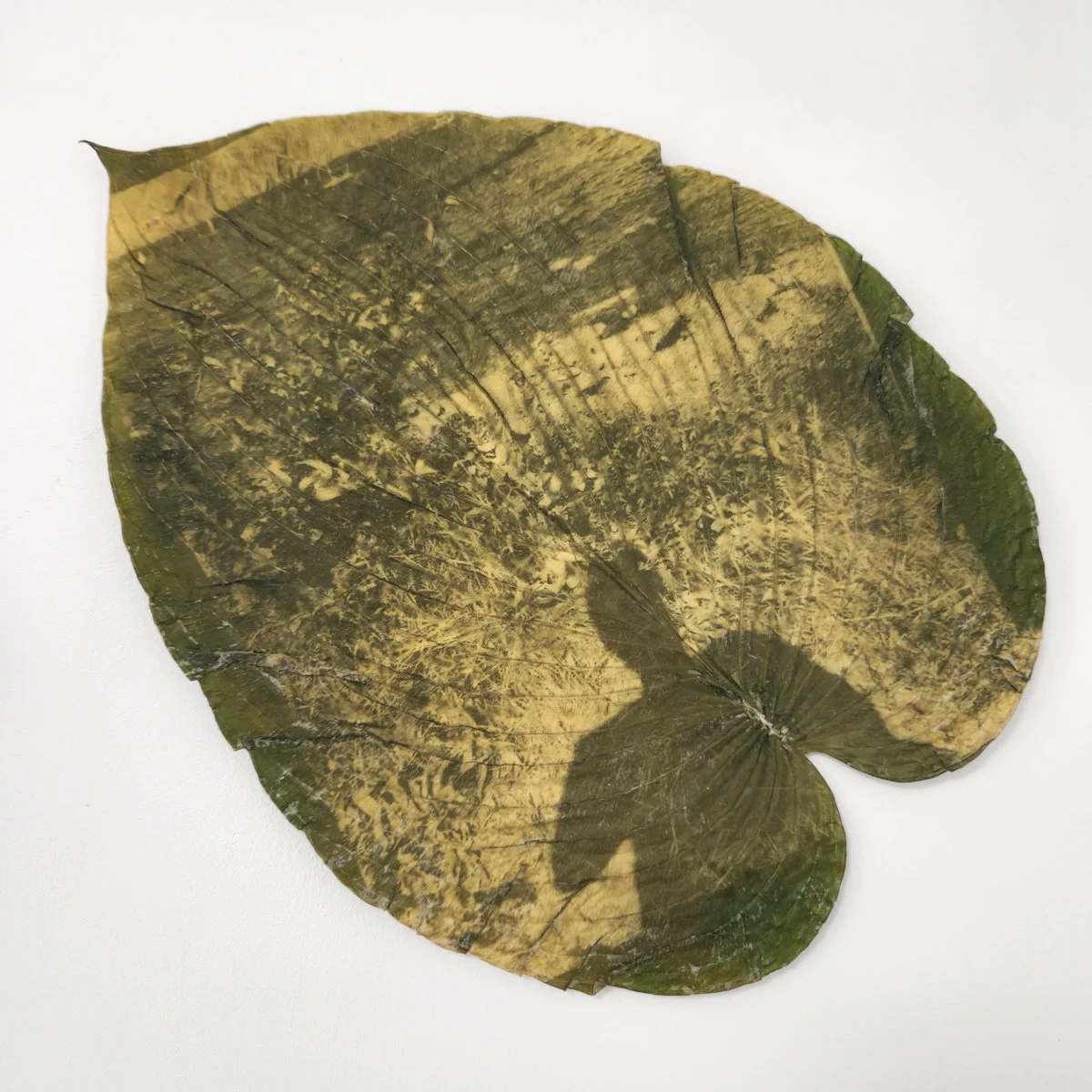
Rosalba Breazeale, Shadow Kin: East End Beach, 2025, 9 x 10 in., chlorophyll print on hosta sieboldiana
In April 2026, I had the opportunity to interview artist Rosalba Breazeale. During our conversation, Breazeale reflects on a multidisciplinary practice that spans photography, installation, and sculpture. Throughout the conversation we discuss how their work engages decolonial frameworks and unsettles Western binaries between human and non-human worlds through material and conceptual experimentation. Their reflections offer insight into an evolving practice grounded in reciprocity, ecological awareness, and relational ways of seeing.
ML: Thank you for sharing space with me today and for your willingness to be a part of the GroundTruth archive. In your creative practice, you work across photography, installation, and sculpture. How did your multidisciplinary approach develop and what first drew you to image-making as a primary language?
RB: I grew up in a household where creativity was encouraged and as an only child, my imagination kept me occupied. I took classes in sculpture, drawing, ceramics, candle making, photography etc. over many years, but photography has been the creative process that always returns. Image-making became a more permanent fixture in my life when I realized it could be the voice I had lost as the result of a childhood spent in Tennessee and Maine experiencing overt and covert racism and sexism.
Utilizing photography as a conduit for self-expression, I chose to hone my photography skills at the School of the Art Institute of Chicago, which is also where I experienced the life-changing exhibition Wangechi Mutu: A Fantastic Journey (1). Mutu’s environmental installation at the Block Museum of Art featured collage, sculpture, video and drawings. It was truly immersive, the work was alluring while also confrontational speaking to themes of colonialism, consumption and the eroticization of the black female body. It was in graduate school at the University of New Mexico, where I had the opportunity to delve more into experimental work utilizing photography and fiber for installation work. I find there is a different level of viewer participation when multiple senses are engaged. A multidisciplinary approach engages both body and mind. I find when I am fully engaged, I spend more time looking into the layers of an artwork, asking questions and being open to different perspectives. This is what I am always working toward within my own practice.
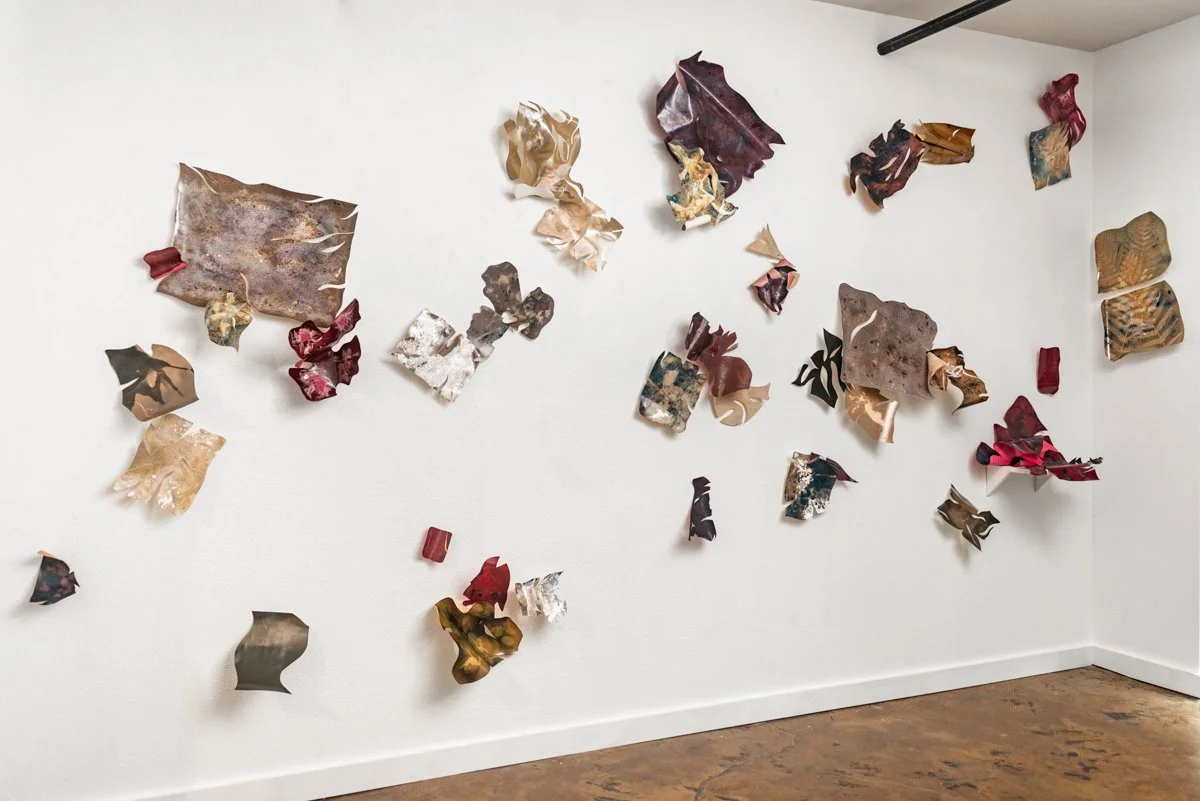
Symbiotic Relatives, Installation at Ricochet Gallery, 2022, 8 x 10 ft, chemigrams on silver gelatin paper, Photographed by Tommy Bruce
ML: You’ve described your identity as foundational to your practice. How do your experiences as a Queer, Jewish, transnational adoptee inform the questions you ask through your work?
RB: As a transnational adoptee, I was removed from my homeland in Peru at the age of three months and brought to a country where, for thirty-six years, I have constantly been reminded that I do not belong or should not exist whether due to race, sex, gender identity and/or cultural identity. Less than 90 years ago, my grandmother escaped Vienna, Austria and Nazi occupation only to be placed in a Jewish ghetto in China, which is where my mother was born. My father was born without a hand due to radioactive contamination from his father, who served in the military at a nuclear plant in Oak Ridge, Tennessee associated with the Manhattan project. These are the stories that form my perspective, but they are also so many other people’s stories as well. They are embedded in my art practice alongside decolonial research, the Jewish concept of Tikun Olam, meaning to it is our duty to take action toward healing the world and the Andean concept of Ayni or reciprocity.
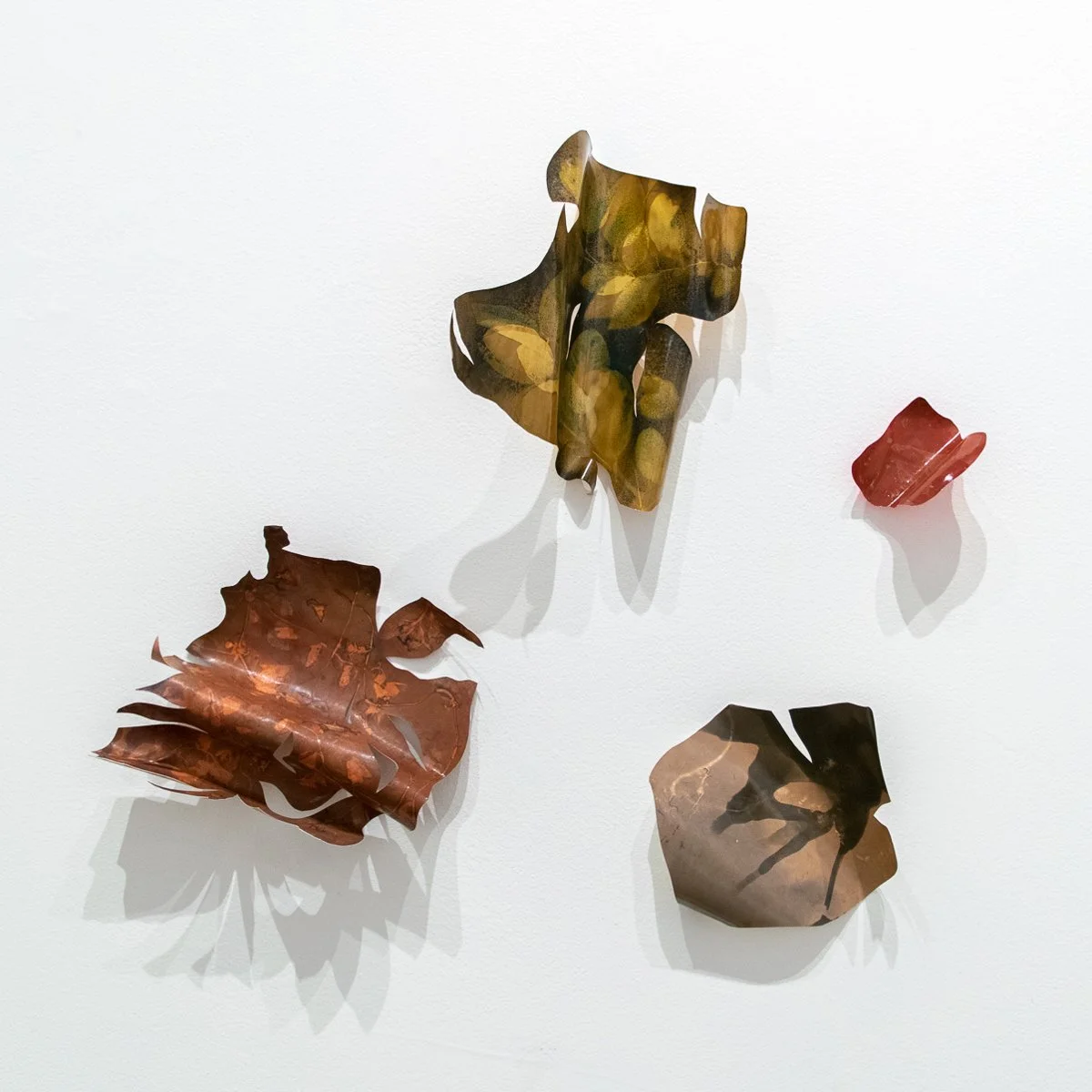
Symbiotic Relatives (detail), Installation at Koslov Larsen Gallery, 2025, variable dimensions, chemigrams on silver gelatin paper, Photographed by Koslov Larsen Gallery
ML: What led you to centering ecology and environmental issues within your artistic practice?
RB: I have always had a close relationship with the land I live on. My earliest memories are of learning to swim in a river and running around the woods naked at my family home in Limington, Maine. In Tennessee, we also lived on a river and within an hour’s drive of the Smokey Mountains. As a child, I attended camp at Ijams nature center, which uses play and exploration to learn science and survival skills related to the local ecology.
The foundation has always been there, but it entered my creative practice more actively in graduate school, which coincided with the covid-19 pandemic. My practice expanded into low/nontoxic alternative process photography, fiber art and sculpture, which allowed me to make deeper connections between materials, the stories they carry and my own. There are many similarities between colonial and postcolonial violence visited on Indigenous peoples throughout Abya Yala (South and Central America) and Turtle Island (North America) that tie directly to the land and the environmental issues we all face today. The land is sacred and we must respect and protect it. Put another way in an apt excerpt from the book, The Light Eaters by Zoë Schlanger (2), she interviews a Slovakian botanist, František Baluška, and he says, “I think the plants are primary organisms, and we are the secondary ones. We are fully dependent on them. Without them, we would not be able to survive. The opposite situation would not be so drastic for them.”
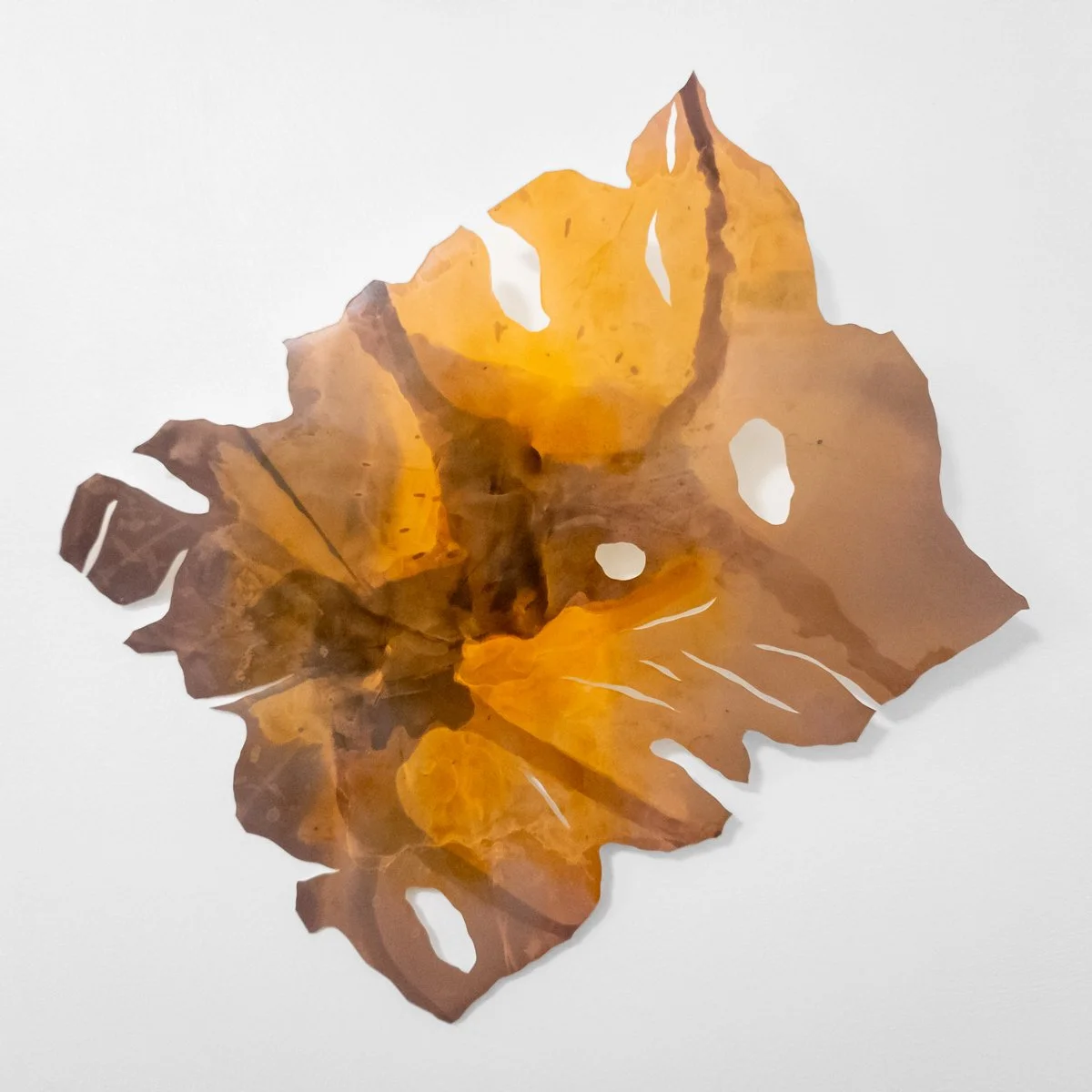
Rosabla Breazeale, Symbiotic Relatives: Early Autumn Breeze on Kezar Lake #2, 2024, 8 x 10 in., chemigram developed in rhododendron-based developer
ML: In what ways does your work challenge Western binaries between human and non-human, or culture and nature?
RB: Decolonial theory and practice are central to my work, in part because they challenge these binaries. Creating deeper connections to my Peruvian culture and learning Quechua led me to the examples I needed to reassess how I live and work. I am very much at the beginning of my language journey with Quechua. Words like kay pacha, meaning ‘every living being in this place and time between the earth and sky,’ and ayni, meaning ‘today for you, tomorrow for me’ speak to a different way of being from capitalist and imperialist systems currently in place.
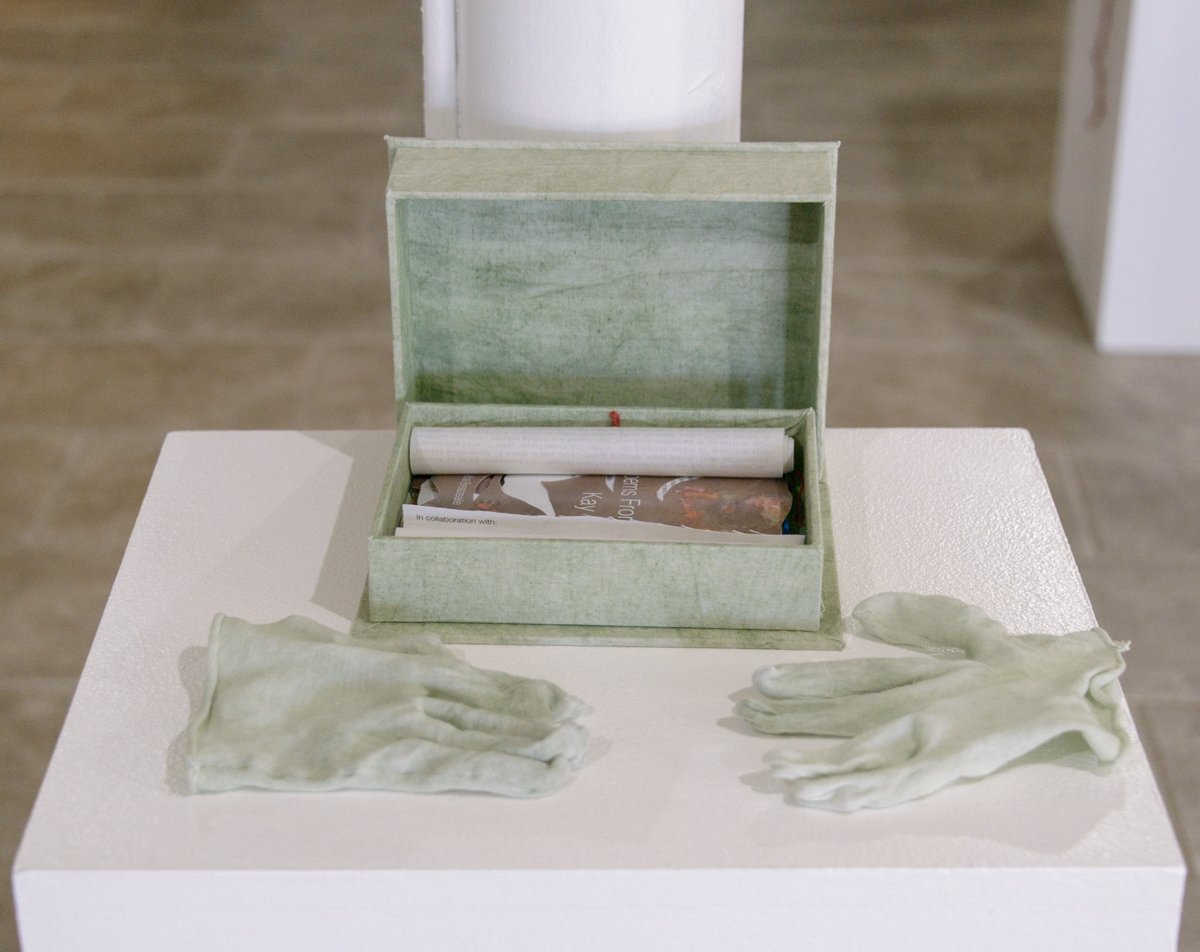
Rosalba Breazeale, Poems from Kay Pacha catalog and gloves, 2023, 5 x 7 x 3 in., Chlorophyllin dyed cotton & silk clamshell box and gloves, plant relatives scroll, essay by Calliandra Marian Hermanson, Pigment Prints on Red River Polar Luster Metallic 255, soil from Limington, ME
The settler state I live in (United States) is a prime example of 500+ years of extractive economy. It is also an example of 500+ years of survivance and resistance by Indigenous peoples. My work focuses on the stories of resistance, knowledge carried on despite attempts at erasure, and reciprocity between humans and non-human living beings because this is the antidote to European colonization and the Western binaries that relegated us to extractable objects. In a more direct sense, my identity as genderqueer/womxn is a direct challenge to societal binaries.
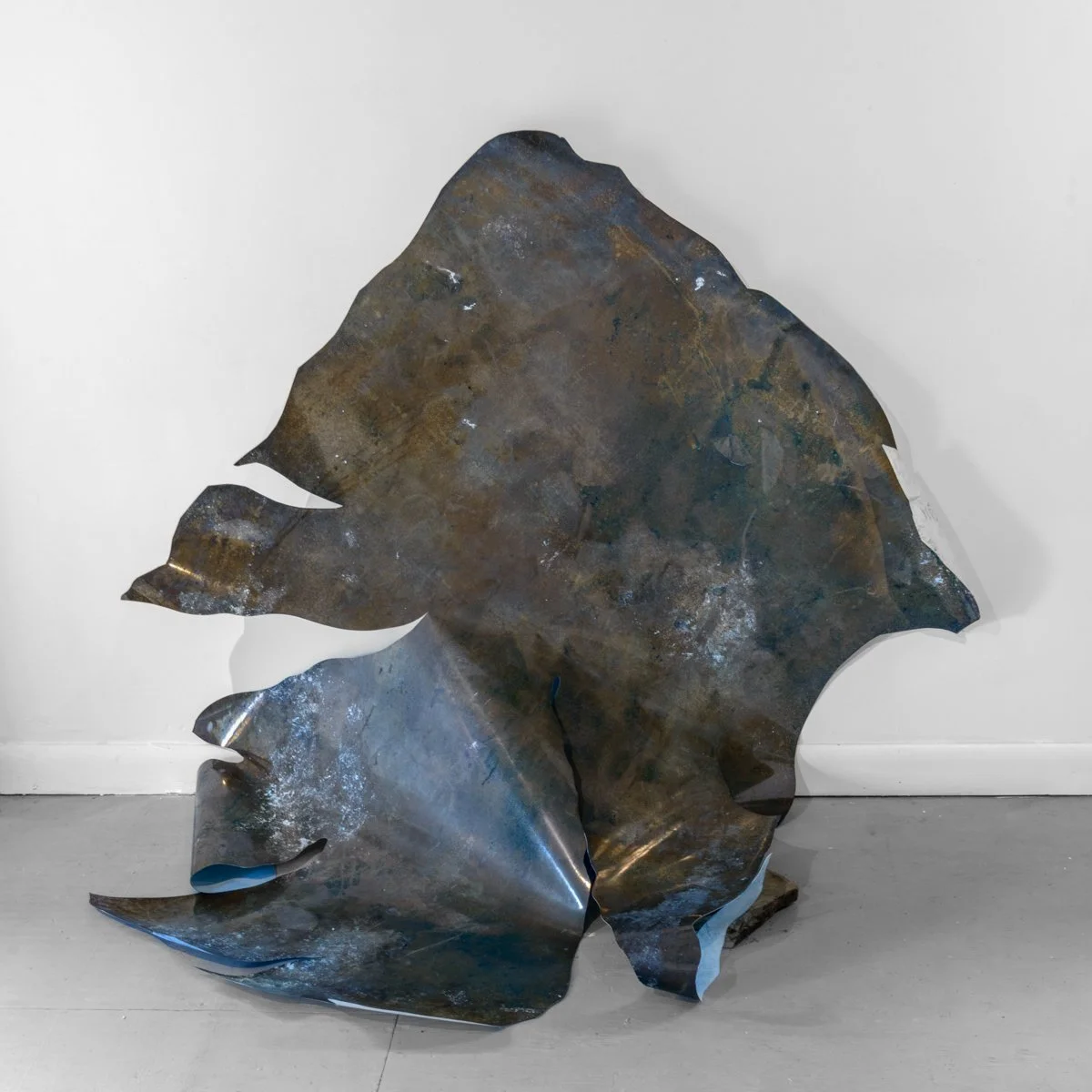
Earth Scroll #5 (1460-hour exposure on the traditional lands of the Pequawket/Limington, Maine), May-July 2022, 42 x 60 x 24 in., chemigram overdyed with indigo on Ilford silver gelatin mural paper
ML: Your work often involves analog and alternative photographic processes. What continues to draw you to these slower, more material approaches?
RB: The darkroom has always felt like home. Everything from the amber glow of the safelight to the images and forms that appear and shift as a result of the chemical reactions between iron and silver-based emulsions and light create a magical experience that never gets old. These processes provide a tactile connection and aura to the resulting art object/being. I also use some of the slowest processes possible, measured from hours to months as a way of connecting with kay pacha. In my lived experience, it takes years to become naturalized to a place, so it makes sense that it would take a long period of time to create a dialogue with the place as well.
Alternative process photography and photography in general is very much aligned with the history of colonization, power and privilege in the United States. It has been used to perpetuate the myth of the disappearing Indian and the myth that the land was unprotected or unoccupied prior to conservationists. The precious metals require to create light sensitive emulsions were at one time mined even if now, some of them are recycled. Spanish colonizers stole as much gold and silver as they could, and I often wonder if the silver I work with is derived from this violence. It makes working with these processes all the more precious. I am reclaiming what was taken from my ancestors, which feels especially important given that alternative process photography is still primarily practiced by white men and women.
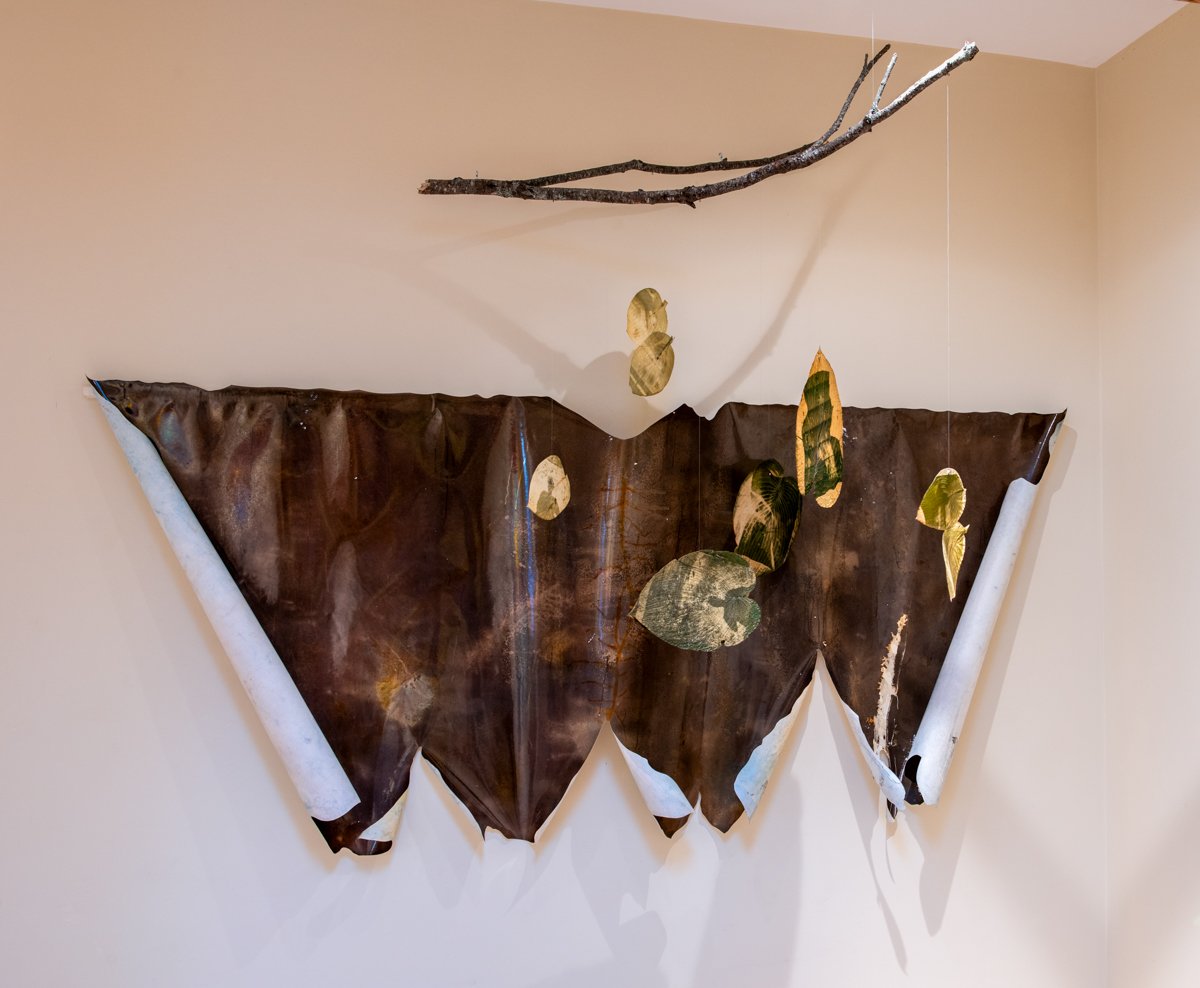
Shadow Kin & Earth Scroll #4(168-hour exposure on the traditional lands of the Pequawket/Limington, Maine), Installation at Maine Jewish Museum, 2025, 84 x 97 x in. 36 in., chlorophyll prints on hosta leaves, windfallen branch from Washington, ME, chemigram mural on silver gelatin paper, Photographed by Bret Woodard
ML: In your projects that include chemigram works, you collaborate with plant and soil “relatives.” How do you conceptualize authorship in these pieces?
RB: Symbiotic Relatives is a collaboration between plant, soil and other earth relatives and my own body. The chemigrams are placed within the land or have specific plant relatives such as those my mother and I have grown placed upon them. Every place and plant relative has a story whether or not we know it. These relatives imbue the sensitized paper with their form and stories as a result of exposure to UV rays, while also documenting changing environmental conditions over time. After exposure, I process the print with plant-based developer, fixer and sometimes a dyebath. Sometimes this reveals forms not seen in the initial plant, which is always exciting. Last, I respond to imprint left by the relative by ‘pruning’ around the form and sculpting the final shape to create a dialogue.
By taking the time to understand the ecological system I’m working in, utilizing respectful harvesting methods and treating the imprint left by the plant or soil with respect as an equal collaborator, I enact a symbiotic relationship with the land. Accepting the autonomy of rivers, mountains, trees etc. is essential to fighting environmental crises and exploitation.
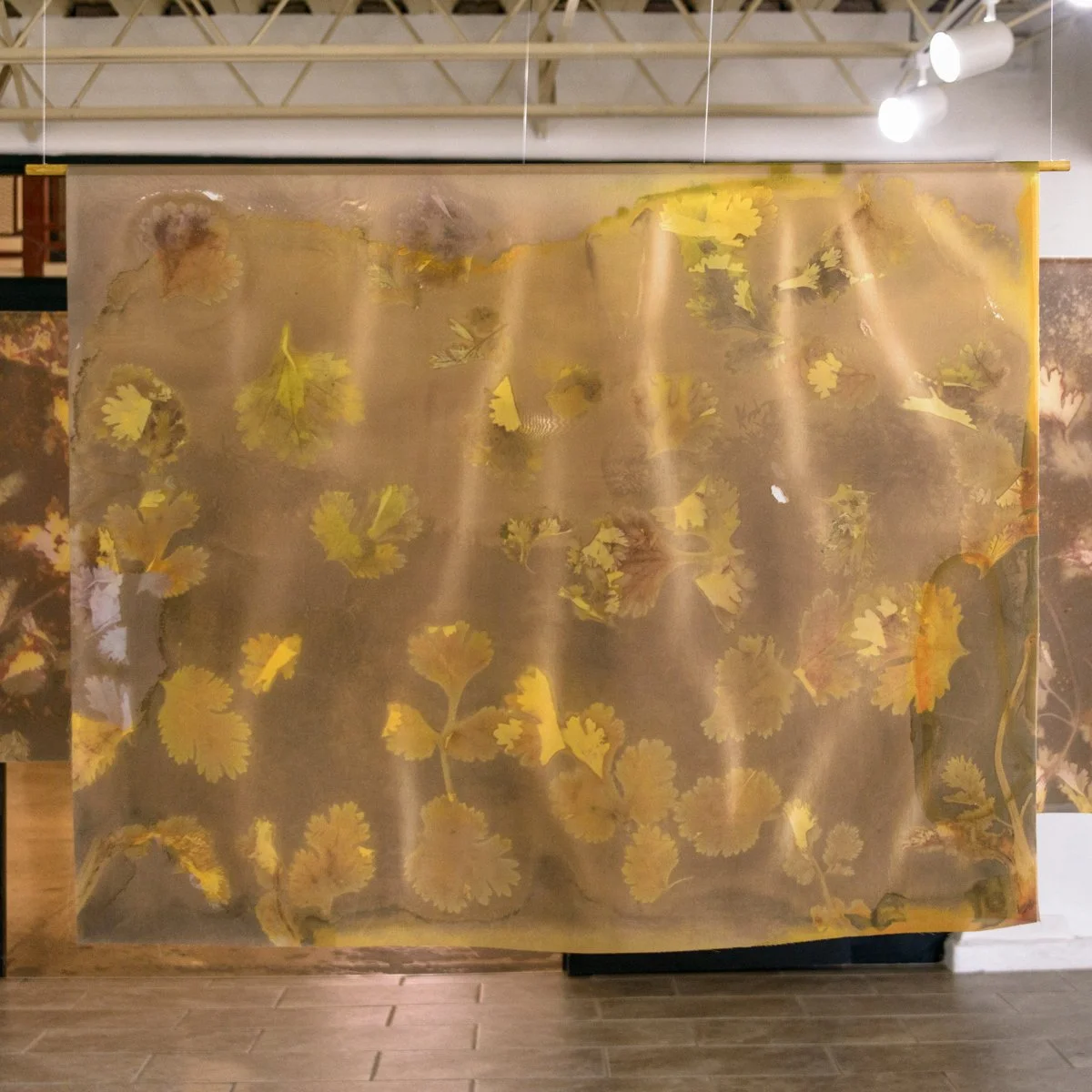
Lumenous Futures #2, 2023, 32 x 40 x 0.5 in., pigment print on habotai silk derived from 8 x 10 in. chemilumen print featuring cilantro, aji amarillo pepper, lime juice, salt, photograph of Nauta, Peru
ML: Can you describe your process of site-specific research? What forms of listening, observation, or collaboration are most central in your practice?
RB: Any place I go to is a potential site, and I am always conscientious of where my body is in relation to the surrounding environment, which is why researching a place is necessary first. I try to spend as much time as possible with any site that I work with observing changes and repeating patterns. Visual stimuli always come first, but all sense available senses are necessary to get to know a place. Having worked on 500 Unheard Legacies on the Pueblo of Laguna, it’s important to point out that I was invited as an extension of my collaborator, Jessica Begay (Diné) and we had a permit to photograph Jackpile Mine. I only spent a few days over a couple of trips, but Jessica had spent a significant amount of time establishing a connection and doing research. I trusted her experience to lead me toward a greater understanding of the site and to help shape the resulting art installation.
ML: How does working across geographies, from New Mexico to Maine, shape your understanding of place and ecological specificity?
RB: I am grateful to have lived in the Southeast, Northeast, Midwest and Southeast over the past 36 years. Having the opportunity to connect with my homeland on the coast of Peru and in the northern Amazon has also been eye opening. Spending time with a site is important. Understanding the history and ecological research is important as well. Each place, even within a region is unique, while also sharing throughlines of environmental damage. For example, abandoned uranium mines (AUBs) continue to adversely affect the health of local populations of Indigenous communities in the Southwest. Then there are the nuclear plants including the one in Oak Ridge, TN used for the Manhattan project, which resulted in the same cancers, infertility and birth defects experienced by communities located near AUBs. Meanwhile in Maine, we sit on a granite bedrock containing naturally occurring uranium, which breaks down into radioactive radon causing similar issues without proper mitigation. Each place is unique, and yet we are all bound together. My work often highlights this duality.
ML: How do you approach building relationships with the communities connected to the land you’re working with?
RB: My ethos around working in community is partially derived from something my undergrad mentor, LaToya Ruby Frazier, once said. She told my undergraduate class that she wouldn’t go to new places without researching and having a project planned first. Entering communities and places without consent or any understanding of one’s impact upon said place can be detrimental. Within the US, I am a guest on stolen land. I understand where I come from, how I came to be here, who I am, that I must be open to other perspectives and to admitting my wrongs if/when I make them to forge a good relationship with any community. I also understand that I do not have the right to anywhere I want on stolen land.
ML: What responsibilities do you feel as an artist working within landscapes marked by extraction, colonization, and environmental harm?
RB: My people have lived in what is now known as Peru since it was first peopled. I didn’t choose to come to Turtle Island, but it is home, nonetheless. As southern kin, I come from a land marked by the same violence. I have a duty to support and bring attention to issues affecting northern Indigenous communities when I have the platform to do so. As previously pointed out, everyone in the US is affected by environmental issues; every human in the world is. Ultimately, we all benefit when help each other.
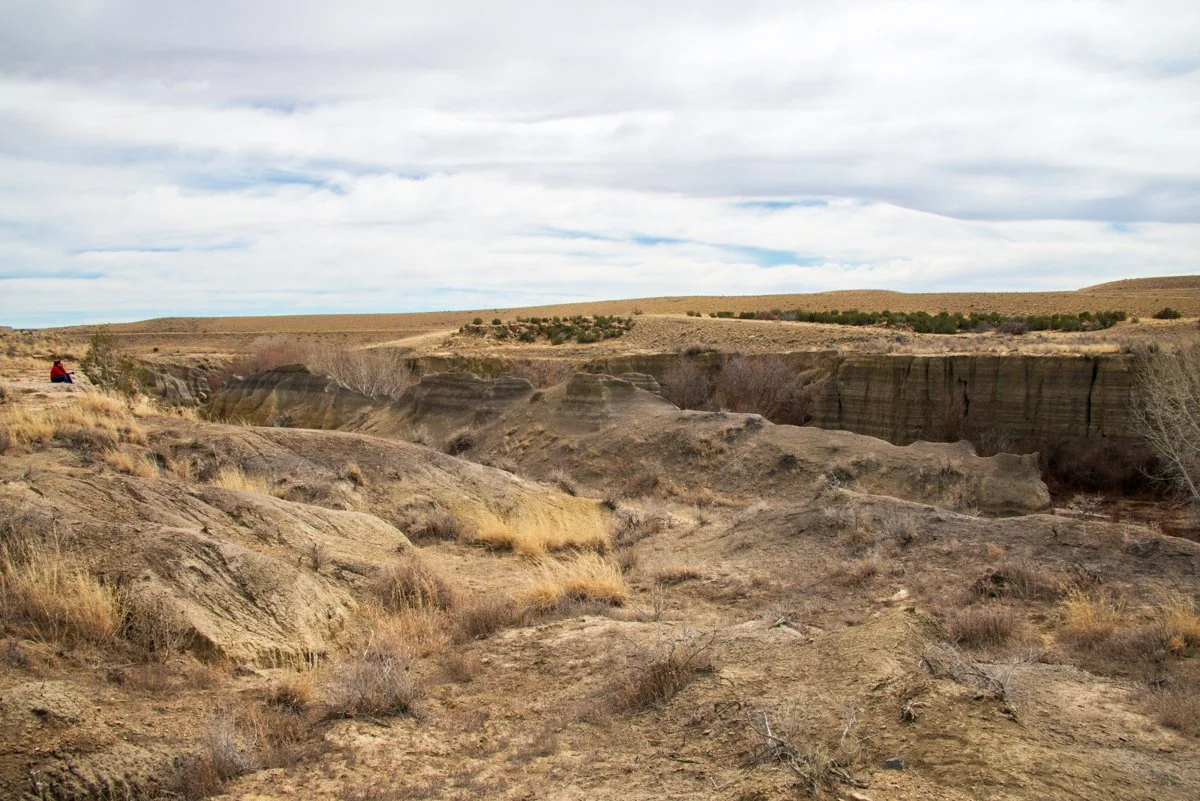
Rosalba Breazeale, 500 Unheard Legacies: Jessica Begay Recording wind at St. Anthony Mine, 2023, 11 x 16/40 x 60 in, pigment print on habotai silk
ML: In 500 Unheard Legacies, you collaborate with Jessica Begay to address the ongoing impacts of uranium mining. How did this collaboration take shape, and what did you learn from working together?
RB: Jessica and I were matched through the Shared.Futures fellowship, which paired one scientist with one artist. We found commonality in our concern about heavy metal mining on Indigenous lands among other things. She introduced me to her research at Jackpile Mine and showed me how research was conducted in the lab. In return, I shared my studio and darkroom and talked about my own research related to harmful photographic materials and processes. Our working relationship for the fellowship evolved into friends. We are both determined to continue work on this project. Jackpile is one site of over 500. When we secure more grant funding, the project will continue.
When working on 500 Unheard Legacies, Jessca and I asked three different levels of authority on the Pueblo of Laguna for permission. While on site, we were guided by a specialist from the Laguna Environmental and Natural Resources Department and respected any boundaries set. Our permissions were to photograph, record video and sound of the mine site and surrounding land. We did not have permission to photograph the people, which wasn’t an issue because we were not interested in victimizing or reiterating emotional harm on the local community. We focused on the land’s perspective, because it is inevitably tied to the Indigenous community as well as the non-human living beings.
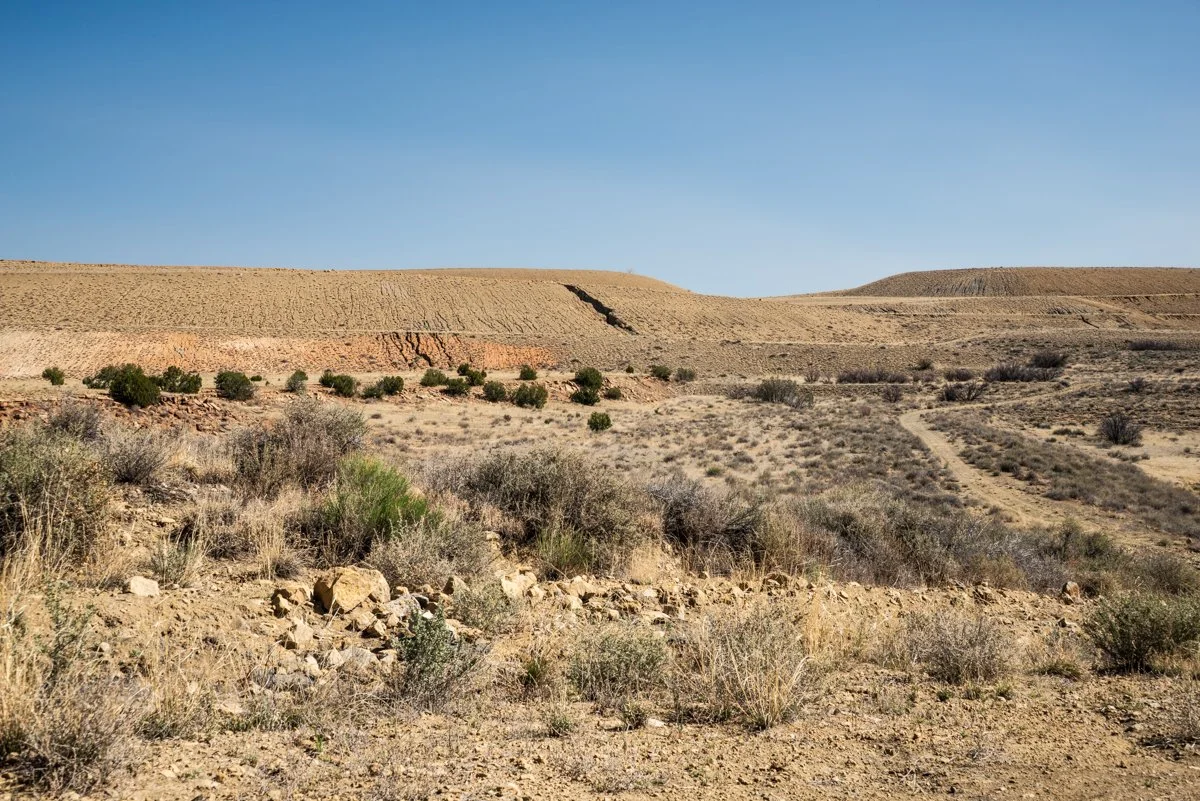
Rosalba Breazeale, 500 Unheard Legacies: Breach, 2023, 11 x 16/40 x 60 in., pigment print on habotai silk
ML: The project integrates photography, sound, and video. How do these different mediums expand your ability to tell this story?
RB: As humans, we use all available senses to understand the world. Prior to 500 Unheard Legacies, I had begun to expand my practice to incorporate more of the human senses. Translating Jessica’s research into art gave me the opportunity to delve into a multidisciplinary approach. Our major question was how to we show tiny windblown particulates moving from Jackpile mine to the nearby community? A still photograph wasn’t enough to encapsulate the land’s perspective. I printed the still images on silk, to simulate the movement of the wind as the viewer moves through the prints. Topography affects the way sound moves through space and Jessica’s voice is intertwined with the audio site recordings to create tangible connection with the research and the people who have been affected. We rounded out the installation with video of our experience moving through the site. Together these elements create an embodied experience.
ML: Uranium contamination is often invisible yet deeply harmful. How do you make these forms of “slow violence” perceptible through visual language?
RB: One project is not enough. 500 Unheard Legacies in conversation with Anti-Uranium Mapping Project(3), Abby Hepner’s Transuranic(4) series and many other creative projects build an archive that is a visual testament to the violence and demand for real reparations. The science is important to finding solutions, but raw data doesn’t sway the average person. Stories that we can connect to bridges that gap.
ML: How does your work engage with or challenge dominant narratives around remediation and environmental recovery?
RB: Early remediation attempts involved taking large amounts of soil and dumping it on the leftover radioactive material and putting a small fence around it. This solution speaks to people who did not know the land or care about the long-term effects for Indigenous communities. The story always comes back to what this country was formed from: the eradication and subjugation of black and brown people. Presently some scientists including those at the UNM METALS superfund are changing the way in which they approach remediation and working with local communities. Dr. Robin Wall Kimmerer illustrates the importance of reciprocity and relational knowledge in her books, Braiding Sweetgrass(5) and The Serviceberry(6). These practices decenter narratives based on consumption and extraction and emphasize the importance of Indigenous knowledge ways. My art practice and the work I create are aligned with these principles.
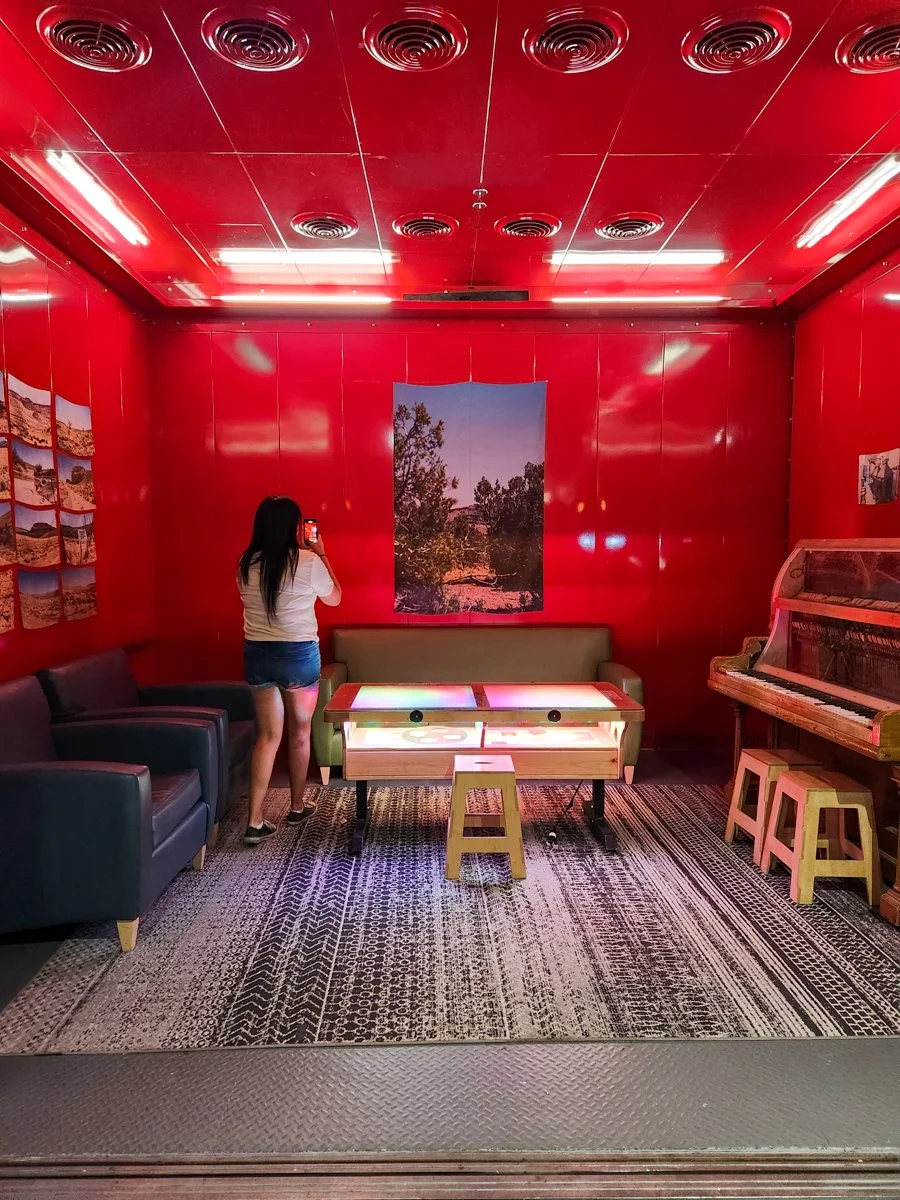
500 Unheard Legacies, Installation in Explora Museum elevator, 2023, 120 x 120 x 60 in., pigment prints on habotai silk, video, audio recordings from Jackpile/St. Anthony Mines and Interview with Jessica Begay
ML: What role do you see art playing in conversations around environmental justice, particularly in relation to Indigenous sovereignty and land rights?
RB: Black and brown communities are disproportionately affected by ecological violence and also often the first on the line of defense. Yet when it comes to having a voice, the people speaking are overwhelmingly white and they are often profiting off Indigenous knowledge. This is why being in community and understanding how to work collaboratively is important. I don’t presume to know what effect my work may have in these conversations. I believe liberation for Indigenous peoples from Abya Yala to Turtle Island are inextricably tied together, and I hope that the work Jessica and I do in our own work as well as our collaboration will be helpful for future generations.
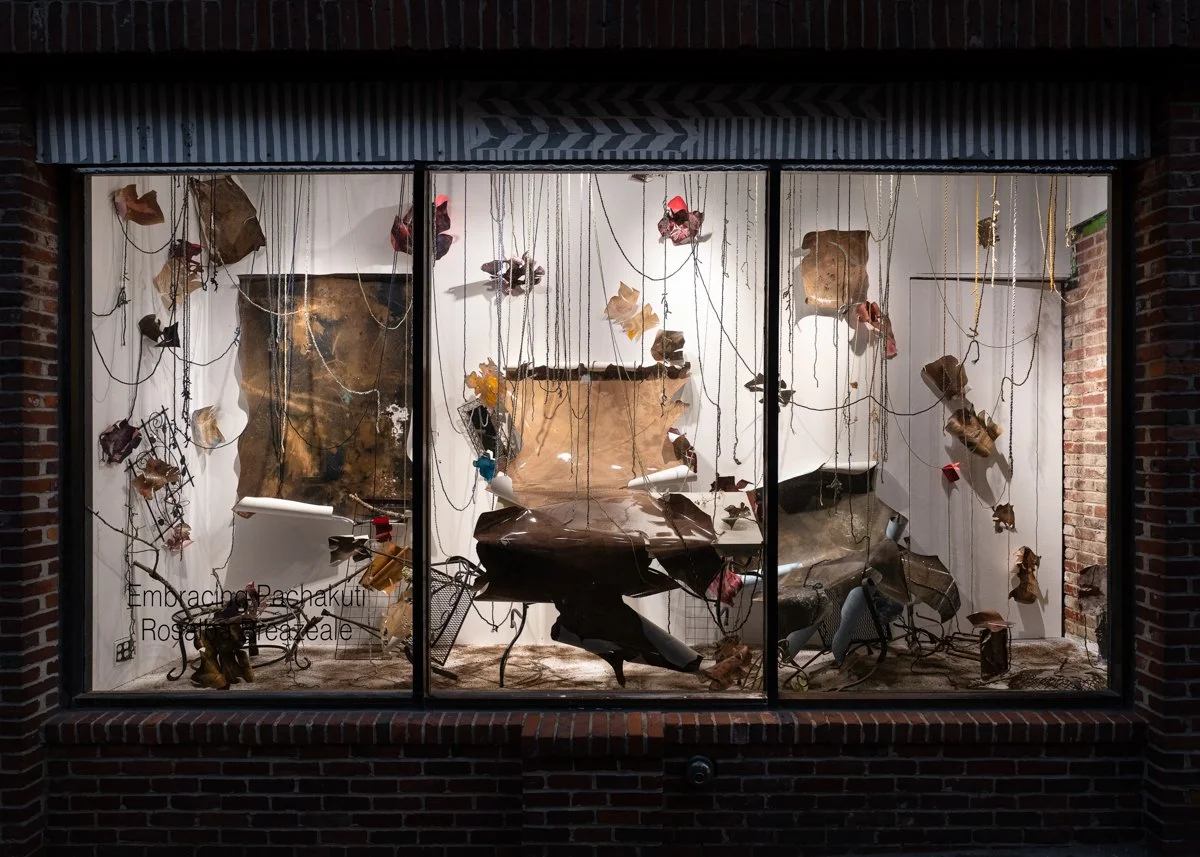
Embracing Pachakuti, Installation at Space Gallery, 2026, 197 x 26 x 96 in., chemigram murals on Ilford silver gelatin paper, pruned chemigrams on expired silver gelatin paper, khipus (knotted cords made from recycled synthetic yarn, Inka cotton yarn dyed with yellow onion skin and chlorophyllin dye, Rambouillet yarn from Lana Plantae dyed with indigo and cyanotype emulsion), Iron & steel rescued from the Limington Transfer Center and donated by my mother, Asherah Cinnamon, soil from Limington, ME, lichen covered branches, dried nasturtium, photographed by Jared Tsui
ML: In the statement for your project Embracing Pachakuti, you discuss the Andean concept of Pachakuti as a concept that can be interpreted as “a hopeful future in which humans have found symbiosis with each other and our non-human relatives or as a warning in which our plant relatives have found balance without us.” How does this duality manifest in your work?
RB: Traditional photography relies on very strict set of standards to produce artwork perceived as valuable. There is always a power dynamic at play that mimics colonial and postcolonial systems whether it be between photographer and subject/viewer or the almost fanatical obsession with ensuring an artwork lasts forever. Who benefits most from this sense of control? The Europeans who built a legacy on genocide, enslavement, the harmful extraction of natural resources and their American descendants who continue to profit from it. Behind this need for control and permanence lies a fear of mortality deeply engrained in American culture. There are many other cultures that understand that life and death are cyclical and necessary to maintain a balanced ecosystem. By working with ephemeral materials and processes and by reclaiming Andean cultural concepts, I question my own learned desire for control and ask viewers to do the same. What if we decentered ourselves as individuals and a species that controls the world? We must consider other ways of living and connecting, because the current system isn’t working.
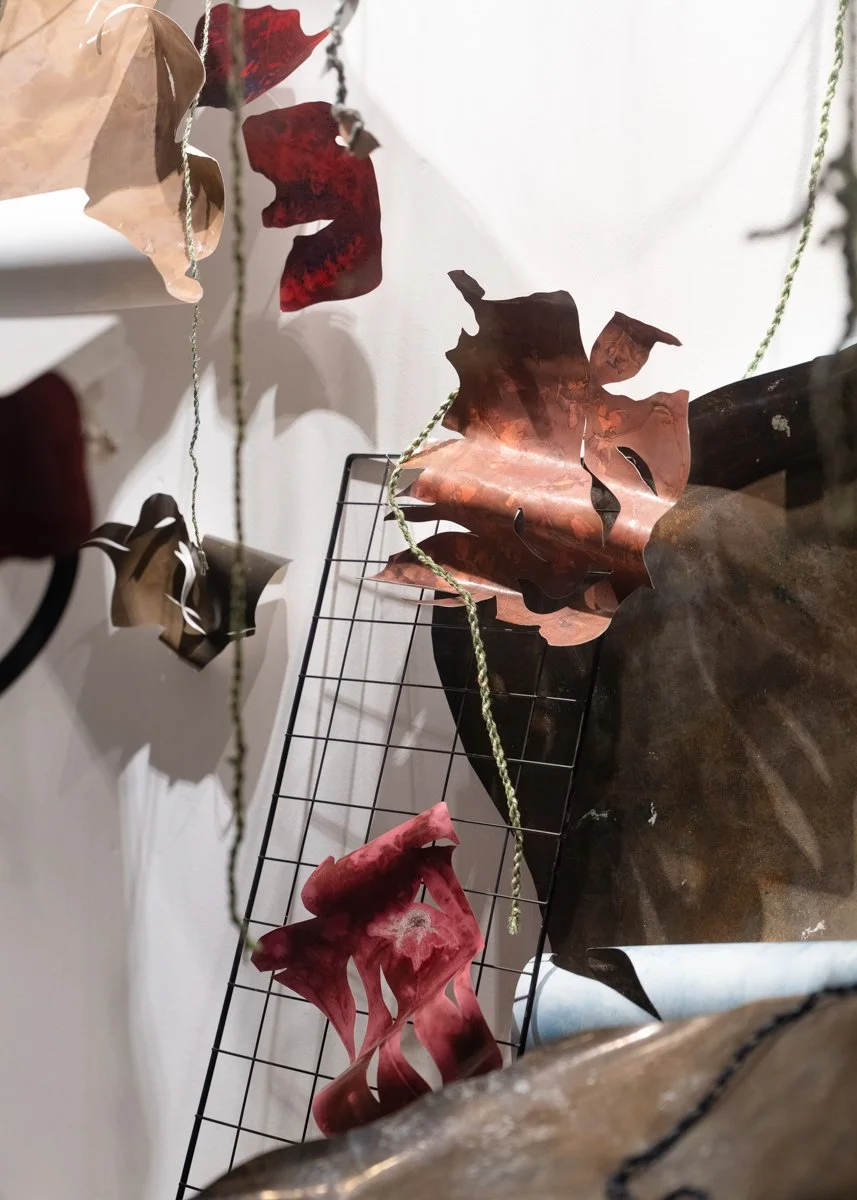
Embracing Pachakuti (details), 2026, Photographed by Jared Tsui
ML: In your installations, there’s often a tension between loss and regeneration. How do you hold these two states in dialogue?
RB: Within conversations about environmental violence, we talk about the physical effects, but not as much about the mental and spiritual effects. As the daughter of a psychologist and former social worker-turned-sculptor, I am acutely aware of how emotions can dictate behavior. As a transnational adoptee, I began experiencing loss at the age of three months: the loss of the person who carried me for 9 months, the loss of my homeland and language, the loss of friends and places with deep emotional ties. It’s important to hold space to grieve loss. It’s something every human experiences. Yet space and time continues around us. The loss I’ve experienced drives me to utilize art as a tool to provide space for other to grieve and then imagine and enact what comes after. In a cyclical world of life and death, there will always be new growth.
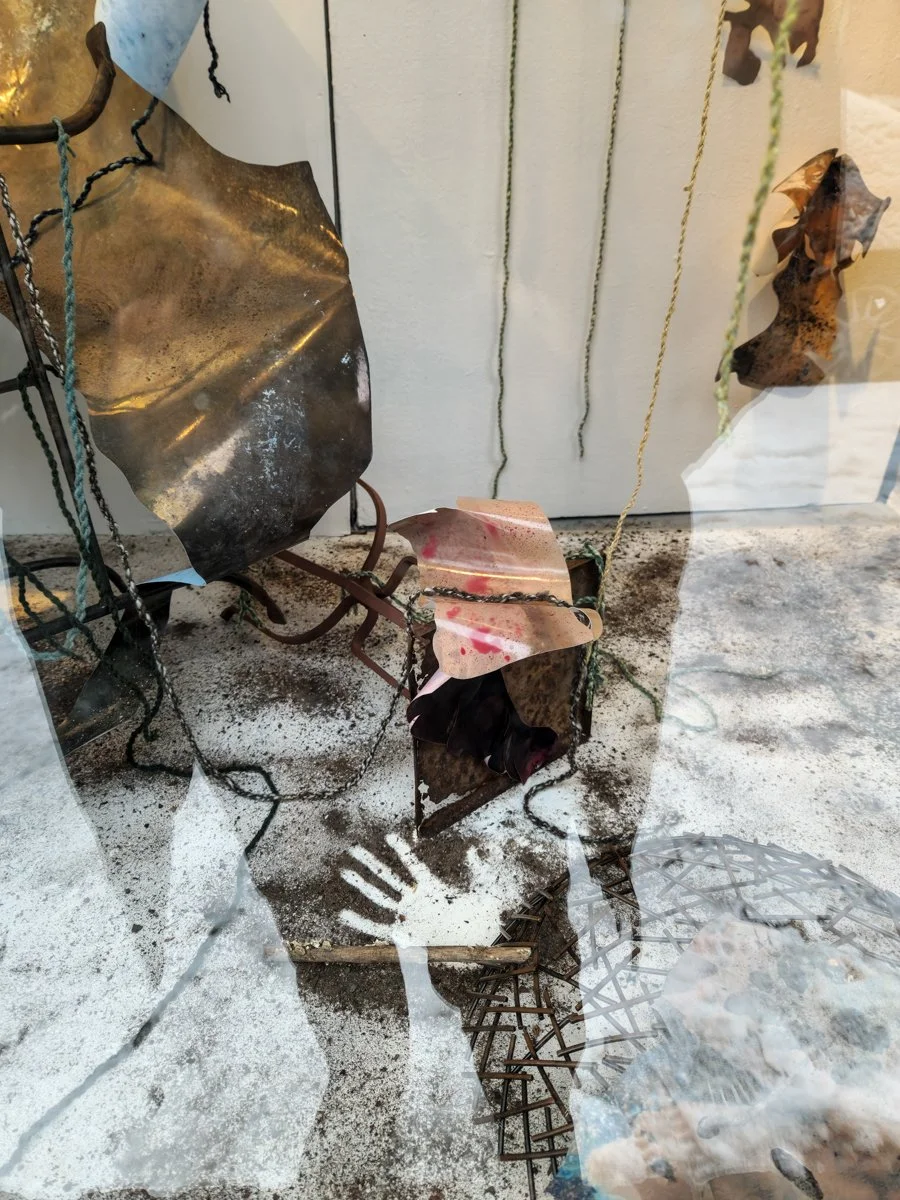
Rosalba Breazeale, Embracing Pachakuti (details #2), 2026
ML: Your work asks what kind of future we are collectively building. What possibilities for symbiosis or repair feel most urgent to you right now?
RB: Community building by uplifting and listening to the voices of marginalized communities especially the elders and education on the grassroots level is key. Change will not come from one group, but from the diversity of people with ideas and the willingness to listen to each other. Artists have an incredible platform to translate these ideas into something tangible.
ML: In the face of environmental devastation and historical trauma, where do you locate hope and how does that sense of hope guide your work moving forward?
RB: I’ve struggled with depression until fairly recently. I’ve faced death and chosen to live. I’ve stood in the Amazon rainforest in the dark and conceded all notions of my own control as a human over the earth. Trauma has shaped me but so has resilience. My ancestors survived worse traumas, so that I could thrive and I will never again take that for granted. My hope is derived from a sense of purpose. In my everyday life, I derive hope from observing how non-human living entities interact with the world and by nurturing the plant relatives that nurture me.
Hope in collaboration with action drive my work forward. I create artwork, but I also share my ideas, learn from others and facilitate community action through teaching. In addition, I run a creative studio space for underserved and marginalized people working in low and nontoxic mediums. I have no idea how these things will affect future work, and I find that exciting.
ML: Is there anything else you would like to share? What is holding your attention at the moment?
RB: I highly recommend reading The Spirit of the Rainforest by Dr. Rosa Vásquez Espinoza(7). It’s really exciting to see how she marries science and Indigenous knowledge from an Indigenous South American perspective.
Wangechi Mutu: A Fantastic Journey, Block Museum of Art, Northwestern University, Evanston, IL.
Zoë Schlanger, The Light Eaters (New York: HarperCollins, 2024).
Anti-Uranium Mapping Project, accessed April 14, 2026, https://www.antiuraniummappingproject.com/.
Abbey Hepner, “Transuranic,” accessed April 14, 2026, https://abbey-hepner.com/#/work/transuranic/.
Robin Wall Kimmerer, Braiding Sweetgrass (Minneapolis: Milkweed Editions, 2013).
Robin Wall Kimmerer, The Serviceberry (New York: Scribner, 2024).
Rosa Vásquez Espinoza, The Spirit of the Rainforest (New York: Simon & Schuster, 2024).