

Megan Jacobs
Megan Jacobs (she/her) is an artist whose work explores delicate relationships—the interweaving between two partners in love, the bond of parent and child, and interdependence between humans and the living world.
Jacobs’ work has been exhibited nationally and internationally in numerous exhibitions at venues such as Aperture Gallery, Saatchi Gallery, the Museum of New Art (MONA), The FENCE, Blue Sky Gallery, and the International Symposium on Electronic Art (ISEA), among others. Her work has been featured in Adbusters, Musee Magazine, Lenscratch, Feature Shoot,Frankie Magazine, F-STOP Magazine, Fraction Magazine, among other publications. Her Hidden Mothers series was selected for Critical Mass Top 50. Her work was recently published in an anthology of women photographers, Eye Mama: Poetic Truths of Home and Motherhood. Her work was also included in a recent anthology published by Texas A&M Press, A Yellow Rose Project: Responses, Reflections, and Reactions to the Nineteenth Amendment.
Jacobs’ newest series, Shared Breath: Motherhood in the Time of Climate Crisis, was recognized with the 2024 Lauren Shrensel Zadikow Award for social/environmental art from the Society for Photographic Education. Megan co-curated the environmental exhibit, Eco-Pulse: Rise and Fall, in partnership with curator Mary Statzer at the University of New Mexico Art Museum. Jacobs is a member of the Eco Echo Art Collective and is a Professor in the Honors College at the University of New Mexico.
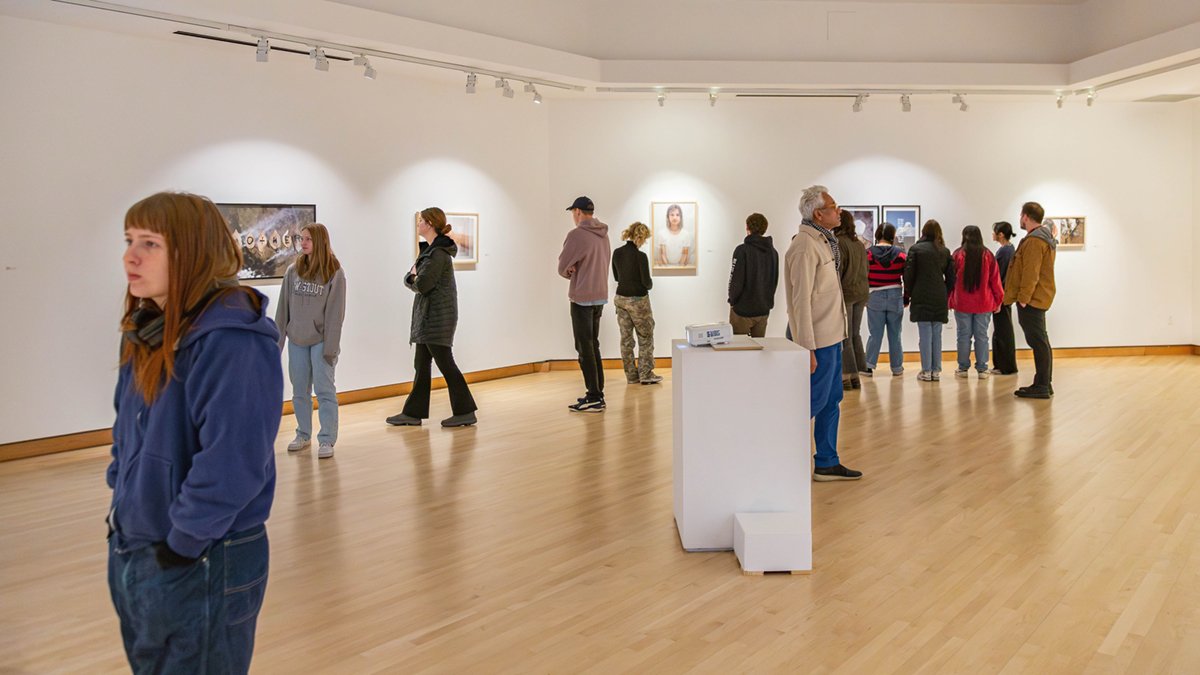
Megan Jacobs, Shared Breath installation: Climate Crisis in the Time of Motherhood
I have been following Megan Jacobs’ work for several years, and I have long admired the thoughtful and deeply considered ways she brings together photography, material exploration, and environmental inquiry. I was especially excited to introduce her session at the 2024 Society for Photographic Education Conference in St. Louis. It was a privilege to learn more about the ideas, experiences, and research that inform her practice, particularly her ongoing investigation into the complex intersections of climate change, motherhood, and our evolving relationship with the natural world.
Jacobs’ work resonates because it approaches the climate crisis not only as an environmental issue, but also as an emotional, embodied, and deeply human experience. Through her use of unconventional materials and labor-intensive processes, she creates photographs and objects that operate metaphorically, revealing the fragility, vulnerability, and uncertainty that characterize our relationship with the Earth.
In this conversation, we delve into Jacobs’ creative process and the ways she uses materials as a language, allowing their physical qualities, transformations, and histories to communicate ideas about connection, loss, resilience, and responsibility. We discuss how motherhood has shaped her perspective as an artist, how climate anxiety and hope inform her practice, and how her experimental approach to photography creates space for contemplating the precarious relationship between humans and the climate crisis.
Margaret LeJeune: Throughout your career, you've explored forms of interdependence between lovers, parents and children, humans and the natural world. Looking back, do you see these as separate subjects or as different expressions of a single question that has guided your work?
Megan Jacobs: I see the arc of my work as an exploration into a shared inquiry. How does investigating the complexities of relationships give us deeper insights into our interconnections with one another and the living world? Ultimately all my series grapple with how to honor our interconnections and break down binary divisions.
ML: In Shared Breath, motherhood becomes a lens through which to understand the climate crisis. Was there a particular moment when these two realities, that of raising children and of witnessing ecological change, became inseparable in your imagination?
MJ: I started thinking about the relationship between motherhood and the climate crisis in part due to place. I have lived in New Mexico for almost twenty years. During that time, I have viscerally experienced a shift in the climate. I often observe the landscape while going to and from work, and over the years have seen the ramifications of the climate crisis at play—from a shortened monsoon season to the absence of certain grasses and flowers, and the lengthening “fire season.” The climate crisis in New Mexico, due to extractive practices, has resulted in a drier environment. In fact, over the past 40 yrs, the New Mexico fire season has lengthened by two months and now spans more than half the year to comprise seven months out of the year. When I was pregnant with my second child, there was an intense fire near Los Alamos, an hour from my house. I remember it being a particularly hot summer and I was in my ninth month of pregnancy, in August, with a house that had no air conditioning (it was built in the 1970s in a time when no one could imagine needing A/C in the high desert). During this time, my doctor recommend staying inside due to the particulates levels which were dangerous for pregnant people and young children. When then largest fire in New Mexico’s history occurred in 2022, it was impossible to write off that earlier fire as a “once in a generation” event. It was clear that the climate crisis played a role in my children’s lives and that the two were tethered. I felt compelled to explore that relationship through art.
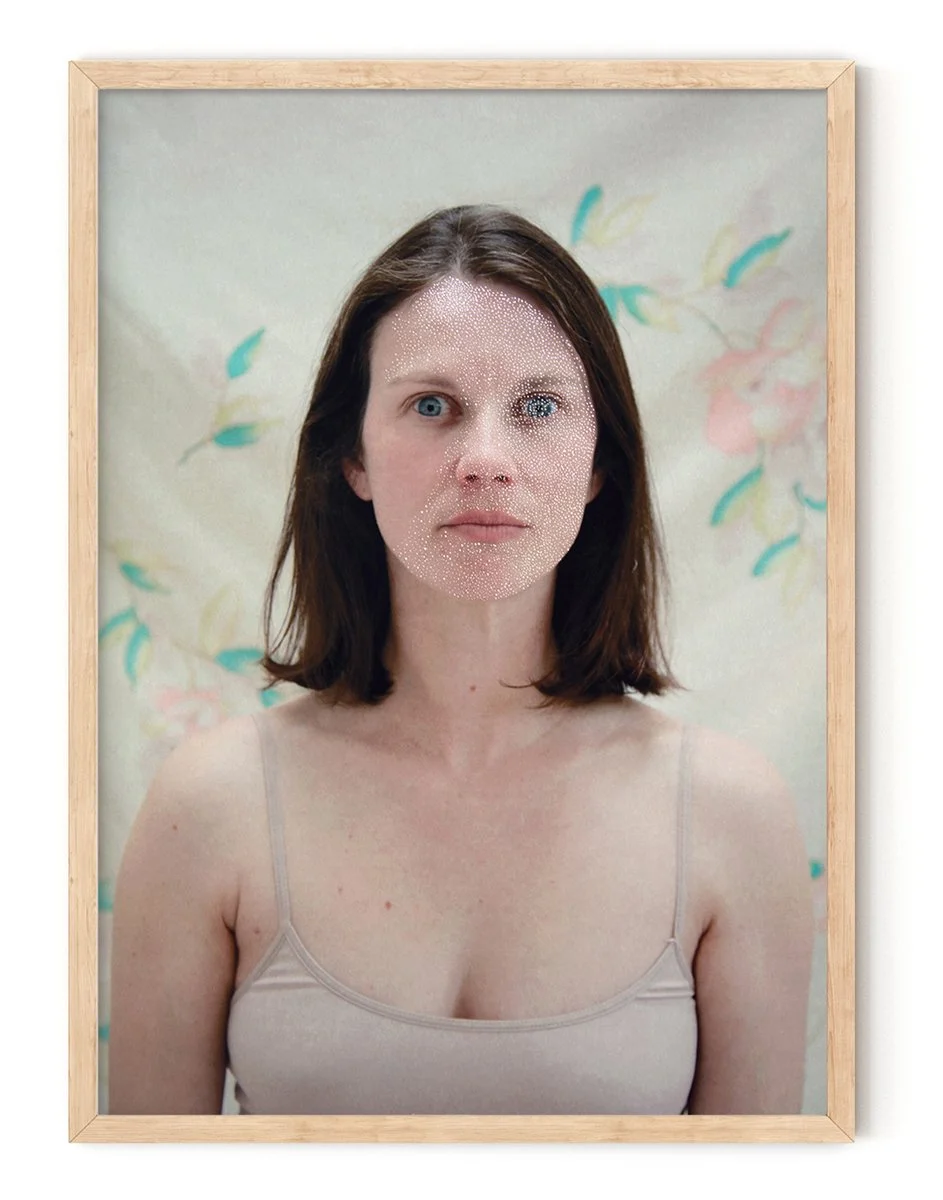
Megan Jacobs, Days as a Mother, Duratrans Print in Light Box, 20”x30”x1”, 2023
ML: You speak about "illusions of separateness” in the project statement. What experiences first taught you that the boundaries between self, family, and environment are more porous than we tend to believe?
MJ: During my undergraduate time at Smith College, I studied art and philosophy and was interested in the dialogue between the two disciplines. My thesis work both researched feminist scholars and artists who sought to de-silo the academy by forging interdisciplinary conversations and was comprised of an exhibition of photographic work that assumed the dual role of artist and subject while challenging the mind/body binary. During this time, I also read The Second Shift: Working Families and the Revolution at Home (1) which recounted how women’s presence in the workplace often came at the expense of additional and unequal domestic duties. Through various readings, the multipronged web of culture and power began to connect to systems and society in a tangible way. After graduate school, I became interested in an investigation into historic and contemporary definitions of the good life. I started to see even more connections between how culture and family inform beliefs and pursuits often to the peril, in the western capitalistic framework, of the environment. These investigations led me to look at progressive scholars such as Naomi Klein who coined the phrase “illusions of separateness” in relationship to how the environment is viewed in a post-industrial world. Scholars such as Robin Wall Kimmerer and Ayana Elizabeth Johnson advocate for holistic examples of an integrated worldview—one that recognizes the health of the environment as fundamental tethered to that of the living world. I became interested in how art can challenge dominant social constructs that promote a separation between humans and the living world.
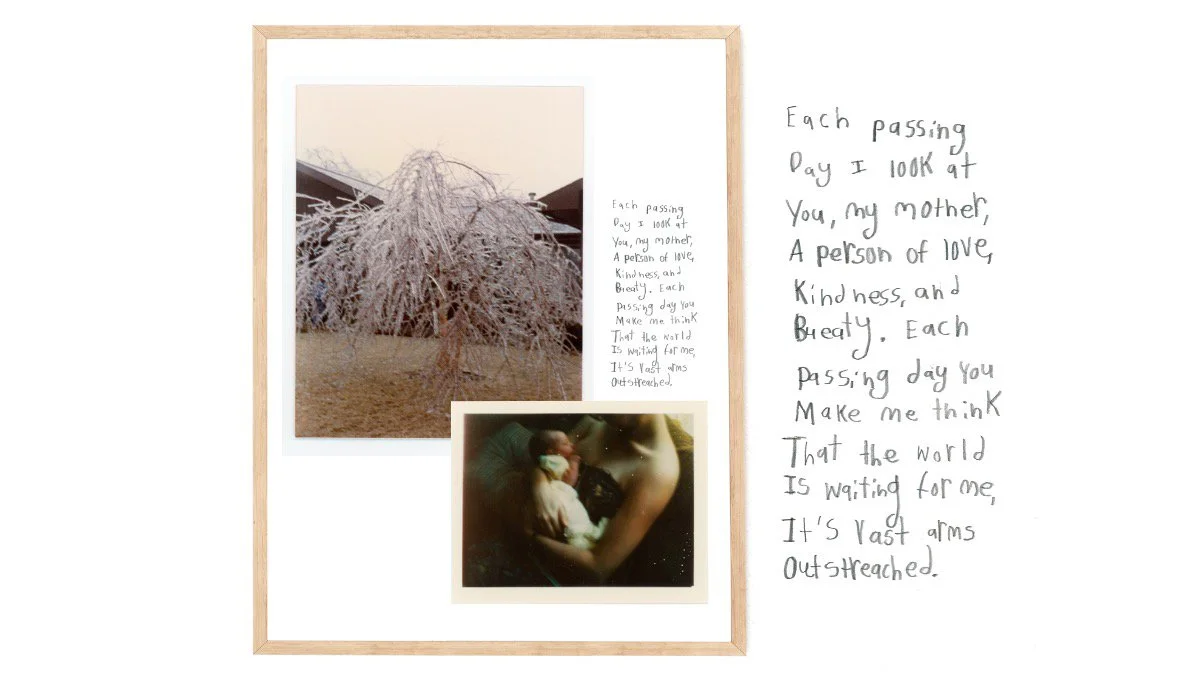
Megan Jacobs, Mother Love, Archival Pigment Print, 20”x30”, 2023
ML: The pyrocumulonimbus clouds in your photographs are visually sublime, such beautiful forms born from catastrophe. What does it mean to make images that seduce viewers with beauty while asking them to confront grief and danger?
MJ: Alfredo Jaar was the artist who showed me that beauty is a critical tool in an artist’s toolbelt. His exquisite work tackles harrowing topics such as genocide, war, and capitalism, and created a sense of awe in me. When dealing with contentious topics such as the climate crisis, which many people want to ignore or refute, beauty is a tool to draw others into the conversation. The realization of what folks are looking at, such as pyrocumulonimbus clouds being produced from the heat of fires, becomes a kind of “second reveal.” Beauty becomes a tool of recognition. It can encourage the viewer to grapple what they may otherwise want to ignore.
Megan Jacobs, Containment, Archival Pigment Print, 20”x30”, 2022
ML: Breathing is one of the central metaphors in Shared Breath. What does the idea of a "shared breath" reveal about our relationship to one another and to the Earth?
MJ: I use the metaphor of a “shared breath” to talk about the inseparability of the health of the landscape and that of the body. The Calf Canyon/Hermit’s Peak fire in New Mexico, the largest and most destructive wildfire to date in the state, was so immense, the smoke plumes were visible from space via NASA satellite imagery. I coupled NASA cloud plume imagery with an image of my daughter’s breath to visually flatten these realities, illustrating a “shared breath”. Each part impacts the other. The aridness of the landscape, that lent itself to such a large wildfire, is due in part to environmental degradation caused by overconsumption and extractive industries. This immense fire consumed, not only natural materials like trees and shrubs, but man-made elements such as plastics, electronics, and rubber found in homes. Dr. Heidi Honegger Rogers, a UNM professor specializing in climate change health care, studies the impact of air particulates on health. She has found that when humans are exposed to particulates, they have a higher rate of asthma and are more susceptible to strokes. While it was health that brought me to this idea of a “shared breath”, in a broader sense the phrase points to the idea that our fates are bound to one another. This is illuminated beautifully in a quote from Elizabeth Roberts in Gaian Buddhism (2). She states, “Earth is not composed of inanimate matter separate from the realms of spirit and consciousness. Rather the Earth is infused with meaning, awareness, and creative evolutionary drive. Mind in the widest sense is immanent in the larger biological system and conversely, the expansion of the human consciousness is kept relevant through the biosphere itself. It may be more appropriate for us to think of ourselves as a mode of being of the Earth, than a separate creature leaving on the Earth.”
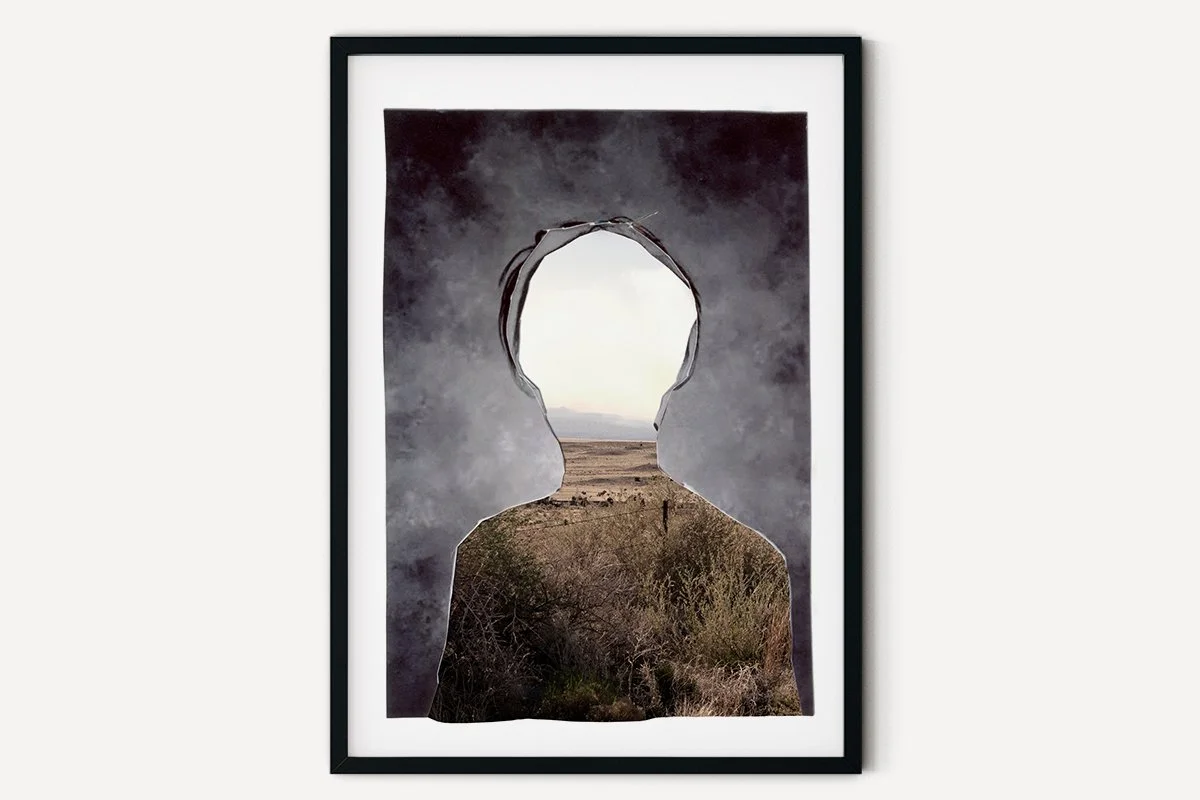
Megan Jacobs, New Mexico Fires, Hand cut Archival Pigment Print layered on Archival Pigment Print, 18”x24”, 2024
ML: Many environmental narratives rely on statistics, forecasts, and abstractions. Your work instead begins with the body, with children, motherhood, touch, and care. What can personal experience communicate that scientific data alone cannot?
MJ: We can look at statistics and yet what is often missing is the human, real world connections that they illustrate. In Ellen Bass’ poem, “The Big Picture”(3), she contemplates environmental collapse. Towards the end of the poem, she has a beautiful line which frames her fear of environmental loss: “there never was anything else. Only these excruciatingly insignificant creatures we love.” There’s nothing else but the people and places we love for which we are an indivisible part. My work comes from a place of what I know and love. This series aims to sew together the personal and universal: my love for my children to the larger living world for which they are a part.
I come from a multi-generational line of farmers from rural Illinois. My kin have a running personal record of the land they tend—the dry years, the wet ones, and the profitable. Photography and farming are connected in that they are fundamentally about paying close attention. Attention is the greatest thing we possess and yet there is so much competing for it. Scientist and scholar, Robin Wall Kimmerer says that “paying attention is a form of reciprocity with the living world.”(4) Caregiving is fundamentally about focused attention. Cultivating that care is paramount in shifting worldviews to combat the climate crisis. Storytelling, about what one knows and loves, is a key part of that process. A recent Yale Program on Climate Change Communication report shows that first-person accounts of climate change are more successful than hard scientific data, such as statistics, in changing an individual’s perspective of the climate crisis. As Ayana Elizabeth Johnson states “We need to have a whole cultural shift, where it becomes our culture to take care of the Earth, and in order to make this shift, we need storytelling about how the Earth takes care of us and how we can take care of her.”(5)
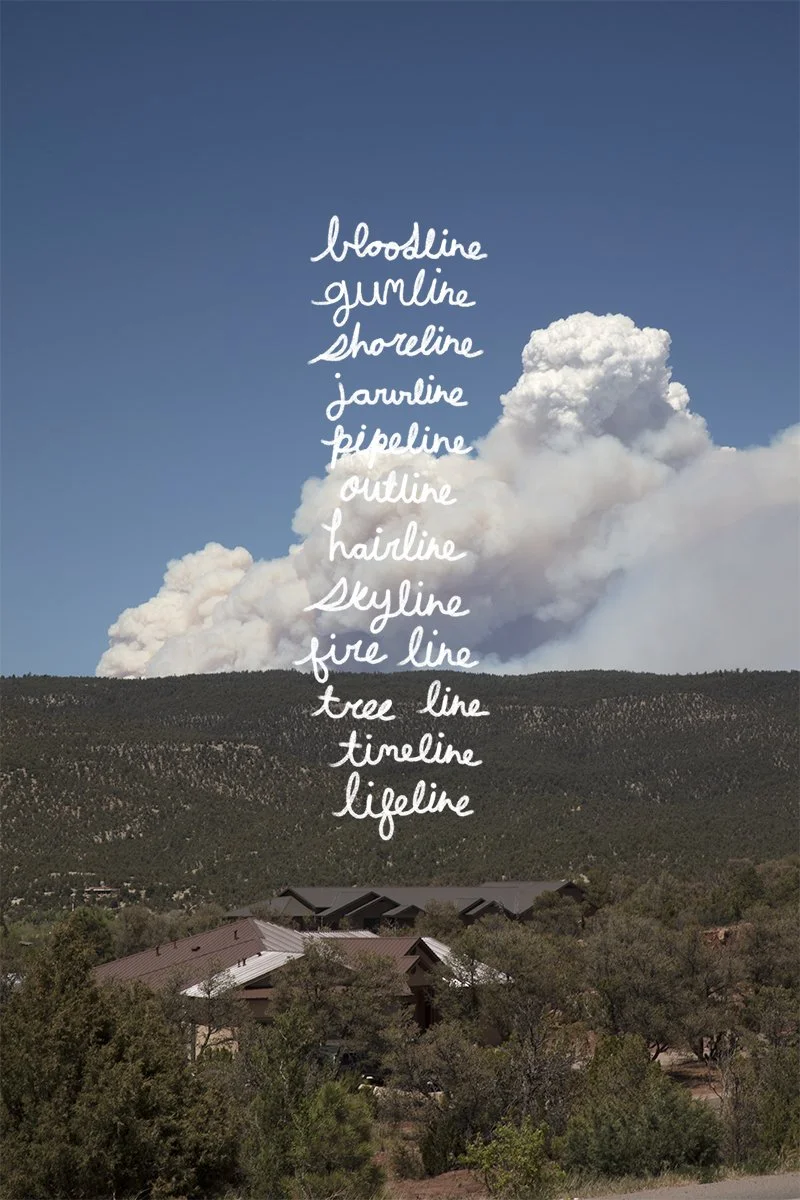
Megan Jacobs, Bloodline, Archival Pigment Print, 18”x24”, 2024
ML: In the project statement for Shared Breath you describe collapsing the boundaries between environmental forms and children's bodies. What do these acts of visual merging allow you to say?
MJ: After the largest fire in New Mexico’s history burned a few years ago just a short drive from our home, I began to see the climate emergency and my kids’ adolescence as tethered—as a story arc within their lives. To begin to heal the Earth we must acknowledge what’s at stake and our connection to the living world. With this aim, I created images that collapse the ongoing climate crisis into my children’s lineage and impending adulthood, to recognize that the two are connected and tethered. I combine images of pyrocumulonimbus clouds, created by the heat of wildfires, with the outlines of my children’s bodies, to tether the boundaries of a damaged environment with those of the human form. To create the photograph NewMexico Fires, I scanned school pictures of my children, which serve as traditional markers of time and growth. The school pictures are hand cut in a crude way to remove the figure but highlight the absence of its form and are layered on top of a burning New Mexico landscape. Visceral symbols of the climate crisis should be included in personal records. The grief for the destruction of this land is both a personal and communal loss.
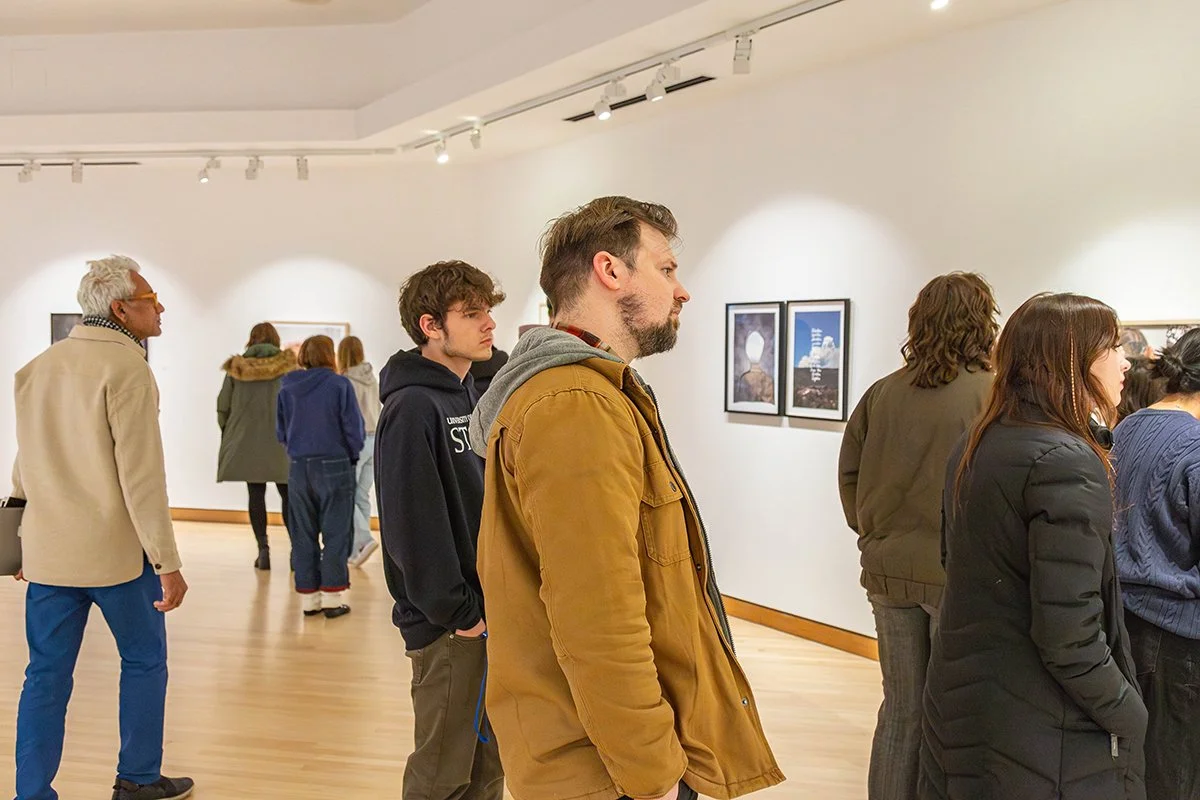
Megan Jacobs, Shared Breath installation: Climate Crisis in the Time of Motherhood
ML: Your work frequently inhabits a space between tenderness and fear. How do you navigate photographing the people you love while carrying anxieties about the future they will inherit?
MJ: As a parent, I am concerned for the environmental future that my kids, and all youth globally, will inherit. A quote that has been a “north star” of my thinking comes from Stephen Jay Gould. He states, “we cannot win this battle to save species and environments without forging an emotional bond between ourselves and nature–for we will not fight to save what we do not love.”(6) If my child was ill, I would do everything in my power to help them heal. If the living world is truly interconnected, then we must do the same and act to heal our home.
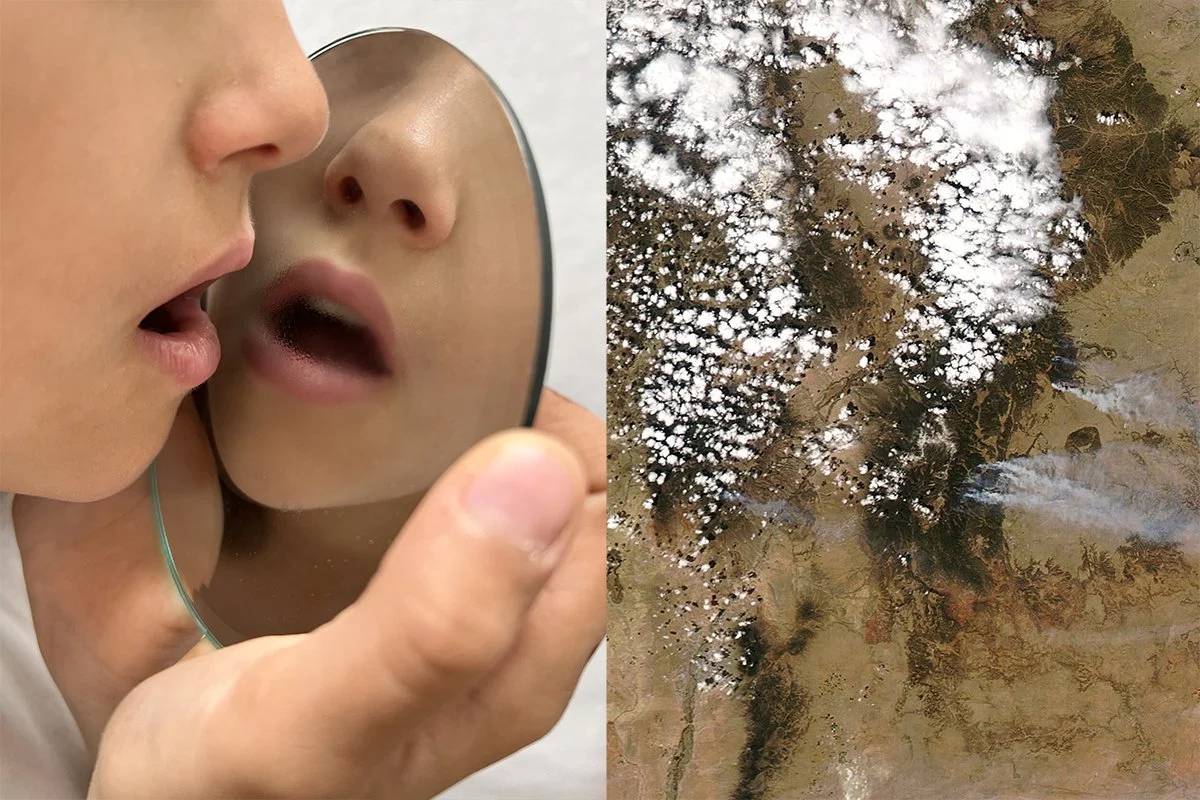
Megan Jacobs, Shared Breath I, Archival Pigment Print, 24”x13”, 2023
ML: The act of marking each print with pinpricks corresponding to the days you've been a mother transforms photography into a record of lived duration. What has this practice taught you about the difference between a photograph as an object and a photograph as an experience?
MJ: One thing that I’ve been in awe of as a parent is to witness the transformation of a child’s identity through time. There are glimmers of a child’s personality early on, but the physical and emotional changes that take place are immense. This growth continues throughout one’s life. Parenthood is a constant state of becoming for child and parent alike. I am drawn to the idea of an ever-transforming object to express this state of flux. As artists Doug and Mike Starn state: “a photograph is not only a captured instant but exists in time and deteriorates and expands with time.” In the piece, Days as a Mother, I physically mark the number of days that I’ve been a mother with a pinprick to the print. Through time, the print, and my likeness, is transformed, mirroring how motherhood has transformed me and in turn how we are transforming Earth. To be a mother is to love your child, yet simultaneously to carry the weight and pain of such a role; this is paralleled in the plight of our Mother Earth as well. Roland Barthes’ famous text, Camera Lucida(7), discusses the idea of the studium and punctum. The punctum is a component in a photograph that impacts or pierces the viewer. Here, I create a literal puncture to marks time and the transformation of self. This approach rejects the static nature of an image and adopts an everchanging work that transforms through time.
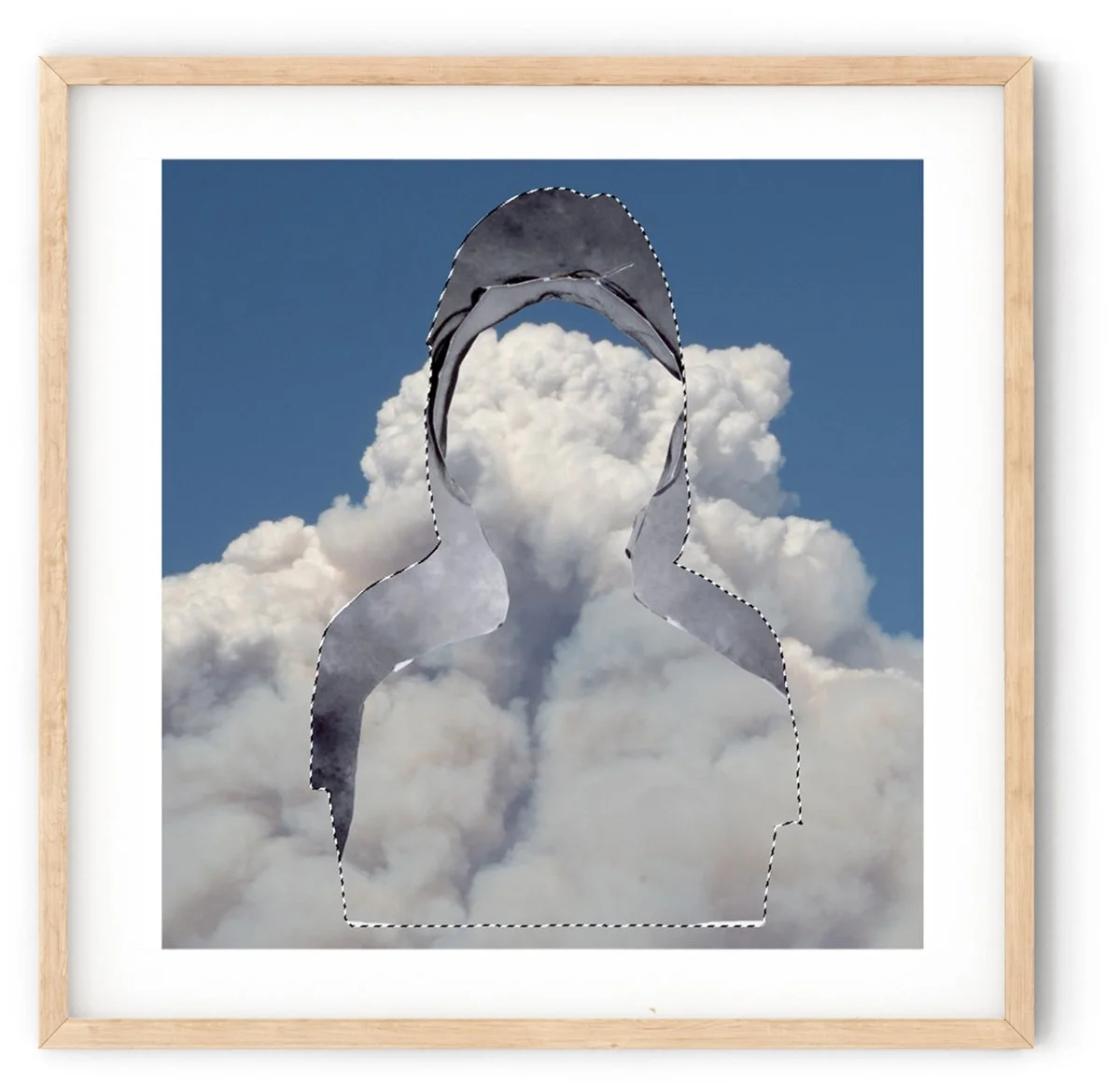
Megan Jacobs, Pyrocumulonimbus Cloud I, Archival Pigment Print, 12”x12”, 2024
ML: You have cited Doug and Mike Starn's idea that photographs deteriorate and expand in meaning over time. How do you hope these works will be understood decades from now, when today's children have become adults?
MJ: My hope is that these works serve as a marker of a critical juncture—a moment where action and transformation were necessary. Years from now, my hope is that the immediacy of this crisis will have subsided through policy changes, political actions, and a reframing and rewriting of social expectations, but like with all great social and political change, I hope the need for artists to speak out, to plant a flag on their way of seeing the world, will continue to resonate.
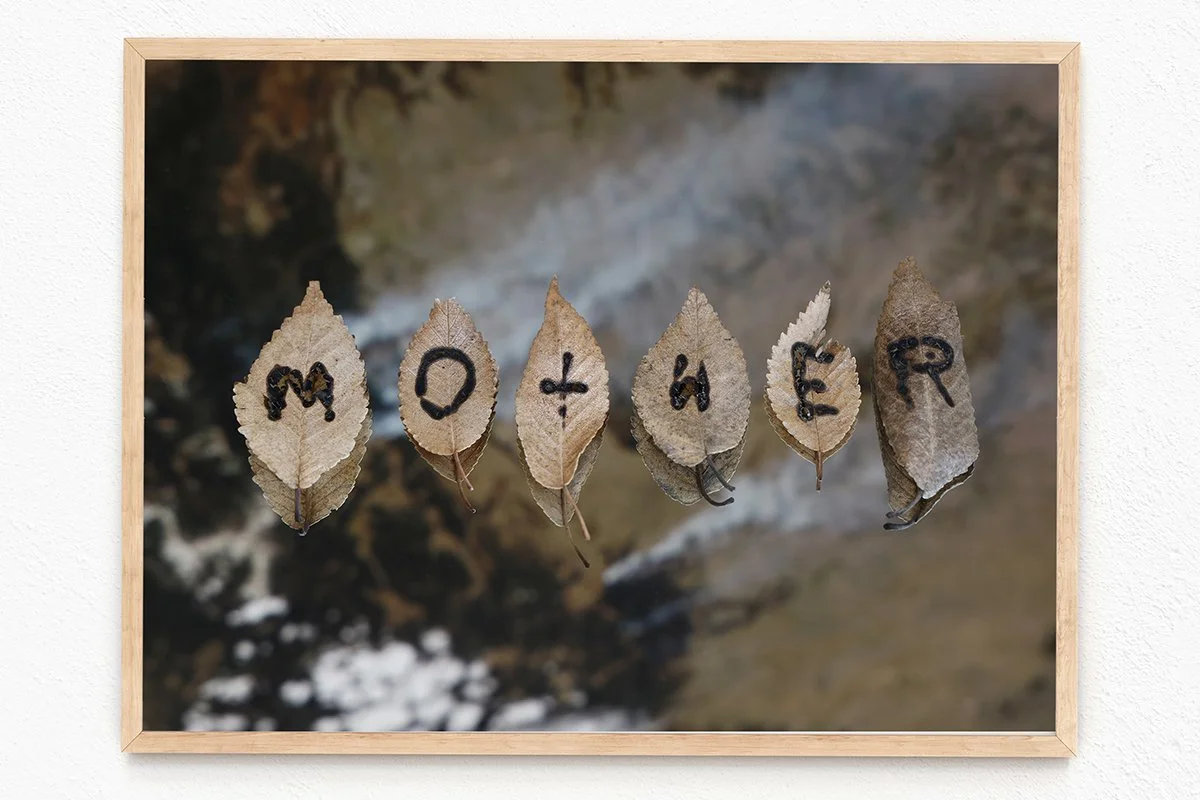
Megan Jacobs, Mother Leaves, Archival Pigment Print, 23”x35”, 2024
ML: The word "mother" shares roots with concepts of measure and reckoning. How has motherhood changed your perception of time itself, its speed, its fragility, and its responsibilities?
MJ: The word mother is derived from the Greek word “meter, or verse” that by which anything is measured. My work seeks to mark time. The aphorism, “the days are long, but the years are short” felt apt during my early years as a mother. My children are 18 months apart so there were years where it felt like we were swimming in diapers, nap times, and preschool drop offs. Now having teens, it feels like the days are short and the years are short! Each revolution around the sun feels like they are vastly transforming. I see a connection between the shared feelings of imminent loss. First, as many before me have experienced, I cling to the scant amount of time I have left before my kids leave the nest. Second, I brace for the domino-like global impacts of an overtaxed Earth. I find myself thinking about the fleetingness of time in both of these contexts and gravitate to materials that speak to the fragility of time—ice, rice paper, laser cut fabrics and images that create shadows, as well as time-based media.
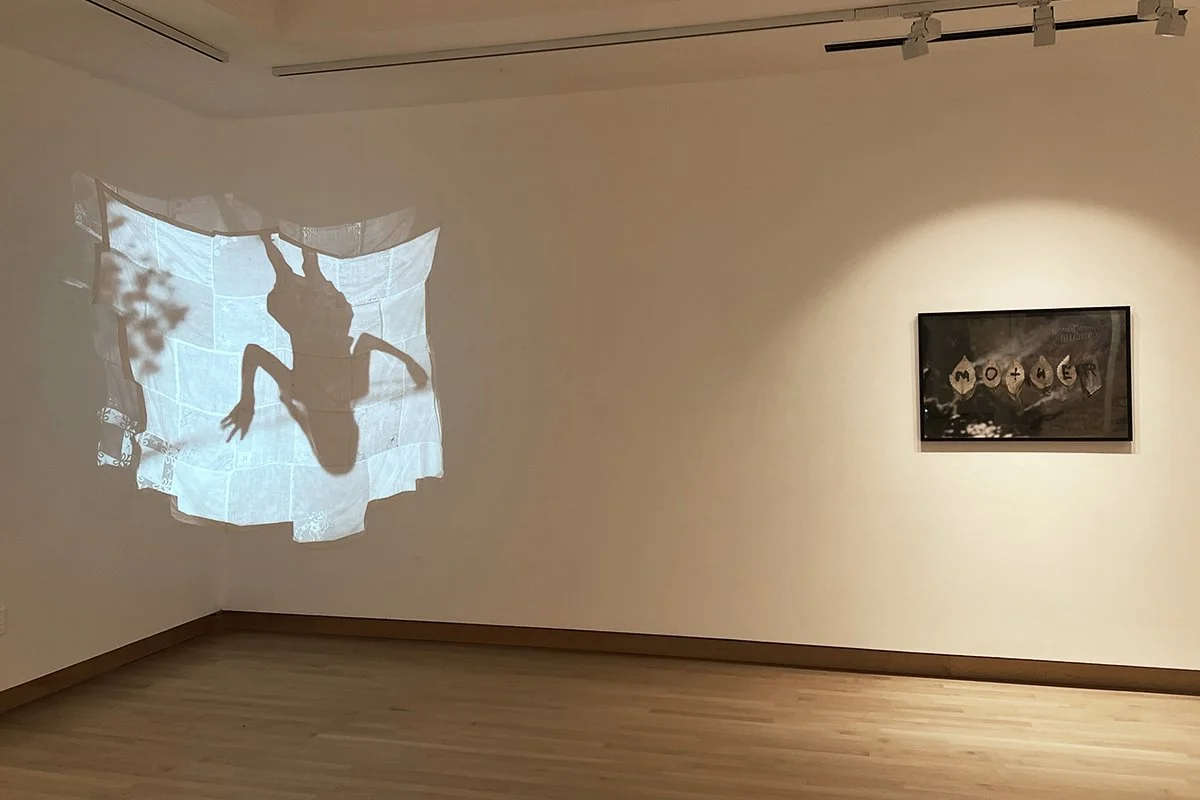
Megan Jacobs, Shared Breath: Climate Crisis in the Time of Motherhood, installation 3
ML: Environmental grief often remains private and difficult to articulate. What role can art play in creating communal spaces for mourning ecological loss?
MJ: When students in my Eco-Art: Making Art to Reconcile with the Climate Crisis course interviewed artist Francesca Samsel she stated, “Art is always the way that humans have talked about the most difficult issues of their time.” A recent survey of 10,000 participants found that 59% of respondents were extremely worried about climate change, and 84% were found to be at least moderately worried. Climate psychiatrist, Van Susteren, states, “it’s culturally acceptable to talk about all kinds of anxieties, but not the climate,” and concludes, “people need to talk about their grief. When you do nothing, it just gets worse.”(8) The latest climate reports are daunting; There’s a lot to grieve, but a lot to save as well. The 10 warmest years in the historical record have all occurred in the past decade (2015-2025). 2025 was the 3rd warmest year on record since global records began in 1850. By the middle of the twenty-first century, it is estimated that 30-50% of all living species will be eliminated through mass extinction. The first step in acknowledging environmental grief and our uncertain futures is to start talking. Art is a powerful tool to reflect and to take action. I’m heartened by the work of Ayana Elizabeth Johnson, especially her unique approach to help people identify how to contribute to climate resiliency. She asks us to identify our skills, the work that needs to be done, and our source of joy. Where those interests and skills overlap is our entry into climate activist efforts. Additionally, I love that Johnson addresses the need for art in all forms—from poetry, to murals, to photographs—to imagine a new future.
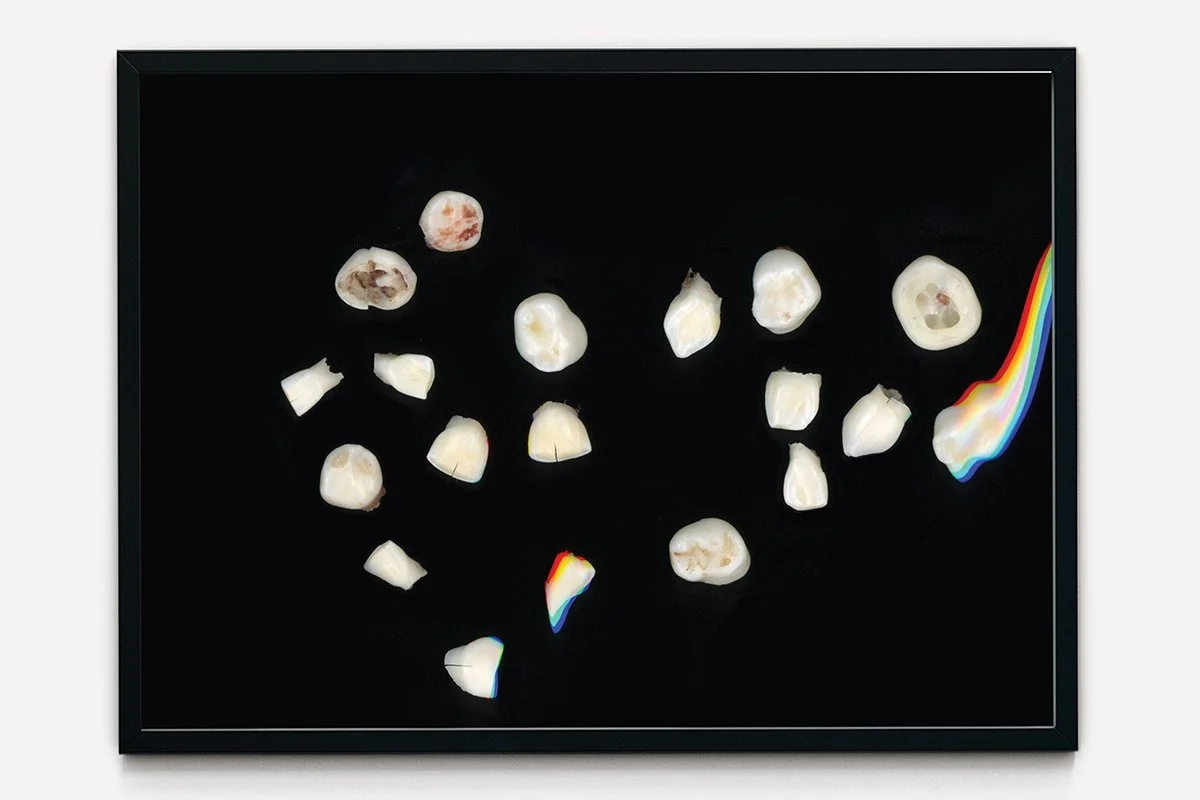
Megan Jacobs, Milk Teeth, Archival Pigment Print, 20”x16”, 2024
ML: Shared Breath exists at the intersection of photography, performance, sculpture, environmental studies, and personal narrative. What possibilities emerge when artistic disciplines begin to dissolve into one another?
MJ: My work is intersectional and interdisciplinary by nature, aiming to collapse boundaries between disciplines and personal and public spheres. When artistic disciplines, or any disciplines for that matter, merge a kind of rewiring takes place. Have you ever learned another language and there’s a phrase or word so poignant and that it perfectly frames a feeling? Perhaps your native language was unable to encapsulate this feeling or emotion, but the new language can? Working in an intersectional way provides the opportunity for new ways of thinking to emerge. The climate crisis is an issue that impacts all people, across geographical, political, and social lines. It is arguably the greatest issue of our time and necessitates collaborative dialogues and interdisciplinary problem-solving. The ability to think in innovative and revolutionary ways are necessary skills to develop equitable strategies to sustainably live on Earth.
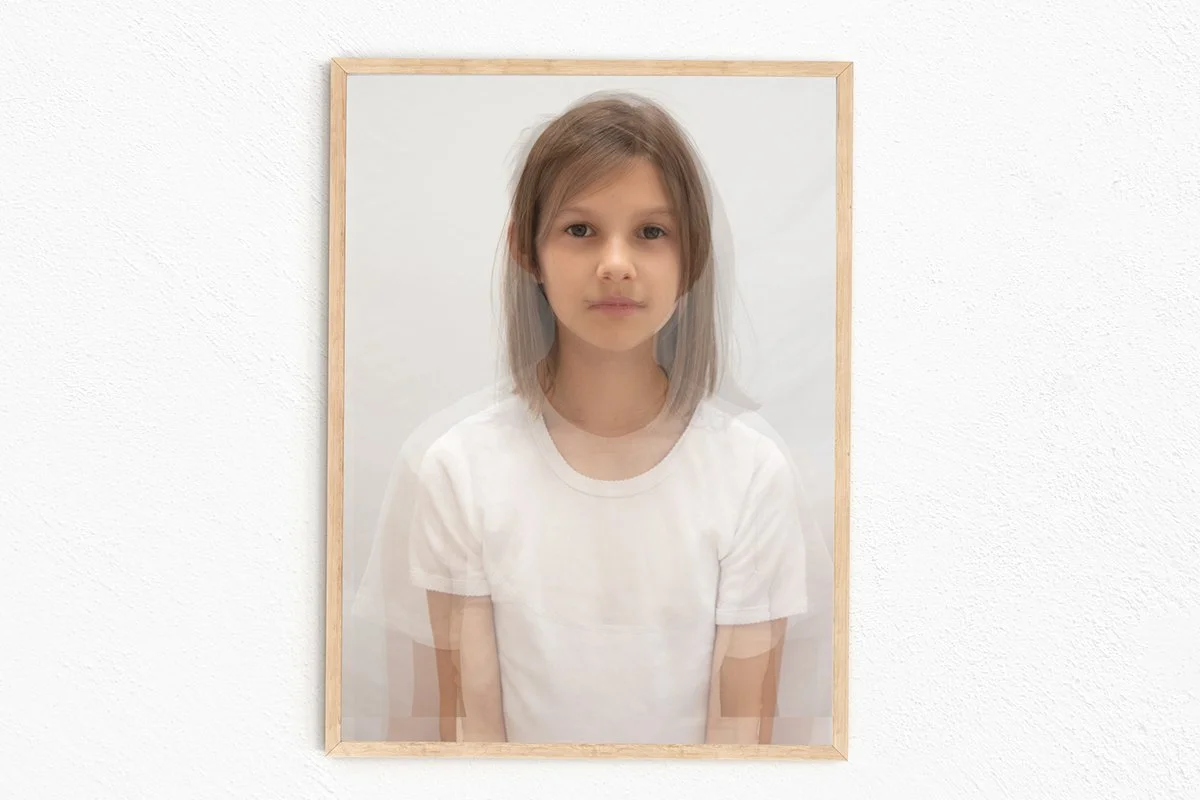
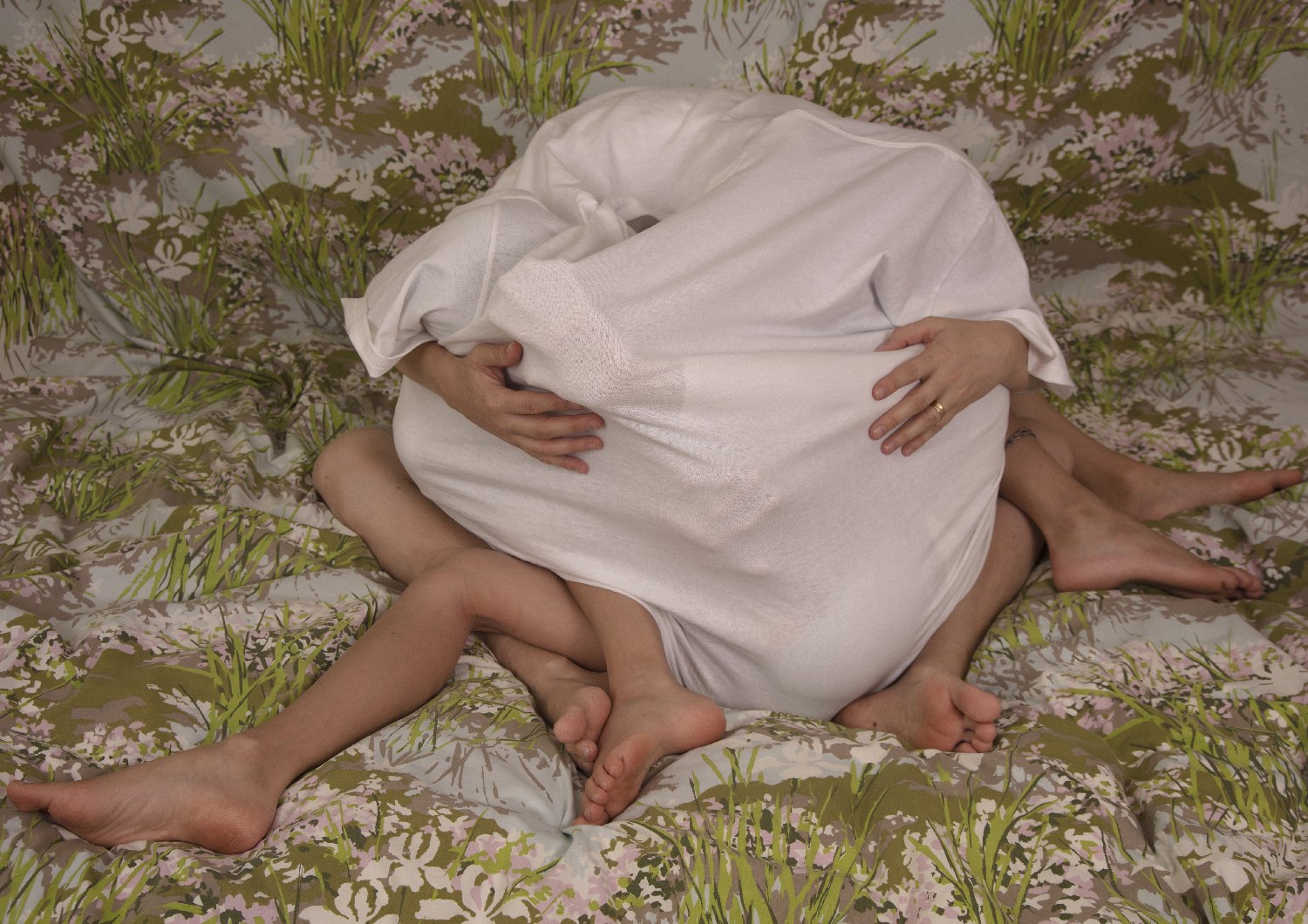
Megan Jacobs, Collapsed Family Portrait, Archival Pigment Print, 20”x30”, 2023
ML: Your work often turns toward material transformation including ice molds, punctured prints, and altered photographic surfaces. What attracts you to these processes?
MJ: The physical sensation of a material—it’s scale, color, and visual or physical weight are powerful decisions that an artist must consider in their work. I like to use the inherent meaning of a given material to communicate a certain emotion or idea. For instance, I look to the materiality of ice to speak to impending change and fluidity. In the image, Ice Teeth, I make ice molds of my children’s teeth, using a plastic retainer that was intended to control and correct one's teeth during adolescence. There’s an unpredictability to ice, it melts fast and there’s a lot of chance when working with this material. In this constructed image, I reflect NASA photographs of melting arctic glaciers. This situation too is precarious, and I use the pairing as a visual connection to the fleeting time we have to change course environmentally. A timeline that dovetails with the limited time my children have before they enter adulthood.
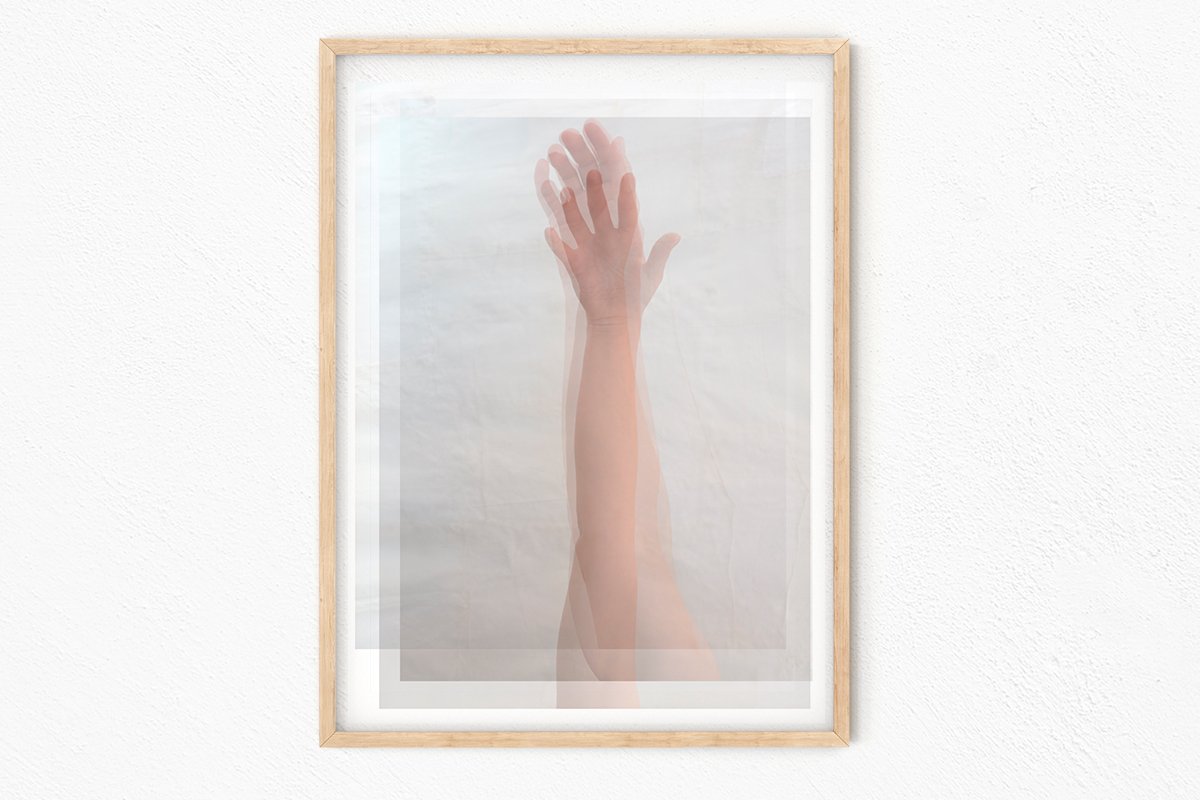
Megan Jacobs, Epigenetics: Three Generations, Archival Pigment Print, 20”x30”, 2024
ML: Across projects such as Hidden Mothers and Shared Breath, motherhood appears not as a sentimental subject but as a complex social, political, and ecological condition. What aspects of motherhood do you feel remain unseen or misunderstood in contemporary culture?
MJ: In the Hidden Mothers series, I investigated how mothers are historically socially and economically undervalued. When parents have their first child, we see a pronounced wage gap in the form of the “motherhood penalty” and “fatherhood bonus.” Additionally, we continue to see significantly larger domestic contributions from women, even in egalitarian households. In Shared Breath: Motherhood in the Time of Climate Crisis, I find parallels to the prevailing framework through which we see our planet. When we look at pre-industrial perspectives of Earth, we see humans revering the Earth as a kind of mother. Yet, our post-industrial framework is the complete opposite—one that doesn’t recognize the limitations of a planet with finite resources. The social strain on mothers is paralleled in the plight of our Mother Earth who is being pushed beyond her capacity due to anthropogenetic climate change.
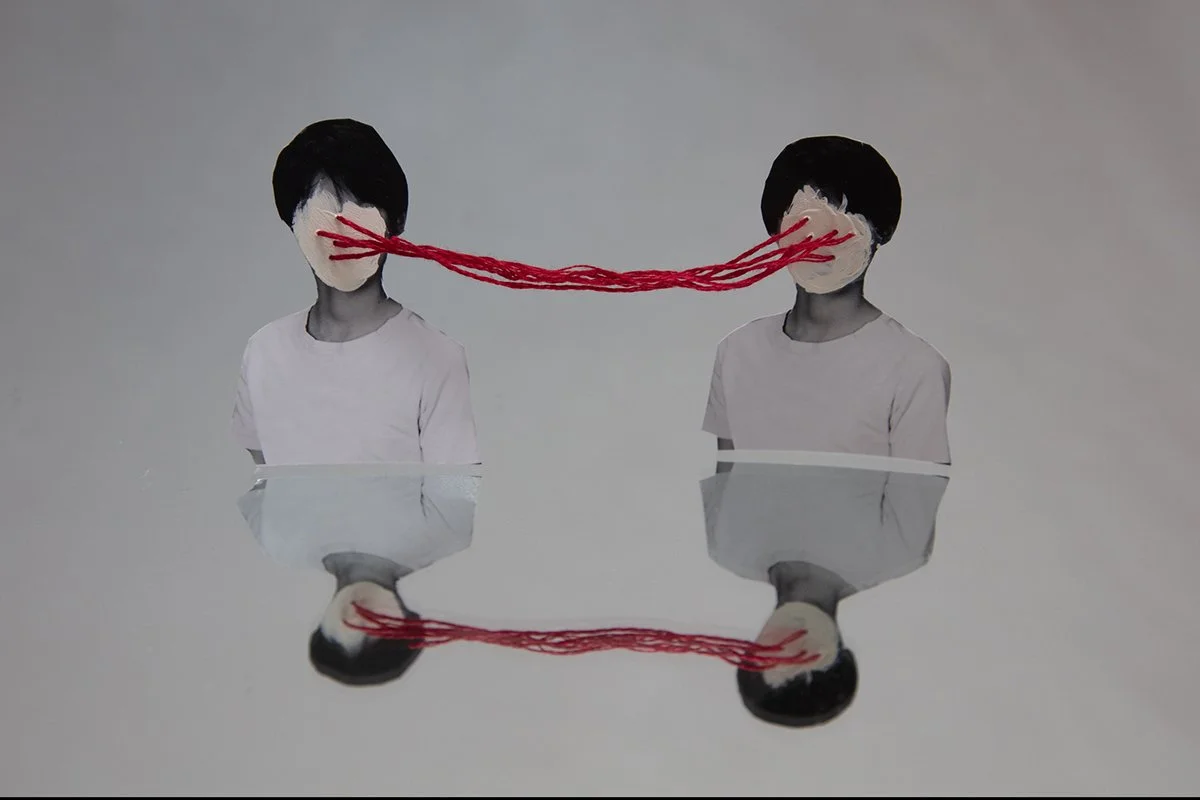
Megan Jacobs, Solastalgia, Archival Pigment Print, 20”x30”, 2023
ML: As both an artist and educator, how do you speak with younger generations about climate crisis without surrendering to despair?
MJ: While I certainly have anxiety about the fate of our climate futures, actions to dismantle archaic systems and innovations to promote equitable and sustainably ways of living are necessary and dare I say, exciting. I am inspired by those doing innovative work to promote sustainable practices to help heal the Earth and its inhabitants in fields such as art, ecology, and sustainability studies.
My research interests in the climate crisis have led me to develop new courses for the University of New Mexico. One course, Eco-Art: Making Art to Reconcile with the Climate Crisis, was co-created and team-taught in a partnership with an honors student. We created the course to empower students to express themselves and create meaningful change through community partnerships to raise awareness and bolster hope. In dialogue with the creation of art, students read a range of contemporary reflections on methods used to process the climate crisis, strategies for action, and tools for resiliency. When addressing climate change and other social justice and environmental issues, it is necessary to critically examine a problem from many different points of view and to develop the ability to communicate between disciplines. We structured this course to mirror these real-world challenges. Students developed the skills to critically analyze artworks and test methods of creation, culminating in an individual and group final project that reflects on climate change on a personal and community level. Students’ collaborative films were created in partnership with a local environmental organization, Land Witness Project, and are comprised of video interviews with New Mexico stakeholders impacted by climate change and their strategies for resilience. The collaborative films were screened to an audience of community members and included a panel discussion with community stakeholders. We found that the collaborative films took on a greater importance for students when they are were created for a real-world audience, including community partners as well as family and friends. Community efforts to promote climate resiliency bolstered students’ hope for the future.
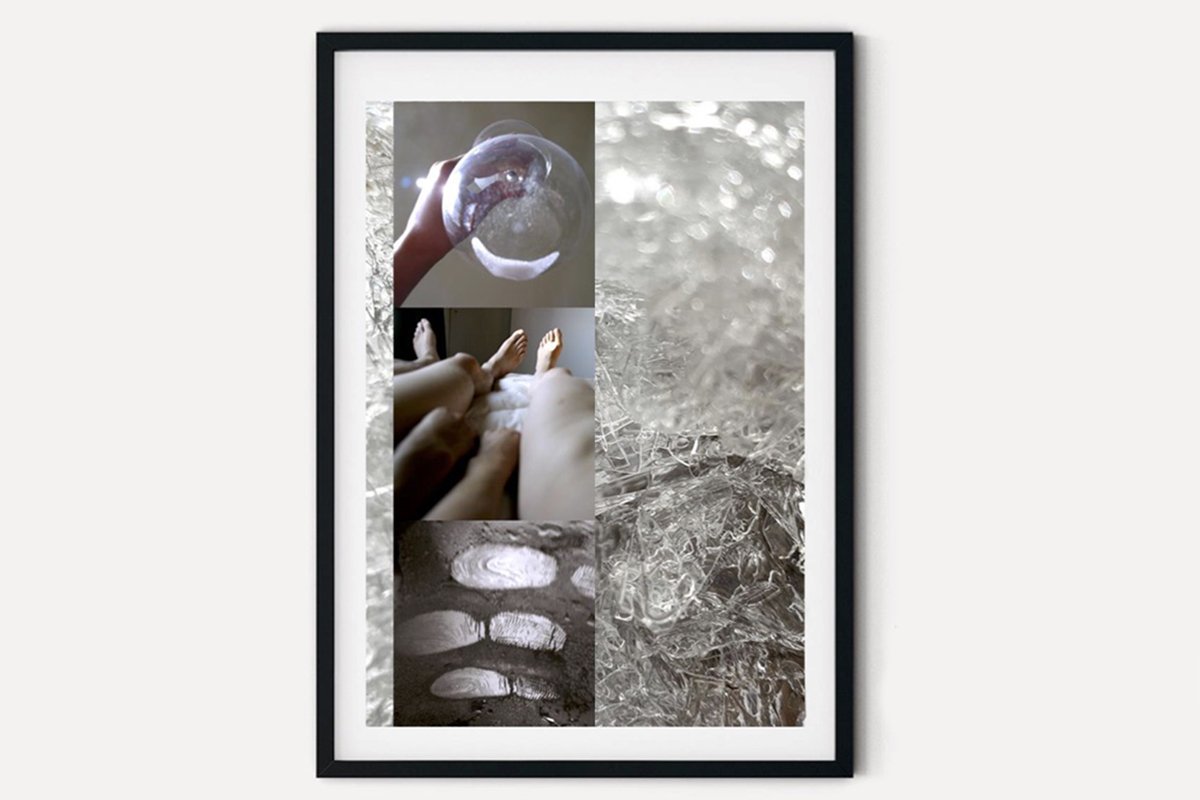
Megan Jacobs, Finite Time, Archival Pigment Print, 13.5”x20”, 2024
ML: Your work suggests that care is both a personal act and a planetary one. What might a culture of care look like if we truly understood ourselves as interconnected with the living world?
MJ: What an incredible future it will be when we adopt an interconnected worldview. That future will be equitable, sustainable, and accessible. There will be an equitable division of resources globally. Public policies and designs will be geared around environmental sustainability and accessibility—from free and efficient public transportation to curb cuts and rain barrels to collect water. Housing will be made from local sustainable sources that respond to the weather of the region and include indigenous plants that are well suited to that particular locale. Communities will have access to healthy affordable food. Food deserts will be a term of the past. Sustainable practices will be part of public education. Scholars who promote the necessity and possibility of this kind of future are Robin Wall Kimmerer and Jason Hickel (Upstream Podcast: Better Lives for All )(9).
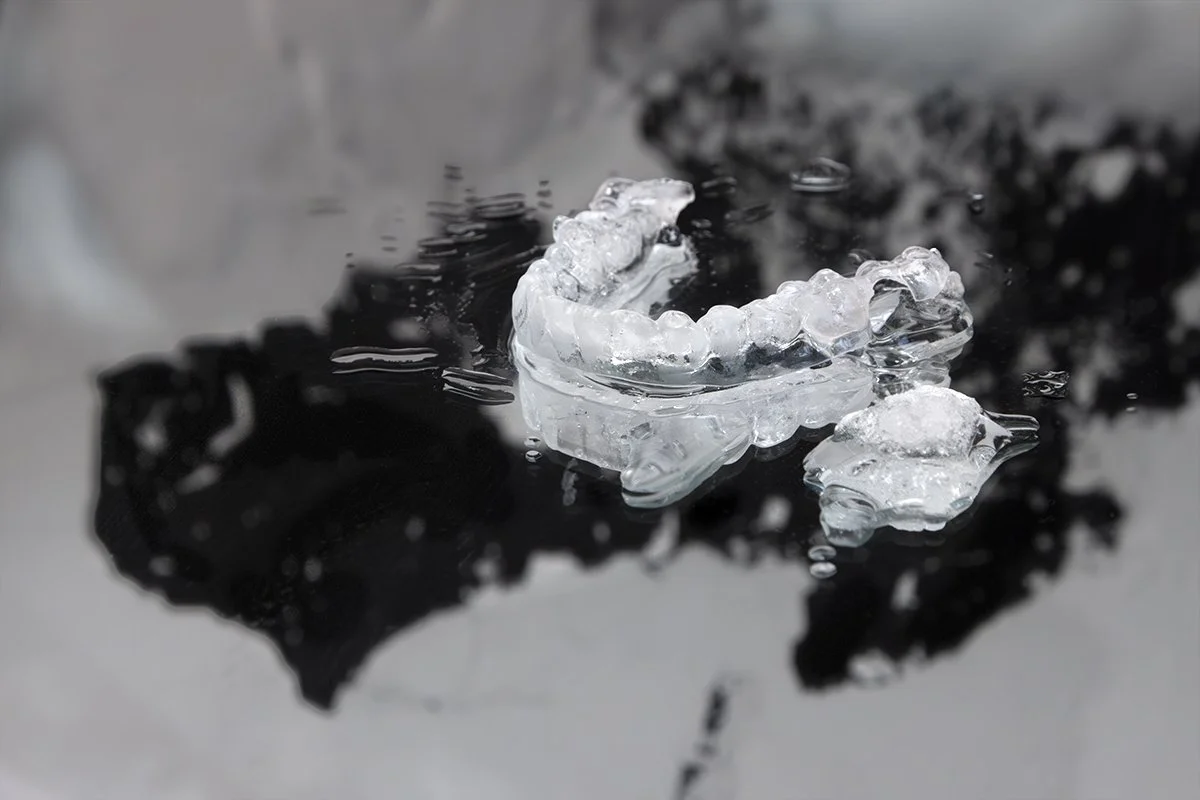
Megan Jacobs, Ice Teeth, Archival Pigment Print, 20”x30”, 2024
ML: What are you currently working on?
MJ: I am collaborating with two artists on a project, Invisible Threads: Connections Through Care. The work integrates photographs, embroidery, and artifacts to explore how lives can be shaped by the reciprocal and intergenerational aspects of nurturing and caregiving. Community members are invited to write, draw, and embroider on communal textile pieces and share photographs that allow them to reflect on caregivers who have impacted their lives.
Hochschild, Arlie Russell, and Anne Machung. The Second Shift: Working Families and the Revolution at Home. New York: Penguin Books, 2012.
Roberts, Elizabeth. “Gaian Buddhism.” In Dharma Gaia: A Harvest of Essays in Buddhism and Ecology, edited by Allan Hunt Badiner, 147–154. Berkeley, CA: Parallax Press, 1990.
Bass, Ellen. “The Big Picture.” In Like a Beggar. Port Townsend, WA: Copper Canyon Press, 2014.
Kimmerer, Robin Wall. Braiding Sweetgrass: Indigenous Wisdom, Scientific Knowledge, and the Teachings of Plants. Minneapolis: Milkweed Editions, 2013.
Johnson, Ayana Elizabeth, and Katharine K. Wilkinson, eds. All We Can Save: Truth, Courage, and Solutions for the Climate Crisis. New York: One World, 2020.
Gould, Stephen Jay. Eight Little Piggies: Reflections in Natural History. New York: W. W. Norton, 1993.
Barthes, Roland. Camera Lucida: Reflections on Photography. Translated by Richard Howard. New York: Hill and Wang, 1981.
Scher, Avichai. "Climate Grief Hits the Self-Care Generation." 2018. CUNY Academic Works.
Duncan, Della Z., and Robert R. Raymond, hosts. “Better Lives for All w/ Jason Hickel.” Upstream. August 27, 2024. Podcast.